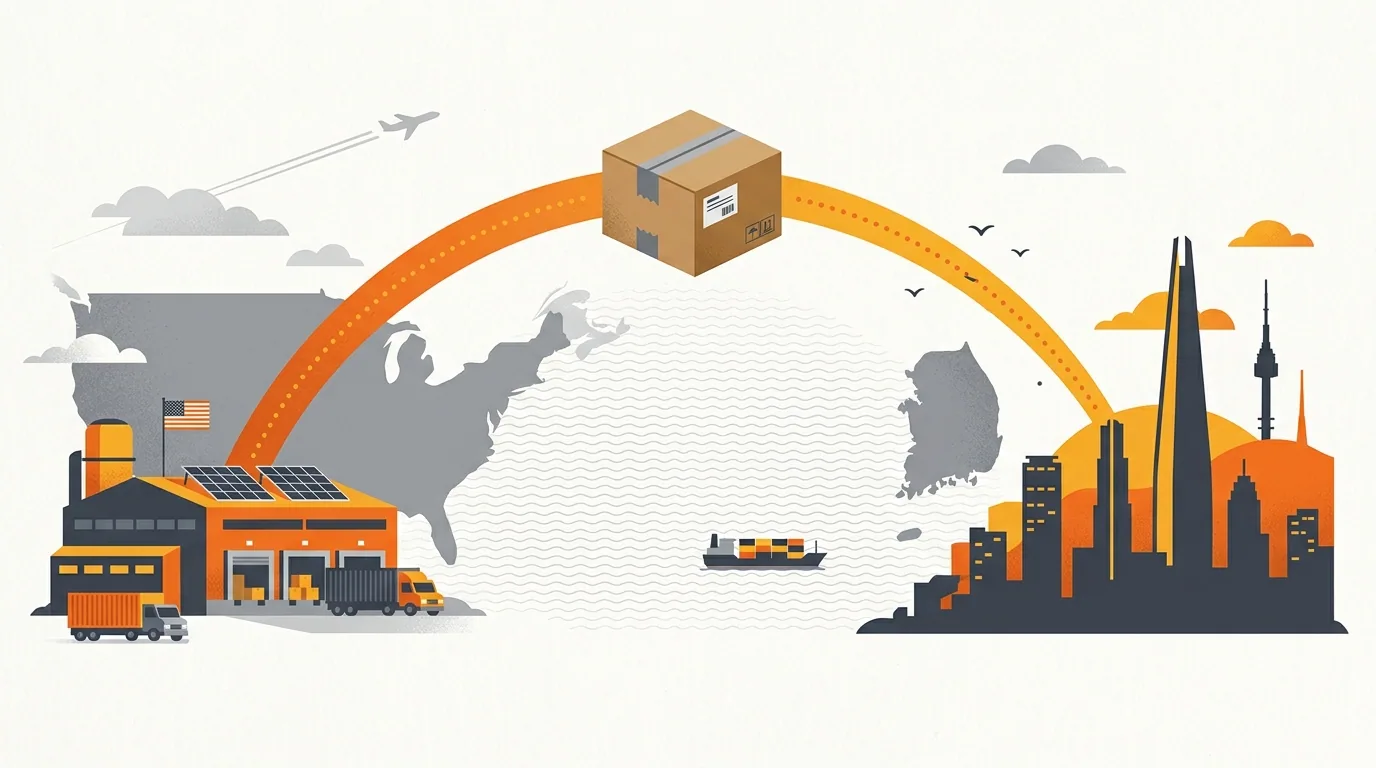
Shipping US to Korea: Time and Cost Per Order
Shipping from a US warehouse to a consumer in South Korea takes roughly 3–10 business days using express carriers (FedEx, UPS, DHL) and 10–20 business days using economy services. The per-order cost typically lands somewhere between USD 25 and USD 80 for a small parcel, before duties, VAT, and last-mile surcharges. But for a brand evaluating cross-border fulfillment as a real channel — not a one-off — the carrier rate is a smaller cost driver than KC certification, Korean-language PDPs, and channel access. Freight is usually 30–40% of landed cost; a single return can wipe out the margin on three orders.
Realistic delivery times from a US warehouse to Korean consumers
The carrier marketing pages give you a corridor, not an answer. Across primary carrier and aggregator pages, the consistent shape is:
- Express (FedEx International Priority, UPS Worldwide Express, DHL Express): 1–3 business days door-to-door under ideal conditions; 3–5 days more realistically once customs is in the loop.
- Economy / international connect services: 5–10 business days.
- Postal and consolidator services (USPS, Korea Post EMS inbound, Planet Express, MyUS): 10–20 business days.
In practice, the variance is almost never the carrier — it's the customs hold. A shipment with clean paperwork, an HS code that doesn't trigger inspection, and a value under the de minimis threshold clears in hours. A shipment that needs a labeling correction, an MFDS notification, or a KC certificate to enter the country sits in a bonded warehouse for days.
If you're modeling unit economics, assume the advertised express time on a good day and the economy time on a bad day. Plan customer service replies accordingly.
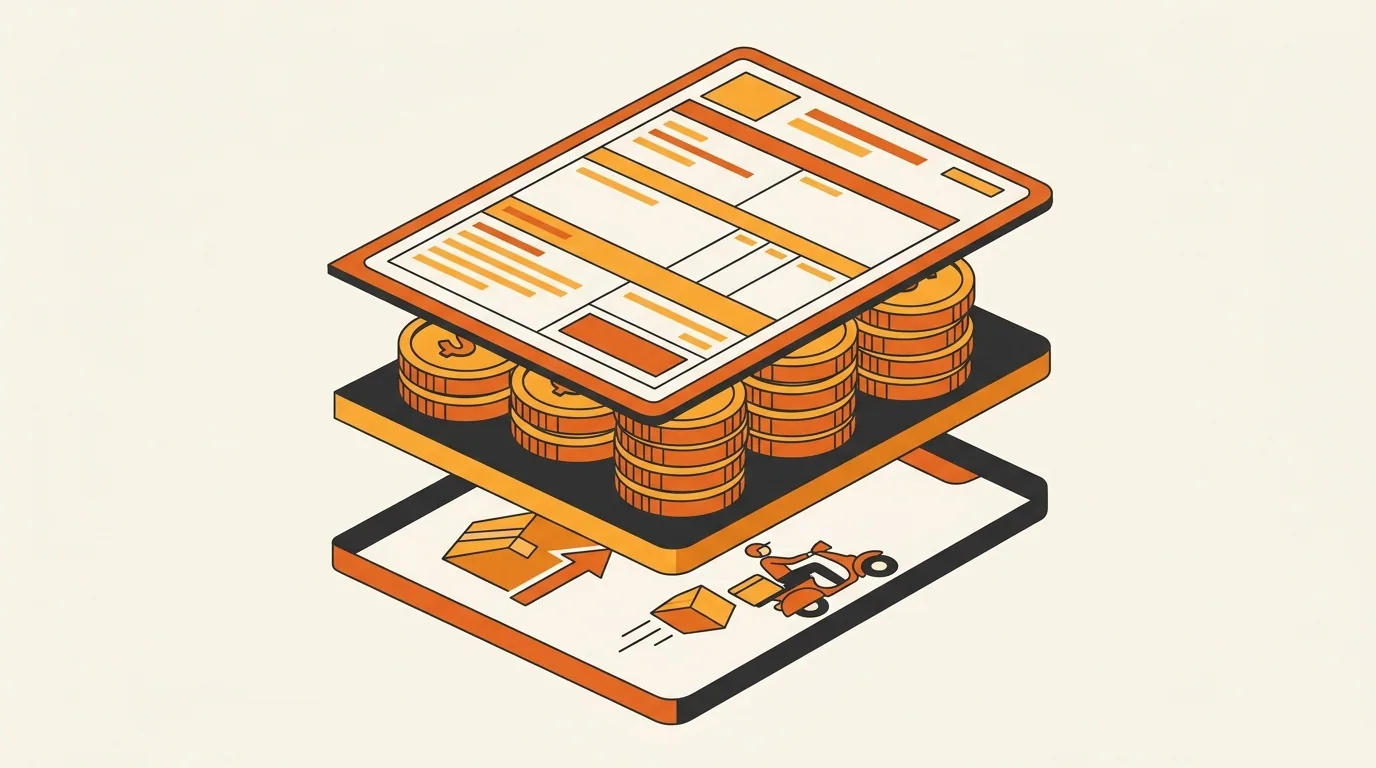
The real per-order cost stack — what carrier quotes leave out
A FedEx or DHL quote tells you the freight rate. It does not tell you the landed cost per order. For a brand running cross-border B2C to Korea, the stack typically looks like:
- Outbound freight — the carrier rate, often USD 25–80 for a 0.5–2 kg parcel.
- Pick, pack, and label — the US warehouse's per-order fee.
- Customs duty — varies by HS code, frequently 0–13% of declared value once the shipment exceeds the de minimis threshold.
- Korea VAT — a flat 10% on the dutiable value, applied at import.
- Brokerage and last-mile surcharges — fuel, remote-area, oversize.
- Return cost — the part most models ignore. A cross-border return is effectively a write-off or a second international leg.
Two thresholds shape the math more than carrier choice. The first is the USD 150 de minimis rule, which determines whether your shipment clears duty-free or not. The second is the incoterm decision — DDP vs DAP for Korean consumers — which decides whether your customer is hit with a surprise tax bill at the door. DDP almost always converts better, but it means you absorb the duty and VAT into your unit cost.
When brands model cross-border seriously and compare against local Korea fulfillment economics, the per-unit picture usually flips somewhere around 100 monthly orders. Below that, cross-border wins. Above it, the fixed costs of going local — entity, IoR, KC, Coupang — amortize, and the per-order cost falls hard.
KC certification: the wall most cost models skip
Almost no shipping-cost article mentions KC certification (KC 인증), and that's a reason most brands miscalculate cross-border viability.
KC is Korea's category-specific mandatory safety certification regime. It applies to electrical and electronic goods, children's products, certain home appliances, and a long list of other categories. The short answer is: if your product needs KC, it needs KC whether you're shipping cross-border B2C or stocking locally — but the enforcement point differs.
In cross-border, a single low-value parcel under de minimis often slips through without certificate enforcement. Once you move volume, or once a customer files a complaint, or once you try to stock the same SKU on a local Coupang account, KC becomes a hard gate. In our experience, brands run cross-border for 18 months and then discover at the moment they want to scale that their entire catalogue needs to be retested.
If your product is in a KC-controlled category, treat the certificate as a prerequisite cost — not a "later" cost. Our KC certification and Coupang guide walks through how certification interacts with entity choice and Rocket Growth eligibility.
Localized PDP and Korean-language conversion
Even if your shipping math works, your conversion rate often doesn't — because the page selling the product is in English, or worse, in machine-translated Korean.
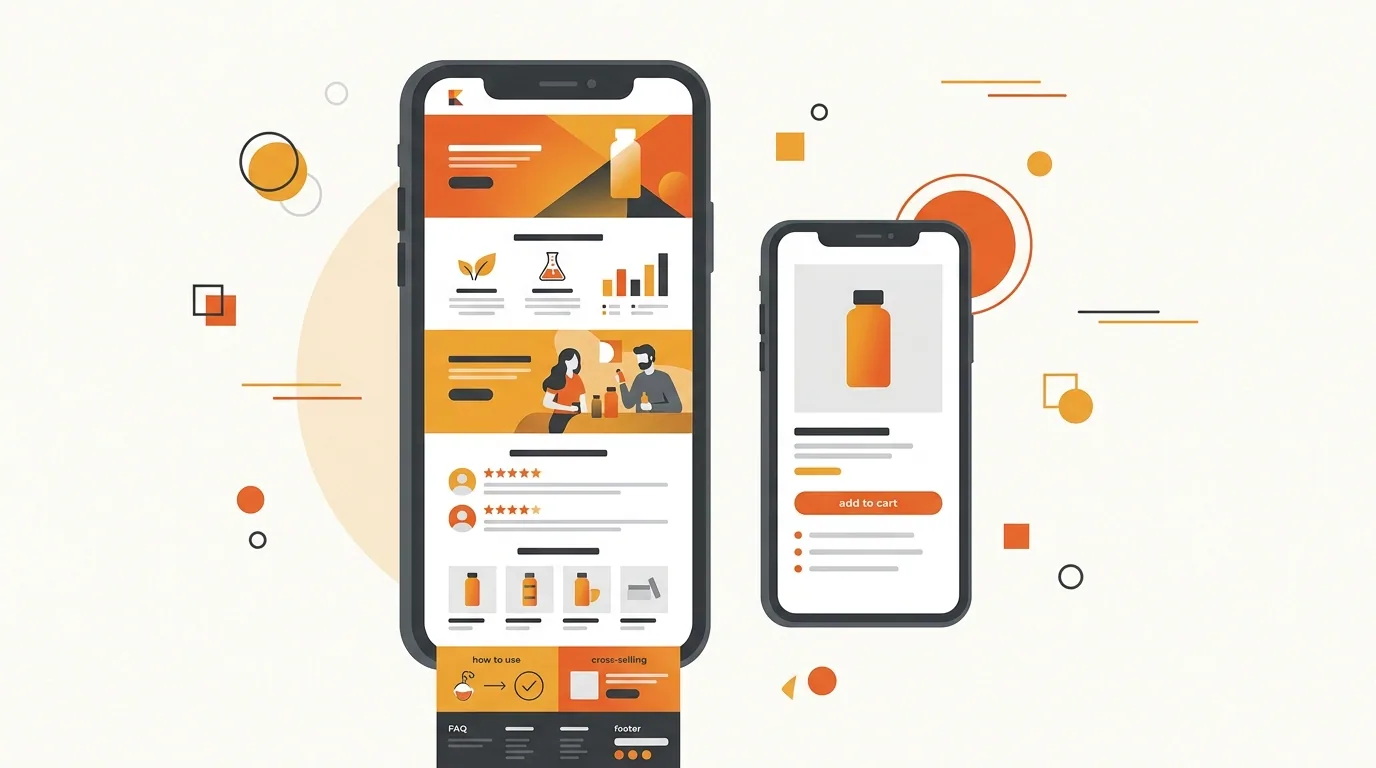
A Korean product detail page is structurally different from a Western one. A Coupang or Naver PDP runs roughly 20,000 vertical pixels. Hero image, problem framing, specs, lifestyle context, reviews, FAQ, and CTA are all rendered as designed graphics, not body text. Korean shoppers scroll the full page. They do not click "read more."
A US-warehouse cross-border listing on Coupang Global or a brand's own Shopify storefront with KRW pricing will technically work. It will also convert at a fraction of the rate a localized PDP achieves on a local Coupang listing. The shipping cost per order is irrelevant if the order isn't placed.
This is where the cross-border-to-local transition usually pays for itself before the freight savings do. Sequence it: validate demand cross-border, build a localized PDP before scaling, then move to local stock.
Marketing and launch sequencing: don't pay for ads into broken ops
Cross-border shipping costs are predictable. The expensive mistake is running paid traffic into a cross-border funnel before the operations support conversion.
We've written before about sequencing operations before ad spend. The short version: a Coupang PPC click costs the same whether the destination is a Korean-language localized PDP with 3-day delivery, or an English page quoting a 14-day FedEx ETA. The conversion rate is not the same.
A realistic sequence for a US brand testing Korea looks like:
- Validation phase (months 0–3): ship cross-border DDP on real organic demand. Use the data to confirm the SKU mix and price elasticity. Do not run paid acquisition yet.
- Compliance phase (months 2–5): if KC or MFDS applies, start it in parallel. These timelines are calendar-bound, not budget-bound.
- Localization phase (months 4–6): build the Korean PDP, line up a Coupang account path (your own entity or a partner's), and decide on IoR.
- Scale phase (months 6+): local stock via Rocket Growth, with the cross-border channel kept as a long-tail or test bed.
Cross-border shipping cost matters most in phase 1. By phase 4, it's a rounding error against the local fulfillment economics.
Entity setup and control tradeoffs
The unspoken question behind "what's the per-order cost from a US warehouse" is usually: "do I have to set up a Korean entity?"
The short answer is no — not to ship cross-border B2C. You can keep your US warehouse, ship DDP, and never register anything in Korea. Plenty of brands do this for years.
The longer answer is that staying cross-border permanently caps you in three ways:
- Channel access. Coupang Rocket Growth — the fulfillment service that drives most of the platform's GMV — requires a Korean Seller of Record. No Korean entity, no Rocket Growth, no Rocket badge, no algorithmic preference.
- Returns and CS. Cross-border returns are operationally painful and a cost driver. Korean consumers expect free returns and native-language support, which requires outsourcing or a local operation.
- Per-order economics at volume. Past a few hundred orders a month, the carrier rate plus duty plus VAT plus return cost runs well above what a local Rocket Growth stack costs.
There are three common structural options once you decide cross-border isn't the long-term answer: use an Importer of Record partner without setting up your own entity, set up your own Korean limited company (유한회사), or use a hybrid where a partner holds IoR and SoR while you keep the brand. Each has different control, cost, and exit characteristics. Our agency vs IoR vs entity comparison walks through the tradeoffs in detail using skincare as the example category.
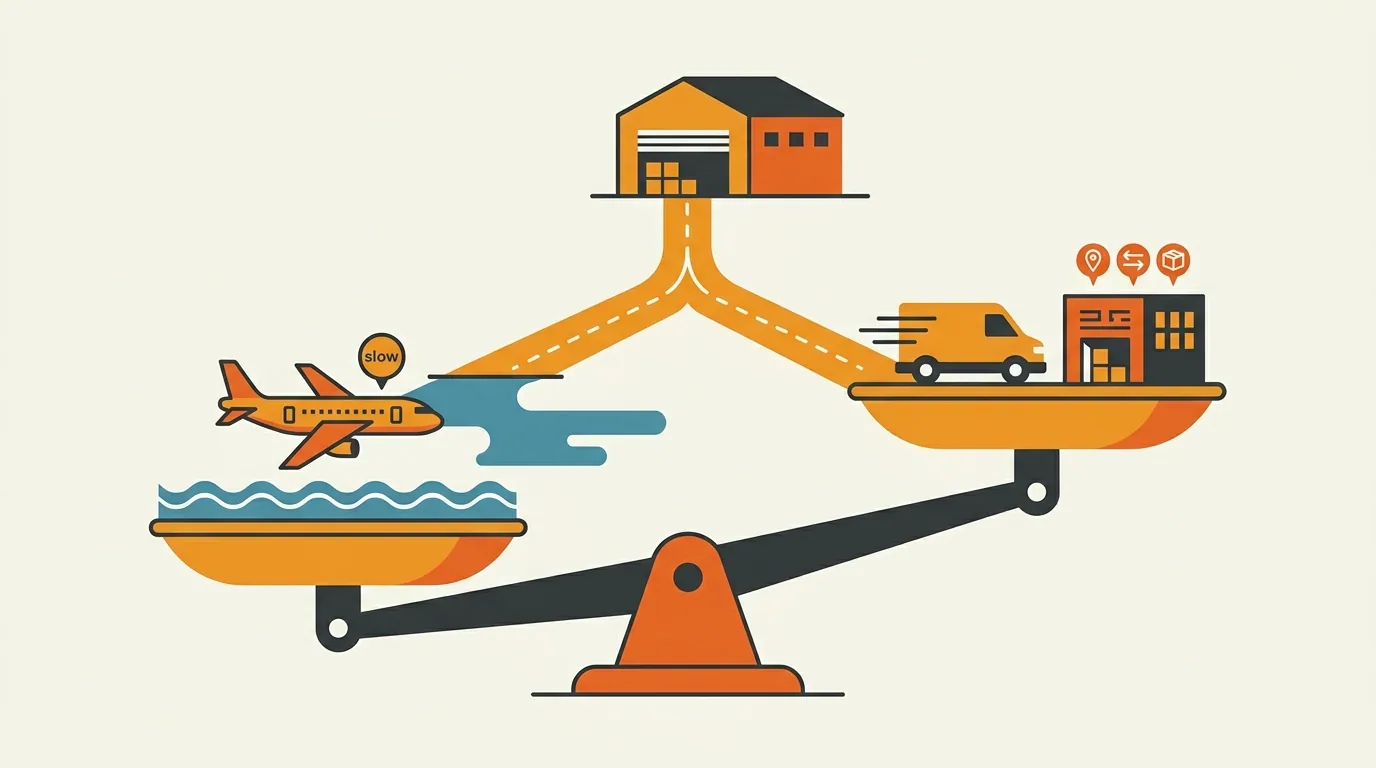
What this means for your unit economics model
If you're building a per-order cost model right now, three rules will keep it honest:
Model cross-border as a validation phase, not a destination. The interesting per-order cost question isn't "what does FedEx charge today" — it's "at what monthly order volume does my freight + duty + VAT + return cost exceed what local Rocket Growth fulfillment would cost." That's the number that decides when to switch.
First, separate the freight rate from the landed cost. The carrier quote is one of six lines. Second, decide DDP or DAP before you quote the customer, and price the duty and VAT in. Third, don't model cross-border in isolation — model it as a phase with a known transition point to local fulfillment.
The reason most cross-border models look great on paper and disappoint in practice is that they treat shipping as the cost and conversion as a given. In Korea, it's the other way around. The shipping cost is solvable. The Korean PDP, KC certificate, channel access, and entity decision are what determine whether the orders show up to ship at all.
Modeling the cross-border to local switch?
We help Western brands run the per-order math both ways — cross-border DDP today and local Coupang Rocket Growth tomorrow — and sequence the KC, PDP, and entity work in between. Tell us where you are and we'll send back a realistic operating plan.
About the author
Korean and global e-commerce operators with 15+ years of cross-border experience, led by CEO Isaac Lee — KOTRA-certified consultant and official lecturer for Seoul City and the Korea Customs Service. We run Korea market entry for overseas brands every day; this blog records what we learn in the field.
More about Kontactic →Related Articles
Korea E-commerce, September 2026: The Market Shrank, Coupang Grew
Korean online shopping spend fell 2.1% in September 2026, yet Coupang grew 3.9% and reached a 72.7% share of the 12 largest platforms. What the data means for a foreign brand choosing where to sell.

Natural Room Spray: Does Korea Require Safety Filing?
Natural room spray still needs Korea’s safety filing: Korea checks its use, claims, formula, spray method, and labels before commercial import for sale.
Korean Children's KC: Do Toys and Hoodies Differ?
Toys and hoodies can follow different Korean KC paths. Korea may require product testing, factory inspection, a filing, or a supplier declaration before sale.