
Korean Sales Agency: Whose Business Address Is Used?
If you use a Korean sales agency, there is no single address answer. The address follows the legal role, not the word “agency.”
The legal seller’s registered address appears in the seller details. The importer’s address appears on the customs declaration. A foreign cross-border seller or your Korean company uses its own seller address.
Ask three questions before you sign:
- Who sells to the buyer?
- Who imports the goods?
- Which account receives the customer’s money?
Those answers decide which address appears on the account, invoice, customs declaration, or buyer-facing seller information.
The legal seller decides the address
A sales agency can translate your product page, answer buyer questions, run advertising, or operate a marketplace account. None of those tasks alone makes the agency the seller.
The seller and importer can be different parties. The Seller of Record (SoR) is the legal seller named for the transaction. The Importer of Record (IoR) is the party named on the Korean customs declaration. Goods stored in Korea must be imported before they can be sold locally.
If a Korean entity is both IoR and SoR, check its registered business address for local seller details. If it is only the IoR, its address belongs on import documents. It does not automatically appear as the customer-facing seller address.
Do not confuse four addresses:
- The legal seller’s registered business address.
- The importer’s address on the customs declaration and import documents.
- The warehouse where stock is stored.
- The return, customer-service, or delivery address.
One company can use more than one location. A warehouse address is not automatically a seller address. A customer-service address is not automatically the importer’s address. Ask the agency to name each one in writing.
A Japanese brand may hire a Seoul agency to translate its product page and answer messages. If the brand remains the seller on a cross-border account, the agency’s Seoul office is not the brand’s seller address. If the agency’s Korean entity imports and sells the stock, its registered address appears as the seller address for that sale.
A Korean business registration certificate (사업자등록증) can show that an entity runs a business. It does not, on its own, show who imported a particular shipment. For that question, see Korean Business Registration: Who Is the Importer?.
Do not accept “we provide a Korean address” as the full answer. Ask three questions: Who is named on the customs declaration? Who is named on the marketplace account? Where do customer payments go?
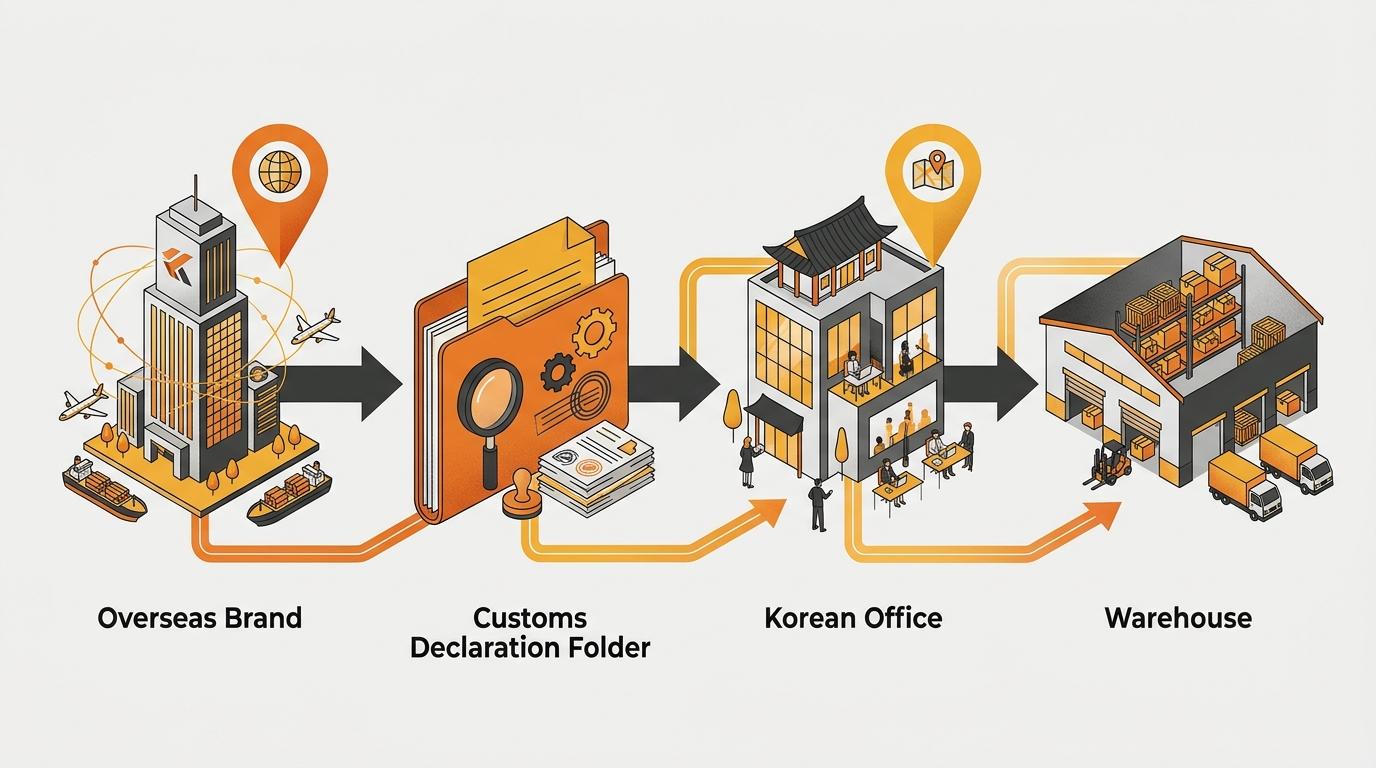
Four entry paths use four different address answers
The phrase “Korean sales agency” can describe several arrangements. The four paths below show why the address changes.
These are parallel choices, not steps that every brand must follow.
Direct uses Coupang Global Fulfillment (CGF), Coupang’s cross-border program. Stock stays in a CGF warehouse outside Korea. Coupang delivers orders to Korean customers in 3–5 days as personal imports. The foreign brand is the seller, holds its own cross-border seller account, and receives the sales money from Coupang. Kontactic does not import or own the goods. The brand’s seller-account and business details provide the address. Direct is only for brands shipping from the US, Europe, Japan, mainland China, or Hong Kong.
Spark Subscription uses Kontactic’s Korean entity as the importer and legal seller on Coupang. That entity holds the dedicated seller account, so its registered address appears in the local seller details. Confirm that the same entity is named as the payment recipient in the account and contract. The seller does not need its own Korean company, but it must be a Coupang-approved seller based in mainland China. The brand owner supplies the product and brand information but does not become the Korean seller merely because it owns the brand.
Spark Project is scoped per project. Kontactic may be the IoR and SoR, or the IoR only. If it is both, its Korean entity’s registered address is the seller address. If it is the IoR only, the separate SoR’s address is the customer-facing seller address. It can cover business-to-business sales to Korean trade buyers, an event, or a one-time import. A partner can use it when it cannot act as the importer. The project contract must name the account holder and payment recipient.
Blaze uses the brand’s own Korean entity. That entity sells and imports, holds the local seller account, and is named as the payment recipient. Its registered address appears as the seller address. Kontactic operates the entity as the brand’s agent. It does not access the entity’s bank accounts. It also does not sign contracts in the entity’s name.
For a side-by-side comparison, see How to Sell on Coupang as a Foreign Brand: Complete Guide. The address follows the chosen legal seller, not the agency’s marketing label.

Coupang setup changes whose name sits behind the address
A Korean office address does not by itself open a Coupang seller account. Coupang needs to know which seller owns the account and which goods that seller offers.
Under Direct, the foreign brand holds its own Coupang cross-border seller account. Kontactic may operate the store as the brand’s agent. It does not import or own the goods. It also does not receive the sales money. The seller details therefore belong to the foreign brand’s account. The 3–5 day CGF delivery period starts after stock reaches the CGF warehouse; it is not an onboarding promise.
Under Spark Subscription, the dedicated seller account is held by Kontactic’s Korean entity. That entity imports the stock and is the legal seller on Coupang. Its business name and registered address are the local seller details to confirm. The account and contract should also name the payment recipient.
Under Spark Project, marketplace selling must be included in the project scope. Ask which party issues the sale document, holds the account, receives customer payments, and whose address the buyer will see.
Under Blaze, the brand’s Korean entity owns the local seller relationship. It can use Coupang and other Korean channels under its own entity. Kontactic operates that entity as an agent, while the entity remains the seller and account holder. Its registered address remains the seller address.
Before Coupang onboarding, request a one-page role sheet with five checks:
- Seller and registered address. Name the legal seller and its registered business address. Use the same spelling on the seller account and buyer-facing details.
- Importer and customs declaration. Name the importer on the Korean customs declaration. If it differs from the seller, state both names.
- Account holder and payment recipient. Name the account owner and the party that receives customer payments. If the agency operates the account, say that it acts as the seller’s agent.
- Warehouse, return, and customer-service addresses. List the stock location, return address, and customer-service or delivery address separately.
- Responsibility for buyer issues. Name the party responsible for product questions, cancellations, returns, and exchanges.
Check the marketplace role and customs role separately. Who Is the Importer of Record When You Sell on Coupang? explains why the two names may differ.
The importer’s address does not prove product compliance
The importer’s address identifies the party named for the shipment, but it does not prove that a product complies with Korean rules. Check the product label and safety requirements before listing. The product review, package label, and marketplace listing must match. A Korean product detail page is more than translated copy, but it cannot replace required information on the product or package. A foreign brand can approve a polished Korean product page while its importer still lacks a required document. The agency’s office address fixes neither problem. For related label and safety checks, see Korean-Language Labeling: How Hangul Label Studio Works and KC Certification and Coupang: A Korean Entity?.
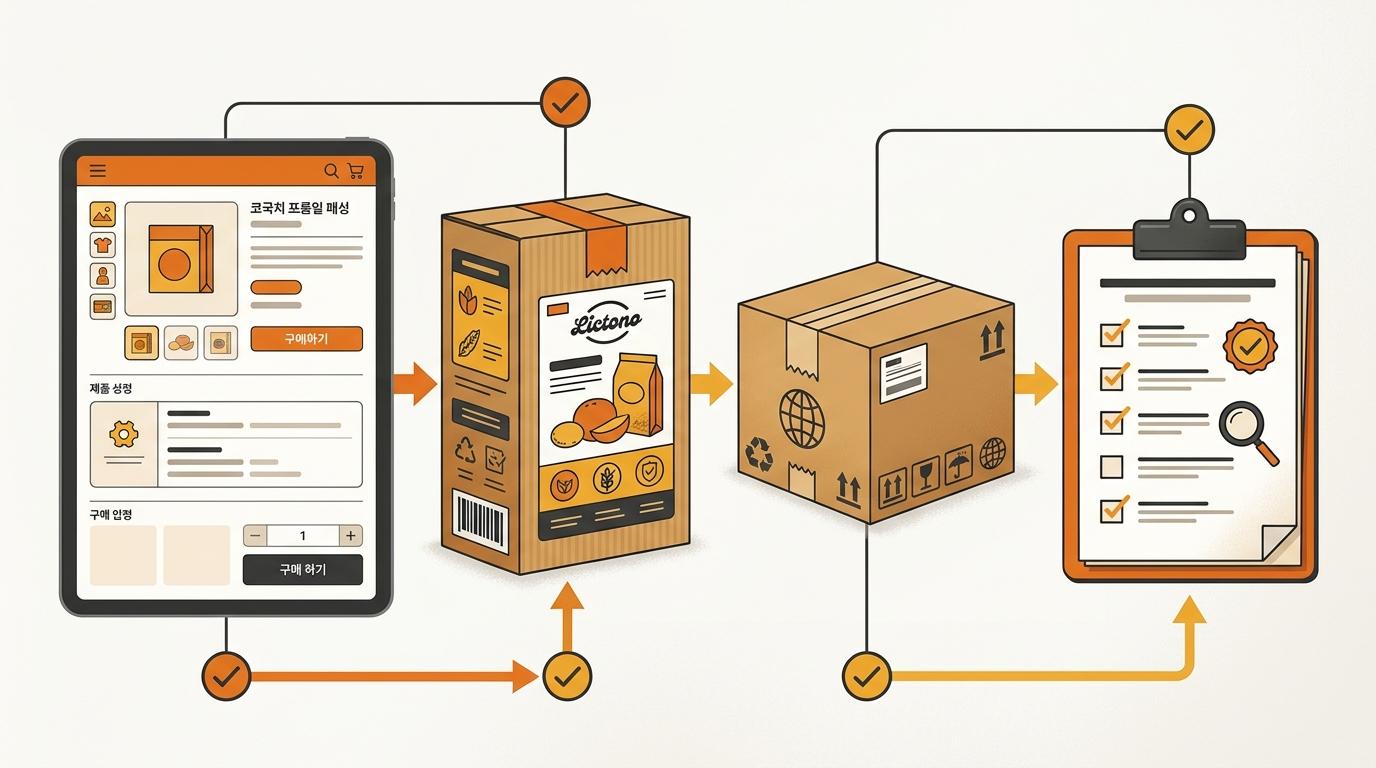
Put the roles in writing
Before signing, match the role sheet to official business details. For a Korean entity, check its legal name and registered business address on the Korean business registration certificate (사업자등록증). Match that name and address to the proposed seller account, sample seller disclosure, invoice, and customs plan. The contract should state the seller, importer, account holder, payment recipient, warehouse, return address, and customer-service address.
Compare the legal seller name and address across the service agreement, business registration details, marketplace account, sample seller disclosure, invoice, and customs plan. One unexplained mismatch is a reason to pause the shipment.
Need to map your Korea selling setup?
Share your product category, shipping origin, and intended sales channel. We can help you identify the seller, importer, account holder, and address that need to be agreed before launch.
About the author
Korean and global e-commerce operators with 15+ years of cross-border experience, led by CEO Isaac Lee — KOTRA-certified consultant and official lecturer for Seoul City and the Korea Customs Service. We run Korea market entry for overseas brands every day; this blog records what we learn in the field.
Meet the Kontactic team →Related Articles

How to Change a Korean Company's Office Address Step by Step
Changing a Korean company's registered office takes more than a lease. Follow approval, registry, tax, bank, Coupang, customs, and fulfillment updates in order.

Coupang Inbound: Can a Later Product Replace a Rejected Sample?
Yes—after a grouped Coupang inbound label submission is rejected, a product that qualifies later can appear among the replacement choices during correction.

Corporate Joint Certificate: Korean Portals That Need It
Find out when Korean companies need a corporate joint certificate for Hometax, UNI-PASS, Government24, and other tax and customs services before filing.