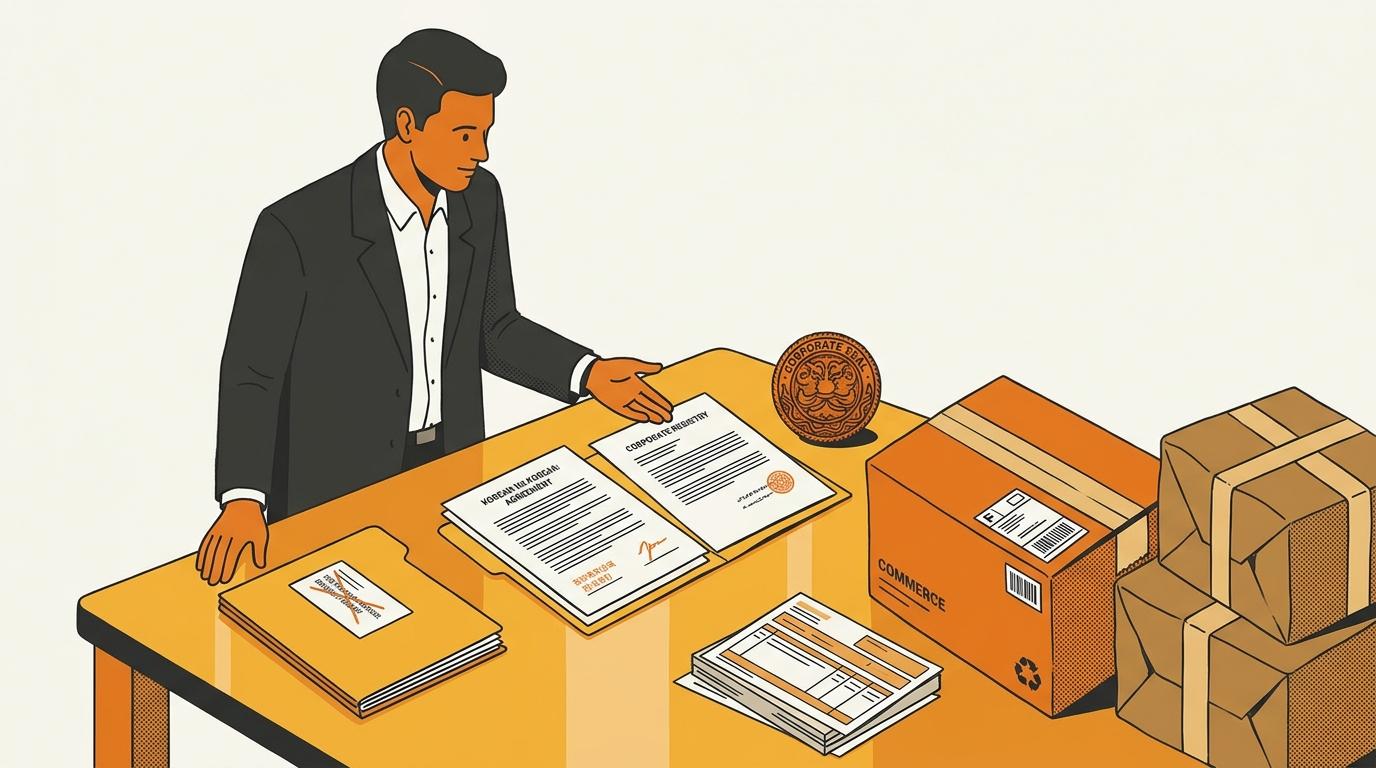
How to Change a Korean Company's Office Address Step by Step
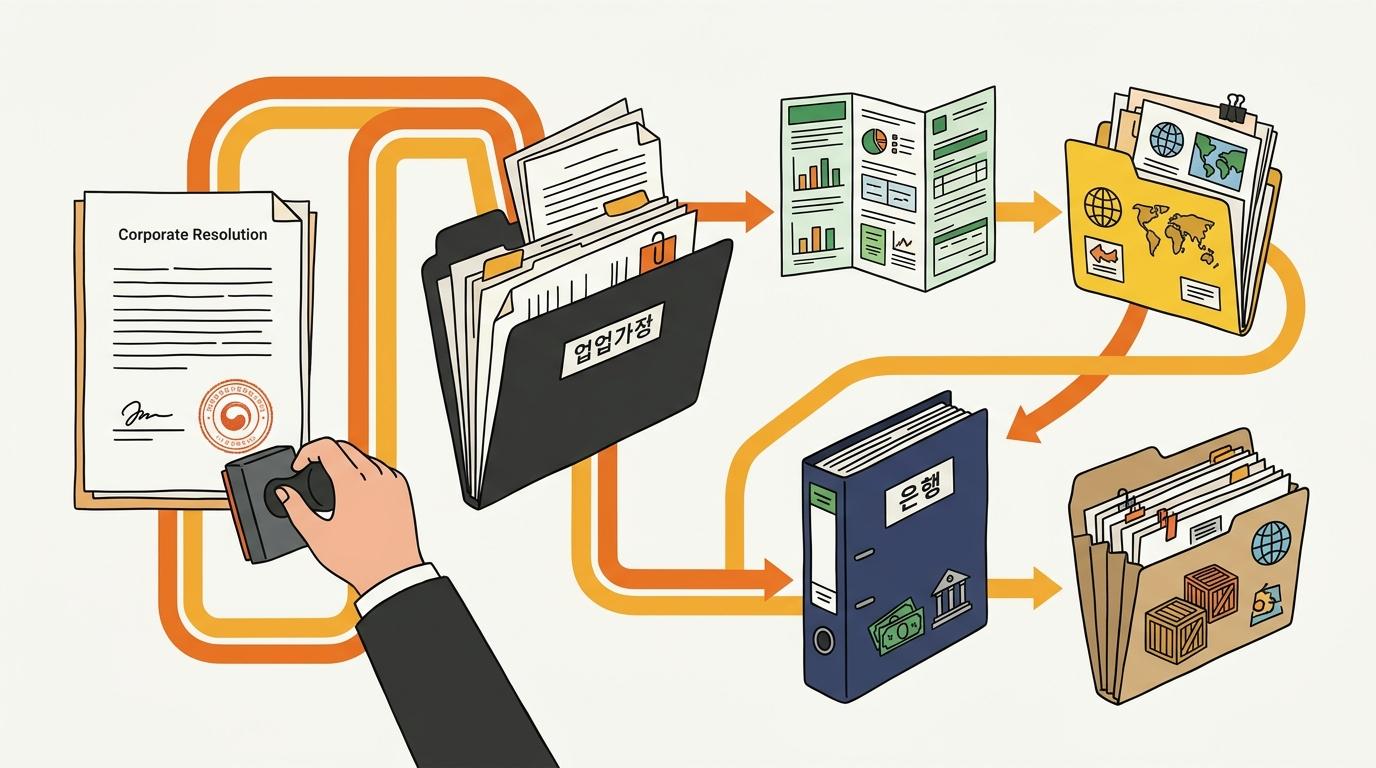
Change a Korean company's registered office in this order: approve the move, secure proof for the new office, file the principal-office change with the commercial registry, update the business registration and foreign-investment records, then update the bank, customs, Coupang, and fulfillment records. The lease alone does not change the legal address.
Start with the commercial registry extract. It proves the company's principal office and gives banks, tax offices, platforms, and customs partners the document they use to check the change. The registered office is not automatically the place where inventory sits.
A new office address does not change the legal company, Importer of Record, Seller of Record, or product model. It changes the company's registered location. Update every separate system that still stores the old address.
1. Confirm what kind of address move you have
Before signing a new lease, identify the current registered office and the full new address. Then answer one question: will the company stay under the same commercial registry jurisdiction?
A move within the same registry jurisdiction is usually simpler than a move to a different jurisdiction. A cross-jurisdiction move can involve the old and new registry offices, a different approval package, and an amendment to the articles of incorporation. The exact route also depends on your company type and articles.
Registry jurisdiction does not always match a broad city or province label. Ask which commercial registry office handles the current address and which office will handle the new one. Confirm this before the move date.
Check the new premises as well. Keep the lease or other proof that the company may use the address. The address should be written in the same Korean form on the lease, registry application, articles if amended, and later business-registration update. A different building number, floor, or unit can trigger a correction request.
A virtual office or shared office may fit one company but not another. The right choice depends on where the company works, what the tax office needs, what the bank checks, and whether the address will appear in import and sales records. Compare those points before you treat a low monthly address fee as the full answer; see Korean commercial lease vs virtual office: which fits?.
For example, a foreign owner may move a Korean limited company (유한회사) from one Seoul office to another. The company and corporate number stay the same, but the registered office changes. If the new office falls under another registry jurisdiction, do not reuse the simpler same-jurisdiction paperwork without checking it.
2. Approve the move and prepare the filing documents
A registered-office change starts with a company decision. It is not just a director sending an email to the landlord.
The approval method depends on the company type, the articles, and whether the move stays in the same jurisdiction. The required decision may be a board resolution, a member or shareholder resolution, or both. A Korean limited company should not automatically use a stock-company template. Check the articles and the registry's required form for that entity.
A typical filing packet may include:
- the application to register the principal-office change;
- the board, member, or shareholder resolution required for your company;
- amended articles of incorporation if the move changes information stated there;
- the new lease or other proof of the right to use the address;
- the company's corporate seal and corporate seal certificate;
- a power of attorney if an agent files for the company;
- representative and company identification documents requested by the registry; and
- the current commercial registry extract and business registration certificate for reference.
If the company has foreign-investment records, keep those documents ready too. The later foreign-investment update may use the new registry extract and business registration certificate.
The person authorized under the company's rules signs the registry application. The directors, members, or shareholders who approve the move sign or seal the required minutes or resolution. If a filing agent submits the packet, the company normally gives the agent a power of attorney and the corporate seal documents.
The foreign owner does not automatically have to appear at the Korean registry counter just because the owner lives abroad. An agent may be able to file the registry packet. That does not settle the bank's rule. A bank may require the representative or an approved signatory to attend for its own customer checks. Ask each institution separately instead of treating one filing method as a rule for all of them.
Before submission, compare the address character by character across the documents. Also check the company's name, corporate registration number, representative, effective move date, and unit number. How long Korean registry extracts and seal certificates take is useful when you are planning the document sequence.

3. File the principal-office change with the commercial registry
Submit the change to the competent commercial registry office after the company has approved it and the document set is complete. The correct office and filing route depend on the current and new addresses.
For a move within the same jurisdiction, the filing may be handled through the existing registry office. For a move across jurisdictions, confirm whether the old and new offices both need filings and whether the articles must be amended. Do not assume that a new lease proves the filing route.
Plan to file the registry change within two weeks of the effective office change. This is a filing deadline, not a promise that every related record will be updated within two weeks. Registry processing can vary with the filing type and corrections.
After the registry accepts the change, obtain an updated commercial registry extract. Read it before sending it to the tax office, bank, platform, or customs broker. Confirm all of the following:
- the new Korean address, including building and unit;
- the company name and corporate registration number;
- the representative or manager information; and
- the date and scope of the registered change.
If the extract is wrong, correct it before you create a second set of mismatched documents. Keep the previous extract for old contracts, invoices, and historical import files. The old document explains what the address was during an earlier period; it does not replace the new extract for current filings.
4. Update tax, foreign-investment, bank, and customs records
The registry update is the legal starting point. It is not the end of the address change.
Business registration and foreign investment
Use the updated registry extract to change the address on the company's business registration certificate through the tax office's available filing route. The registry address and business-registration address should match. Do not update only the tax record while leaving the commercial registry unchanged.
If a foreign parent funded the company through a foreign-investment report or registration, update that foreign-investment record through the channel used for the investment. A registry change does not automatically update every foreign-investment record. The exact filing path depends on how the investment was recorded.
Give the new documents to the company's tax accountant. The accountant may also need the address for tax invoices, statutory notices, and company records. Keep the effective date consistent across the registry, business registration, accounting file, and customer-facing documents.
Bank and payment records
Give the bank the updated registry extract and business registration certificate. Ask for its current corporate-address-change checklist. The bank may request seal documents, an authorized signatory, a branch visit, or additional customer information.
An office move does not add a signatory, remove a signatory, open a new account, or raise a transfer limit. Those are separate bank decisions. Do not promise your finance team that the address update will be accepted remotely or that the bank will change a payment limit on the same day.
Also check the address stored in payment and remittance paperwork. If staff use Hometax or customs portals, verify that the right corporate certificate and user permissions still work after the company records change. A corporate joint certificate can matter for Korean portals such as Hometax and UNI-PASS, so include digital access in the checklist.
Customs and the Importer of Record
Tell the customs broker and any import-service provider about the new legal address. The Importer of Record is the entity that files the import declaration and pays Korean import duty and import VAT. If the same Korean company remains the importer, the entity and importer role do not change, but the broker's company details, contact information, and supporting documents should match the new address.
If another company is the Importer of Record, do not replace that importer simply because the brand owner moved offices. Update the records that belong to the brand, and keep the importer name consistent with the customs declaration and product documents.
5. Update Coupang, Korean product pages, and fulfillment records
An office move can create a mismatch in the places where Korean customers and platform reviewers see your company details.
Coupang seller onboarding
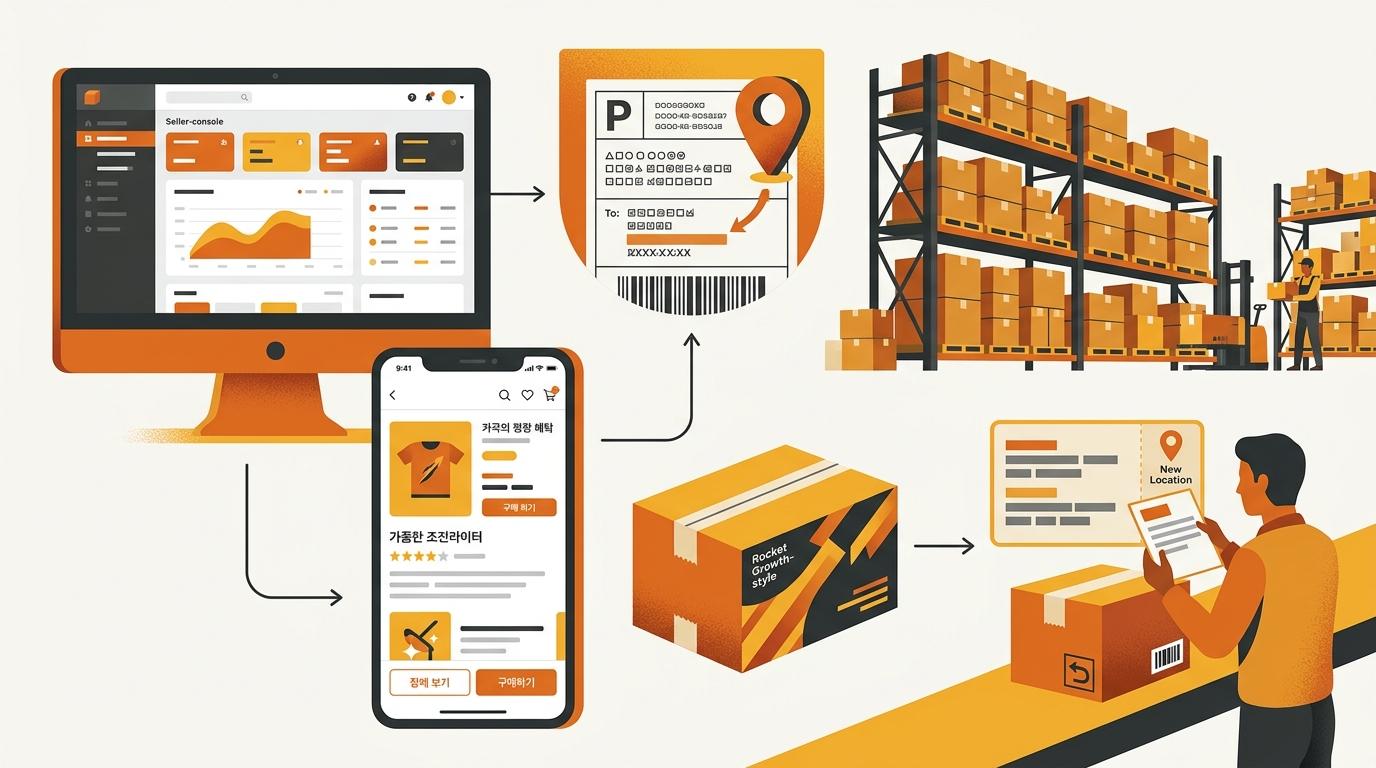
For local selling through a Korean entity, check the seller account in WING, Coupang's seller console. Review the legal seller name, corporate registration number, registered address, customer-service contact, and documents attached during seller onboarding. Upload the new business registration certificate or registry extract if Coupang requests it.
The company remains the same legal seller when only its office address changes. Treat the change as an account-information update unless Coupang tells you that another review is needed. Do not open a second seller account just to make the address match.
This is different from Direct. Direct is Coupang cross-border selling where the brand is the seller and exporter on its own cross-border seller account, and Korean consumers import through Coupang's process. If you use Direct, do not treat the Korean entity's registered office as the legal address of that cross-border seller account.
Korean PDPs, labels, and compliance files
PDP means product detail page. Review every Korean PDP that shows the seller address, customer-service contact, return instructions, or business information. Update the Korean text, not only the English master file. Also check product-information disclosure files, package inserts, invoices, and return messages.
If the old address appears on a Korean label or package, decide whether the next production run needs a new label. A Coupang page and a physical product label are separate places. Updating one does not update the other.
Check product compliance records at the same time. KC certification is not one safety-only check. It can involve electrical and household product safety, children's product safety, or radio and electromagnetic-compatibility conformity. If a KC, radio, food, cosmetic, or other product record names the company or shows its address, ask the responsible agency or testing body whether an administrative amendment is needed.
Do not assume that an address-only move requires new testing for every SKU. Do not assume the opposite either. The answer depends on the certificate holder, the product model, the label, and the regulator's record. Keep the old compliance file with the effective date and the updated file together.
Rocket Growth, inbound stock, and returns
Rocket Growth is Coupang's fulfillment service for storage, delivery, and returns inside Korea. Its warehouse address is not your registered office address.
If the company moves from Seoul to Busan, stock can still sit in a Rocket Growth warehouse in Seoul. The legal address changes, but the inventory location does not change automatically. Do not send stock to the new office unless the fulfillment plan requires it.
Update the seller and return contacts in WING and with the fulfillment provider. Check open inbound plans, carton labels, return instructions, outbound records, and the address printed on customer communications. A returned parcel may follow a different address from an inbound shipment. Rocket Growth: why outbound and return locations matter explains why those locations need separate checks.
For example, a customer may return a product after the office move while the parcel is still routed to the old address. The registry can be correct and the order can still fail if the return instruction was not changed. Close the operational gap before you announce the move to customers.
6. Plan the timeline and cost without using a false single number
There is no responsible one-price or one-day answer for every Korean office move. Two facts change the work: whether the new address stays in the same registry jurisdiction, and whether the articles of incorporation must be amended.
A practical sequence looks like this:
- Confirm the new premises and effective move date.
- Approve the move and prepare the seal, resolution, lease, and filing documents.
- File the commercial-registry change within the two-week filing window.
- Obtain the updated registry extract.
- Update the business registration and, if relevant, foreign-investment records.
- Update the bank, customs broker, tax accountant, WING account, Korean PDPs, labels, fulfillment, and return records.
The registry filing may be quick once the packet is correct. The full change takes longer because the bank, tax office, Coupang, customs broker, and fulfillment provider each have separate review steps. Set the customer-facing change date only after the new registry extract and business registration certificate are available.
Budget these cost items separately:
- rent, deposit, or virtual-office charges for the new premises;
- commercial-registry government charges;
- professional filing fees for the registry and tax-office work;
- amended articles, resolutions, seal certificates, and registry extracts;
- translation, notarization, courier, or document-issuance costs when required;
- foreign-investment update work, if the company has that status;
- bank, platform, or fulfillment administration fees, if charged; and
- new Korean labels, package inserts, PDP assets, or return materials.
A same-jurisdiction move with no articles amendment and no printed-label change is the simpler case. A cross-jurisdiction move with an articles amendment, foreign-investment records, and new packaging work has more separate cost points. Ask for an itemized quote that says what is included and what is not. Do not compare an address-change quote with a generic company-incorporation price.
7. Close the change with a written checklist
Mark the move complete only when these records agree:
- the commercial registry extract shows the new address;
- the business registration certificate matches it;
- foreign-investment records are updated where needed;
- the bank and accounting file use the new address;
- the customs broker and Importer of Record documents are correct;
- WING shows the right seller information;
- Korean PDPs, seller disclosures, labels, and return instructions are reviewed;
- KC and other product records are checked for address changes; and
- Rocket Growth inbound, warehouse contact, outbound, and return records are correct.
Keep the old address available for a short transition period if the landlord, bank, customs broker, or carrier may still send documents there. Forwarding mail does not replace changing the legal and customer-facing records.
Need to map a Korean office-address change?
Contact Kontactic to review the registry, tax, customs, Coupang, and fulfillment records that need to change for your Korean operation.
About the author
Korean and global e-commerce operators with 15+ years of cross-border experience, led by CEO Isaac Lee — KOTRA-certified consultant and official lecturer for Seoul City and the Korea Customs Service. We run Korea market entry for overseas brands every day; this blog records what we learn in the field.
Meet the Kontactic team →Related Articles
Coupang Inbound: Can a Later Product Replace a Rejected Sample?
Yes—after a grouped Coupang inbound label submission is rejected, a product that qualifies later can appear among the replacement choices during correction.

Corporate Joint Certificate: Korean Portals That Need It
Find out when Korean companies need a corporate joint certificate for Hometax, UNI-PASS, Government24, and other tax and customs services before filing.
Korean Business Phone: Can Kontactic Apply for You?
Kontactic keeps your Korean business phone request pending until the initial payment is confirmed, then sends the application to the telecom provider.