
Corporate Joint Certificate: Korean Portals That Need It
Not every Korean government portal requires a corporate joint certificate. A foreign-owned Korean company should plan for it first in National Tax Service Hometax and the Korea Customs Service’s UNI-PASS portal. Government24 and other public systems choose the login method for each service. The certificate is only one check. The portal also checks the company, the person using it, and the action they want to take.
The short answer: Hometax and UNI-PASS matter most
A corporate joint certificate (법인 공동인증서) is an electronic certificate issued for a company. It lets a company user log in, sign filings, and show that the company approved an action. Older English guides may call it a public certificate or accredited certificate.
There is no single Korean government login that covers every business task. Use this map as a starting point:
| Portal or system | When a company usually meets the certificate | What the system checks |
|---|---|---|
| National Tax Service Hometax | Tax filings, value-added tax (VAT), electronic tax invoices, and business tax certificates | Certificate status, business registration number, company account, and the user allowed to act |
| Customs UNI-PASS | Customs account work and import-related filings | Company or importer account, certificate validity, and the authority of the filer or agent |
| Government24 | A corporate service that asks for electronic signing or organization login | The authentication method allowed for that exact service; it is not the same on every page |
| Local tax, social insurance, and public procurement systems | Business filings, applications, or electronic signatures | The organization account, user role, and any extra check required for that task |
The Government24 sign-in guidance lists mobile ID, simple authentication, a joint certificate, a financial certificate, and private certificates among its possible methods. That list is an authentication menu, not a promise that every corporate service accepts every method.
Hometax and UNI-PASS are the two systems to plan for first when a Korean company will file tax documents or import goods. Other systems may accept a different login for viewing information but ask for a company certificate when you submit or sign something.

What a corporate joint certificate actually proves
The word “joint” does not mean that two people must sign together. It is the Korean name for a certificate shared across approved digital services. The company controls the certificate and its private key. A portal can then check whether the signature is valid and whether the certificate is still usable.
In practice, four separate checks can sit behind one login:
- Certificate status. The system checks the issuer, whether the certificate has expired or been revoked, and whether the electronic signature has been altered.
- Company match. The certificate must connect to the right company name and business registration number. A changed company name or a mistyped number can stop the login or filing.
- Human identity. The portal may also check the person using the certificate. This can involve a personal account, mobile verification, passport, or foreigner registration details, depending on the service.
- Permission for the action. A person may be allowed to view tax information but not submit a filing, change company details, or sign a customs document. The portal may ask for a registered user, representative check, or accepted power of attorney.
Korean identity verification (본인인증) usually means proving the person’s identity. A corporate joint certificate proves the company’s electronic signing identity. These checks are related, but they are not always the same.
An employee can hold the company’s certificate and still fail when submitting. The portal may reject the action because the employee is not an approved user. A foreign director may pass a personal identity check and still lack access to the company’s Hometax account.
A valid certificate does not give every employee permission to act for the company.
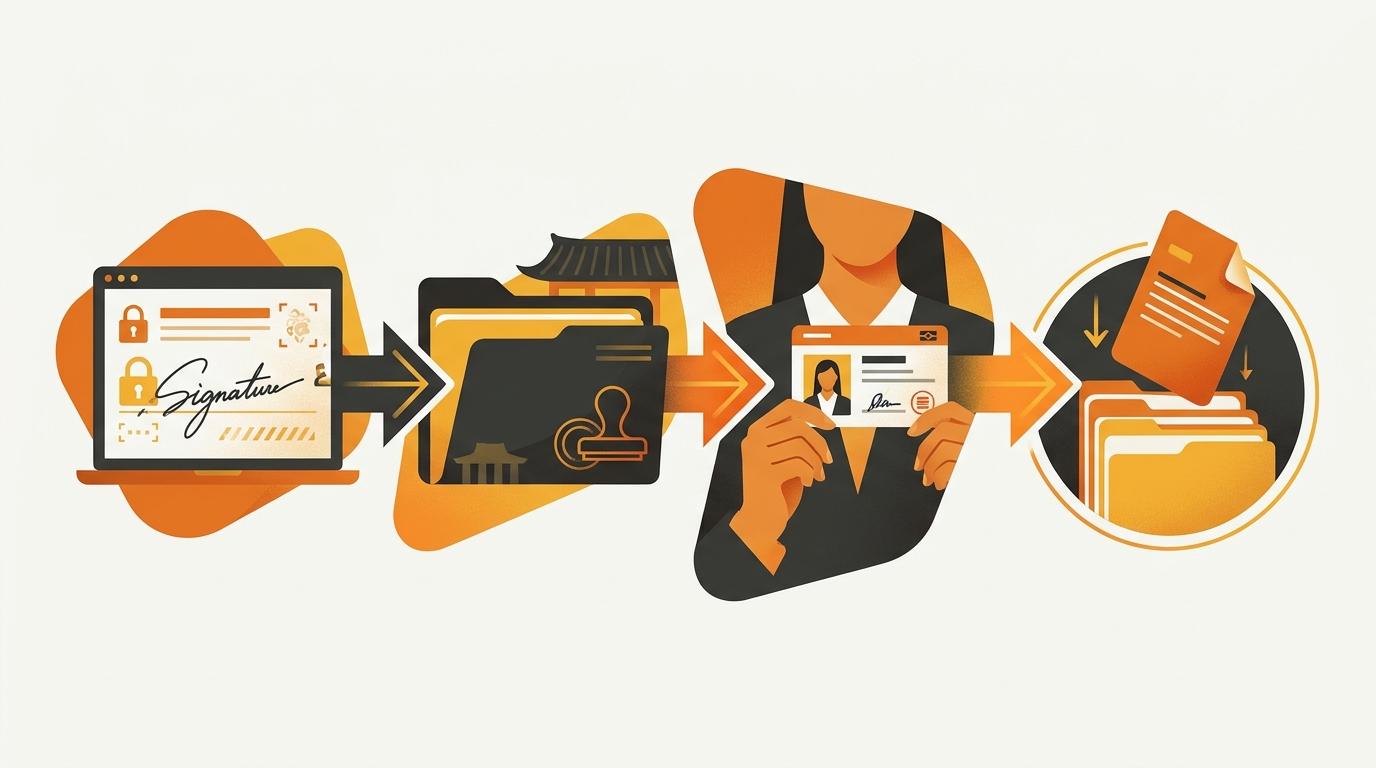
How the main portals check the person behind the certificate
Hometax checks the tax identity of the company
Hometax business access normally starts with the company’s business registration number and the certificate or another approved business login. The system then connects the action to the company account and the user allowed to file or sign.
A director who can enter Hometax as an individual has not necessarily entered the company’s tax account. This is a common source of confusion for foreign owners. Check the business number and the account type before troubleshooting the certificate itself.
A tax filing can also need a signature at the final step even when viewing information did not. Test the exact action you need, such as a VAT submission or tax certificate request, rather than testing only the home screen.
UNI-PASS checks the customs user and importer details
UNI-PASS may connect the certificate to a customs user account, the Korean company, and the party named in an import filing. The filing user can be a company employee, a customs broker, or another accepted agent. The portal login alone does not decide who is the Importer of Record (IoR), meaning the party legally named to import the goods.
That distinction matters. A customs broker can file through UNI-PASS without becoming the importer. Before goods move, confirm whose Korean business number and name will appear on the customs entry and which party carries the importer duties. The guide on whether a Korean customs broker can be your Importer of Record explains why filing access and importer status are separate. For a related business-registration question, see Korean Business Registration: Who Is the Importer?.
Government24 checks the service, not just the website
Government24 covers many public services, so its login choices change by service. A personal service may check a resident registration number or foreigner registration details. A company service may ask for organization information and an electronic signature.
A personal joint certificate, financial certificate, or simple authentication may work for one request. It may not work when a company must sign or submit a document. Read the authentication instruction on the exact service page before asking an employee to log in.
Other business portals add their own user rules
Local tax, social insurance, and public procurement systems can use company certificates for business actions. They may also ask the company administrator to register a user, approve an employee, or provide a separate organization number.
Do not assume that a certificate which works in Hometax will automatically work in every other portal. The certificate may be valid while the user account, company number, or requested role is missing from the second system.
Documents, signatories, timing, and cost
Prepare the company documents before requesting the certificate. The exact list comes from the certificate provider, bank, and portal, but these documents are commonly relevant:
- the Korean business registration certificate;
- a corporate registry extract showing the company and representative;
- the representative’s passport and foreigner registration card (외국인등록증), if applicable;
- a corporate seal certificate (법인인감증명서) or registered seal, if the issuer asks for it;
- bank or account details when the certificate is issued through a bank relationship; and
- a power of attorney and the agent’s identification if someone other than the representative will act.
The registered representative normally controls the company application. Some issuers allow an authorized employee or agent to complete the process. That person may need a power of attorney, an employee identity document, and proof that the company accepted the appointment.
A foreign representative may need to appear in person when a bank or certificate provider performs its own identity check. A power of attorney can help an agent act, but it does not guarantee that the provider will waive the representative’s appearance. The provider’s current rules decide this point.
There is no single government price or processing time for a corporate joint certificate. The portal is not selling one universal certificate. An accredited certificate provider or bank sets the issue and renewal fee, and secure-token, cloud-storage, replacement, translation, or agent costs may be separate.
If the company already has a matching bank or provider account, the issue step may fit into one session. A new foreign-owned company, a changed representative name, or a proxy application can trigger more document review. Ask the issuer for the current fee and processing time. Do not schedule a customs shipment or tax filing on the assumption that the certificate will be issued the same day.
What the certificate does not decide
A certificate authenticates a company action; it does not determine importer status or product approval. For the separate questions of Coupang seller onboarding and product approval, see How to Sell on Coupang as a Foreign Brand and KC Certification and Coupang: A Korean Entity?.
Request the certificate for the Korean entity that will file the tax or customs action, then register the approved user on that portal. Once registered, test the real action: a tax submission, a customs account action, or another company signature. A successful password check is not enough.
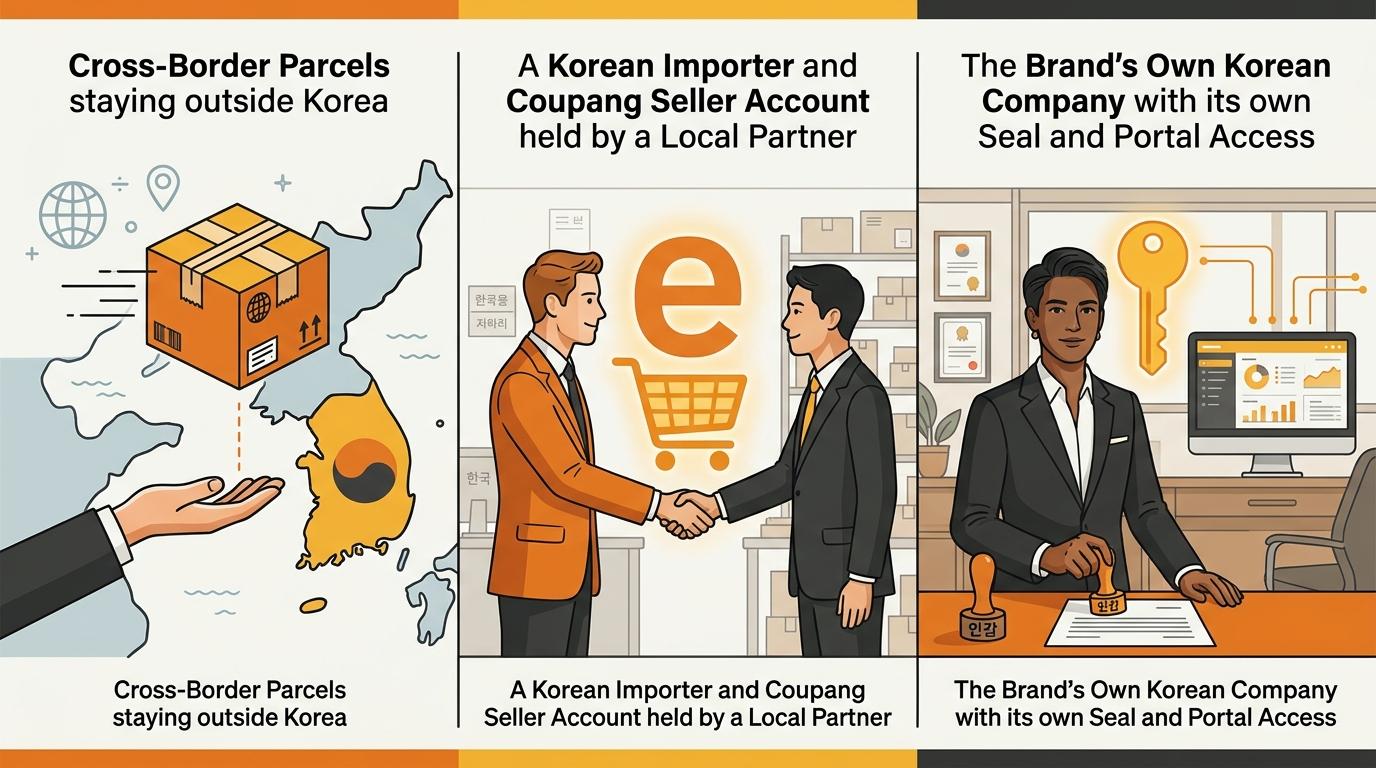
Map your Korean portal access before launch
Tell us which entity will file taxes, import goods, or sell on Coupang. Kontactic can help you separate certificate access from importer, seller, and product-compliance decisions.
About the author
Korean and global e-commerce operators with 15+ years of cross-border experience, led by CEO Isaac Lee — KOTRA-certified consultant and official lecturer for Seoul City and the Korea Customs Service. We run Korea market entry for overseas brands every day; this blog records what we learn in the field.
Meet the Kontactic team →Related Articles
Korean Business Phone: Can Kontactic Apply for You?
Kontactic keeps your Korean business phone request pending until the initial payment is confirmed, then sends the application to the telecom provider.

Can a Korean Corporate Bank Receive USD and Pay in KRW?
A Korean corporate bank can usually receive USD, convert it to KRW, and pay local bills. The bank checks the account, purpose, documents, fees, and limits.
What to List in Korean E-Commerce Incorporation Articles
What to list in Korean e-commerce articles of incorporation: online sales, importing, distribution, and fulfillment your company will actually perform.