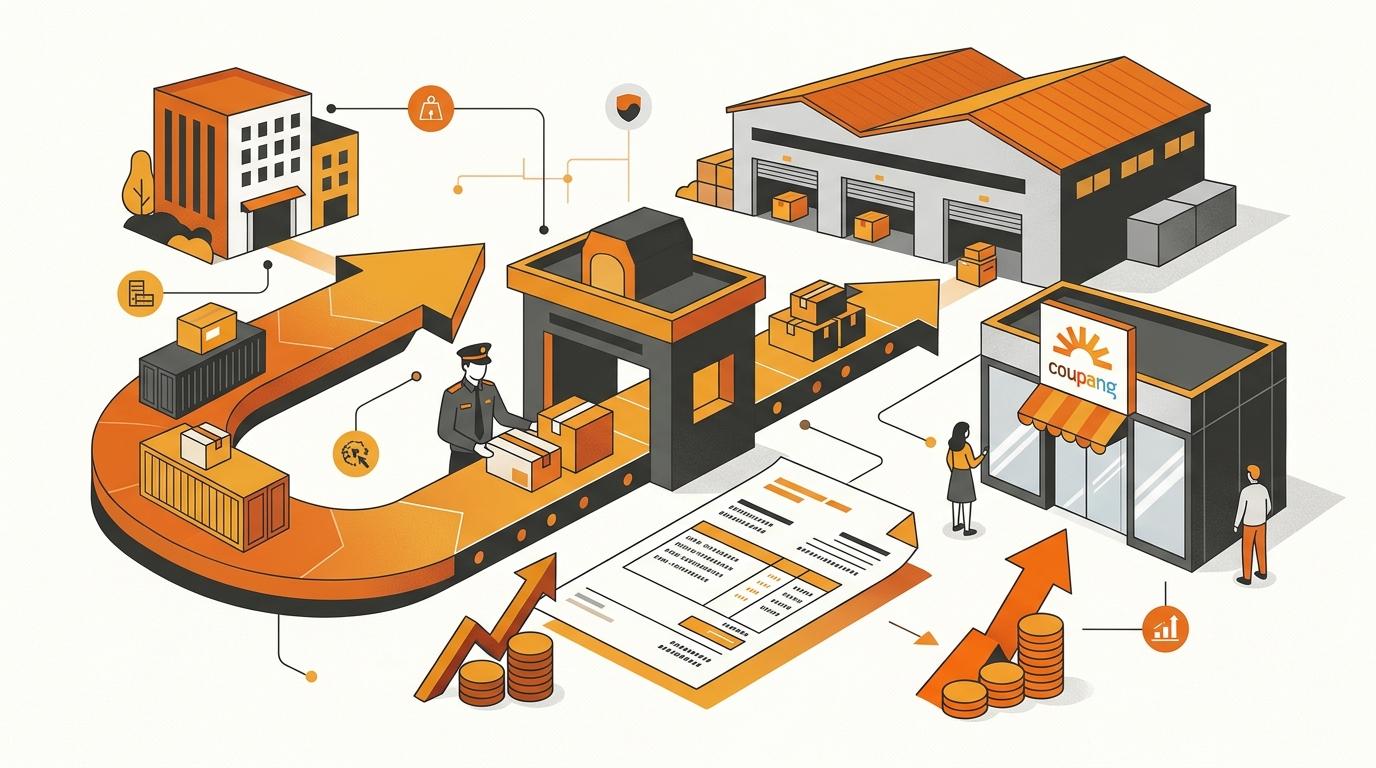
Korean Import Duty and VAT: Which Price Counts?
The customs value for goods sold by an overseas parent to a Korean company normally starts with the amount the Korean company pays or owes. Korean Customs normally does not use the later price a shopper sees on Coupang. It may add specific costs or use another permitted value; the accepted customs value then determines duty and import value-added tax (VAT).
What Korean Customs starts with
Customs calls the first valuation method the transaction value. It means the price actually paid or payable for goods sold for export to Korea, when that method fits the shipment. “Payable” matters. The Korean company does not have to wire the money before Customs can examine the agreed import price.
Keep these three amounts separate:
| Amount | Sale it describes | How it is used |
|---|---|---|
| Parent-to-Korean-company price | The overseas export sale | The normal starting point |
| Accepted customs value | The starting price after permitted additions, or another permitted value | The basis for duty and import VAT |
| Coupang shopper price | The later Korean retail sale | Normally not the starting point for import valuation |
The commercial invoice should identify the legal seller, the Korean buyer, the goods, the unit prices, the currency, and the freight terms. The import entry should identify the Korean company that is the importer. Those names should not conflict without a clear reason.
Here is a simple example. A US parent sells its insulated bottles to its Korean subsidiary at an internal wholesale price. The Korean subsidiary imports the bottles and later lists the same model on Coupang at a higher retail price. Customs normally examines the parent-to-subsidiary sale first. It does not simply replace that price with the Coupang listing.
Check the rule in the Korea Customs Service (KCS) customs guidance and the Customs Act (관세법) on law.go.kr. KCS explains how Customs applies it; the Act sets the legal rule.
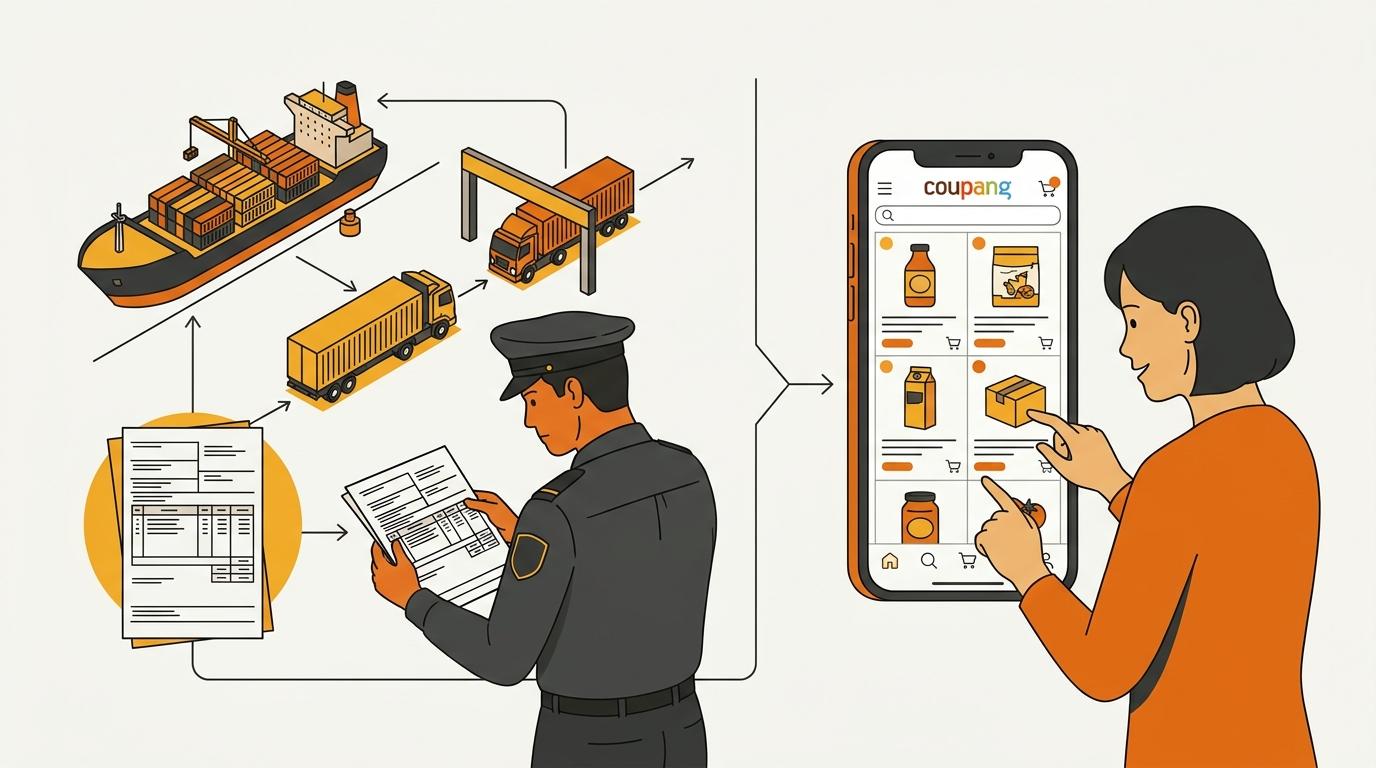
Why the Coupang price is usually not the customs price
The parent invoice and the Coupang listing describe two different sales.
The parent invoice describes an export sale to the Korean company. The Coupang listing describes a domestic retail sale to a Korean shopper after import. The retail price may be set to cover Korean retail margin, advertising, delivery, returns, and channel costs. It answers a different question: what should the shopper pay?
Using the Coupang price can make the import value look much higher than the price the Korean company agreed to pay its parent. That can increase the cash needed for duty and import VAT when the goods enter Korea. The Korean company may need to pay those import charges before the Coupang sale generates cash.
The opposite problem also matters. A parent and subsidiary cannot choose an unexplained token price simply because they share an owner. If the companies cannot explain an unusually low price, Customs may question it and use another permitted valuation method.
The invoice is not always final. Start with the real price paid or payable for the export sale. Then check whether Customs accepts it and whether any additions apply. A higher Coupang retail price does not automatically replace a lower wholesale import price. A lower internal price does not automatically pass without explanation.
What Customs can add to the invoice amount
The invoice amount is a starting point. If the following costs are not already included, Customs may add them when the rules cover them:
- Freight to the Korean entry point.
- Insurance to the Korean entry point.
- Packing costs.
- Certain materials or tools that the buyer supplied for production.
- Certain royalties or licence payments connected to the imported goods and tied to the sale.
These additions are not an automatic list to copy onto every shipment. Each cost must fit the customs valuation rule, and the invoice must not already include it. Do not add the same freight or insurance twice.
For example, if the parent’s invoice excludes freight and insurance to the Korean entry point, those amounts may need to be considered separately. If the invoice already includes them, Customs does not need the retail Coupang price to fill that gap.
This is why a customs budget should separate the parent’s product price from freight, insurance, and other specified additions. The same point appears in Korea Import Duty Is Assessed on CIF Value, Not Your Invoice, which explains why transport and insurance can change the amount used at the border.

How Customs checks a related-company price
The same owner does not automatically make an invoice unusable. It does mean Customs can ask whether the relationship changed the price.
A useful document set should answer four plain questions:
- What legal company sold the goods?
- What legal company bought them?
- What price, currency, payment terms, and freight terms did they agree?
- How did the two companies set that price?
The sales agreement, invoice, and payment terms should tell the same story. If the Korean company pays later, the agreement should show that payment timing. When payment occurs, it should match the agreed amount and terms. The price-setting explanation should describe the method the companies actually use, such as a written group wholesale schedule or another agreed pricing formula.
Return to the bottle example. The parent’s agreement sets a group wholesale price. The invoice uses the same unit price and currency. The Korean company pays under the stated terms. The Coupang price is higher because it is a later retail price. That gives Customs a clear explanation for the gap.
Now change the facts. The invoice shows a very low price. There is no sales agreement, no clear payment term, and no explanation for that price. The shared ownership does not make that low price safe. Customs may decide it cannot use the declared transaction value and use another permitted valuation method.
Related companies are not automatically rejected, and they are not automatically accepted. Keep the sales agreement, payment terms, and real price-setting explanation together before the shipment leaves.
What happens when there is no sale price?
A free sample, warranty replacement, gift, or other no-charge shipment needs a different explanation. There is no normal sale price for Customs to start with.
A zero invoice does not automatically make the goods duty-free. Unless a specific exemption applies, Customs uses another permitted way to set the customs value. That method may look at Korean selling prices or other permitted reference values, but it is not simply “use the Coupang listing.”
Consider a warranty replacement. The overseas parent sends one replacement unit to the Korean company without charging for the product. The paperwork should state that it is a replacement and identify the product. “No charge” describes the commercial arrangement. It does not answer the separate question of what value Customs should use at import.
The same applies to a promotional sample. Do not enter a zero amount and assume the border tax disappears. Check whether a specific exemption applies. If it does not, prepare for Customs to request a permitted alternative value.
No sale price does not mean no customs value. Marking a sample, gift, or replacement as “free” describes the charge between the companies; it does not create an automatic duty exemption.

After Customs accepts the amount: duty, VAT, and your shipment file
Once Customs accepts the customs value, the calculation follows the product and its origin. The steps are:
- Customs identifies the product’s Korean customs code, often called its HS code.
- Customs checks the product’s legal country of origin.
- Korea applies the duty rate for that code and origin to the accepted customs amount, if duty applies.
- Import VAT generally applies at the standard 10% rate to that amount plus duty and any other import taxes that apply.
The retail Coupang price does not choose the duty rate. The Korean customs code groups the product for duty, and legal origin can change the result. The country where the overseas parent is registered, or the country from which a warehouse ships, is not automatically the product’s legal country of origin.
Do not copy a US or EU customs code into Korean paperwork without checking the Korean classification. Korean HS Code: Can You Reuse US/EU HS Codes? Not Always explains why a foreign code is a starting point, not a guaranteed Korean code.
Make the shipment documents match
Compare the documents before shipping. The seller, buyer, importer, price, and freight terms should match. If they differ, explain why.
Use the sales agreement, commercial invoice, and import paperwork to check:
- The legal name of the overseas seller and the legal name of the Korean buyer.
- The company named as the Importer of Record (IoR), meaning the entity named on the import declaration and responsible for the import charges.
- The currency and unit prices.
- The freight and insurance terms, including whether those costs are already included.
- The payment terms and the explanation for the related-company price.
- The person or company that will answer Customs questions and pay the import charges if the seller and importer are different legal companies.
If you are still deciding which Korean entity should be named as importer, see Korean Importer of Record Needs a Business Registration Number.
Keep two calculations separate in your budget. The border calculation starts with the accepted customs value and adds duty and import VAT. The retail calculation starts with the Coupang price and subtracts the costs of selling in Korea. Mixing those two prices can hide how much cash the Korean company needs before the first sale.
Common questions about a parent-to-Korea import
Does shared ownership mean Customs must use the Coupang price?
No. Shared ownership can lead Customs to check whether the relationship changed the import price. It does not turn the later retail price into the normal starting point.
Is the invoice amount always the final customs value?
No. Customs may add freight, insurance, packing, buyer-supplied materials or tools, and certain royalties or licence payments when the rules cover them. If the related-company price is not accepted, Customs can use another permitted valuation method.
Can a free sample or replacement use a zero customs value?
Not automatically. A zero charge is not the same as a duty exemption, so Customs may require another permitted value unless a specific exemption applies.
Can Coupang’s price ever matter to Customs?
It may be considered as part of a permitted alternative method when there is no accepted sale price. Customs does not normally take the Coupang listing and use it directly when a real parent-to-Korean-company sale price exists.
Which official sources should a brand check?
Start with the Korea Customs Service’s customs valuation guidance and the Customs Act (관세법) on law.go.kr. The exact result depends on the sale documents, related-company facts, product code, origin, freight terms, and whether the shipment has a real sale price.
Check the import price before shipping
Need to review the seller, Korean importer, price, freight terms, and document set for a Korea shipment? Contact Kontactic before the goods leave.
About the author
Korean and global e-commerce operators with 15+ years of cross-border experience, led by CEO Isaac Lee — KOTRA-certified consultant and official lecturer for Seoul City and the Korea Customs Service. We run Korea market entry for overseas brands every day; this blog records what we learn in the field.
Meet the Kontactic team →Related Articles
What Happens to Unsold Stock After a Korea Pop-Up Store?
After a Korea pop-up, unsold stock must be sold locally, returned, re-exported, or disposed of at the brand’s cost. Choose the route before the event.
Can One Korean Importer Sell to Several Buyers?
Yes—one Korean importer can clear a shipment and resell it to several Korean buyers. Set the seller, tax invoice, labels, and compliance roles before it ships.

KC Testing in Korea: Can You Submit a Prototype?
Can you submit a prototype for KC testing in Korea? Use an early prototype for design checks, but formally test a matching production-intent sample for sale.