Why Korea Inspects Every Food Shipment, Not Just Your First
Korea inspects your food, beverage, or supplement on every shipment — not just the first. Under the Special Act on Imported Food Safety Control (수입식품안전관리 특별법), each arriving batch must file its own import declaration to the Ministry of Food and Drug Safety (MFDS / 식약처) before it can clear customs and be sold. A one-time product review does not exempt future lots, and any batch can still be pulled for laboratory testing regardless of how many times the same product cleared before.
This trips up Western brands because it is not how the US FDA model works. You register a facility and a product once, and then you ship. Korea separates two things that American brands treat as one: the initial review of what the product is, and the per-shipment declaration of what physically arrived. The first happens once. The second happens every single time a container lands.
The one-time registration you are thinking of is not the clearance
There is a real initial step — a foreign facility registration and a product/ingredient review that establishes your product is legally importable and correctly classified. That step matters, and it is a prerequisite. But it is not the event that releases cargo.
The event that releases cargo is the import declaration filed for that specific shipment. The importer of record files it with the MFDS through Korea's imported-food declaration system, and the declaration is tied to the lot number, quantity, manufacturing date, and shipping documents of the goods actually sitting at the port. The MFDS reviews that declaration — not your history — before granting the certificate that lets the product enter domestic distribution.
Import declaration (수입신고): the per-shipment filing to the MFDS that every imported food, food-contact, or health-functional-food lot must pass before customs release. It is separate from — and repeated well beyond — the one-time product registration.
So the mental model to correct is "register once, ship freely." The accurate model is "register once, then declare and clear each shipment on its own merits." If you are still mapping the broader registration landscape, our explainer on what foreign brands actually need to register to import food and hygiene products into Korea covers the initial-review side that sits upstream of this per-shipment step.
Inspection is tiered: documents, sensory, or full lab testing
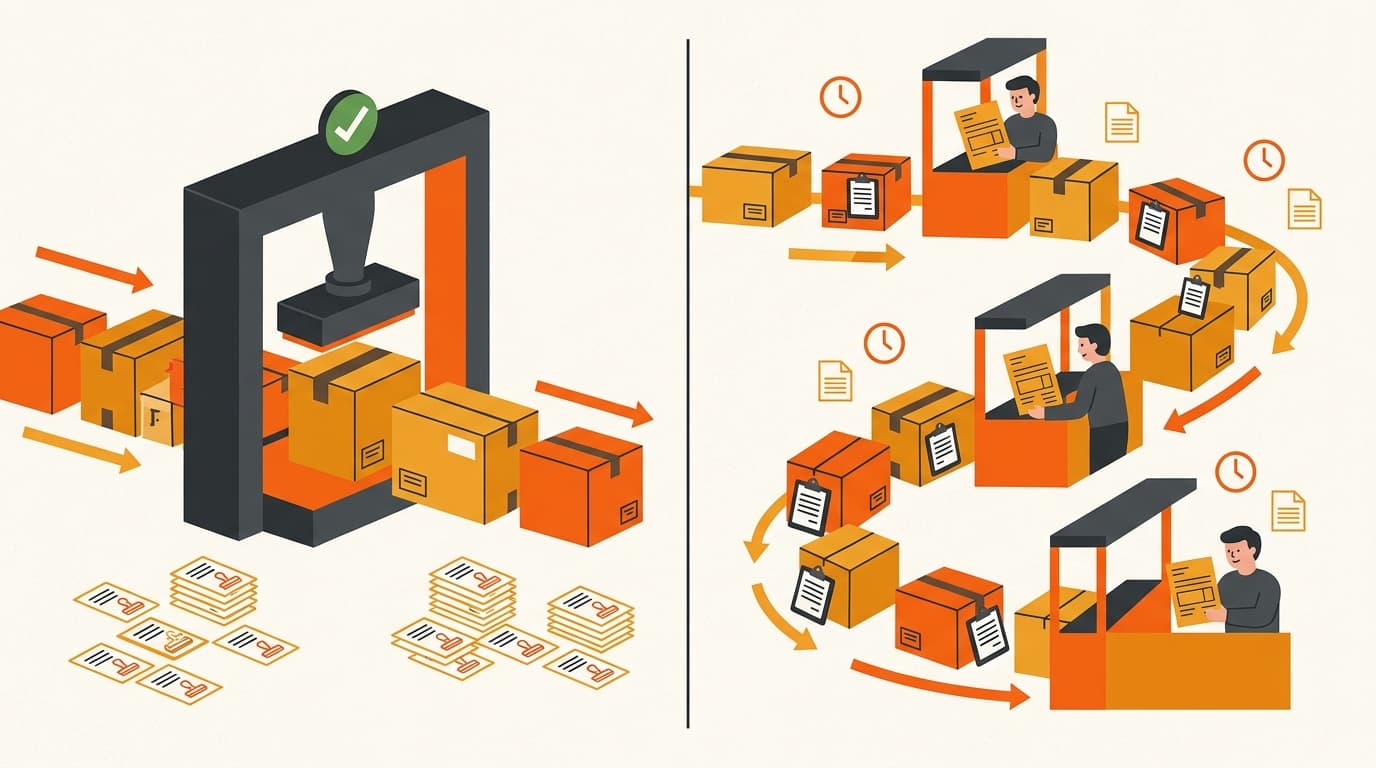
Not every declaration gets the same scrutiny. The MFDS clears shipments through one of several inspection tiers, and it decides the tier based on product risk, the item's import history, and randomized sampling.
- Document inspection — the declaration is cleared on paperwork alone. Manufacturing records, ingredient documentation, and prior clearance history are reviewed without physically opening the goods. This is the fastest path and the one most routine, low-risk repeat imports follow.
- Sensory / visual inspection — an inspector physically examines the goods: appearance, smell, packaging integrity, labeling, and condition on arrival. No lab work, but the cargo is opened and checked.
- Laboratory inspection — a sample is drawn and sent for testing against Korean standards: residues, heavy metals, microbial counts, additive levels, and category-specific parameters. This is the tier that holds a batch the longest, because the lot cannot be sold until results clear.
The important point for forecasting: you do not control which tier you land in. Even a product that has cleared on documents ten times running can be pulled into laboratory testing on the eleventh through randomized sampling. The tier is assigned per declaration, not locked in by track record.
When you model replenishment lead time, do not budget for the best-case document-only path. Budget for the possibility that any given batch gets pulled for lab testing — because you cannot predict which one will.

Why prior clearance never exempts a new batch
Laboratory testing checks the physical lot in front of the inspector, not the abstract product. That is the whole reason prior clearance does not carry forward.
Residue levels, microbial contamination, and additive concentrations are properties of a specific production run — a specific harvest, a specific batch of raw material, a specific line on a specific day. A lot that passed last quarter says nothing definitive about the lot that arrived this week. Korean clearance treats conformity as something proven per shipment, not certified once and assumed thereafter. This is a deliberate feature of the regime, not friction the MFDS forgot to remove.
There is also an escalation mechanism you should plan around. If a product — or its country of origin or manufacturing site — has a prior inspection failure, subsequent shipments can be placed under a reinforced inspection (정밀검사 강화) status for a period, meaning heightened or mandatory laboratory testing on a run of following imports. One failed batch does not just cost you that batch; it raises the inspection burden on the shipments behind it until the reinforced period lapses. Your import history is an asset, and a single bad lot spends it down.
“Korean clearance treats conformity as something proven per shipment, not certified once and assumed thereafter.”
Kontactic — Commerce Trends
What a held or failed batch does to your timeline and cash
A batch in laboratory testing is not sellable inventory. That is the operational reality that reshapes your launch and replenishment planning.
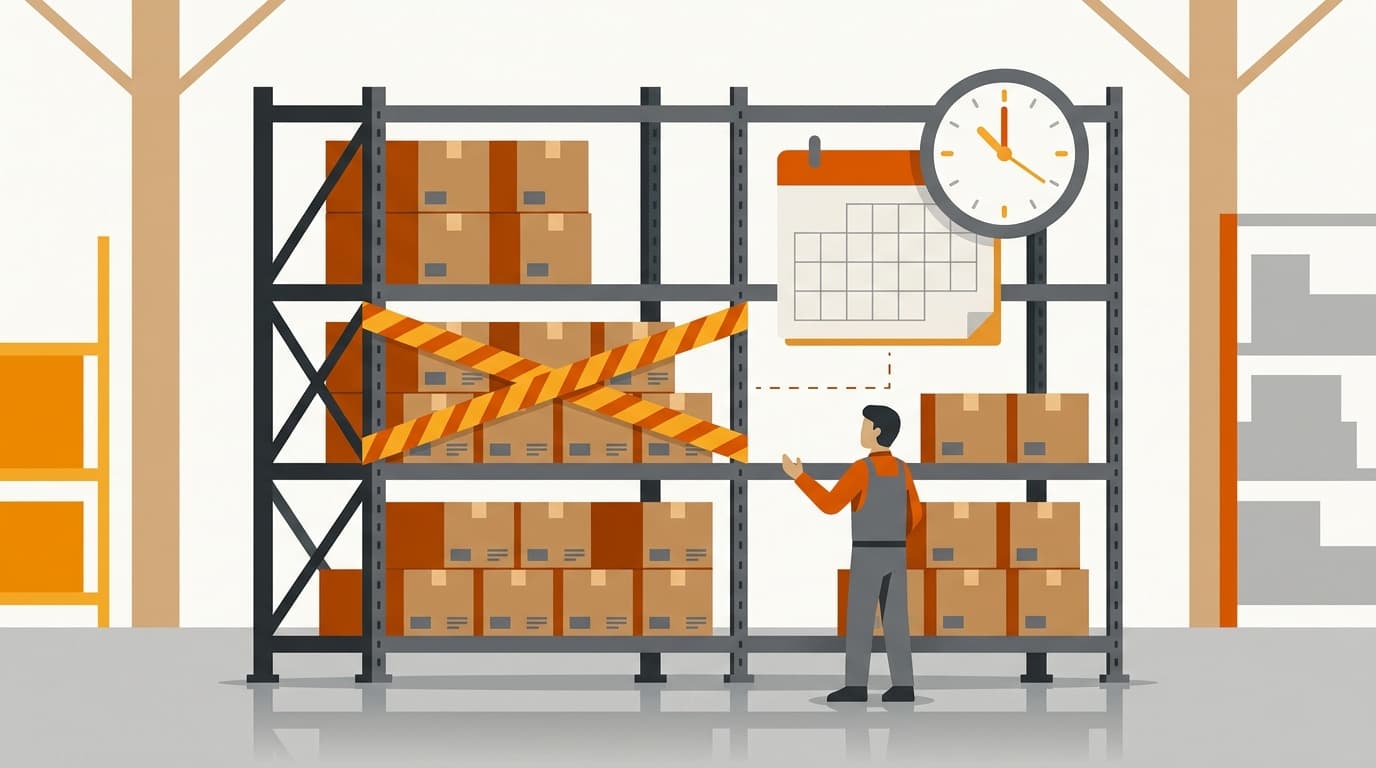
Plan for inspection lead time in every cycle, not just the first import. If a lot is pulled for lab testing, it sits — legally undistributable — until results clear. On a platform like Coupang, where you are managing Rocket Growth stock and cannot let a hero SKU go out of stock, that hold translates directly into lost buy-box time and ranking decay. The mitigation is unglamorous: hold safety stock sized to cover a testing hold, and stagger inbound so a single detained lot does not empty your available quantity.
Then there is the worst case. A non-conforming lot can be returned, re-exported, or destroyed — at the importer's cost. This is not a paperwork correction you resubmit; it is inventory and cash walking out the door. A batch that fails on a residue level or an unapproved additive does not get a second chance at the same port; it gets disposed of, and you absorb the landed cost, the freight, and the disposal fee.
Treat a failed inspection as a real inventory and cash-flow event, not an administrative hiccup. The financial exposure is the full landed cost of the lot plus disposal or re-export charges — and it lands on whoever filed the declaration.
Why this responsibility lands on the importer of record
Every import declaration is filed by, and legally attributed to, the importer of record — the Korea-side entity accountable to the MFDS and the Korea Customs Service (관세청) for that shipment's conformity. This is the structural reason your overseas standards alone do not govern Korean clearance.
Your US or EU compliance file is evidence, but the entity signing the Korean declaration is the one that carries responsibility if the lot fails, and the one that bears the cost of a return or destruction. That is why the question of who is the importer of record is not administrative trivia — it decides who absorbs a failed-batch loss and who is on the hook for reinforced inspection going forward. We cover that boundary in detail in who the importer of record is when you sell on Coupang.
Common questions
Does clearing my product once mean future shipments skip inspection? No. The initial product review establishes that your product is importable; it does not clear future lots. Each shipment files its own import declaration and is inspected on its own merits.
Can a product that always cleared on documents suddenly get lab-tested? Yes. The MFDS uses randomized sampling in addition to risk- and history-based selection, so any batch can be pulled into laboratory testing regardless of prior clearances.
What is reinforced inspection? When a product, country, or manufacturer has a prior failure, following shipments can face heightened or mandatory lab testing for a period. One failed batch raises the inspection burden on subsequent imports until that period ends.
Who verifies the exact rules for my product? The governing law is the Special Act on Imported Food Safety Control, available on Korea's official legislation portal (law.go.kr), and the MFDS (식약처) publishes the import-food declaration and inspection procedures. Customs release itself is administered with the Korea Customs Service. Confirm your product's specific standards against those primary sources.
How much safety stock should I hold? There is no universal number — it depends on your reorder cadence and how tight your Coupang stock runs. The principle holds regardless: size it so a single lab-tested or detained lot cannot take your best SKU out of stock.
Planning food or supplement imports into Korea?
Talk to Kontactic about sequencing MFDS declarations, inspection lead time, and safety stock so a held batch never empties your Coupang shelf.
About the author
Korean and global e-commerce operators with 15+ years of cross-border experience, led by CEO Isaac Lee — KOTRA-certified consultant and official lecturer for Seoul City and the Korea Customs Service. We run Korea market entry for overseas brands every day; this blog records what we learn in the field.
Meet the Kontactic team →Related Articles
Can Coupang Buyers Pay Two Charges With Free Shipping?
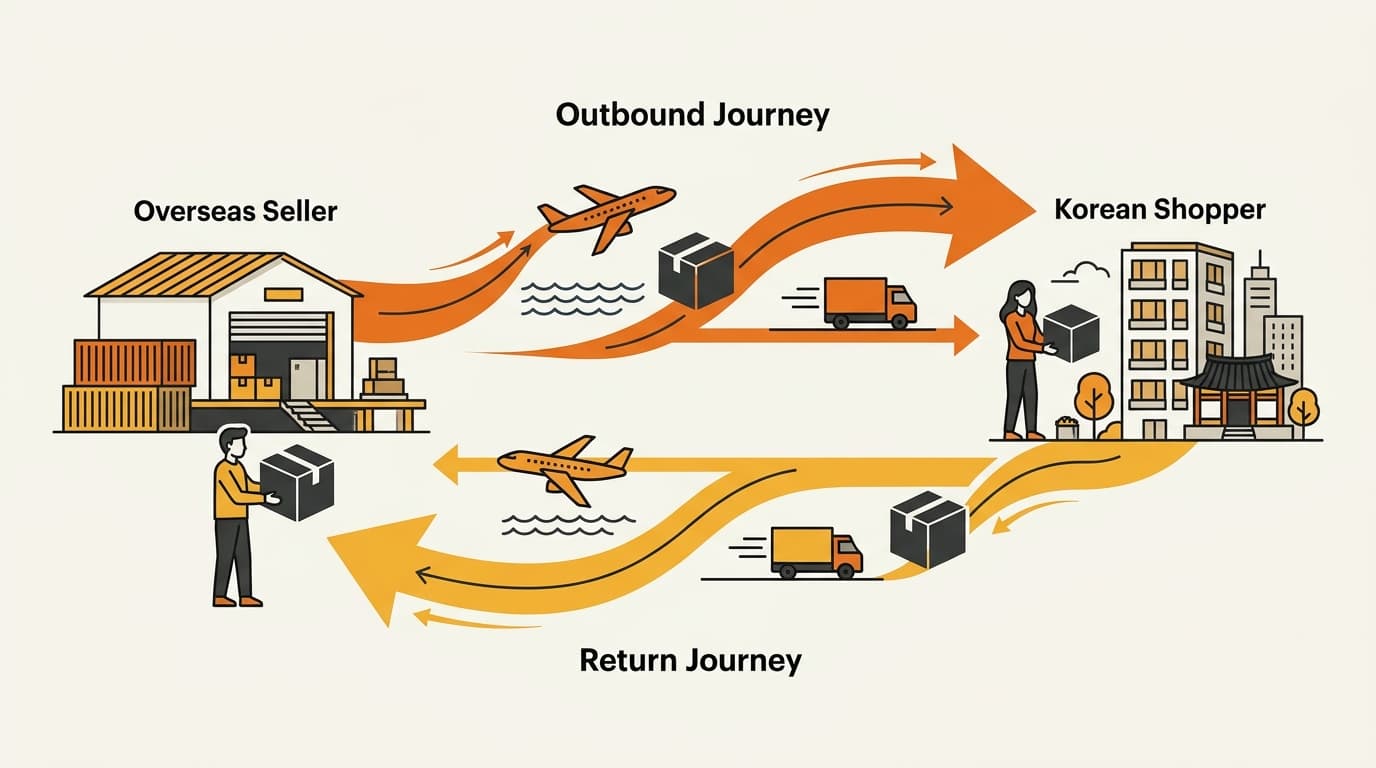
On Coupang, free shipping can still leave the buyer paying two return charges: the original delivery cost and the cost of sending the parcel back to the seller.
Coupang Product IDs: One ID Cannot Cover Every Variant
One Coupang product ID cannot cover every ERP variant; keep your brand SKU as the main key and map listing, option, edit, and order values to each SKU.

Coupang Rocket Growth Stock: Can an ERP Set It via API?
An ERP cannot set Coupang Rocket Growth stock through the Open API; replenishment starts when Coupang physically receives a new inbound shipment of stock.