Selling Grills in Korea: Three Required Certifications
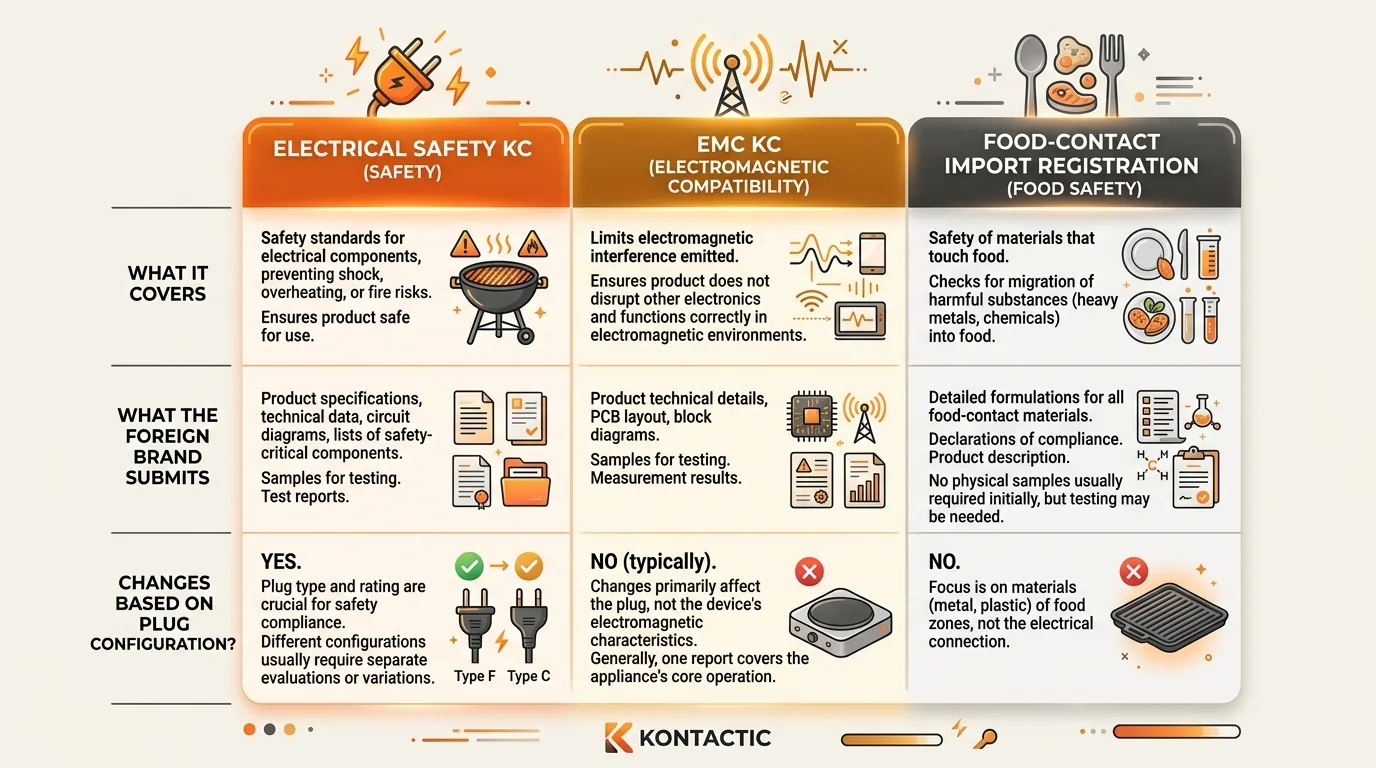
A cooking grill sold locally in Korea typically needs three separate certifications before it can clear customs and list on Coupang: electrical safety KC (전기용품 안전관리), EMC KC, and food-contact import registration with Korean labeling. The exact scope of the electrical certification depends on whether the grill has an integrated plug or uses a detachable adapter. All three apply together only when you go local — cross-border orders do not trigger this stack.
This post walks through what each regime covers, how the plug configuration changes the scope, and why brands usually discover the full list only after they ask.
Why a grill is three regulatory products, not one
A consumer cooking grill looks like a single SKU to the brand that makes it. Korean regulators look at it differently. The device is simultaneously an electrical appliance, a source of electromagnetic emissions, and an object that touches food. Each of those three characteristics is governed by a different agency and a different certification process.
Most founders arrive with the right instinct — they know some certification is needed — but they rarely know it is three parallel workstreams. In a recent intake call, a client asked us what KC certification their home grill needed. They had a basic idea that electronics require KC. They also knew food contact adds something. They did not know those are two separate regimes, or that EMC is a third.
KC certification (KC 인증) is not a single certificate. It is a family of category-specific mandatory certifications. For a food-contact cooking appliance, electrical safety KC and EMC KC are both required, and the food-contact regime is a separate track entirely.
For a broader primer on how KC certification interacts with Coupang and entity status, see our earlier piece on KC certification and Coupang.
Regime 1: Electrical safety KC — and why the plug matters
Electrical safety KC (전기용품 안전관리) covers the grill as an electrical appliance. The scope of what you need to certify depends on the physical configuration of the power path.
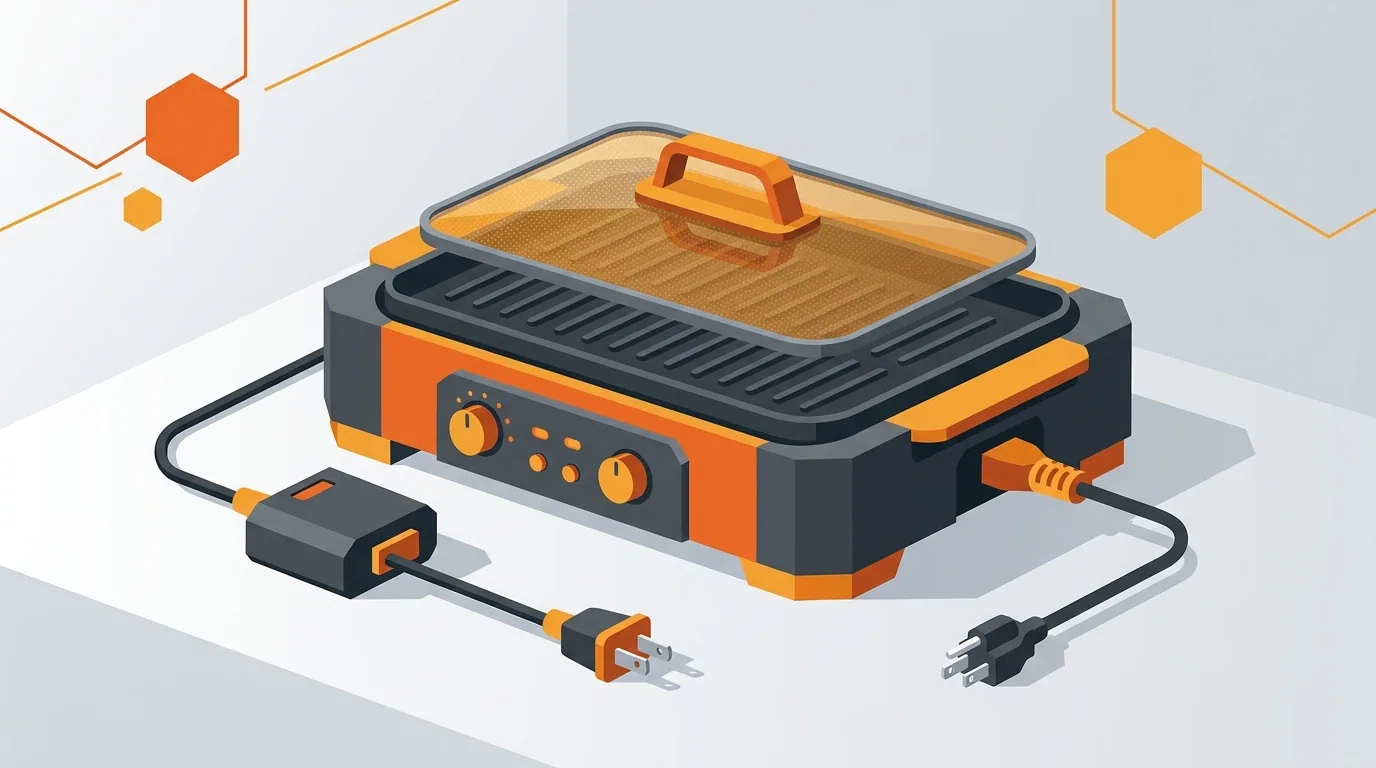
- Integrated plug. If the grill's power cord and plug are built into the grill as a single unit, one electrical safety KC certification covers the whole product. The grill itself is the certified item.
- External adapter. If the grill connects to the wall through a separate adapter — grill → adapter → wall socket — then electrical safety KC is required twice: once for the grill and once for the adapter. They are two distinct items under the regime, even if they are sold together in the same box.
This is the most common place where brands underestimate the workload. A product that ships with a detachable power brick is, for Korean purposes, two regulated articles. If you are sourcing the adapter from a third-party supplier, you need to know whether that supplier's adapter already carries a valid Korean electrical safety KC mark — and if it does not, you either certify it yourself or swap in one that is already certified.
Regime 2: EMC KC
EMC (electromagnetic compatibility) certification is a separate KC track governing electromagnetic emissions and susceptibility. It applies to the grill regardless of plug configuration — any powered electronic device destined for the Korean market falls under it.
EMC is sometimes where foreign brands can save the most time, because in certain cases an existing foreign EMC test report can be reused for the Korean Declaration of Conformity process. The short answer is that this depends on the test standards the foreign lab used and on the product category. We covered the mechanics of that specific question in when a foreign EMC report is enough for USB- and battery-powered devices. A mains-powered cooking grill is a different animal than a USB accessory, but the underlying principle — check whether your existing test data maps to the Korean requirement before you pay for a fresh test — still applies.
Regime 3: Food-contact import registration and labeling
Because the grill surface touches food directly, it is not just an appliance import. It is a food-contact import, and that pulls in a third regime entirely.
Three things change when a product is food-contact:
- Importer registration. The Importer of Record must be registered to import food-related products. A generic electronics importer registration is not sufficient. This is an attribute of the importer entity, not of the product.
- Korean food-contact labeling. The product packaging must carry Korean-language labeling consistent with food-related product requirements.
- Food-related import inspection. Each shipment goes through a specific food-related import inspection regime rather than the standard customs path.
If you are selling other food, food-contact, or hygiene items in Korea, the same importer-registration logic applies more broadly — we wrote about this in importing food and hygiene products into Korea.
When all three apply — and when they do not
The full three-regime stack is triggered by local selling. If you are selling cross-border — shipping from your home country directly to Korean consumers through Amazon Global, Shopify international, or a similar channel — the Korean import, KC, and food-contact regimes are not your compliance surface in the same way.
Cross-border is a light way to start. Local is where most Korean demand is captured. We have argued this at length in cross-border orders understate your Korea opportunity and laid out the operational choice in Rocket Growth vs. cross-border selling.
The practical decision rule for a food-contact electronic product looks like this:
- If you want to start light, sell cross-border. You do not need to spend on KC and food-contact registration yet, and you can move to local selling later if you choose.
- If you are ready to sell locally — because Korean buyers already order from you cross-border, or because you are committing to Korea from day one — the three-regime stack is the cost of going local, and going local is where the revenue multiple lives.
“If you're selling cross-border, you're basically testing out the market. If you're selling local, you're one of those sellers that has already proven demand in Korea.”
Isaac Lee — CEO, Kontactic
What a Western brand should do at intake
When a brand contacts us about a food-contact electronic product, we want to settle three questions before anyone discusses timelines or fees:
- Plug configuration. Integrated plug or external adapter? This single answer determines whether electrical safety KC is one certification or two.
- Existing EMC test data. What EMC test reports do you already hold, and under which standards? Usable reports can shorten the EMC track meaningfully.
- Cross-border or local. Do you want to start light with cross-border selling, or sell locally now? This determines whether the full local-compliance stack needs to start now.
We have written about why we do this sequencing work before any ad spend in operational readiness before ad spend.
Common questions
Is KC certification one certificate or several? Several. For a food-contact cooking appliance, you are looking at electrical safety KC and EMC KC as two separate KC tracks, plus the food-contact import regime on top. They are issued and maintained independently.
If my grill ships with a detachable adapter, do I really need to certify the adapter separately? Yes, for electrical safety KC purposes the adapter is its own regulated item. In some cases you can source a pre-certified adapter that already carries a valid Korean electrical safety KC mark and avoid certifying it yourself.
Does cross-border selling require any of this? No. Cross-border orders shipped directly from overseas to Korean consumers do not trigger the local KC or food-contact import regimes. The trade-off is that cross-border is friction-heavy for Korean buyers and almost always leaves substantial demand uncaptured.
Who can be the registered food importer? A Korean entity registered for food-related imports. That can be your own Korean limited company (유한회사), which we can run for you under Blaze, or Kontactic's entity if the category fits — through Spark Subscription for Coupang-approved sellers in mainland China, or a Spark Project for a defined B2B supply, event, or one-off import. The choice usually comes down to category, volume, and how much operational control you want.
Talk to us before you start testing
Food-contact electronics are the category where brands most often discover, late, that the compliance surface is larger than they assumed. The fix is earlier scoping, not more spend.
Planning to sell a food-contact appliance in Korea?
Tell us about your product and your plans for Korea. We will walk through the three regimes, what your existing test data covers, and whether cross-border or local selling fits you better.
About the author
Korean and global e-commerce operators with 15+ years of cross-border experience, led by CEO Isaac Lee — KOTRA-certified consultant and official lecturer for Seoul City and the Korea Customs Service. We run Korea market entry for overseas brands every day; this blog records what we learn in the field.
Meet the Kontactic team →Related Articles

Q1 2026 Coupang–Naver Shift: Your Channel Strategy
Coupang's Q1 2026 trust shock slowed growth, but Naver SmartStore captured real volume. Foreign brands should plan a two-channel model from day one in 2026.
Who Pays for What in Korea: Operating Costs Explained
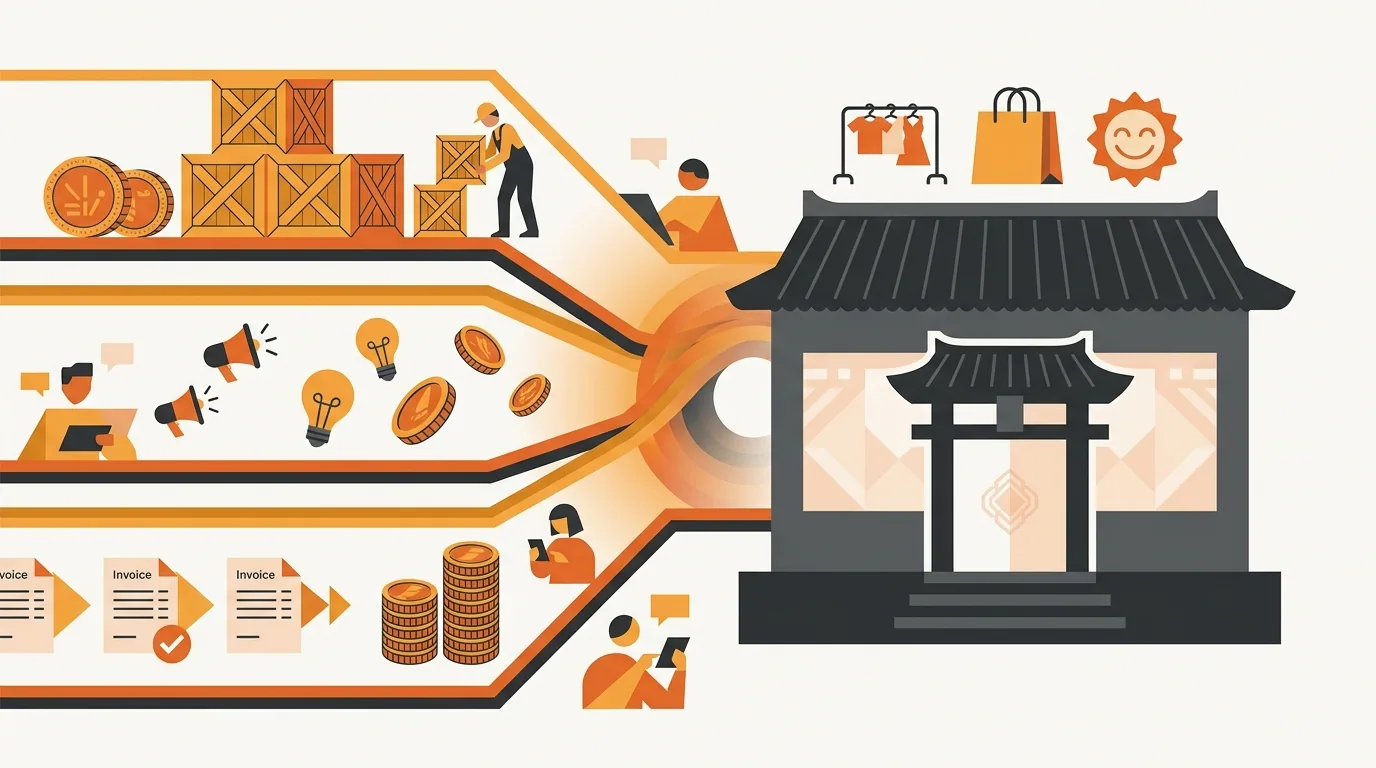
Inventory, ads, platform fees, VAT — every Korea entry model puts these costs on the client. Here is exactly how funding flows when our entity imports and sells for you (Spark) and when you own the Korean entity (Blaze).
Coupang Settlement Timelines: Monthly vs Weekly vs Fast
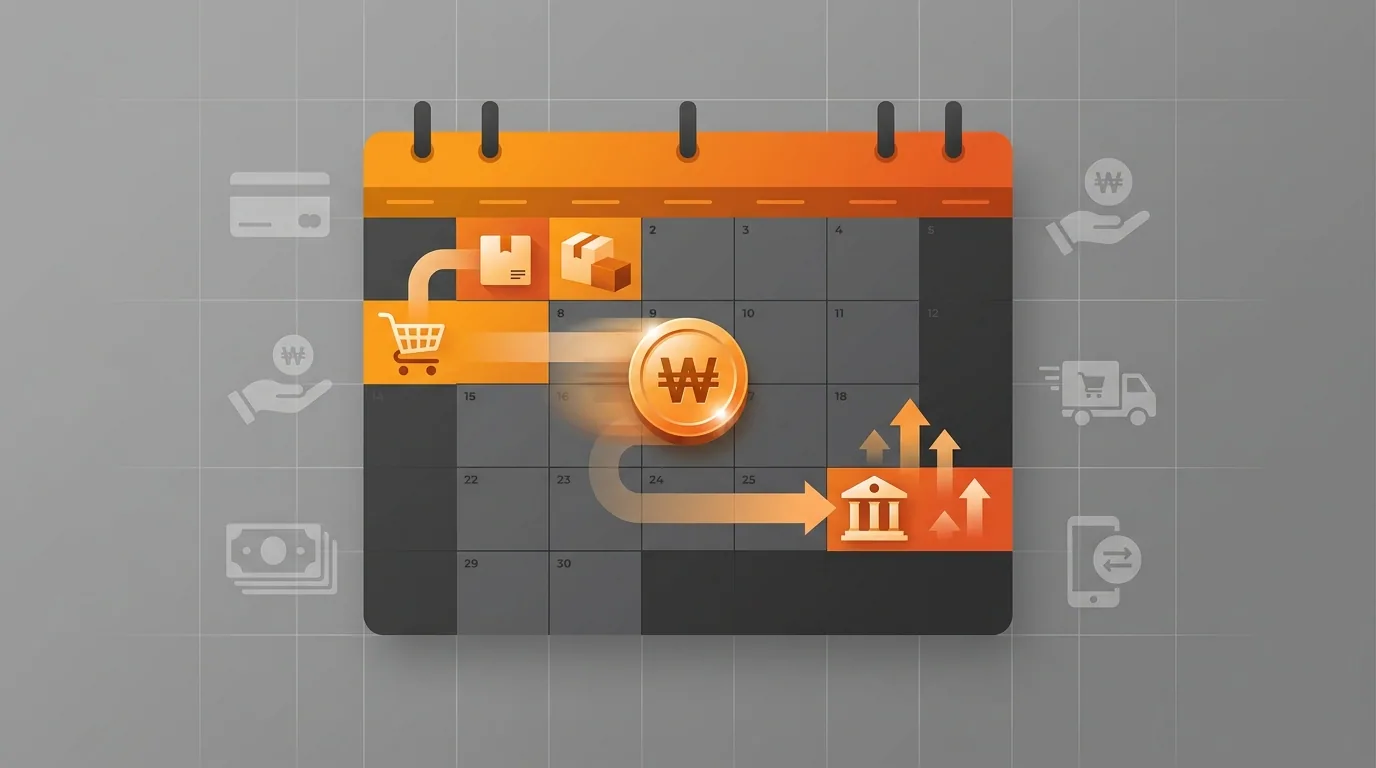
Coupang pays sellers on the 20th business day of the following month by default — close to 60 calendar days. Compare monthly, weekly, and fast settlement.