Coupang Product-Information Disclosure in Listings
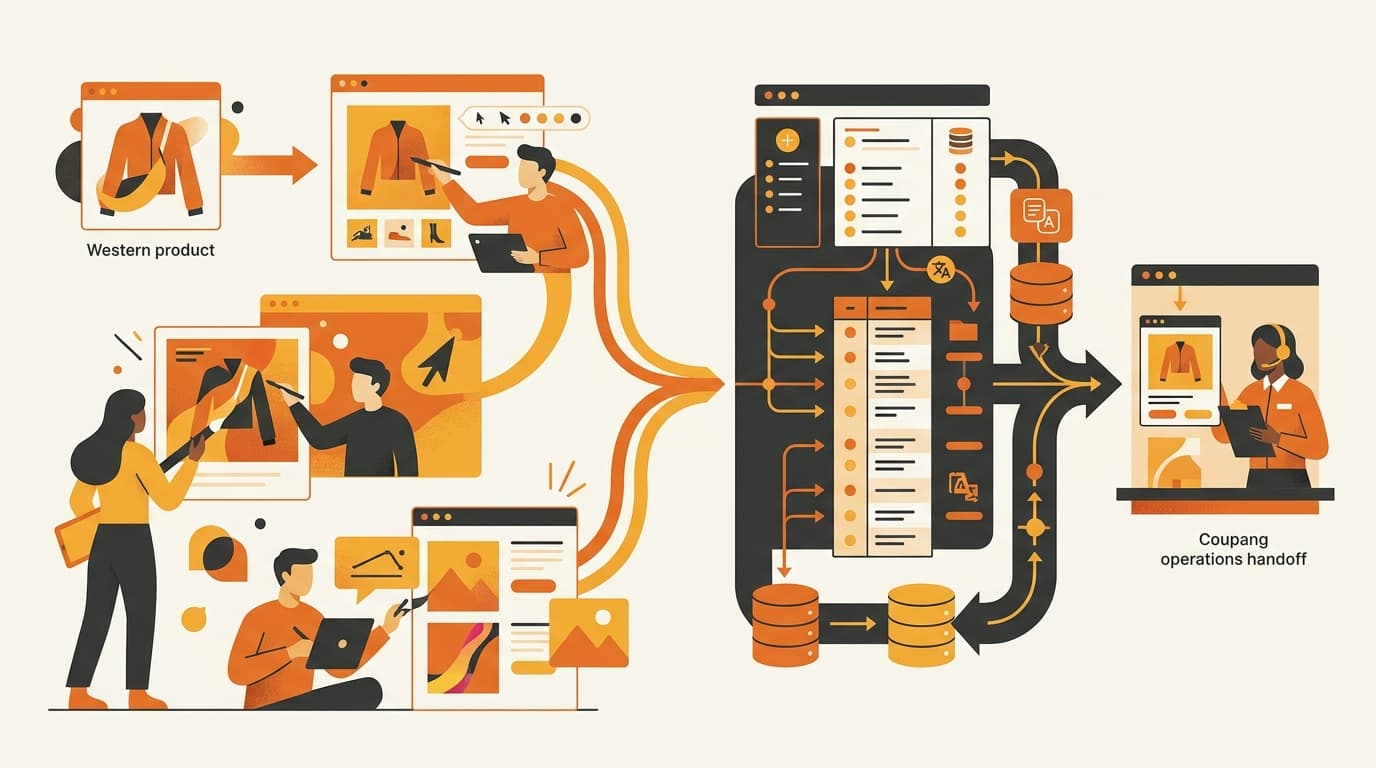
Kontactic builds Coupang’s product-information disclosure into the same Seller Center listing workflow that produces localized listing content and visual assets. The dedicated export keeps structured marketplace information with the handoff instead of adding it after the PDP is complete. It improves repeatability but does not replace Coupang review or product-specific legal judgment.
Product-information disclosure is the structured marketplace information attached to a product listing. It is separate from the product detail page (PDP), a physical Korean label, and KC certification.
A PDP is only one part of a Coupang listing
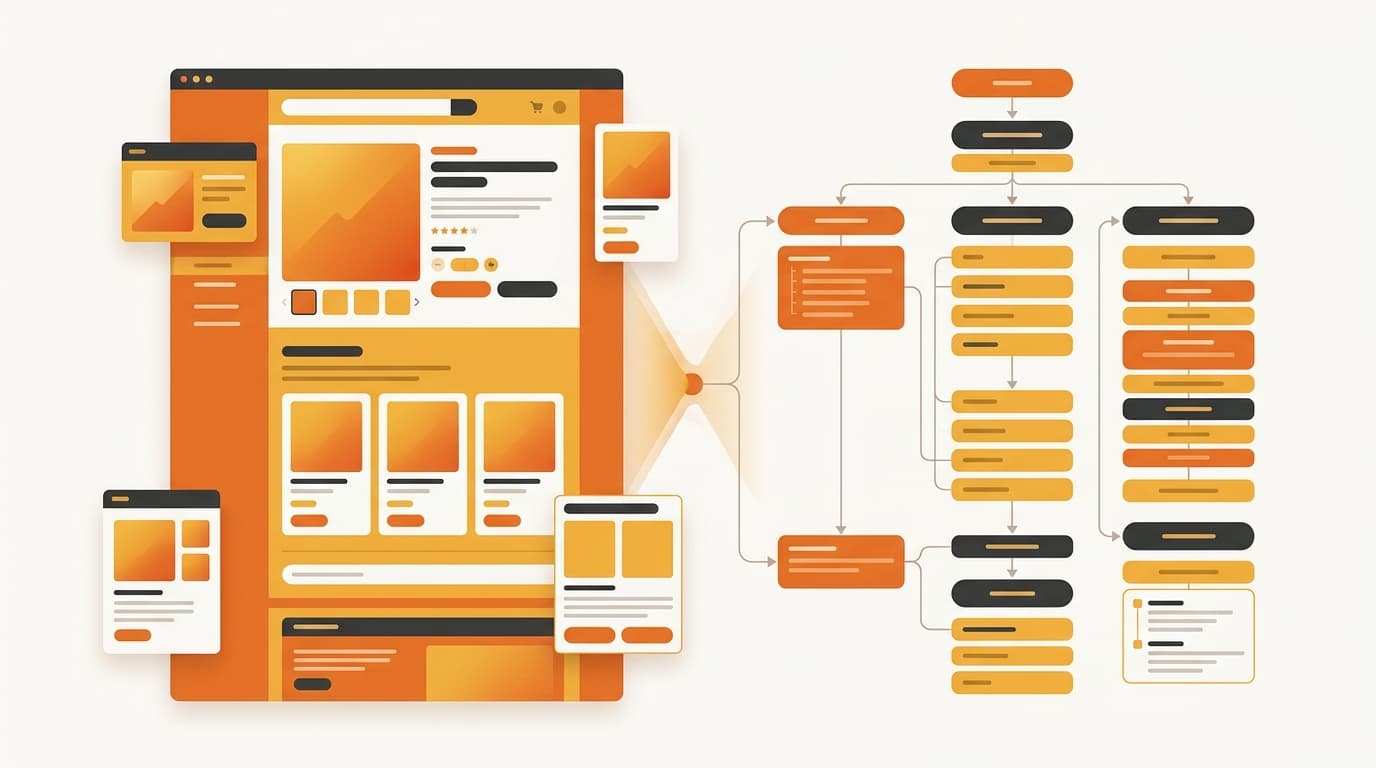
A product detail page (PDP) is the visible, visual part of a listing. It presents the product to shoppers through localized copy, product imagery, and page design. Product-information disclosure serves a different purpose: it carries structured marketplace information that needs to move with the listing into Korean marketplace operations.
The two outputs belong together, but they are not interchangeable:
| Listing component | Primary job | What it does not replace |
|---|---|---|
| Localized PDP and creative | Presents the product clearly to Korean shoppers | Structured product-information disclosure |
| Product-information disclosure | Provides structured marketplace data for the listing handoff | Physical labeling or KC certification |
| Physical labeling or KC certification | Addresses separate product-level or category-specific requirements where applicable | The marketplace listing export |
The distinction is practical, not semantic. A page can look finished while the non-visual listing information still sits in a source catalog, email thread, or separate document. Someone then has to reconstruct that information for marketplace operations, creating another point where product content can be re-entered or drift from the approved material.
A Korean localization workflow is more complete when it produces both layers: the content shoppers see and the structured information operations teams need to use. The disclosure export addresses that second layer without pretending to be a label, certificate, or marketplace approval.
Why structured information belongs beside Korean creative
Localization is not finished when source copy has been translated and product images have been redesigned. The Korean marketplace handoff also needs product information handled in a structured form that can be reviewed and transferred into listing operations.
That second layer is easy to overlook because it is less visible. A designer can finish the visual assets while the information needed for the listing remains scattered across disconnected documents. The problem is not that a separate document can never work. The problem is that the visual and non-visual parts of the same listing are now being completed, checked, and passed between people in different places.
Kontactic’s Seller Center treats the disclosure as a named output within the listing workflow. At a high level, the process has three connected stages:
- Content completion. Product information is handled as part of listing preparation, rather than as an administrative task that begins only after visual production is finished.
- Generation. The completed content is turned into a dedicated product-information disclosure output alongside the rest of the listing content.
- Export. The disclosure output is exported for the Korean marketplace handoff with the localized creative, giving operations a defined artifact to review and use.
This keeps the structured data layer visible before the handoff. It gives the team a clear place to resolve missing information before handoff. That is better than discovering the gap while someone manually prepares the marketplace listing.
That is the operational idea behind the Coupang-Ready Export: Kontactic’s Listing Builder: localization output should be prepared for marketplace operations, not only for a design review.
The useful unit of localization is the handoff. If a team finishes the PDP in one place, reconstructs structured listing information somewhere else, and then reconciles the two manually, the workflow is still fragmented.

What the dedicated export changes for the handoff
An export can sound like a small implementation detail. For operations, it changes the shape of the handoff in four useful ways.
- It creates a defined output. Product-information disclosure is no longer an implied task hidden behind the finished PDP. It has a named deliverable inside the listing workflow.
- It reduces avoidable re-entry. The team does not need to rebuild the non-visual listing layer from a page design or a collection of disconnected documents after creative production is complete.
- It separates responsibilities more clearly. Visual content, structured marketplace information, physical labeling, and certification evidence can be reviewed as related but distinct parts of launch readiness.
- It makes the process repeatable. A dedicated export gives future listing work the same operational shape: complete the content, generate the disclosure, and hand it off for review.
Repeatable does not mean automatic. The export helps transfer information into Korean marketplace operations. It does not mean every product detail has been accepted or that the listing is live.
It is also different from automatic catalog ingestion. Coupang Open API can upload product catalogs, but an upload mechanism is a separate systems question from preparing an accurate disclosure output. Neither removes the need for controlled review of the product information before a listing is submitted or updated.

What the export does not replace
The export is useful precisely because its job is specific. It organizes a marketplace listing component. It does not absorb every other Korean market-entry obligation.
A product-information disclosure export is an operational handoff, not an approval. Marketplace review, product-specific compliance work, and legal judgment remain separate steps.
Four boundaries matter:
- Physical Korean labeling. A marketplace disclosure output is not a printed or applied product label. If the product needs Korean-language labeling, that work still has to be handled separately.
- KC certification. Where a product falls into a category with applicable KC requirements, the relevant certification or conformity work is separate from the listing export. The disclosure cannot substitute for it.
- Marketplace review. Exporting structured information does not mean Coupang has reviewed or accepted the listing. The marketplace’s own review and submission process still applies.
- Legal and category judgment. The workflow can organize information for handoff, but it does not decide whether a claim, product category, or regulatory path is legally appropriate.
Keeping these boundaries visible protects the value of the feature. The export solves a workflow problem without making a broader claim about product approval or compliance.
A practical review checklist before handing off a Korean listing
The same handoff discipline should apply to both visible and non-visible listing content. The creative side is covered in How Kontactic Gates Coupang Image Sets Before Export; the disclosure export applies the same operational logic to structured product information.
Before a Korean listing moves to marketplace operations, ask:
- Is the visual content ready for the intended Korean listing? The images and PDP should be localized content, not merely a translated source page.
- Is the structured product information complete? The team should know what information is being handed off and which items still need a decision or source confirmation.
- Was the disclosure generated from the content being handed off? This helps avoid sending a visual version and a separate, outdated information document.
- Is the dedicated export included with the listing handoff? The operations team should receive the structured output as a defined part of the package, not as an assumed follow-up task.
- Has a human reviewer checked the output separately? Product facts, marketplace requirements, and any category-specific legal or certification obligations still need their own review.
These checks do not turn an export into a compliance verdict. They make the workflow easier to inspect. They also reduce the chance that a visually complete listing is treated as operationally complete while structured information is missing.
Common questions about Coupang product-information disclosure
Is product-information disclosure the same as a PDP?
No. A PDP is the visual, shopper-facing presentation of the product. Product-information disclosure is the structured marketplace information prepared for the listing handoff; both can be produced in the same workflow, but they are different outputs.
Is the disclosure export the same as a Korean physical label?
No. The export is a marketplace listing component. Physical labeling is a separate product-level requirement and should not be treated as completed merely because a disclosure output exists.
Does the export replace KC certification?
No. Where KC requirements apply, certification or conformity work remains separate. The export helps organize listing information but cannot stand in for that process.
Does exporting the disclosure mean Coupang will approve the listing?
No. Export means the structured information is prepared for handoff. Coupang review, submission, and any required corrections remain separate.
Why not keep the disclosure in a separate spreadsheet?
A separate document may be workable, but it creates another handoff to maintain. Bringing completion, generation, and export into the listing workflow keeps the structured information beside the localized creative and reduces avoidable re-entry.
Plan a complete Korean listing handoff
If your Korea launch plan covers the PDP but not the structured marketplace-data layer, contact Kontactic to discuss the operational handoff your products need.
About the author
Korean and global e-commerce operators with 15+ years of cross-border experience, led by CEO Isaac Lee — KOTRA-certified consultant and official lecturer for Seoul City and the Korea Customs Service. We run Korea market entry for overseas brands every day; this blog records what we learn in the field.
Meet the Kontactic team →Related Articles

Coupang Order Appearing Twice: How Kontactic Stops It
Coupang can send the same product option twice in one order. Here is how Kontactic joins the repeat so your local team processes one clear order line.

Korean Import Totals: Compare Supplier Payments
Kontactic compares each seller’s running Korean import total with its running supplier-payment total to help local teams find missing entries or timing gaps.

Korean Business Registration: How Kontactic Checks
Kontactic checks your Korean business registration certificate against the prepared address and representative, then keeps the setup open if either value differs.