
How Kontactic Gates Coupang Image Sets Before Export
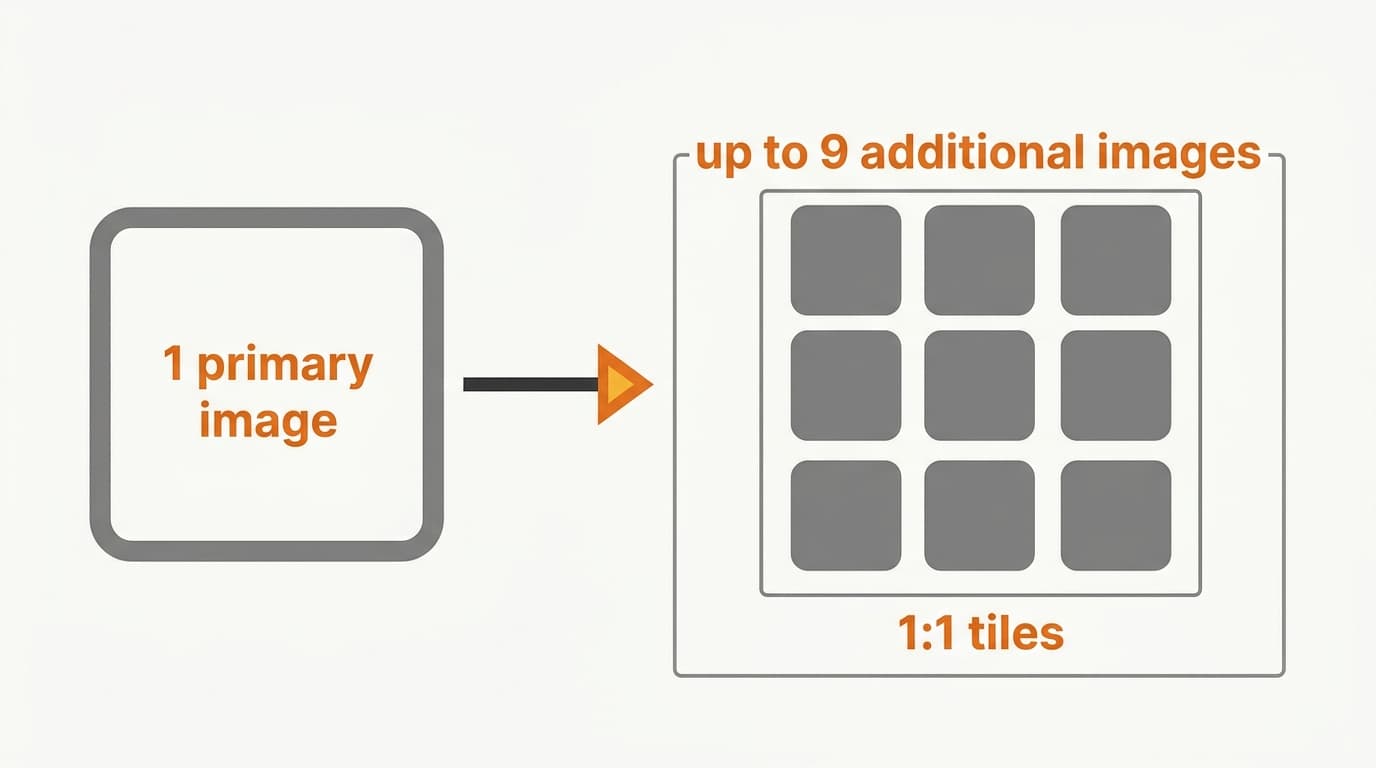
Seller Center holds generation and export until the brand team approves a product’s merchandising plan. The resulting Coupang image set contains one primary image and up to nine additional 1:1 tiles.
The product update: this is a controlled production workflow, not a request to “localize some photos.” The decision about what a Korean shopper should see, and in what order, is made before the asset package is generated.
Why strategy comes before the image set
Proven Korean demand tells you a product deserves attention. It does not automatically produce a listing that is consistent across a catalog, easy for a Western team to review, or practical to hand off to the people operating Coupang.
A photo-localization request usually starts too late. It begins with existing images and asks a local team to add Korean copy around them. That can produce a localized asset, but it leaves a more important question unanswered: what is this product trying to communicate in the Korean marketplace, and which visual sequence supports that decision?
The Seller Center workflow starts with that question. Each product gets a merchandising strategy before image generation. The brand can decide what a Korean shopper needs to understand, which information deserves visual emphasis, and how the sections should be sequenced. The section structure can vary by product instead of forcing every item into one fixed page template.
That flexibility matters when products have different information burdens. A specification-heavy item may need a clear technical explanation; another product may need a different order that gives more room to use context or a visual demonstration. The point is not to create unlimited creative options. It is to make the product-specific choice visible and reviewable before the team is asked to approve finished assets.
That is the distinction behind the view that localizing product pages for Korean e-commerce is a design problem, not a translation problem. Seller Center turns that principle into an ordered production step: strategy first, presentation second, generation third.

What the approval gate controls
An approval gate is the difference between a creative draft and a production handoff. Seller Center lets brand teams revise Korean copy, composition, and merchandising strategy, then give final approval before asset generation and export.
The sequence is straightforward:
- Set the product strategy. Decide the role of the Korean image set and choose a section structure that fits the product.
- Revise the presentation. Edit Korean copy, layout, composition, and merchandising choices while the plan is still reviewable.
- Check the relationship between facts and visuals. Confirm that the creative treatment represents the actual product information and supplied imagery.
- Approve the final plan. Give the production step a defined handoff point before the visual assets are generated and exported.
That order changes the internal conversation. Instead of reviewing a finished image set with no clear record of why it looks the way it does, a brand team can approve the plan that produced it. A Western headquarters team, a local operator, and a creative reviewer are looking at the same product-specific decision rather than passing an open-ended request between them.
During production, the workflow also validates the use of real product imagery. This is a practical safeguard: a polished visual treatment still needs to remain tied to the actual product represented by the listing. The image set should not drift into a generic interpretation simply because the creative layout has been localized.
Approval is not the same as regulatory sign-off. It controls merchandising and production; it does not replace product-category reviews, Korean disclosures, or the brand’s responsibility for factual claims. The same distinction is useful alongside turning product photos into a Korean PDP in-portal: starting from real product assets is helpful, but a repeatable plan and a clear approval gate still determine whether the output is usable.
What the Coupang-specific output contains
The output is not a generic folder of localized images. It is a Coupang-specific gallery package with a known shape: 1 primary image and up to 9 additional images. The additional images are composed as 1:1 tiles.
That structure gives the team a concrete package to plan against. The primary image and supporting tiles are separate positions in the gallery, so approval can evaluate the first presentation and the supporting sequence separately. The visual story can be product-specific even though the output format is consistent.
The phrase “up to 9” matters. The workflow provides room for additional tiles without requiring every product to use every available position. A short, focused set can remain short; a product that needs more explanation can use more of the available gallery structure. The fixed part is the handoff shape, not a demand that every item look identical.
Each additional tile can therefore be treated as part of the listing rather than as an isolated creative file. The strategy can determine whether a tile clarifies a specification, explains a use case, or gives another product-specific piece of evidence. Those choices are made in relation to the primary image and the other tiles, not after the fact in a loose asset folder.
This is what makes the output operational for a brand catalog. A team can review the number of assets, their role in the gallery, and the visual sequence before export. The result is a defined Coupang asset package rather than an ad hoc local creative request.
Why factual information stays separate from creative treatment
Factual product information and creative presentation are connected, but they are not interchangeable. The factual layer supplies the product information and technical specifications that the listing must communicate. The creative layer decides how Korean copy, composition, visual hierarchy, and merchandising strategy present that information.
Keeping those layers distinct prevents a layout edit from becoming an accidental fact edit. A shorter line can omit an important qualification. A rearranged panel can make a secondary feature appear central. A translated phrase can sound stronger than the approved product information supports. Separating the layers gives the team a way to improve presentation while keeping the underlying facts visible for review.
The real-imagery check reinforces the same principle. Product imagery is not merely decoration around the information; it is part of how the product is represented. During production, the workflow validates that the visual treatment uses real product imagery, keeping the generated composition connected to the actual item and its approved presentation.
The export can also include a product-information notice, a listing-ready artifact that contains the product facts, technical specifications, and notices to accompany the generated visual assets. The Coupang operator receives that notice with the visual package, rather than having to reconstruct the connection from separate conversations.
This workflow should not be confused with final regulatory review. Coupang inbound verification for labels and certification evidence is a separate check, and approval of an image set does not establish that every category-specific obligation has been satisfied.
Approval controls the asset-production process; it does not by itself establish that every product claim, label, certification, or category obligation is satisfied.
Why Korean typography belongs in the workflow
Localized copy can be accurate and still fail if the final composition makes it difficult to read. Korean typography is therefore a production concern, not a finishing detail to handle after the strategy is approved.
The workflow includes Korean typography handling and unit-aware layout treatment so Hangul and technical specifications such as dB, W, V, square metres, and inches remain readable in the visual composition. This matters when a product’s value depends on a technical detail: the number must remain legible, stay associated with the right product point, and fit the section where the strategy placed it.
The same principle applies when copy changes during review. A revised Korean phrase can alter spacing or hierarchy even when the underlying meaning is unchanged. A strategy change can also require a different section structure. The approval gate brings those decisions back together, allowing the team to judge the message and its physical presentation before generation and export.
That is a more practical standard than asking whether a page has been translated. The relevant question is whether the Korean product presentation remains readable, factually grounded, and coherent as a Coupang image set.
The approval checklist before export
Before approving a product’s plan, a brand team should be able to answer six questions:
- Is the section structure right for this product? It should reflect the item’s merchandising strategy rather than inherit a fixed template without review.
- Does the Korean copy stay within the approved product information? Creative presentation can be revised, but factual claims and specifications should remain controlled.
- Does the composition give the gallery a coherent sequence? The primary image and additional tiles should work as one listing presentation.
- Does the imagery represent the real product? The production check should catch a visual treatment that has drifted away from the supplied product imagery.
- Are Hangul and technical units readable? Review dB, W, V, square metres, inches, and other product-specific information in the actual composition, not only in a source document.
- Does the handoff include the product-information notice? Confirm that the generated visual assets and the product-information notice are included together.
This checklist creates consistency without forcing uniform design. The repeatable part is the decision process: strategy, revision, approval, production, and export. The creative result can still vary because the product-specific section structure and merchandising choices are allowed to vary.

Common questions about the workflow
Is this a fixed Coupang PDP template?
No. The gallery format is defined, but the section structure can vary by product. The aim is to standardize the handoff while preserving product-specific merchandising.
Can brand teams edit the plan after it is created?
Yes. Teams can revise Korean copy, composition, and merchandising strategy before the brand team gives final approval. Asset generation and export follow that approval.
How many images does the output contain?
The Coupang-specific structure is 1 primary image and up to 9 additional images. Each additional image is composed as a 1:1 tile; “up to” describes the available structure, not a requirement to fill every position.
Does the workflow use generic product visuals?
During production, it validates the use of real product imagery. The visual treatment remains tied to the actual product rather than becoming a generic localization exercise.
Can the export include a product-information notice as well as images?
Yes. The export can include the product-information notice alongside the generated visual assets. It contains the product facts, technical specifications, and notices that support the listing handoff.
Does approval replace Korean compliance review?
No. Approval governs merchandising and asset production. Category-specific requirements, disclosures, certifications, and product claims still need their own review.
Review your Korean product asset workflow
If your team needs a repeatable way to plan, approve, and export Coupang image sets for multiple products, talk with Kontactic about the workflow.
About the author
Korean and global e-commerce operators with 15+ years of cross-border experience, led by CEO Isaac Lee — KOTRA-certified consultant and official lecturer for Seoul City and the Korea Customs Service. We run Korea market entry for overseas brands every day; this blog records what we learn in the field.
More about Kontactic →Related Articles

What Happens After Your Korean Coupang Page Is Finished?
After your Korean Coupang page is finished, see the real page, follow the same instructions in Seller Center and email, and get reminders only if needed.

Korean Tax and Import Paperwork: What Kontactic Handles
Korean tax and import paperwork: you provide entity details, supporting documents, and import papers; Kontactic completes the local submissions for a shipment.

How Do I Renew My Korean Entity Service Before It Lapses?
See how Korean entity service renewal works: billing starts three months before the end date, with warnings two and one months ahead so HQ can respond in time.