Coupang Instant Refund: Why Buyers Get Paid Before Returns Arrive
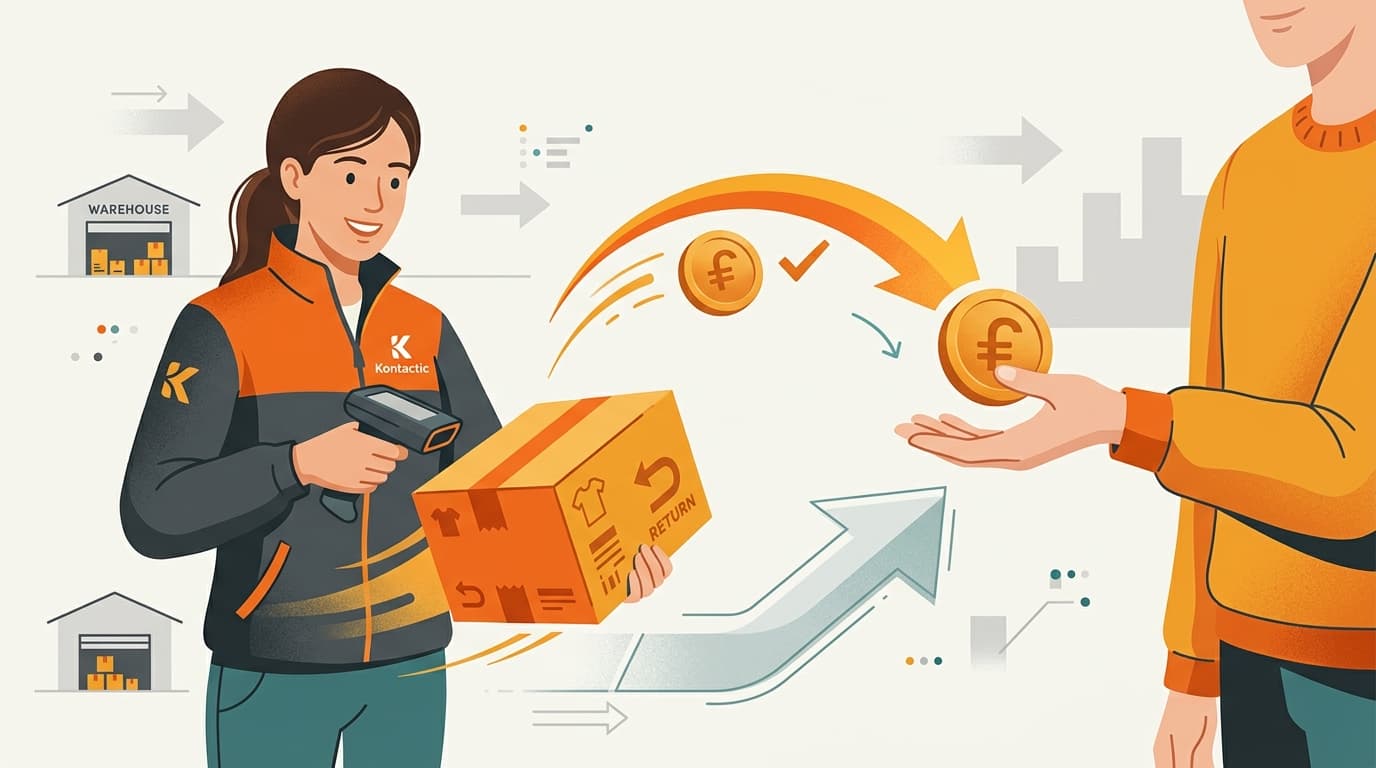
On Coupang, an eligible seller-fulfilled return refunds the buyer the moment the return courier scans the pickup waybill — not after you receive and inspect the product. This is Coupang's fast refund (빠른환불, also called 선환불 or pre-refund), and it means your settlement can be debited before the returned unit ever reaches your Korean return center. Your recourse if the item comes back used, damaged, or wrong is a claim after the fact, not a hold on the refund.
That single detail breaks the returns model most Western brands carry in from their home market. On Amazon, eBay, or a Shopify-plus-3PL setup, the refund typically fires after an inbound receipt confirms condition. On Coupang, for eligible orders, the sequence is reversed — and if you plan your cash flow and your customer-service coverage around the wrong sequence, you will get surprised twice: once by the timing, and once by the disputes you never raised.
The two return paths for seller-fulfilled orders
Coupang runs two distinct refund sequences for seller-fulfilled (3P) returns, and which one applies is decided by the item, not by you.
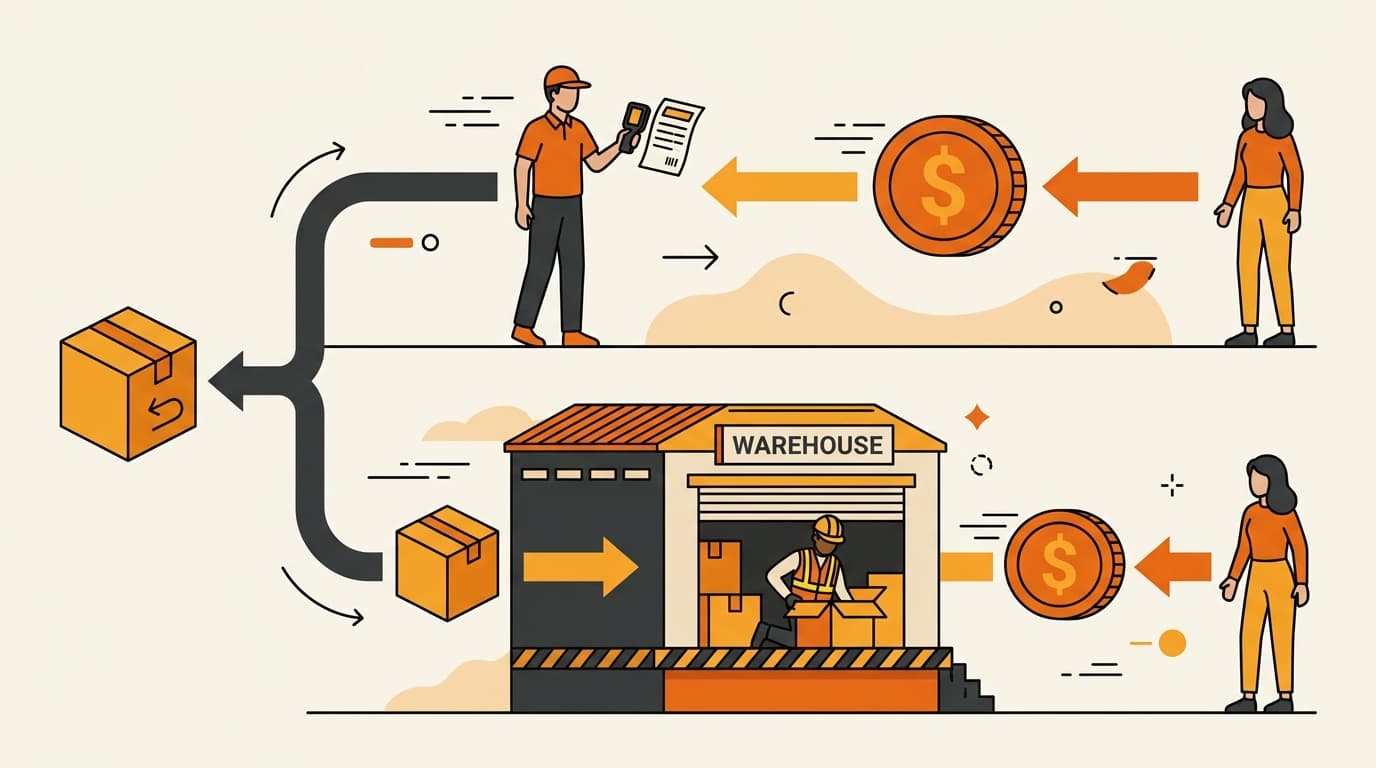
The first path is fast refund (빠른환불 / 선환불). For eligible items, Coupang issues the refund to the buyer as soon as the return pickup courier waybill is tracked. The customer is made whole while the parcel is still in transit. From your side, the money leaves your settlement at scan time, and the physical unit shows up at your return center later — sometimes days later, depending on the courier lane.
The second path is inbound-receipt confirmation. For items that are not fast-refund eligible, the refund does not complete until you actively confirm receipt of the returned goods. That means someone on your side has to receive the parcel, mark it inbound, and trigger the refund. If no one does, the refund — and the customer's goodwill — sits stuck.
Fast refund (빠른환불) is Coupang's pre-refund mechanism: for eligible seller-fulfilled returns, the buyer is refunded when the return pickup is scanned, before the seller inspects the item. It reverses the usual "inspect, then refund" order that most Western marketplaces follow.
The practical takeaway is that your returns operation has to handle both flows at once. Some SKUs will refund automatically and arrive later; others will sit unrefunded until you act. Unattended operations quietly fail on the second path — a stack of returned parcels no one confirmed becomes a stack of angry buyers whose money is still pending.
Which orders qualify — and why you don't decide
Eligibility for fast refund is defined by Coupang, published in its documentation, and applied automatically. You do not opt individual orders in or out.
Per Coupang's developer documentation, fast refund generally applies to standard-delivery items below a certain price threshold, and explicitly excludes categories where a pre-refund would be risky for the seller — notably fresh and perishable goods and made-to-order products. The logic is intuitive: Coupang is more willing to front the refund on a low-value, standardized item it can reason about than on a custom or perishable one where condition on return is unpredictable.
Two cautions matter here. First, the specific price threshold and the exact excluded categories change, so treat any number you read secondhand as stale — verify the current values directly in Coupang's official developer docs before you build them into a model. Second, eligibility is evaluated per order at return time, so the same SKU can behave differently depending on delivery type and price at purchase.
For a foreign brand, the honest planning stance is: assume a meaningful share of your low-priced, standard-delivery catalog will be fast-refund eligible, and assume your premium or perishable lines will follow the inbound-confirmation path. Then confirm the split against your actual catalog rather than a generic assumption.
The timing gap, and what it does to your cash model
The core operational consequence is a gap between two events that most brands assume are simultaneous: the settlement debit and the physical inbound.
For a fast-refund-eligible return, the settlement reduction happens at pickup-scan time. Your inspection window happens whenever the parcel actually lands. In between, you have been debited for a unit you have not seen and whose condition you cannot yet confirm. If your reconciliation logic expects a single post-inspection deduction — one clean line that says "unit returned, inspected, refunded" — it will not match Coupang's ledger, which already moved the money.
“Model a fast-refund-eligible return as an immediate settlement reduction at pickup-scan, not a post-inspection deduction. The physical unit is a separate, later event — and sometimes it never matches what you were charged for.”
Isaac Lee — CEO, Kontactic
For cash-flow modeling, the cleaner approach is to split the return into two independent lines. The first is the refund itself, timed to the courier scan for eligible orders. The second is return shipping, which is a separate cost driven by fault attribution (covered below). Treating them as one deduction is where forecasts drift — and because Coupang's default settlement already runs on a long cycle, a wave of pre-refunds can swing a period's net remittance before the corresponding goods are even back in your hands. If you are still mapping how settlement timing works, our breakdown of Coupang settlement timelines is a useful companion.
Who pays return shipping: fault attribution (귀책)
Whether a return costs you shipping on top of the refund is decided by fault attribution (귀책), not by which return path the order took.
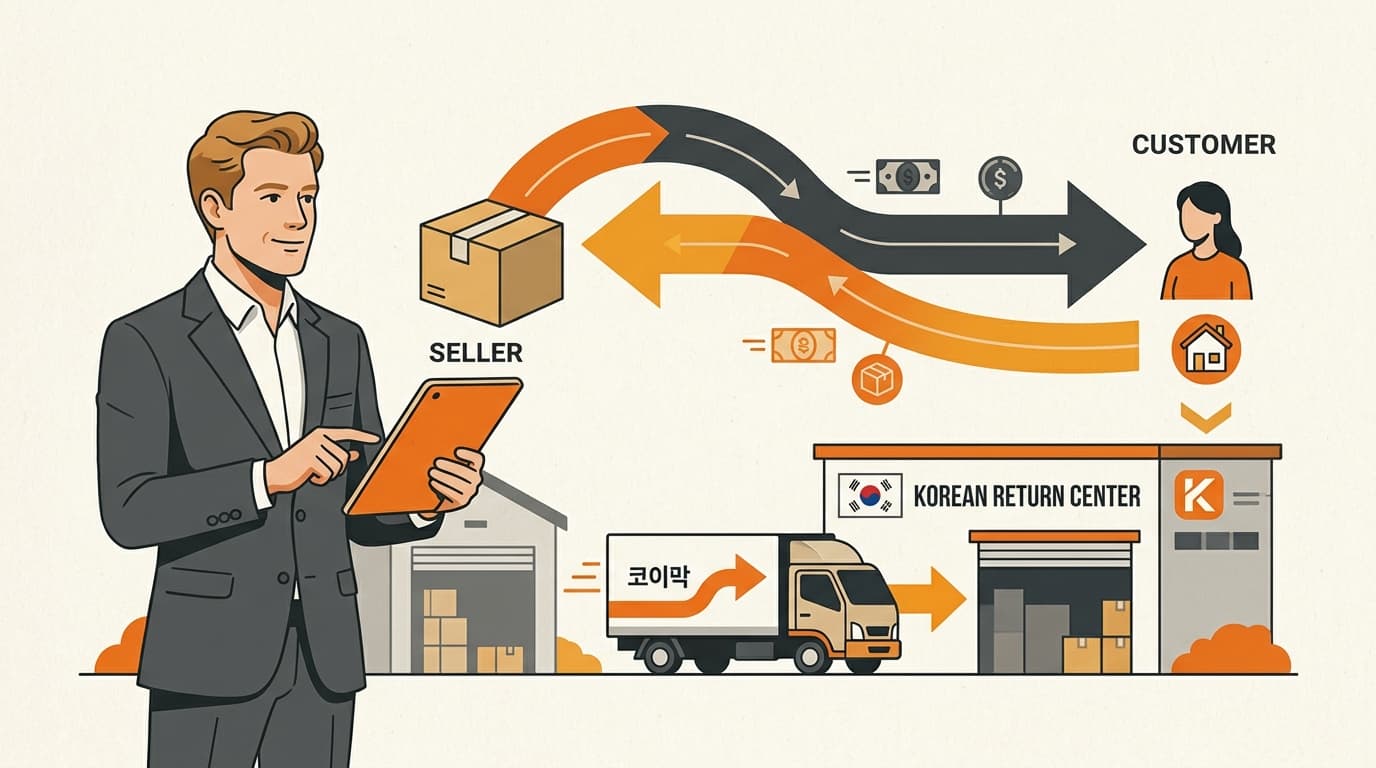
Coupang's API returns a fault type for each return — broadly, the fault can be attributed to Coupang, the seller/vendor, the customer, logistics, or a general/unspecified reason. The return shipping charge is then signed accordingly: a positive charge is seller-borne, a negative charge is customer-borne. So a "simple change of mind" return where the customer is at fault typically shifts the shipping cost to the customer, while a return caused by a defect or a wrong-item ship-out lands the shipping cost on you.
This is why the refund and the shipping are genuinely separate cost lines. A single return can produce a refund debit at scan time and a positive (seller-borne) shipping charge — or a refund debit and a shipping charge the customer absorbs. Budgeting them as one number hides the fault-driven variance that actually moves your returns cost.
If you want to see how these return mechanics sit inside the broader Rocket Growth flow — where Coupang runs the customer-facing return but the unit re-enters your inventory — our post on who handles returns under Coupang Rocket Growth draws the ownership boundary. Note the distinction: that post covers Rocket Growth's fulfillment-side returns, while fast refund as described here is a settlement-timing mechanism that also surfaces on seller-fulfilled orders.
Your recourse is a claim, not a hold
Once a fast refund has fired, you cannot claw it back at the pickup scan — but you can dispute it after the fact.
When the returned goods or the shipping charge are wrong — a customer sends back a used, damaged, or incorrect item, or the fault attribution looks mis-assigned — your recourse is to raise a Coupang confirmation request (Coupang 확인 요청) in the seller portal (WING). This is a post-hoc claims process, not a pre-refund block. You are asking Coupang to review the return after the money has already moved, with the burden generally on you to show what came back.
That burden-of-proof reality is why unattended returns handling is a liability. If no one inspects inbound units against the orders they refund, you have no evidence to file a confirmation request with — the window closes and the loss sticks. The disputes that reset Rocket Growth margins in practice tend to be exactly these evidence-driven claims; we walked through the shift in three Coupang policy changes that reset Rocket Growth margins.

What you must have in place before returns can flow
Fast refund does not run on an empty operation. Two prerequisites decide whether the mechanism works for you or against you.
First, you must register a valid Korean return center (반품지) with a courier contract before any return can be picked up and processed. Without it, the return pickup that triggers a fast refund has nowhere to go.
Second, non-eligible items require you to actively perform inbound-receipt confirmation to complete the refund. That is a staffed task on Korean business hours, not a background process. A brand running Korea remotely with no local coverage will accumulate unconfirmed inbound parcels — refunds pending, goodwill eroding — while fast-refund orders quietly debit settlement in the background.
Put together, the operational picture is: fast-refund orders take money out automatically and need inspection capacity to defend; non-eligible orders need active confirmation to release money at all. Both require a working return center and someone watching it.
Common questions
Does Coupang refund the buyer before I inspect the return? Yes, for fast-refund-eligible seller-fulfilled orders. The refund issues when the return pickup courier waybill is scanned, before the item reaches your return center. For non-eligible items, the refund waits on your inbound-receipt confirmation.
Can I stop a fast refund if I suspect the return is fraudulent? No. Fast refund is not something you hold. Your recourse is a post-hoc Coupang confirmation request (Coupang 확인 요청) in WING once you have inspected the returned item and can show it was used, damaged, or incorrect.
Who pays the return shipping? It depends on fault attribution (귀책). Coupang assigns a fault type — Coupang, seller/vendor, customer, logistics, or general — and signs the shipping charge as seller-borne (positive) or customer-borne (negative) accordingly. Change-of-mind returns typically shift shipping to the customer; defect or wrong-item returns land it on you.
Which items are fast-refund eligible? Coupang defines eligibility, generally covering standard-delivery items below a price threshold and excluding categories like fresh/perishable and made-to-order goods. The exact threshold and exclusions change — verify them in Coupang's official developer documentation before modeling.
How should I budget returns for cash flow? Split each return into two lines: the refund, timed to the pickup scan for eligible orders, and the return shipping, driven by fault attribution. Do not model a single post-inspection deduction — Coupang's ledger will have already moved the refund.
Planning your Coupang returns operation in Korea?
Talk to Kontactic about how fast refund, return-center setup, and settlement reconciliation fit your catalog before you commit inventory to Korea.
About the author
Korean and global e-commerce operators with 15+ years of cross-border experience, led by CEO Isaac Lee — KOTRA-certified consultant and official lecturer for Seoul City and the Korea Customs Service. We run Korea market entry for overseas brands every day; this blog records what we learn in the field.
More about Kontactic →Related Articles
Coupang Rocket Growth Stock: Can an ERP Set It via API?
An ERP cannot set Coupang Rocket Growth stock through the Open API; replenishment starts when Coupang physically receives a new inbound shipment of stock.
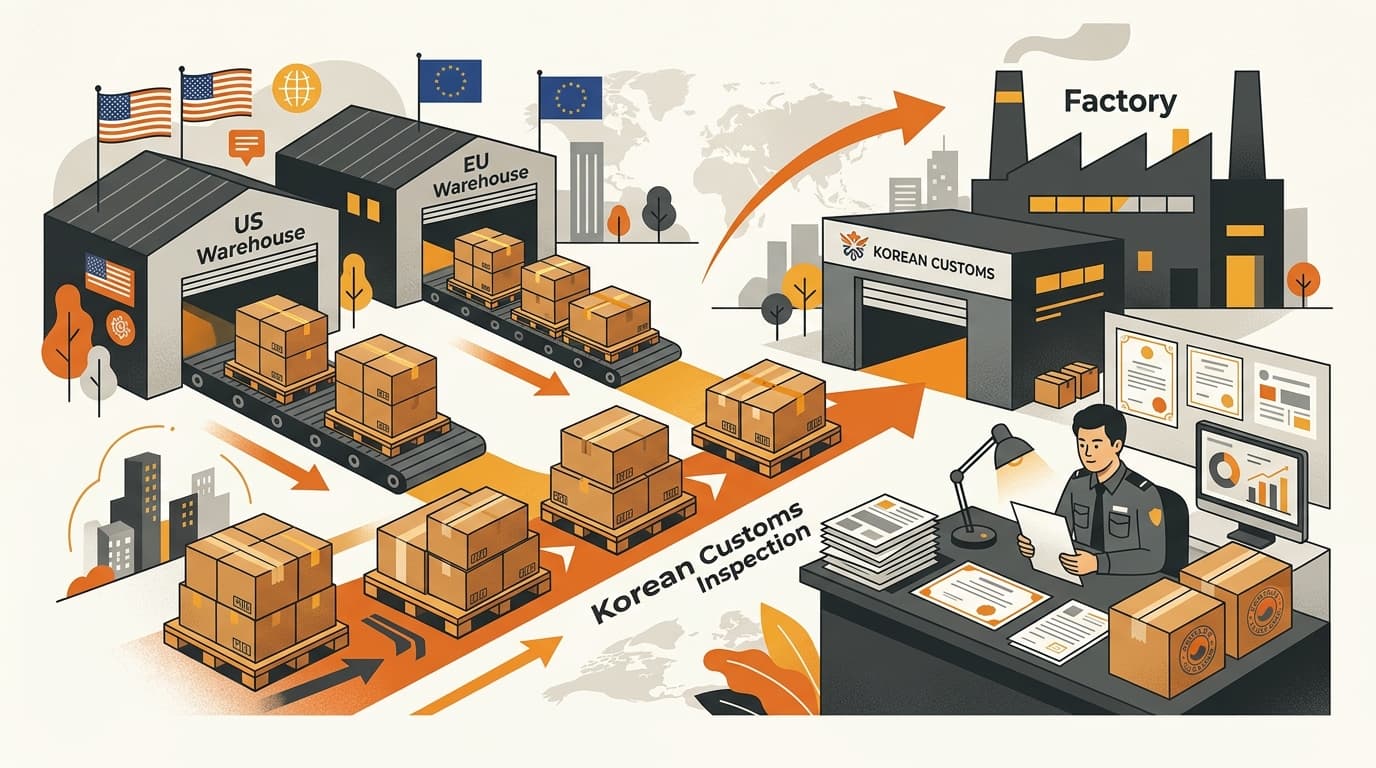
Korea FTA Duty: US/EU Warehouse Shipping Is Not Enough
A US or EU warehouse does not prove FTA origin in Korea. The importer must verify production, transit, and documents before claiming a lower customs duty rate.
Agentic Commerce: When AI Picks the Product, What Should Brands Selling in Korea Do?
AI shopping agents now search, compare, and sometimes buy for the shopper, and they recommend 1–5 products instead of a page of results. What Korea's Chamber of Commerce found in the US and Europe, and what it means for your product data in Korea.