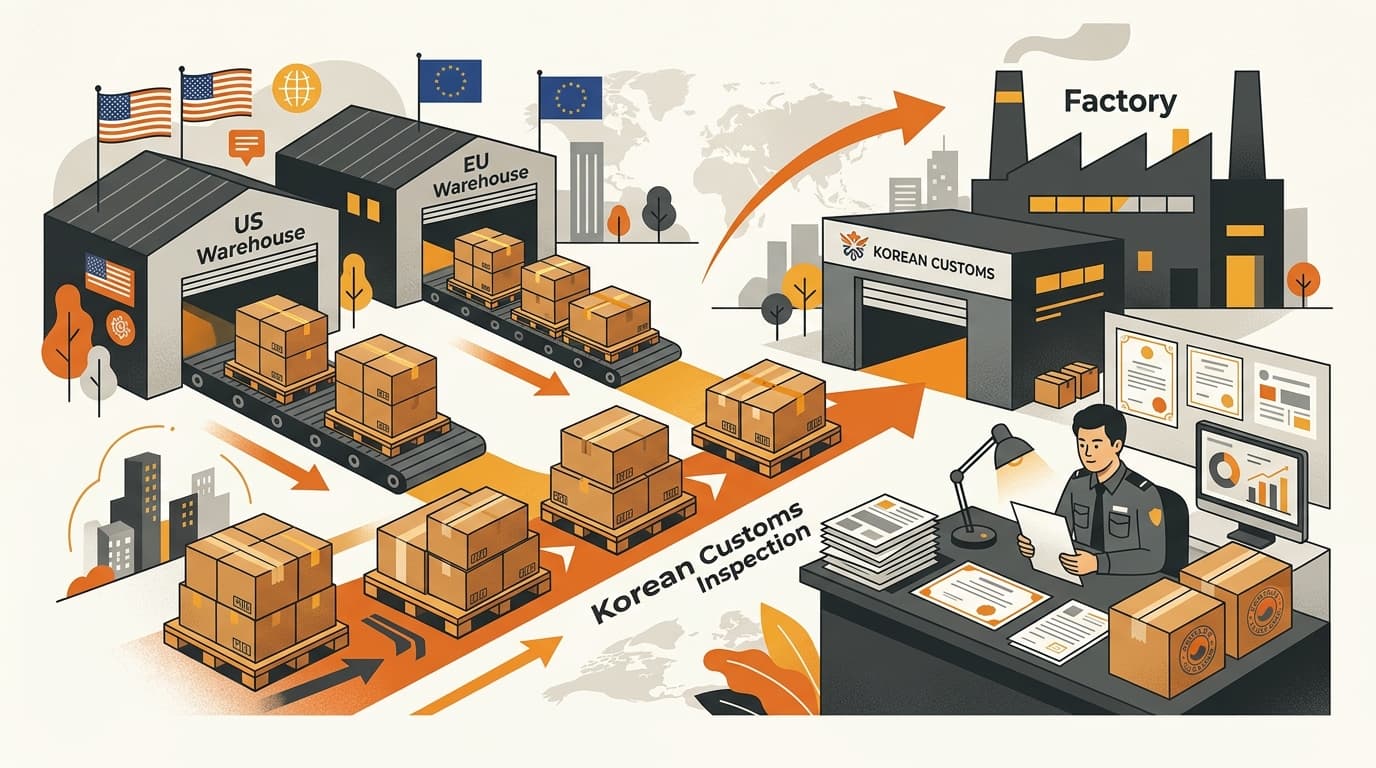
Korea FTA Duty: US/EU Warehouse Shipping Is Not Enough
A US or EU warehouse does not establish free trade agreement (FTA) origin in Korea. The product must meet the agreement’s origin rule. The Korean importer must use the origin document that agreement accepts before claiming the lower rate.
An FTA duty rate is the lower customs duty available under a free trade agreement. Korea applies it only when the goods meet that agreement’s origin rule and the importer has the required proof.
The warehouse shows dispatch, not customs origin
Origin follows production. Customs asks where the product was made, or where it underwent enough production to receive a new origin under that agreement. It does not decide origin from the last warehouse, the brand’s nationality, or the airport where the shipment leaves.
These facts answer different questions:
| Fact | What it tells Customs |
|---|---|
| Stock sits in a US or EU warehouse | Where the goods were stored or dispatched |
| The brand has a US or EU headquarters | Who owns or sells the brand |
| A US or EU company issued the invoice | Who billed the Korean buyer |
| The factory and production details | Where Customs should start the origin check |
Simple storage, repacking, or relabeling normally does not create a new origin. Moving a finished product into a New Jersey or Rotterdam warehouse does not turn that product into US or EU-origin goods.
For example, imagine a US brand that makes a reusable kitchen bottle in Vietnam. The brand stores the bottles in New Jersey and sells them to a Korean importer from its US company. The cartons leave the United States, and the invoice shows the US company. Those facts do not make the bottles US-origin. The importer still needs to check the actual production and the Korea–US agreement’s rule before claiming the lower rate.
A product made in the United States or the European Union may qualify for an FTA rate even if the brand uses a separate warehouse. The warehouse neither disqualifies the goods nor proves their origin.
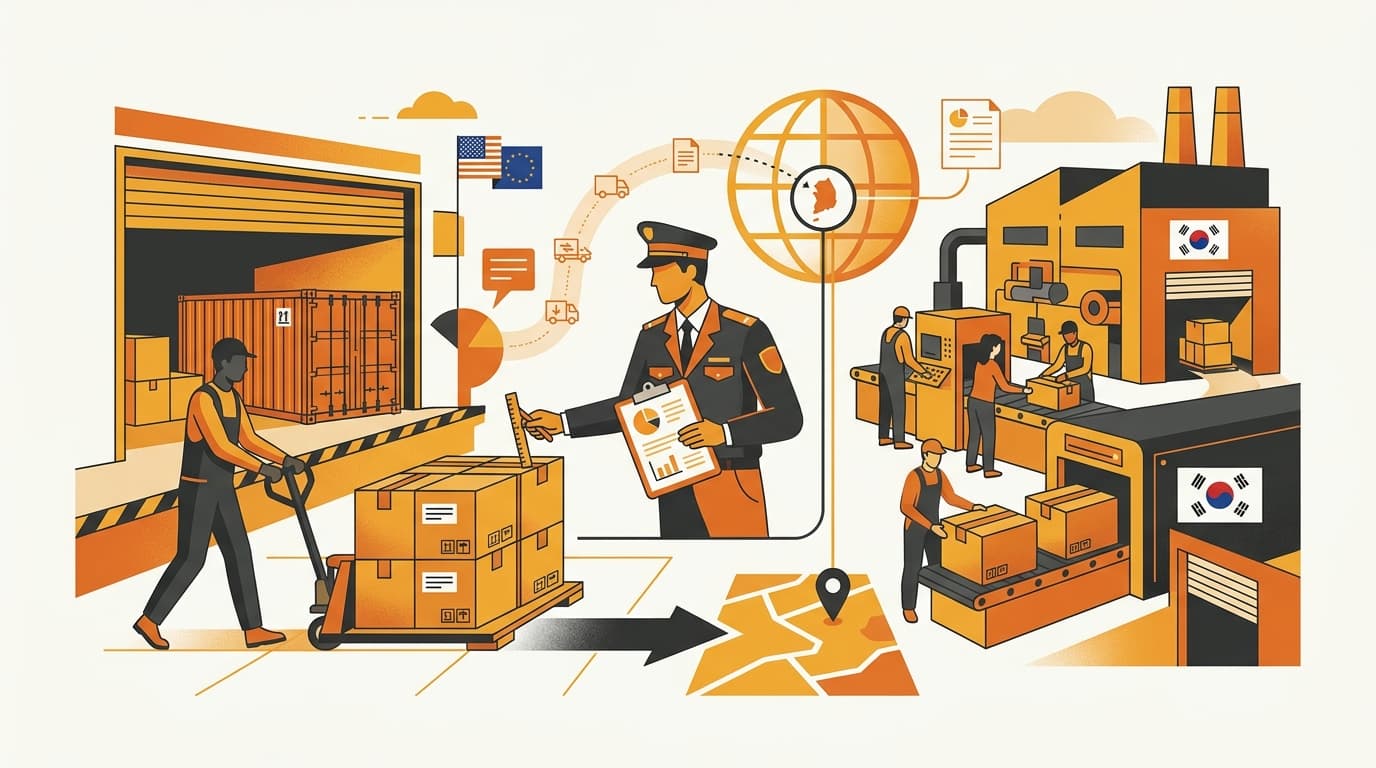
Start with the Korean product code and exact FTA
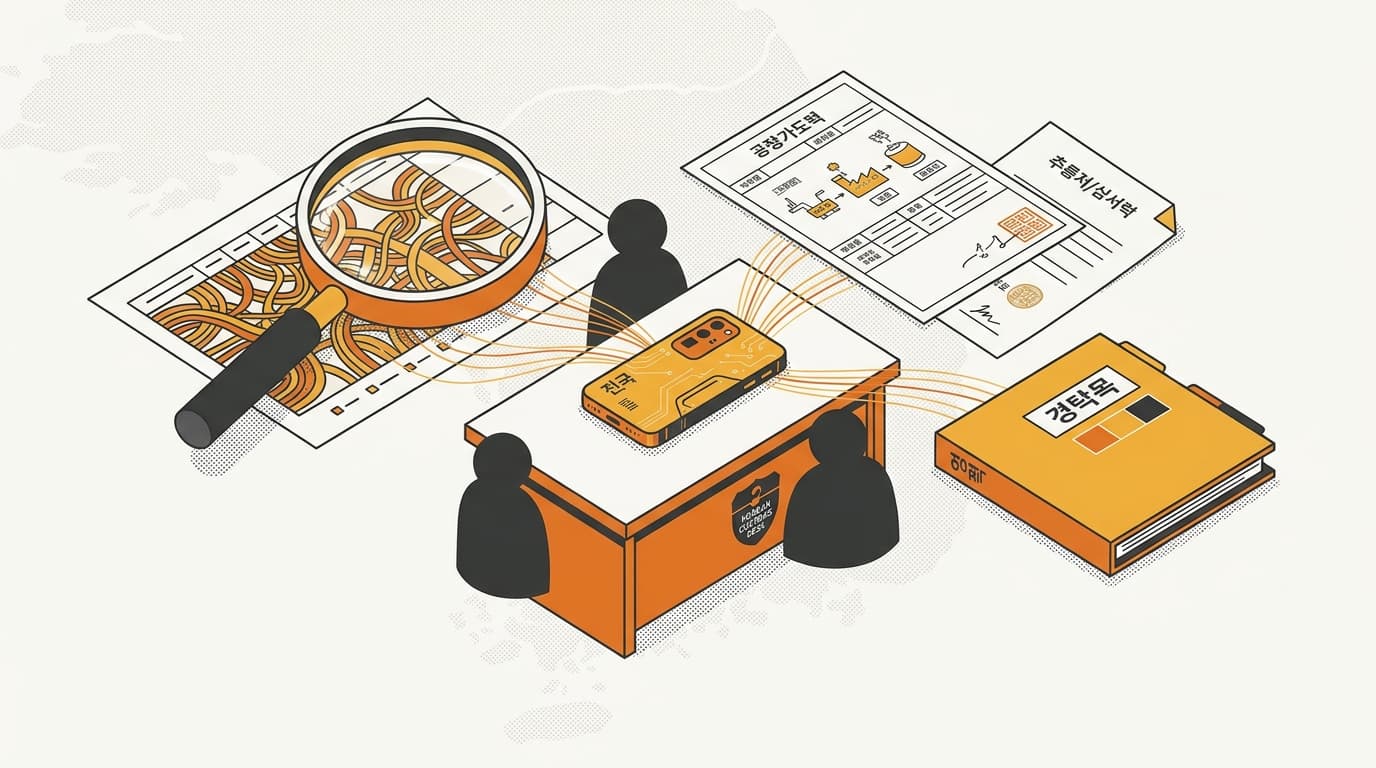
Before pricing the Korean sale, confirm the Korean HS code (the Harmonized System product code) and the exact agreement and origin rule that apply.
Customs uses this code to identify goods and find the duty and origin rule for that Korean HS code. The Korean tariff line matters. A code used in the United States or the European Union is a useful starting point, but it is not automatically the final Korean classification. See why a US or EU HS code may not be reusable in Korea before using a code in a cost model.
The agreement must match the product’s actual origin. A qualifying US-origin product may be checked under the Korea–US Free Trade Agreement, commonly called KORUS. A qualifying EU-origin product may be checked under the Korea–EU agreement. The warehouse location does not choose the agreement.
The origin test changes by product and by agreement. The rule for one Korean tariff line may require a particular manufacturing step. Another may require a minimum share of materials or value from the agreement countries. A result under KORUS cannot simply be reused for the same product under Korea–EU rules.
Do not assume that an FTA rate means zero duty. The agreement may lower or remove customs duty for a qualifying product, but the rate depends on the agreement and the Korean tariff line. This comparison of KORUS and Korea–EU duty treatment explains why the agreement and product code must be checked together.
For the official starting points, use the Korea Customs Service for customs and FTA guidance. Check the legal text for that agreement through the Korean Law Information Center. Those sources are more reliable than a warehouse label or a general statement from a freight company.
What the Korean importer must collect before filing
The Korean importer makes the FTA claim in the import declaration. It should have the product and origin documents ready before the first declaration, not rely on the dispatch country after Customs asks questions.
Use this check:
- Identify the actual producer and production country. Ask which factory made the goods and where the qualifying work happened.
- Confirm the Korean HS code. The code leads to the origin rule Customs will apply.
- Name the exact agreement. Do not use “US origin” or “EU origin” as a substitute for the agreement’s product-specific rule.
- Read the rule for that product. Check whether it requires a manufacturing step or a minimum share of materials or value from the agreement countries.
- Obtain the accepted origin document. Depending on the agreement, this may be an exporter or producer statement rather than a fixed government certificate.
- Map the transport path. Note every country the goods pass through and any warehouse or processing between the producer and Korea.
The actual producer matters. A distributor’s invoice may show a real sale, but it does not explain where the product was made. A warehouse shipping label shows a dispatch point, but it does not describe production. A normal commercial invoice alone is not enough to prove FTA origin merely because it carries a US or EU company address.
Return to the bottle example. The Korean importer should ask the producer for manufacturing details and the origin document allowed under that agreement. It should not rely only on the US brand’s New Jersey warehouse label. If the producer cannot support the rule, the importer should not price the shipment as if the lower rate were already confirmed.
Third-country transit is a separate check
Product origin and transport are not the same question. A product may appear to meet the production rule and still need a separate check on how it reached Korea.
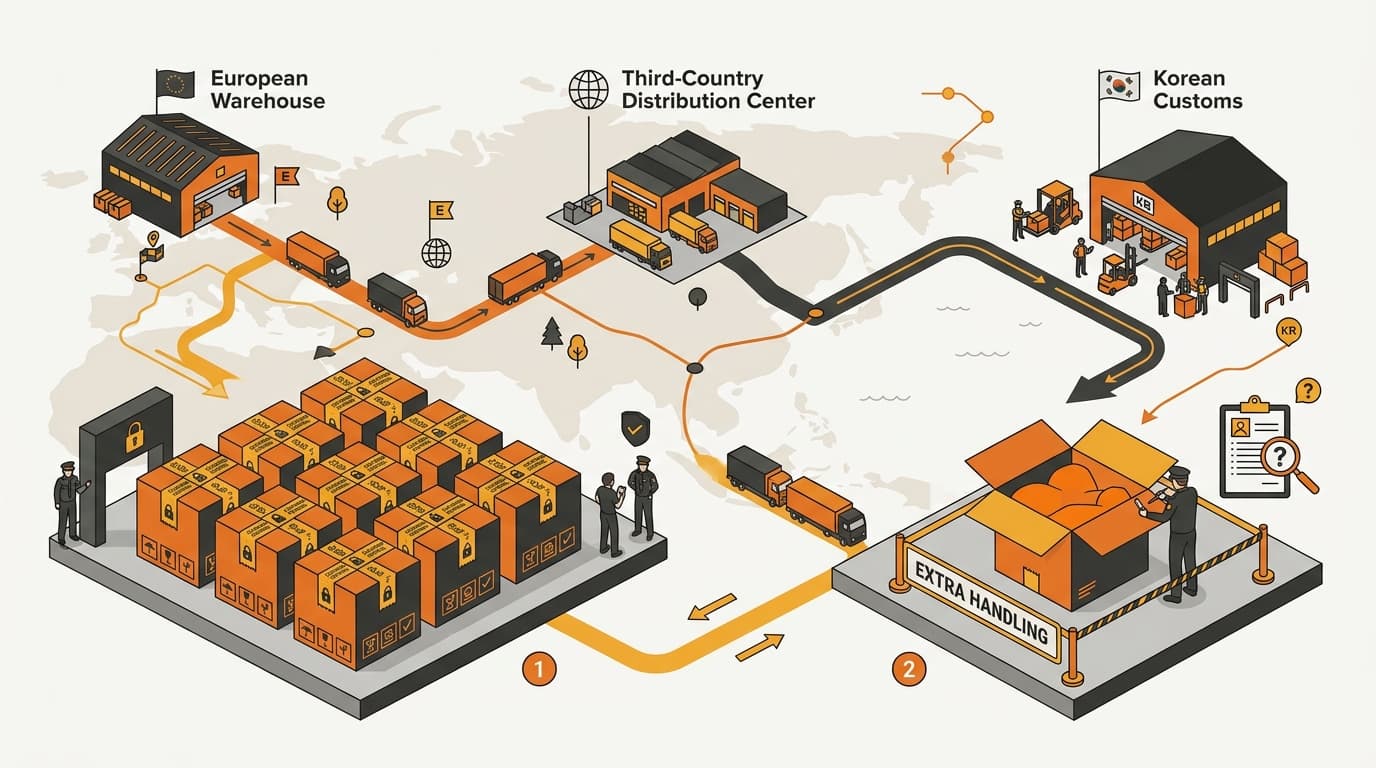
Some agreements require direct transport. Others may allow passage through another country only when the goods remain under customs control. A third-country warehouse or extra processing can raise this question even when the product’s manufacturing origin appears to qualify.
Consider an EU-made product that is stored in an EU warehouse, moved to a distribution center in another country, and then shipped to Korea. The importer should ask:
- Did the goods pass through a third country?
- Did they stay under customs control while there?
- Were the cartons opened or the products processed?
- Can the transport documents show what happened between the EU and Korea?
Do not treat every third-country stop as an automatic failure. The agreement controls the answer. But do not ignore the stop either. Simple storage may not change the product’s origin, while the agreement’s transport condition can still require proof about that storage and movement.
This is why a warehouse plan belongs in the FTA check. The importer needs both the production story and the path the goods took to Korea.
If the claim is wrong, regular duty and import tax can follow
If the goods do not meet the agreement’s origin rule, the importer must use Korea’s regular duty rate. If the importer claimed the lower FTA rate incorrectly, Customs can collect the unpaid duty and may add penalties. The exact result depends on the goods, documents, and Customs review.
A customs broker can prepare or file the declaration. It cannot create origin that the product does not have. It also cannot replace the production details that should come from the actual producer.
FTA treatment usually lowers or removes customs duty. It does not automatically remove Korean import value-added tax (VAT). Import VAT generally still applies unless a separate exemption covers the goods. If Customs later adds duty, the amount on which import VAT is calculated can also rise.
That change affects the Korean selling price. A model built on the lower FTA rate can understate landed cost if the warehouse country was used as a shortcut. Customs value affects duty and import VAT. CIF means cost, insurance, and freight. See how Korea assesses import duty on CIF value, not just the invoice.
Treat the FTA rate as conditional. Before using it in your price, confirm the Korean HS code, agreement rule, producer documents, and transport path.
Keep the filing documents with the shipment papers after clearance. This explanation of why Korean customs duty may be revisited after clearance shows why a released shipment does not make an unsupported origin claim safe.
Do not use the warehouse country as a duty shortcut. Before the first Korean import declaration, confirm the producer, Korean HS code, agreement, accepted origin document, and any third-country transport condition.
Check your Korea FTA origin before importing
Share the SKU, actual producer, warehouse path, and draft import documents with Kontactic before you set a Korean selling price.
About the author
Korean and global e-commerce operators with 15+ years of cross-border experience, led by CEO Isaac Lee — KOTRA-certified consultant and official lecturer for Seoul City and the Korea Customs Service. We run Korea market entry for overseas brands every day; this blog records what we learn in the field.
More about Kontactic →Related Articles

Agentic Commerce: When AI Picks the Product, What Should Brands Selling in Korea Do?
AI shopping agents now search, compare, and sometimes buy for the shopper, and they recommend 1–5 products instead of a page of results. What Korea's Chamber of Commerce found in the US and Europe, and what it means for your product data in Korea.

Korea E-commerce, September 2026: The Market Shrank, Coupang Grew
Korean online shopping spend fell 2.1% in September 2026, yet Coupang grew 3.9% and reached a 72.7% share of the 12 largest platforms. What the data means for a foreign brand choosing where to sell.

Natural Room Spray: Does Korea Require Safety Filing?
Natural room spray still needs Korea’s safety filing: Korea checks its use, claims, formula, spray method, and labels before commercial import for sale.