
Coupang Image Gallery: How Kontactic Builds Each Set
Kontactic builds each Coupang product gallery as one defined image set: 1 primary image plus up to 9 additional 1:1 images. The primary and supporting slots follow different production paths, but the full set stays connected to the product-page builder as one listing deliverable.
The gallery is scoped at product level. The primary image leads the presentation, while the supporting tiles extend it within a defined capacity. The point is not to fill every slot automatically; it is to keep each asset tied to the same listing.
One product page needs more than a localized hero
The hero is often the first localization task. It is also the easiest place to stop too early. A Western brand moving from cross-border demand to local Coupang operations may have a localized primary image and still lack a defined supporting gallery.
That gap is operational, not just visual. Supporting assets need a defined scope, a common format, and a connection to the same product. Otherwise, each additional image is prepared when someone notices it is missing, and the listing handoff has no clear meaning of “complete.”
Seller Center treats the listing as one image set. The product-level scope makes it clear whether the deliverable contains only the lead visual or the supporting gallery as well. That visibility gives localization, review, and listing teams the same completion target.
Because the supporting capacity is bounded, the team can plan additional tiles without assuming that every product needs the maximum number. The ceiling is an available scope, not an obligation to fill every slot. That turns the gallery from an undefined afterthought into a planned part of the listing deliverable.

Why the hero and supporting images have different production roles
Primary and supporting images belong to the same product, but they are not the same production task. The primary image is a singular anchor: it establishes the lead presentation for the product. Supporting images are repeatable slots that extend that presentation across a consistent square canvas.
That distinction changes the brief. A hero request asks for one lead composition. A supporting-gallery request asks for a defined number of additional assets, a 1:1 format, and a rule that every tile remains associated with the same product. The latter is a system, not a pile of interchangeable files.
Treating the slots as interchangeable makes review harder. Several polished files can still leave three questions: do they belong to this product, are they 1:1, and will the builder receive them with the listing? Separating the roles surfaces those checks before handoff.
That is why the supporting work is better understood as gallery assembly, not simple image resizing. The format is consistent, but each asset still has to be scoped against the product. It is the same reason a layout-aware workflow for Korean Coupang creative matters: composition should be handled as a system rather than as isolated files.
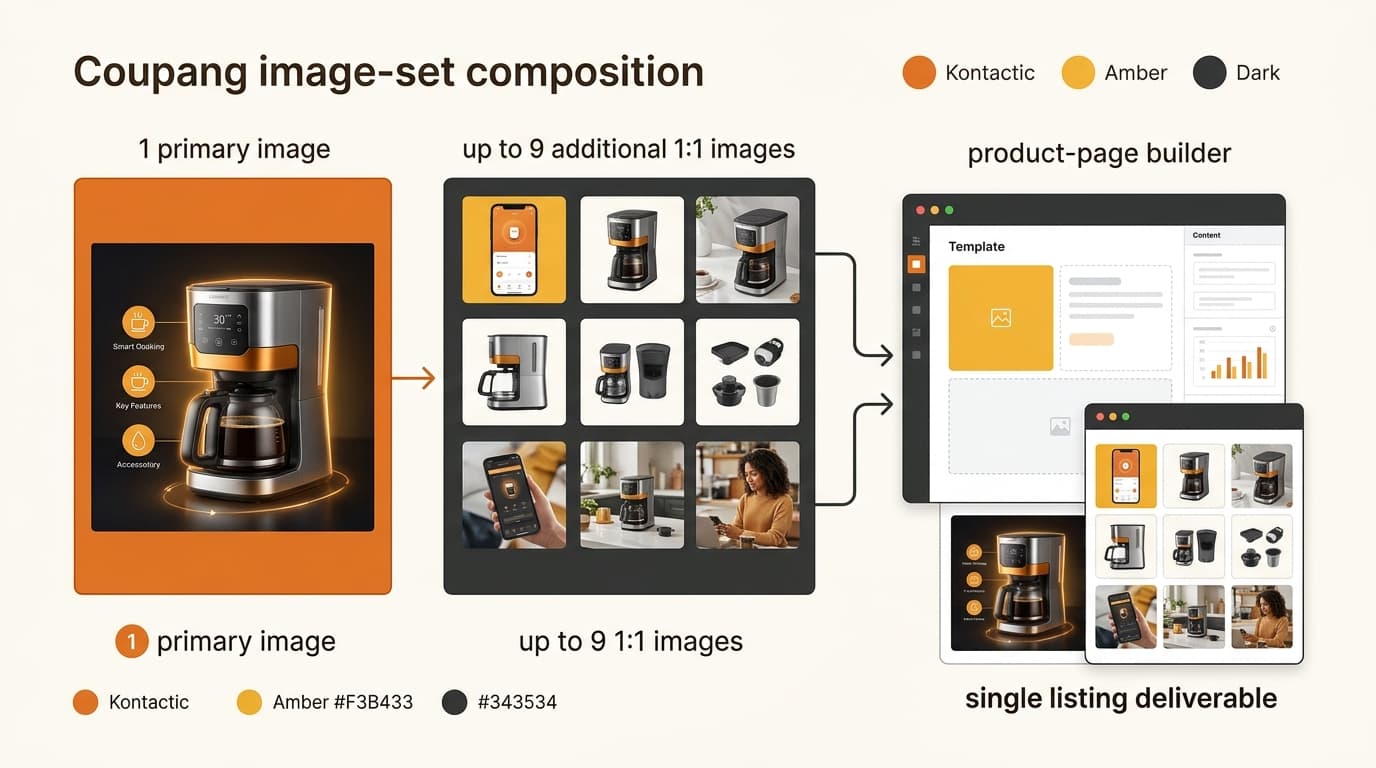
How Seller Center keeps the image set in one listing deliverable
Seller Center uses a simple production separation: the hero has its own role, while the gallery follows a repeatable tile path. The documented output is a product-level set, not a button-by-button interface sequence. Four checks keep that output clear:
- Scope the work by product. Associate the image work with one product so the primary and supporting assets share a clear listing context.
- Identify the primary separately. Produce the primary image as the lead visual, rather than treating it as the first item in an undifferentiated queue.
- Use square supporting tiles. Each additional slot follows the same 1:1 format, keeping the gallery consistent even when the supporting assets serve different purposes.
- Keep the set attached to the page builder. The primary and additional images remain part of the same listing deliverable. The supporting gallery does not wait for a separate post-production handoff after page work is complete.
These checks describe the deliverable rather than a button-by-button interface workflow. A square file alone does not complete a supporting tile. The tile is complete only when it is scoped to the product and included in the same page-building deliverable.
This complete-set approach also fits the broader Coupang-Ready Export: Kontactic’s Listing Builder, where localized listing assets are treated as an organized output rather than a loose collection of files. The gallery capability keeps the primary and supporting images inside that same product context.
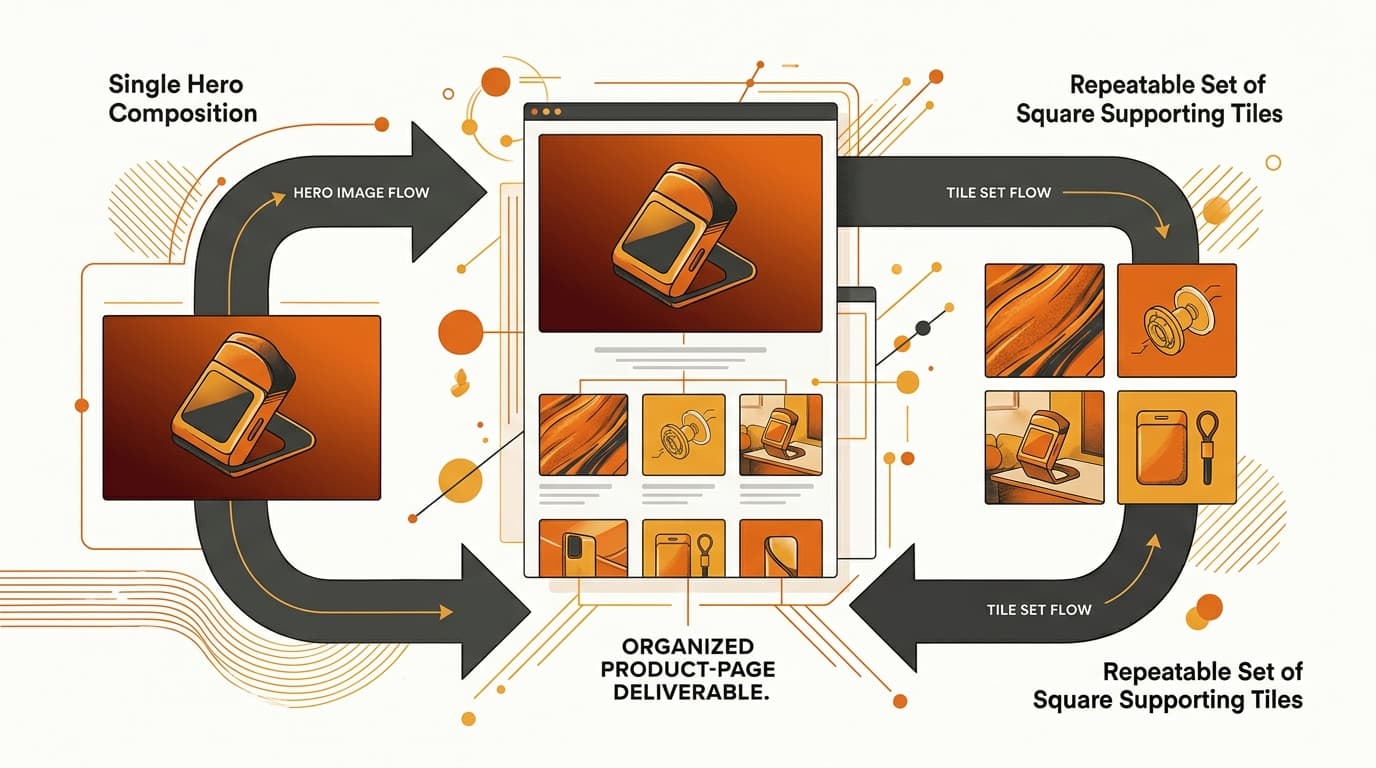
What a complete gallery handoff should include
For a Western brand, this changes what to ask for in the listing brief. Instead of approving a hero file and leaving the rest open, define the image-set handoff up front:
- Product scope: identify the exact product the image set belongs to.
- Primary scope: identify the single lead image separately from the supporting images.
- Supporting capacity: state the permitted number of additional images; do not turn the ceiling into a requirement to use every slot.
- Format: make 1:1 the working format for supporting tiles.
- Builder connection: keep the primary and supporting assets attached to the same product-page deliverable.
- Completion check: review whether the gallery is complete as a set, not only whether a hero image exists.
This checklist is intentionally modest. It does not prescribe a campaign concept, copy, or brand visual system. It protects the operational part of localization: scope, format, and product connection.
An agreed set can then be reviewed as one unit through Coupang image-set approval before export, rather than as scattered files that happen to mention the same product. With that model, supporting images stop being a postscript. They become a defined part of what it means to deliver a localized Coupang page.
Common questions about Coupang supporting images
Does the primary image count toward the 9 additional images?
No. The primary has its own slot; the nine-image figure applies only to the additional supporting images.
Does every product need 9 supporting tiles?
No. “Up to 9” is the available scope, not a requirement to use every slot. The useful change is deciding the gallery scope deliberately instead of leaving additional images undefined.
What format do the supporting images use?
Supporting images are composed on a 1:1 tile format. The square canvas standardizes the supporting slots, but it does not make them interchangeable with the primary image.
Are supporting images delivered separately from the product page?
No, not in this model. The complete image set remains connected to the product-page builder, making additional images part of the same listing deliverable instead of a separate post-production handoff.
Why does this matter to a brand moving from cross-border to local Coupang operations?
Because a localized hero is only one part of the visual handoff. A defined primary-plus-supporting set gives the local listing a repeatable scope and keeps the gallery associated with the product it is meant to present.
Plan the complete Coupang image set
If your Korean listing brief covers only the hero image, contact Kontactic to scope the primary and supporting gallery inside one product-page workflow.
About the author
Korean and global e-commerce operators with 15+ years of cross-border experience, led by CEO Isaac Lee — KOTRA-certified consultant and official lecturer for Seoul City and the Korea Customs Service. We run Korea market entry for overseas brands every day; this blog records what we learn in the field.
Meet the Kontactic team →Related Articles

Korean Product Approval: Why a SKU Needs It and What to Do
Korean product approval does not have to be a yes-or-no answer. See the cited rule, preparation steps, language options, and SKU-only rechecks HQ can use.

Coupang Order Appearing Twice: How Kontactic Stops It
Coupang can send the same product option twice in one order. Here is how Kontactic joins the repeat so your local team processes one clear order line.

Korean Import Totals: Compare Supplier Payments
Kontactic compares each seller’s running Korean import total with its running supplier-payment total to help local teams find missing entries or timing gaps.