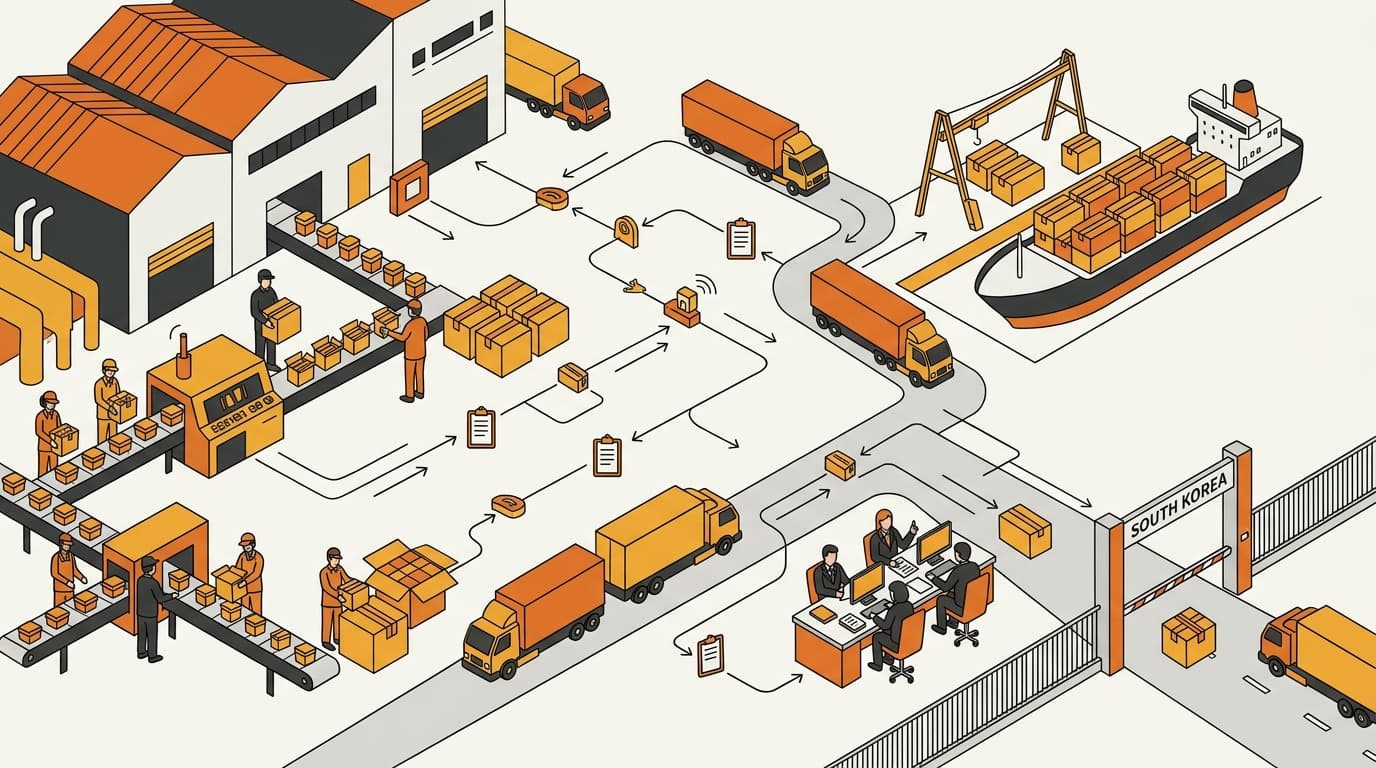
Can Korea Import Food Before MFDS Facility Registration?
No. A normal commercial shipment of food, beverages, or dietary supplements for sale in Korea requires registration of the relevant overseas manufacturing or packing facility with the Ministry of Food and Drug Safety (MFDS). The Korean importer must have that registration before filing the import declaration. A Korean entity, customs workflow, or Coupang seller account does not substitute for that facility-level prerequisite.
The registration follows the site. It is tied to the actual overseas facility that makes or packs the imported product—not simply to the Western brand, Korean importer, SKU, or sales channel.
The gate is the overseas facility, not the Korean importer
The common mistake is to ask whether the Korean importer is ready. The first question is whether the overseas site behind the shipment is registered for the applicable MFDS process.
Treat the sequence as two connected but separate steps. Foreign-facility registration comes first: the relevant overseas manufacturing or packing facility must be registered with MFDS before the commercial import declaration is filed. Shipment import declaration follows: the Korean business importing for sale submits the declaration for the specific product and shipment, with the required product, facility, and other supporting information.
The second step does not give the importer permission to complete the first step later. Facility registration is an upstream condition; the declaration is a shipment-level action. They should be planned together, but they are not the same record and one does not replace the other.
This distinction matters when a brand sells through a Korean entity or marketplace account. The Korean importer can have its corporate and customs process ready while the relevant overseas factory or packer is still unregistered. The brand's Coupang account, product SKU, or local sales setup does not make that facility registered.
The requirement also follows the physical supply chain rather than the brand portfolio. If a brand uses one facility for manufacturing and another for final packing, the team must identify which facility or facilities are applicable to the imported product and verify each one. A registration associated with Facility A is not automatic coverage for Facility B. A new contract manufacturer is a new import-readiness question, even when the brand name and product name have not changed.
That is different from the separate question of which food filings recur for each shipment. The distinction between a facility-level prerequisite and a shipment-level declaration is explained further in Do You Register a Korean Food Import Once, or Every Shipment?.
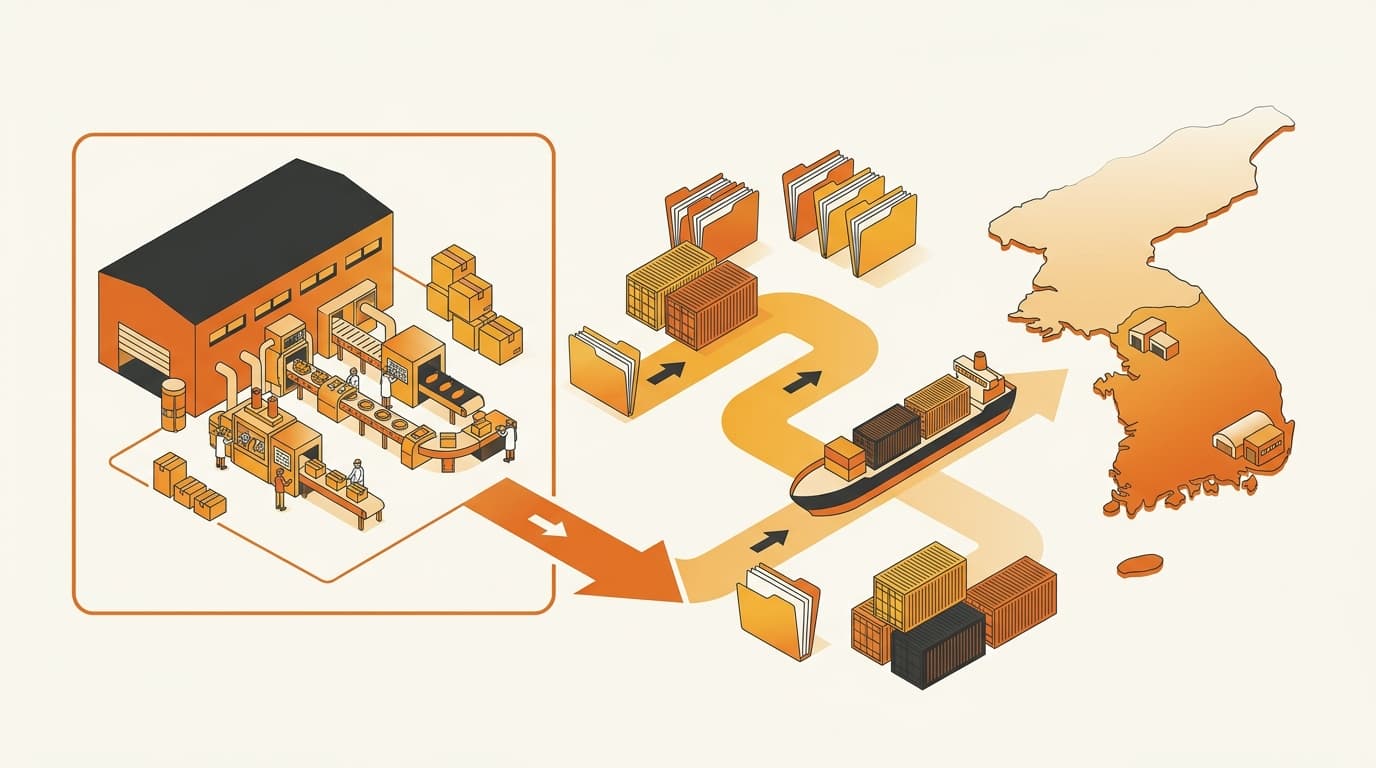
What MFDS facility registration does—and does not—prove
Facility registration is necessary for the sequence described above, but it is not approval of the product. It records the relevant foreign facility as part of the imported-food process; it does not answer every question about what that facility produces or whether a specific shipment can be sold.
| Question | Does facility registration answer it? |
|---|---|
| Is the applicable overseas facility registered? | Yes—this is the facility-level gate. |
| Are the product's ingredients and formulation compliant in Korea? | No. |
| Is the item treated as general food or health functional food? | No. |
| Does the Korean label meet the applicable requirements? | No. |
| Does the shipment still need an import declaration? | No—the declaration remains a separate step. |
| Could inspection or testing still apply? | Yes, facility registration does not remove those requirements. |
For dietary supplements in particular, do not use a facility record as evidence that a product is eligible in Korea. Ingredients, claims, classification, labeling, and import requirements still need their own review. A product that is lawful in the United States or Europe can still require a different Korean assessment; see Can a US/EU Supplement Legal at Home Be Imported Into Korea?.
The same logic applies to inspection. Registration does not guarantee release or eliminate any inspection or testing requirement that applies to the product or shipment. Why Korea Inspects Every Food Shipment, Not Just Your First covers why prior clearance should not be treated as a permanent exemption from later controls.
Do not read “registered facility” as “approved product.” Facility registration removes one gate in the import sequence. It does not establish ingredient compliance, product classification, Korean-label compliance, or the outcome of an inspection.
Why a new manufacturer can stop an otherwise ready shipment
A common failure pattern is a shipment that looks ready from the Korean side but no longer matches the overseas facility record.
Imagine that a brand has a Korean importer, a completed Korean label, a customs process, and a Coupang seller account. Its contract manufacturer then moves final packing to a second site. If the import documents still identify the first site, they no longer match the shipment. The same is true if the second site lacks the applicable MFDS registration. In either case, the importer cannot accurately describe the supply chain in the declaration. The result can be a delay or an inability to release the goods for the first sale.
The problem is not solved by registering the brand, changing the SKU spreadsheet, or relying on the fact that the same product was previously sold through another route. The relevant question is narrower: does the facility information attached to this commercial import describe the actual overseas manufacturing or packing site?
Before a first shipment, map the physical chain for each product:
- the facility that manufactures the food or beverage;
- the facility that packs the finished product, if different;
- any alternate site used for the shipment; and
- the facility information appearing in the product documents and Korean label.
A supplier may operate several plants or use a subcontracted packer. The brand should not assume that a supplier's corporate name, headquarters, or general statement that it is “registered” identifies the site relevant to the shipment. Confirm the actual facility and its identifying information before production and shipping.
This is also why a supplier change should be treated as a compliance change, not only as a procurement update. If the site changes, reopen the facility-registration check and reconcile the product documents before the Korean importer prepares the next declaration.

How facility data, product documents, and the Korean label need to match
The rule becomes practical when the records are viewed as one chain of identity. Facility registration, product documents, the Korean label, and the import declaration should all describe the same product moving through the same supply chain.
- Facility record: identifies the actual overseas manufacturing or packing site relevant to the product.
- Product documents: describe the product composition and manufacturing-site information accurately and completely.
- Korean label: describes the product and supply-chain information consistently with the underlying records.
- Import declaration and supporting documents: identify the product and facility information for the shipment being imported.
These are not interchangeable approvals. A correct facility record cannot repair an outdated formula. A correct label cannot make an unregistered facility acceptable. A complete product file cannot justify declaring a different packing site from the one that actually handled the goods.
Typical mismatches include:
- the registered facility name or address differs from the actual manufacturer or packer;
- the product documents describe an earlier formulation while the shipment contains a revised one;
- the Korean label identifies a supply-chain detail that the facility record does not support; or
- the declaration names one site even though the product was manufactured or packed at another.
A mismatch does not merely create an administrative inconsistency. It can delay or prevent import release and the first sale. The Korean business importing for sale remains the accountable local party for the import declaration and applicable Korean food-labeling and distribution duties. The foreign brand and manufacturer still need to provide complete, accurate formulation, manufacturing-site, and product information so the importer can file correctly.
For category-specific questions beyond the facility gate, Importing Food and Hygiene Products into Korea: What Foreign Brands Actually Need to Register is a useful companion. The point is not to create extra paperwork for its own sake; it is to keep the facility, product, and local-sale records aligned.
A pre-shipment sequence for the first commercial import
Use this order before production and shipping. Repeat the relevant checks whenever the facility, formulation, or product information changes.
-
Map the actual supply chain. Record which overseas site manufactures the product and which site packs it for the Korean shipment. If the supplier uses multiple sites, identify the site attached to each product rather than relying on the brand's general supplier name.
-
Verify the applicable MFDS facility registration. Confirm that each relevant overseas manufacturing or packing facility is registered before the Korean importer files the commercial import declaration. Keep the facility name and identifying information consistent across the working file; do not plan to register after the first shipment arrives.
-
Freeze the product identity. Confirm the final composition, product description, and whether the item is being handled as general food or health functional food under the applicable Korean requirements. A change in formulation can reopen the product review even if the facility has not changed.
-
Reconcile the Korean label with the source documents. The label, formulation information, facility details, and importer information should describe the same product and route to market. Do not treat Korean-language adaptation as a substitute for checking the underlying product data.
-
Check product-specific inspection and documentation requirements. Facility registration does not decide whether additional inspection, testing, or category documents apply. Check the current MFDS guidance for the product before the shipment is dispatched.
-
Give the Korean importer one controlled declaration set. The importer should review the facility, product, label, and supporting information as one package before filing. If the supplier documents and the declaration describe different sites or product versions, pause and reconcile them rather than asking the importer to file first and correct the record later.
-
Recheck change triggers. A new contract manufacturer, new packer, facility move, formulation change, or material change in product information should reopen the facility and import-document review before the next commercial shipment.
Set a change-control trigger. Treat a new manufacturing or packing site as a new MFDS facility-registration check, and treat a formulation change as a new product-document review. Neither should be handled as a simple supplier or listing edit.

Where to verify the current rule
Use primary sources for the live procedure rather than an old supplier checklist or a generic market-entry summary. Start with the MFDS imported-food portal and current MFDS guidance for foreign-facility registration and imported food. Check the Food Sanitation Act and related legal text on law.go.kr for the governing framework. Use the Korea Customs Service for customs declaration and release mechanics.
These sources answer different parts of the question. MFDS addresses the food and facility regime, the official law database provides the legal text, and the Korea Customs Service explains customs mechanics. None of them turns facility registration into product approval, so the records still need to be reconciled before the importer files.
Common questions about MFDS facility registration
Can the Korean importer file the first commercial food declaration and register the facility afterward?
No—not for the normal commercial import-for-sale sequence described here. The relevant overseas facility registration should be in place before the Korean importer files the import declaration; post-arrival registration should not be treated as the standard way to cure the sequence.
Does one brand-level registration cover every contract manufacturer or packer?
No. The registration follows the actual overseas facility and its identifying information. A brand using multiple manufacturers or packing sites must verify each applicable site, and a new contract manufacturer is not covered automatically.
Does facility registration approve the product or its ingredients?
No. It does not confirm ingredient compliance, the distinction between general food and health functional food, Korean labeling, or any inspection and testing outcome. Those questions require separate product and shipment review.
Who remains responsible for the Korean import declaration?
The Korean business importing for sale remains the accountable local party for the declaration and applicable local food-labeling and distribution duties. The foreign brand and manufacturer must provide accurate formulation, facility, and product information so the declaration reflects the real supply chain.
What should the importer do if the registered facility details do not match the shipment documents?
Stop and reconcile the records before filing. An unregistered facility, inaccurate site information, or a mismatch between the facility, product documents, Korean label, and declaration can delay or prevent import release and the first sale.
Review the sequence before you ship
Planning a first commercial food shipment to Korea or changing a manufacturer or packer? Contact Kontactic to review the facility, product-document, and declaration sequence before dispatch.
About the author
Korean and global e-commerce operators with 15+ years of cross-border experience, led by CEO Isaac Lee — KOTRA-certified consultant and official lecturer for Seoul City and the Korea Customs Service. We run Korea market entry for overseas brands every day; this blog records what we learn in the field.
Meet the Kontactic team →Related Articles
Can Coupang Buyers Pay Two Charges With Free Shipping?
On Coupang, free shipping can still leave the buyer paying two return charges: the original delivery cost and the cost of sending the parcel back to the seller.
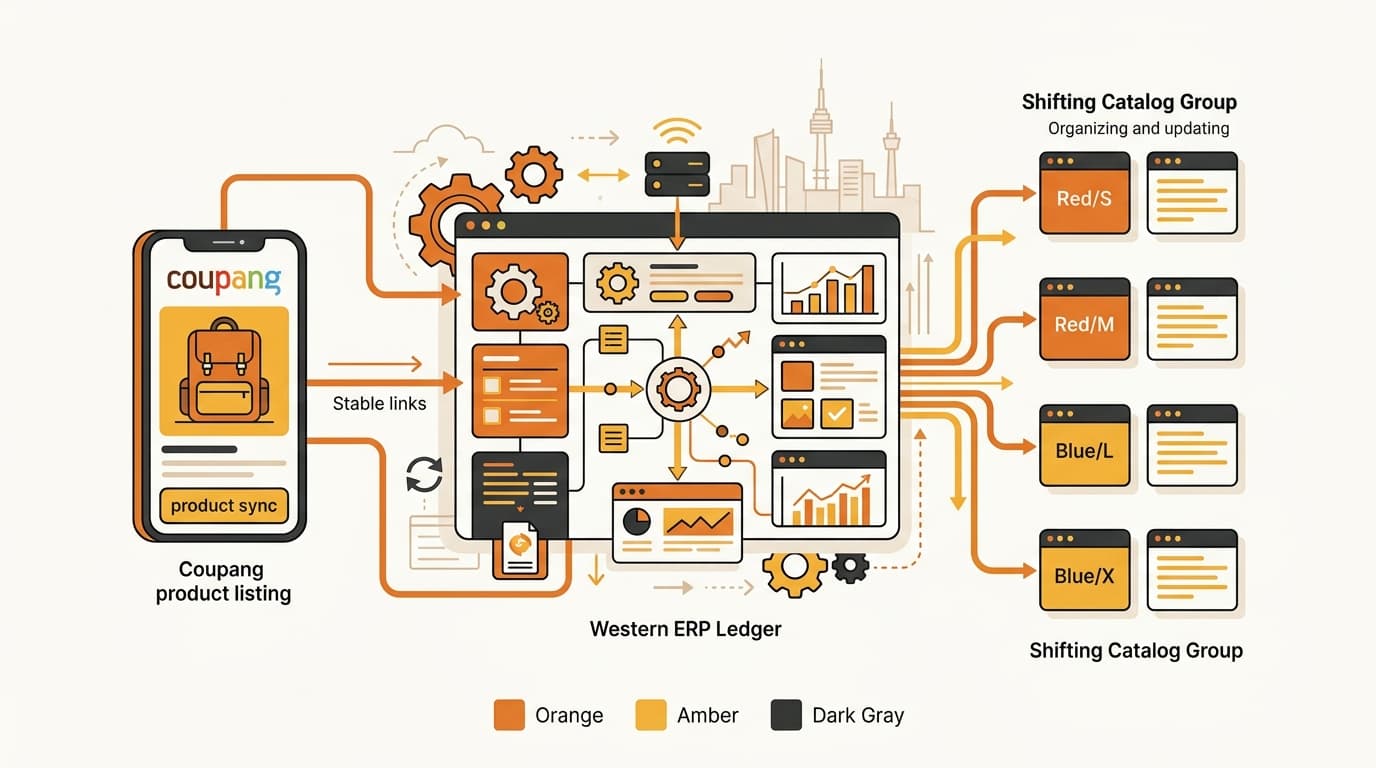
Coupang Product IDs: One ID Cannot Cover Every Variant
One Coupang product ID cannot cover every ERP variant; keep your brand SKU as the main key and map listing, option, edit, and order values to each SKU.

Coupang Rocket Growth Stock: Can an ERP Set It via API?
An ERP cannot set Coupang Rocket Growth stock through the Open API; replenishment starts when Coupang physically receives a new inbound shipment of stock.