
What "Press Back" Means When Coupang Says an Order Was Delivered
"Press back" means exactly what it sounds like: when Coupang records a delivery as complete, approves a return, or refunds a buyer in a way you believe is wrong, you do not have to accept it. You can contest the decision — but only with source evidence, and only inside a timing window. On a call this week the whole instruction was two words. This post is what those two words mean in practice on a Coupang account.
The instinct matters because most sellers treat a Coupang system decision as final. It usually isn't. Coupang runs a formal burden-of-proof process — the CVR, or 쿠팡확인요청 (Coupang confirmation request) — that exists precisely so a seller can push back on an outcome that doesn't match reality. The catch is that "press back" only works if you've kept the evidence and you move before the window closes.
“Press back.”
Isaac Lee — CEO, Kontactic
Why a "final" Coupang decision often isn't final
A delivery marked complete is a claim, not a fact you have to live with. So is an approved return. So is an instant refund. Each of those is a system event that can be contested when the underlying reality differs from what the platform recorded.
Two things make this counterintuitive for foreign sellers. First, the money often moves before you get to weigh in — Coupang can refund a buyer the moment a return courier scans the pickup, which is why buyers get paid before the returned goods arrive. Second, a sale you thought was locked can still reverse, because Coupang recognizes revenue on delivery completion and a return can undo it after the fact.
CVR (쿠팡확인요청) is Coupang's confirmation-request process — the mechanism a seller uses to formally contest a delivery-completion, return, or refund decision by submitting evidence. It puts the burden of proof on the seller, which is exactly why the evidence has to exist before the dispute does.
So "press back" is not stubbornness. It's using the one lever the platform actually gives you: a documented request to re-examine a decision, backed by proof.

The three moments where pressing back applies
In our experience, almost every contestable Coupang event falls into one of three buckets. Knowing which one you're in tells you what evidence you need.
- Delivery marked complete, buyer says it never arrived. The dispute is about whether the parcel reached the address. Evidence is the courier's delivery record, GPS/photo proof of delivery, and the tracking timeline.
- Return approved that shouldn't have been. The dispute is about whether the returned unit matches what was sold — wrong item back in the box, used goods returned as new, missing accessories. Evidence is inbound photos and the condition record of the returned unit.
- Refund issued before you could inspect. The instant-refund timing gap means the buyer already has the money. The dispute is recovered after the fact, which makes the return-condition evidence the whole case.
Notice the pattern: in every bucket the seller is the one who has to produce proof. That's the burden-of-proof design. If the evidence doesn't exist at the moment the return courier scans or the delivery pings complete, there is nothing to press back with later.
The KRW 50,000 threshold and the timing window
Two numbers decide whether pressing back is even worth doing.
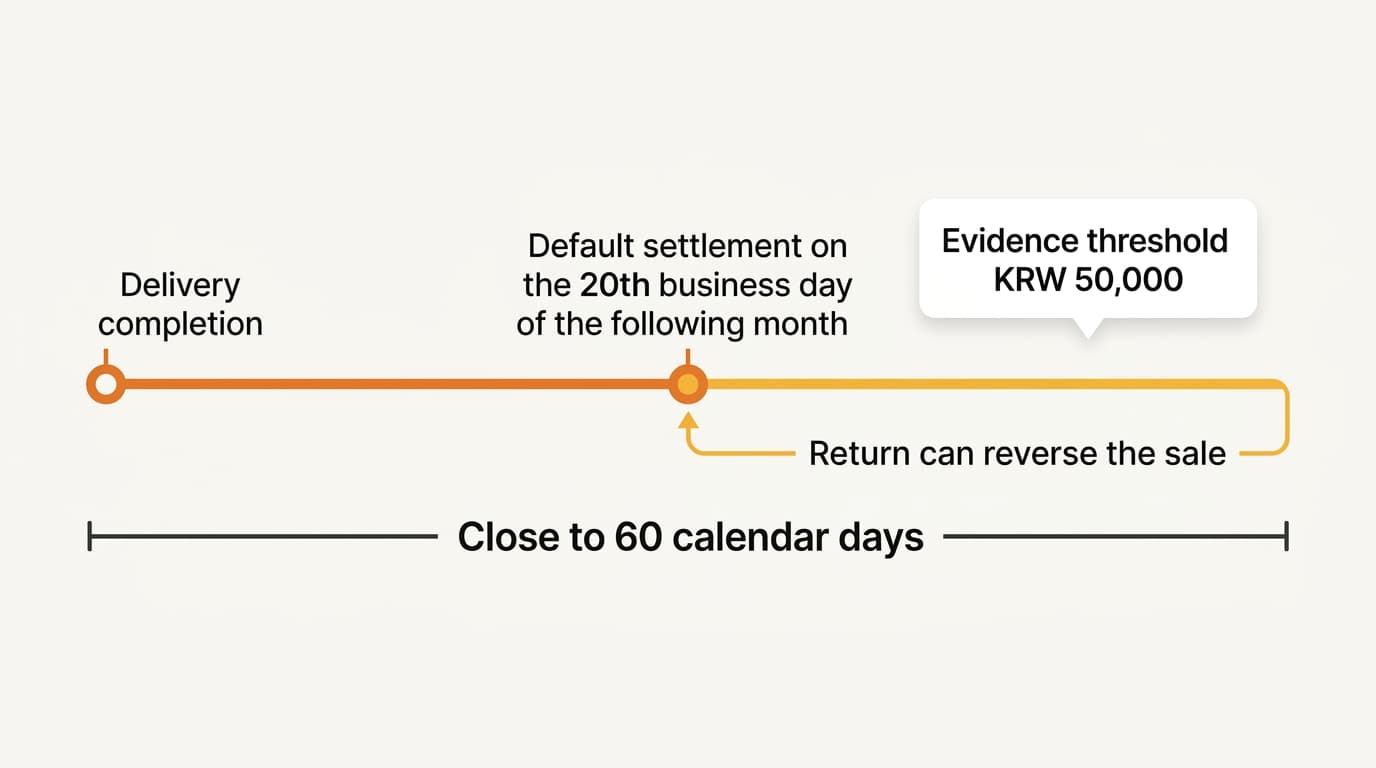
The first is the evidence threshold. Coupang applies a KRW 50,000 line to the seller's burden of proof — below it, chasing a contested case rarely pays for the operational effort; at or above it, the case is usually worth building. It's one of the Coupang policy changes that reset Rocket Growth margins, and it's the number we use to triage which disputes to actually file.
The second is the settlement clock. Coupang's default payout lands on the 20th business day of the following month — close to 60 calendar days after the sale — as we cover in the breakdown of Coupang settlement timelines. That gap cuts both ways. It gives you time to gather evidence before a reversal fully settles, but it also means an unchallenged wrong decision quietly reduces a payout you won't see for weeks.
Why the evidence has to exist before the dispute
You cannot press back on a case you didn't document. This is the part foreign brands underestimate, because in their home market the platform often eats small disputes. On Coupang the seller carries the burden, so the operating discipline is to capture proof as a routine, not as a reaction.
Practically, that means:
- Photograph every returned unit on inbound, before it re-enters sellable stock, with the order reference visible.
- Keep the courier delivery record for anything a buyer might claim never arrived.
- Log the return condition — item match, usage, missing parts — at the desk, not from memory.
- Triage against the KRW 50,000 line so you file the cases worth filing and let the trivial ones go.
- File inside the window, before the reversal settles and the case ages out.
Under Rocket Growth, the practical nuance is that Coupang runs the customer-facing return while the returned unit re-enters your inventory — so the condition evidence you'd use to press back has to be captured at the point the unit comes back to you, not later.
Whose call it is to press back — and who carries the cost
The right to contest is yours because the exposure is yours. Across every Kontactic tier — Spark, Flame, and Blaze — the client owns the inventory and bears the operating costs and liability, which is how funding and liability actually flow when you sell in Korea. A wrong reversal comes out of the client's proceeds, not ours, so the decision to spend effort pressing back is fundamentally a client-economics call.
That's why we run it as a triage, not a reflex. Pressing back on a KRW 8,000 item can cost more in operating time than the reversal itself. Pressing back on a KRW 90,000 unit that came back used, with clean inbound photos, is a case worth building every time. "Press back" is the instinct; the KRW 50,000 line and the evidence file are what turn it into a decision.

Common questions
Can I contest a delivery that Coupang already marked complete? Yes. Delivery completion is a system claim you can challenge through the CVR (쿠팡확인요청) process using the courier record and proof of delivery — provided you file before the case ages out.
Is it worth contesting small refunds? Usually not below the KRW 50,000 evidence threshold. The operational effort of building and filing a case tends to exceed the recovery on low-value items.
Does pressing back reverse an instant refund the buyer already got? It recovers the amount after the fact, not before. Because eligible returns refund the buyer at pickup scan, the money is already gone — so your return-condition evidence is what wins back the proceeds later.
Who decides whether to press back on a Kontactic-run account? The exposure sits with the client under every tier, so it's a client-economics call. We build the evidence file and triage cases against the KRW 50,000 line, then contest the ones worth contesting.
Want your Coupang disputes handled the right way?
Talk to Kontactic about running your Korean Coupang account with the evidence discipline that lets you press back on wrong deliveries, returns, and refunds — and win them.
About the author
Korean and global e-commerce operators with 15+ years of cross-border experience, led by CEO Isaac Lee — KOTRA-certified consultant and official lecturer for Seoul City and the Korea Customs Service. We run Korea market entry for Western brands every day; this blog documents what we learn in the field.
More about Kontactic →Related Articles
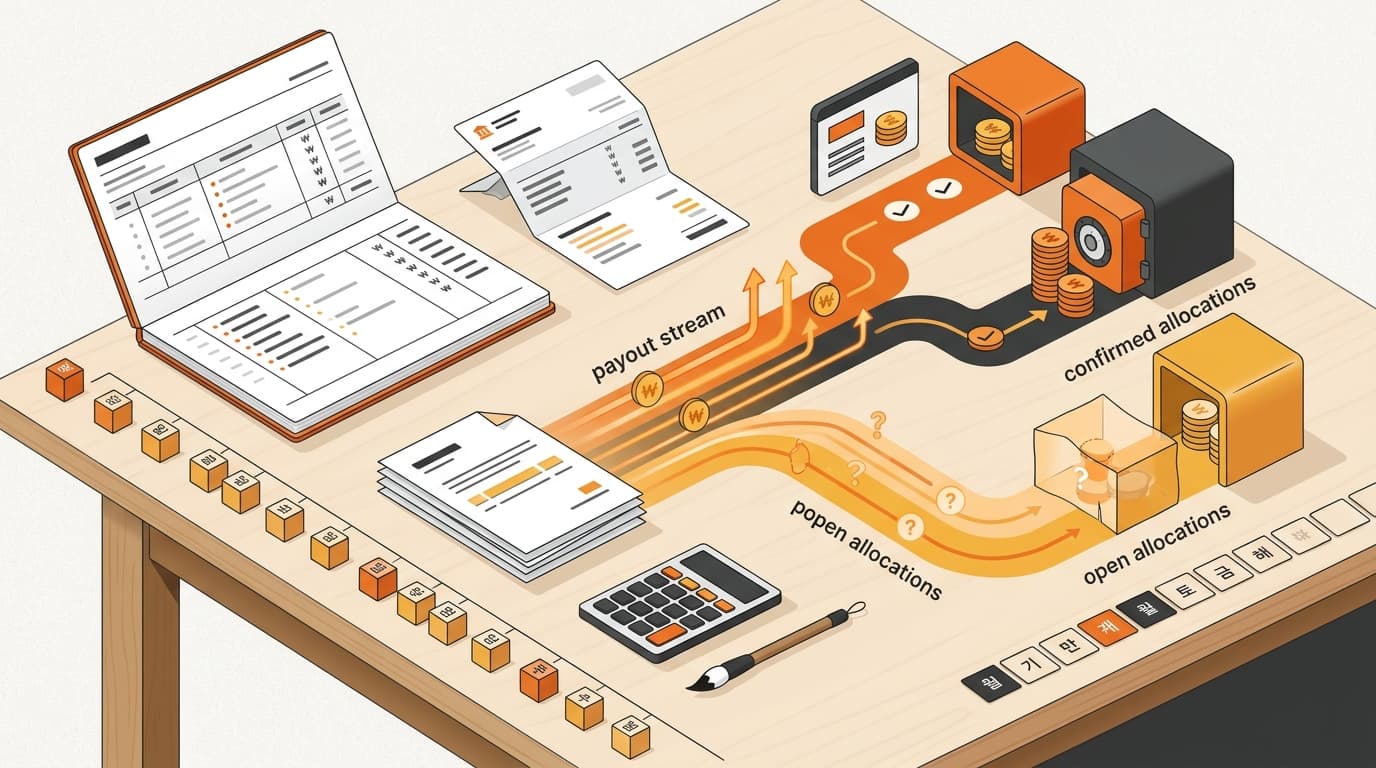
Coupang Settlement Periods: How Kontactic Reconciles
Kontactic closes Coupang settlement periods by confirming allocations, checking bank evidence, and keeping FX differences and late corrections visible.
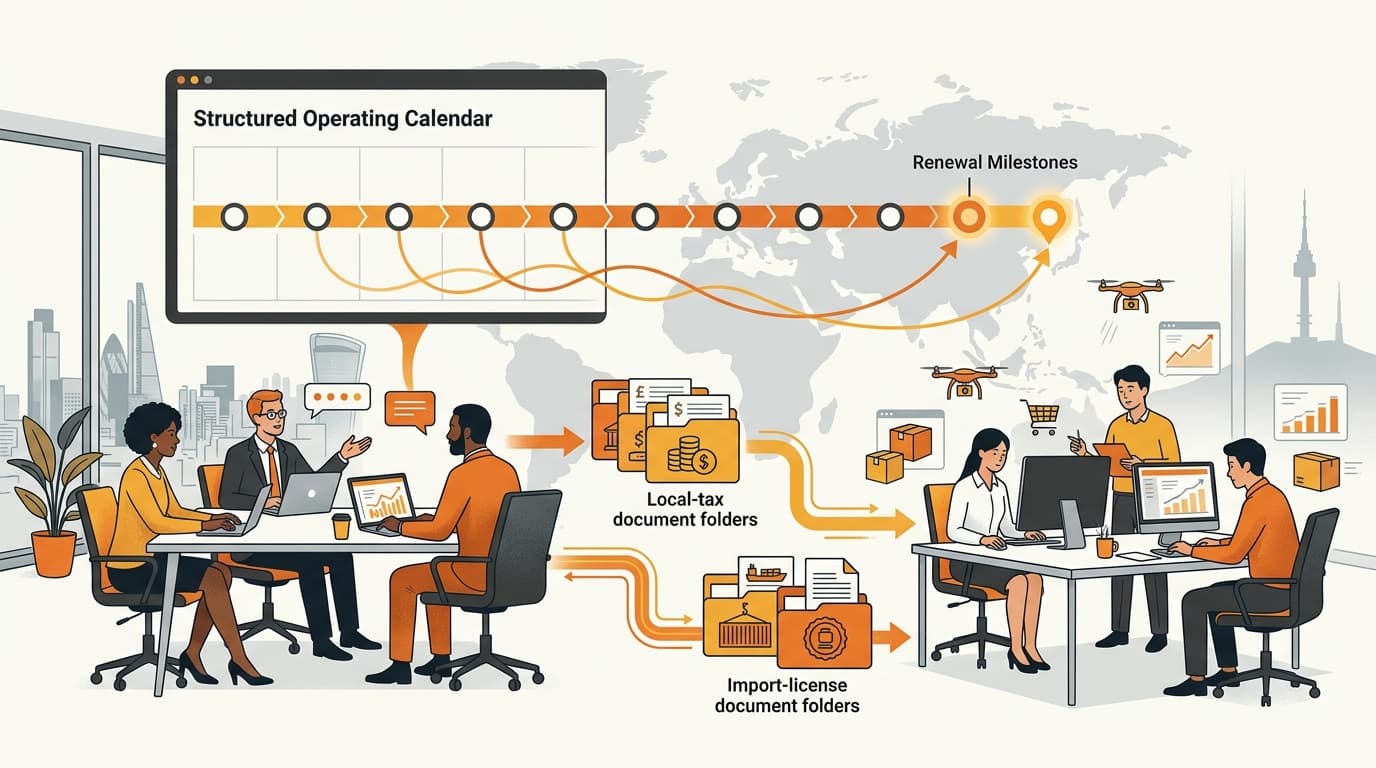
Korean Entity Administration: What Happens After Setup?
Incorporation is the start for a Korean entity. See how Kontactic Seller Center stages renewal reminders and routes local-tax and import-license document work.
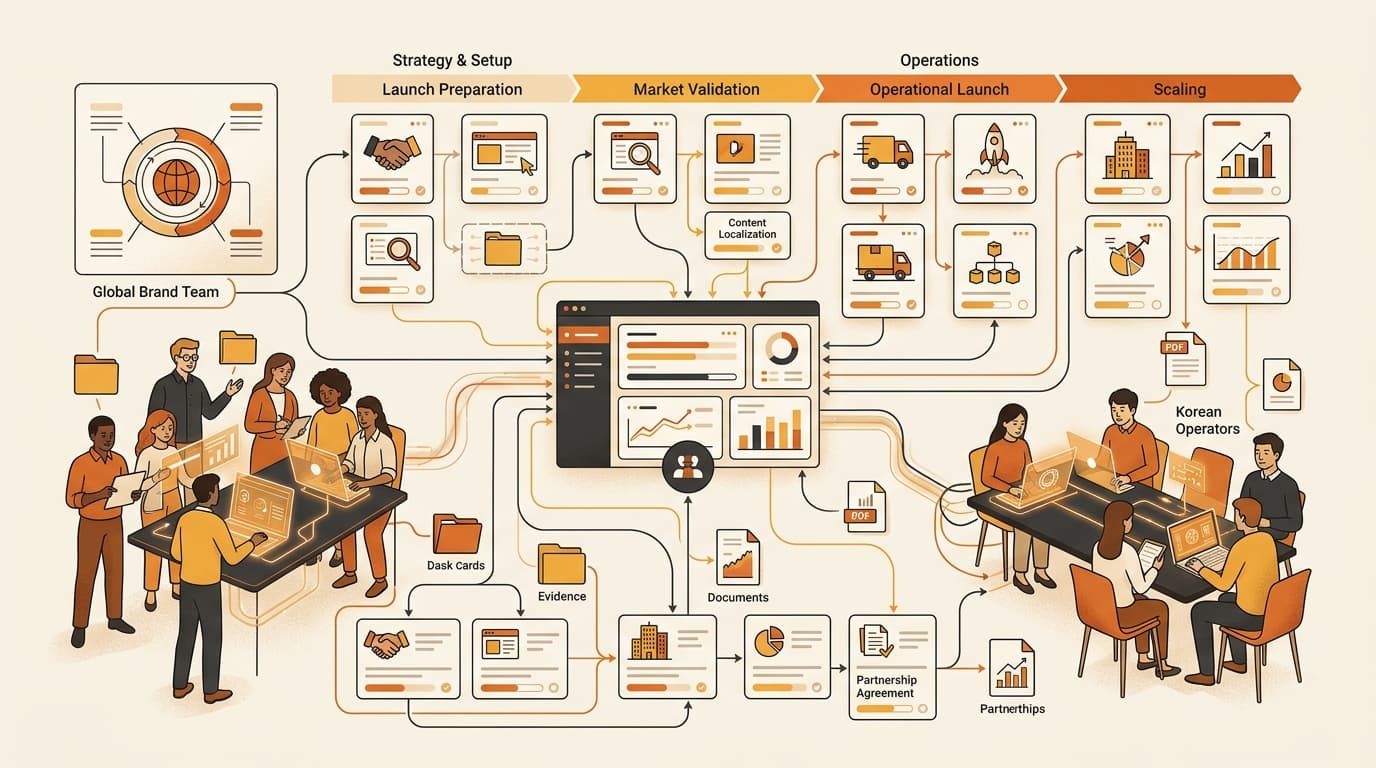
Korea Launch Roadmap: Kontactic’s Brand-Specific Plan
A Korea launch roadmap should reflect the brand, while Kontactic Seller Center turns scope, evidence, dependencies, and progress into one shared plan.