Korean Entity Administration: What Happens After Setup?
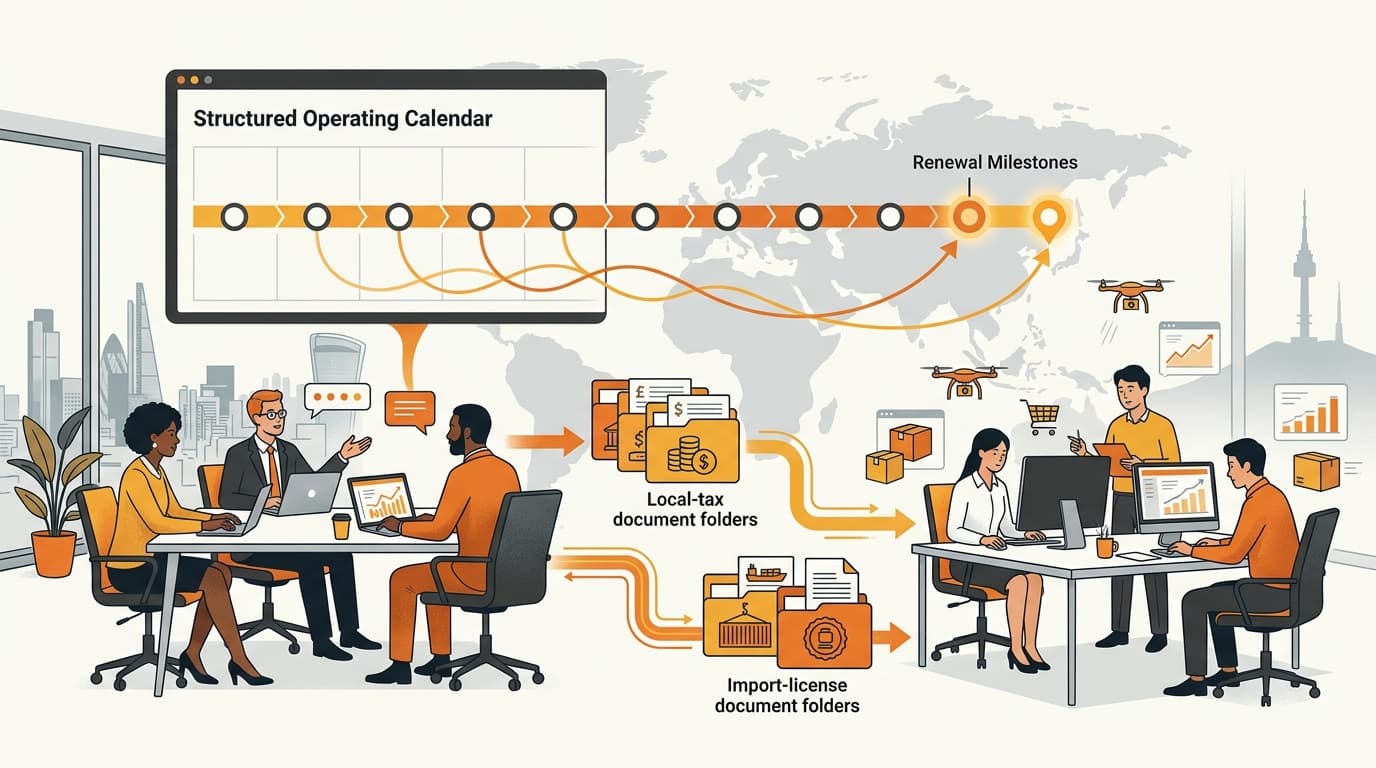
After incorporation, Korean entity administration becomes a recurring operating cycle: renewal and expiry dates are surfaced three months ahead, follow-up alerts appear at two and one months, and delegated local-tax and import-license document actions have defined workflow paths. Kontactic Seller Center turns those tasks into an operating view for a live Korean commerce business, rather than leaving them as a one-time setup checklist.
Incorporation is the start of the workflow, not the finish
Formation has a visible endpoint. The entity is registered, the initial records are in place, and the commercial launch can move forward. Administration does not behave that way. Dates recur, local actions need delegation, and import-related document work can remain relevant while the business is already selling.
For a Western brand moving from proven Coupang demand to a local Korean operation, this creates a practical management problem. The people who made the launch decisions may be in the US or Europe, while the recurring actions require a Korean operating path. A remote team can understand that something needs attention and still lose time working out which date matters, who should act locally, or where the supporting document belongs.
Ongoing entity administration is the recurring work that keeps a Korean entity’s dates, delegated local-tax actions, and import-license document tasks visible and moving after incorporation.
That is the distinction between a launch checklist and an operating cycle. A checklist asks whether the entity was formed. An operating cycle asks what must be revisited next and whether the local action has a defined place.
If you are still at the formation stage, Setting Up a Korean Entity Without the Paperwork Fog covers the registration sequence. This update starts where that sequence ends: the entity exists, and the global team needs a repeatable way to keep its administration current. The transition from formation to ongoing ownership is also a handover problem, which is why Korean Entity Handover: How Kontactic Aligns Each Step is a useful companion to this workflow.

Renewal dates need a staged cadence
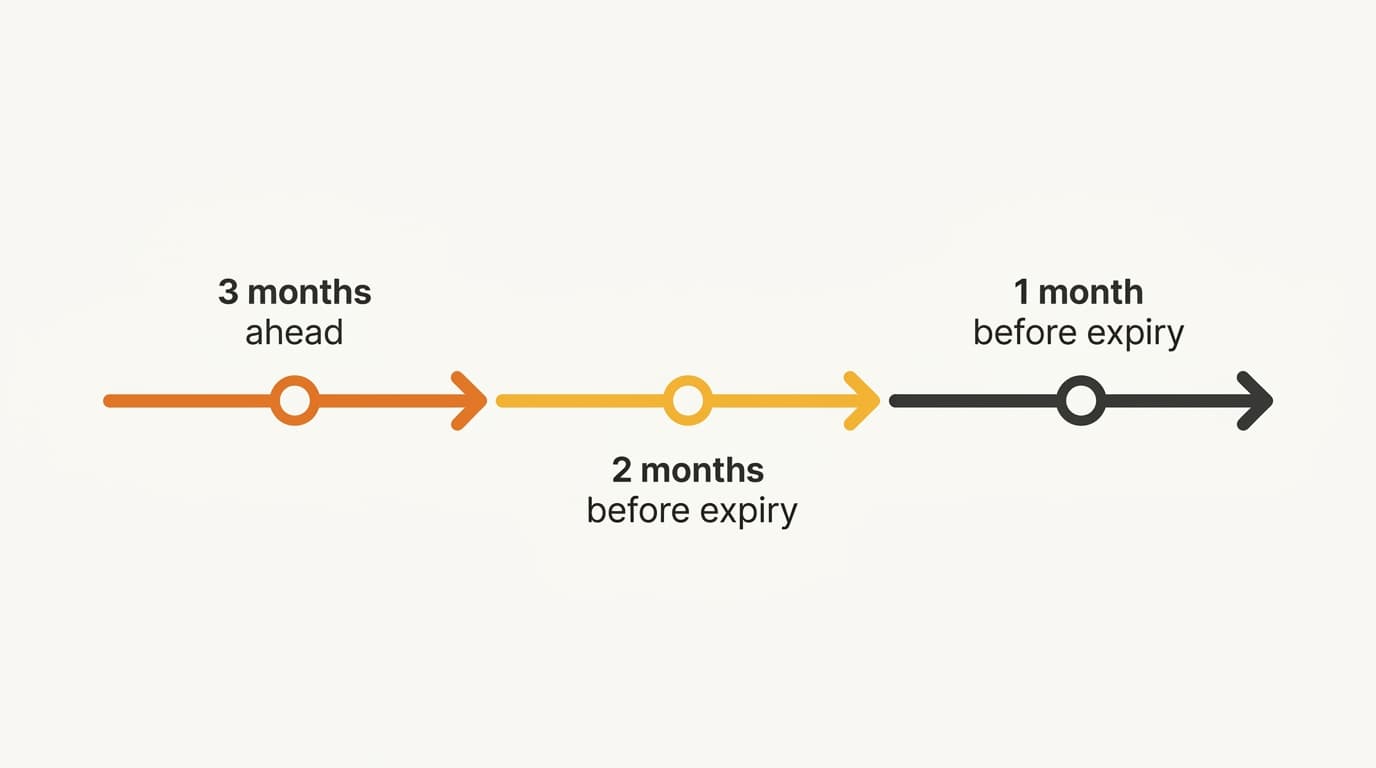
The renewal workflow is anchored to the expiry date. Seller Center surfaces the date in the operating view, starts the cycle three months ahead, and places follow-up alerts at two and one months.
The sequence is simple by design:
- 3 months ahead: the renewal cycle is triggered and the upcoming expiry is visible early.
- 2 months before expiry: a follow-up alert keeps the action in view if it has not yet been completed.
- 1 month before expiry: a further follow-up alert brings the approaching expiry back into the operating rhythm.
Each alert has a different operational purpose. The first creates planning time. The second prevents the item from disappearing after the initial review. The third keeps the approaching date visible when the remote team is balancing the entity’s administration with commercial work.
This is more useful than a single reminder attached to the original setup project. A formation task can be marked complete and disappear from view; a renewal date needs to return to view before it becomes urgent. The cadence also gives a global team a shared reference point instead of relying on one person’s inbox or memory.
The dates should be treated as workflow controls, not as a replacement for the underlying renewal or filing. The applicable record determines what action is required. Seller Center’s role is to surface the date early and keep the follow-up sequence in the operating workflow.
A reminder is not the underlying renewal or filing. It is the control that gives the responsible team time to complete the applicable action through the correct local path.
Delegated local-tax work needs an explicit route
Local-tax work is a routing problem as much as a timing problem. When a Korean local party must carry out an action, a Western team should not have to reconstruct the request from an email thread every time the action comes due.
The capability makes delegated Korean local-tax filing actions explicit and correctly routed within the operating workflow. That distinction matters. A note that says “local tax filing needed” is a loose reminder; an explicit workflow action gives the work a defined place alongside the entity’s other recurring administration.
This does not turn the remote brand into the local filing party, and it does not suggest that software itself completes the underlying filing. The value is operational: the global team can see that the action exists, the local work has a proper route, and the item belongs to the entity’s ongoing administration rather than to an unstructured request queue.
Seller Center organizes and routes delegated local-tax filing work; the delegated Korean party still needs to complete the applicable filing or document action.
The exact filing obligations can depend on the entity and the relevant circumstances. The product capability is intentionally narrower and more practical: make the action visible, put it in the right workflow, and give the team a repeatable way to follow it up.
Import-license documents should not live in a side folder
Import-license document actions have the same operational failure mode. A document may exist somewhere in a shared drive, but that does not tell the team when an action is due, whether it belongs to the current entity workflow, or how a remote commercial team should coordinate the next step.
Seller Center gives import-license document actions a defined path inside the operating workflow. That keeps them connected to the Korean entity that supports the commercial operation instead of treating them as disconnected paperwork. For a brand importing inventory for a live Coupang business, this connection matters: document work is part of keeping the local operation ready to run, not an administrative appendix to launch.
The distinction is important. A workflow does not decide which authorization applies to a product, create a missing document, or replace the underlying compliance action. It gives the action a known place so that the team can manage it with the same discipline as other recurring entity work.
Import authority also has its own renewal and expiry questions. For a focused look at why those dates can affect inbound operations, see Importer of Record Renewal: Stop Expiry Pausing Sales. The point here is the operating layer around the action: the earlier the date or document task is visible, the less likely it is to surface as an isolated emergency.
The result is a managed layer for a live Coupang business
A managed administration layer earns its place after launch because the Korean entity is no longer just a formation project. It supports a live commercial operation. The team now needs to keep dates, delegated work, and import-license documents visible while the business handles the normal demands of selling on Coupang.
The difference can be summarized this way:
| One-time setup mindset | Ongoing workflow mindset |
|---|---|
| The entity is formed. | Which renewal or expiry date is approaching? |
| The launch documents are collected. | Which local-tax or import-license document action is next? |
| The checklist is complete. | Which delegated local action needs follow-up? |
| The team prepares to go live. | The operating view supports the live Coupang business. |
For a remote Western team, the practical operating loop is straightforward:
- Review the entity’s renewal and expiry dates in the operating view.
- Treat the 3 months ahead alert as the start of the renewal cycle, not as a reminder to revisit later.
- Use the 2 months before expiry and 1 month before expiry alerts as staged follow-up points.
- Keep delegated Korean local-tax filing actions in their explicit, correctly routed workflow path.
- Put import-license document actions in their defined path instead of managing them as separate paperwork.
This is not a promise that administration disappears. It is a way to make recurring work harder to overlook and easier to coordinate across a remote headquarters and a Korean operating context. The product update is therefore less about adding another setup screen and more about changing the unit of work: from a completed incorporation task to a maintained operating cycle.

Common questions about Korean entity administration
Is Korean entity administration finished once the company is incorporated?
No. Incorporation completes the formation stage, but renewal dates, delegated local-tax filing actions, and import-license document work continue to require visibility and follow-up.
How early does the renewal workflow start?
The cycle starts 3 months ahead of the relevant expiry date, with follow-up alerts at 2 months before expiry and 1 month before expiry.
Does Seller Center complete the local-tax filing itself?
The capability makes delegated Korean local-tax filing actions explicit and correctly routed within the operating workflow. It is a workflow control for the action; the delegated local party still handles the applicable underlying filing or document work.
What happens to import-license paperwork?
Import-license document actions receive a defined path in the operating workflow rather than remaining disconnected paperwork. The workflow does not replace the underlying document or determine which authorization applies.
Is this only useful before a Korean business launches?
No. The point is to support the live Coupang operation after incorporation, when the entity’s recurring administration has to run alongside local commerce rather than ending with setup.
Make post-incorporation work visible
If your Korean entity is live but recurring administration still sits across inboxes and disconnected documents, contact Kontactic to discuss a managed operating workflow.
About the author
Korean and global e-commerce operators with 15+ years of cross-border experience, led by CEO Isaac Lee — KOTRA-certified consultant and official lecturer for Seoul City and the Korea Customs Service. We run Korea market entry for Western brands every day; this blog documents what we learn in the field.
More about Kontactic →Related Articles
Korea Launch Roadmap: Kontactic’s Brand-Specific Plan
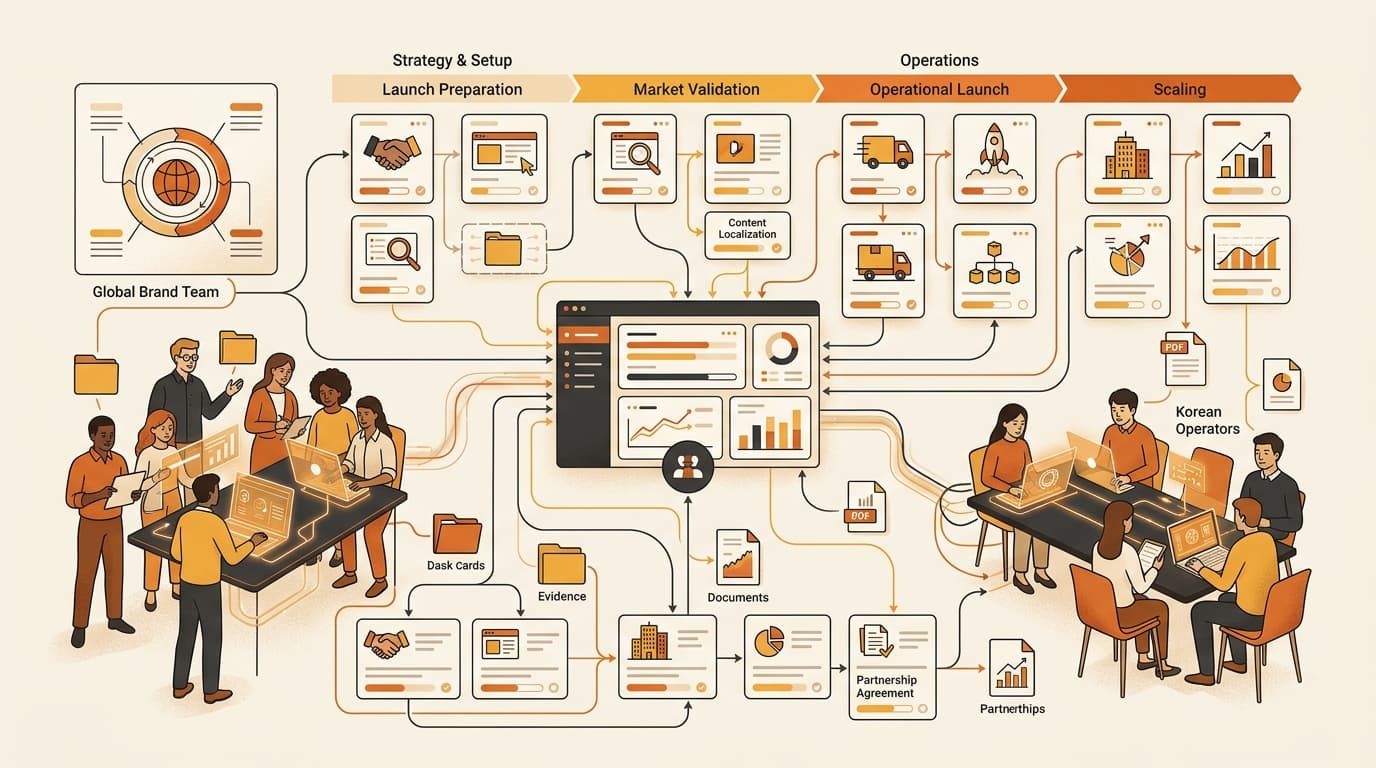
A Korea launch roadmap should reflect the brand, while Kontactic Seller Center turns scope, evidence, dependencies, and progress into one shared plan.

How Does Kontactic Protect Coupang Catalogs When Sync Fails?
When Coupang connectivity fails, Kontactic separates shared incidents from seller-level issues and protects the live catalog from incomplete inventory updates.

Korean Entity Handover: How Kontactic Aligns Each Step
See how Kontactic Seller Center keeps a Korean entity handover aligned across representative records, documents, delegated tax work, milestones, and exceptions.