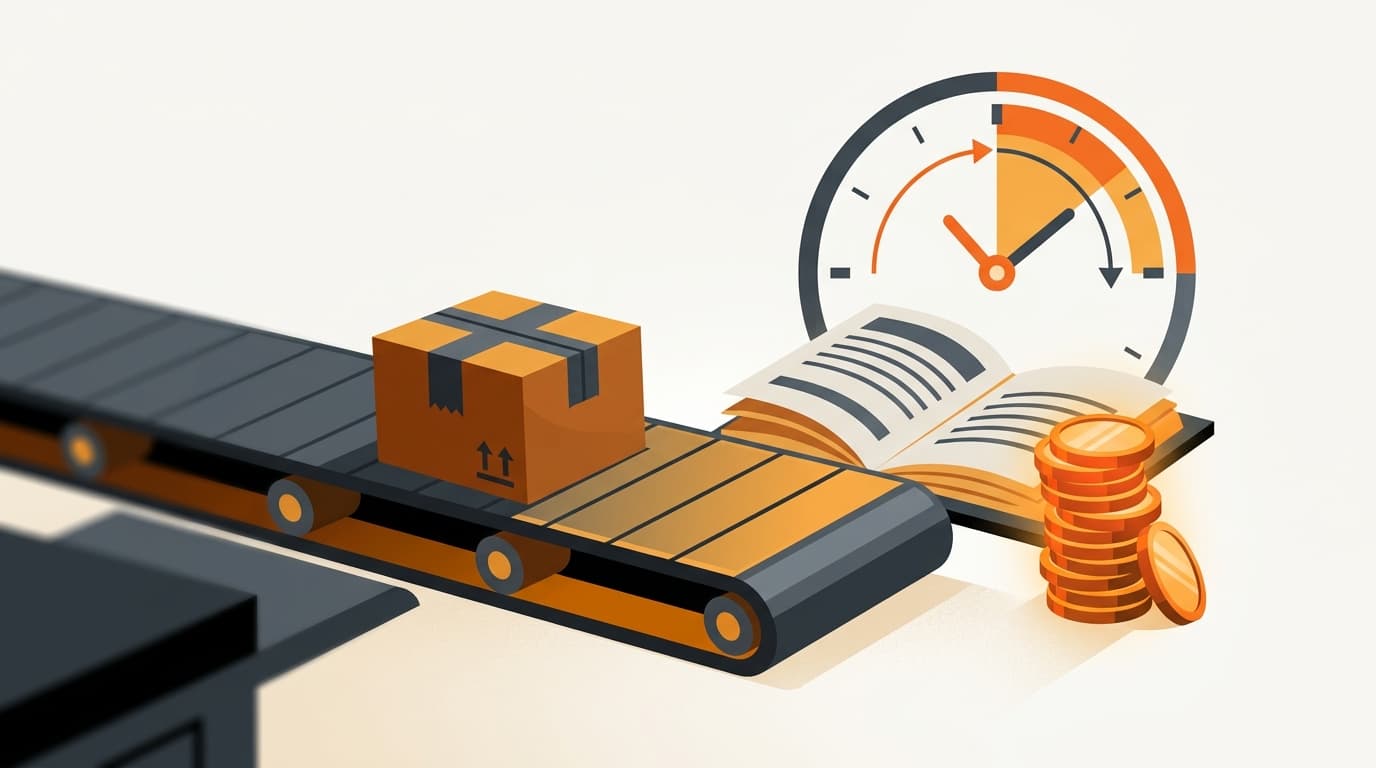
When Coupang Recognizes Your Sale as Revenue
Coupang recognizes your sale as revenue on the delivery-completion event — not when the customer pays and not when the parcel leaves your warehouse. That recognized sale then enters a separate settlement cycle before it becomes cash, and a return can reverse it — shipping cost included — even after the product has shipped. So the day a Coupang order shows "delivered" and the day you actually get paid for it are almost never the same day, and neither is final until the return window closes.
If you are modeling Korean cash flow the way you model a Shopify or Amazon payout, this is the assumption that will burn your forecast. Below is the actual sequence.
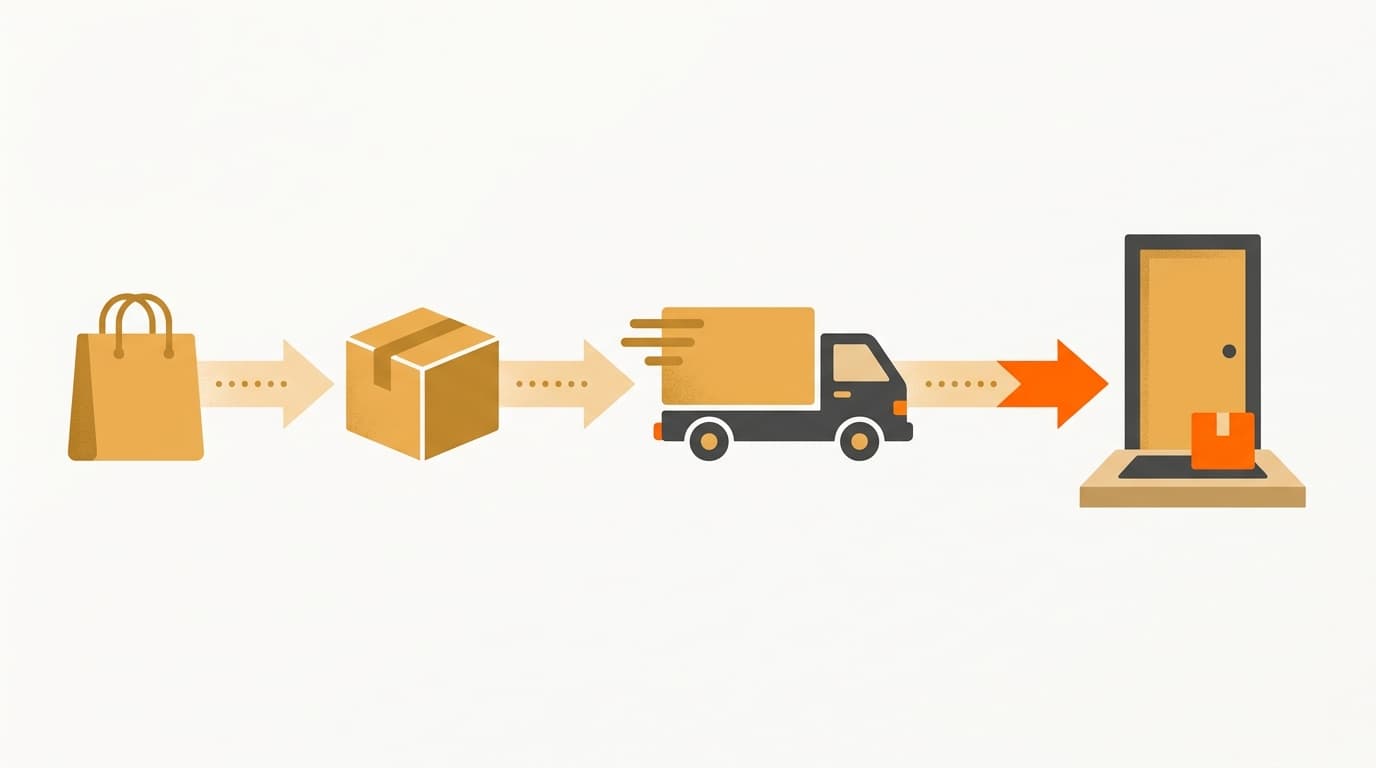
The order lifecycle has distinct states, and recognition sits near the end
A Coupang order does not flip from "paid" to "revenue" in one step. It moves through a chain of states, and only the last one triggers recognition:
- Order created — the customer has paid Coupang, but this is not your revenue yet.
- In preparation — you have accepted the order and are picking and packing.
- Shipped — the parcel has left with a carrier and a tracking number is attached.
- Delivery completed — the carrier confirms the parcel reached the buyer.
Revenue is recognized on that final delivery-completed trigger. The customer's payment at checkout sits with Coupang as an intermediary; it does not become a settle-eligible sale on your side until delivery completes. This matters because the two events can be days apart — a fast-moving SKU might be created, shipped, and delivered inside 48 hours, while a heavier or regional order stretches the gap.
Delivery-completion trigger: on Coupang, a sale becomes settlement-eligible revenue when the order reaches the delivery-completed state — not at checkout payment, and not at ship-out. Everything before that is provisional.
The practical consequence: a dashboard full of "shipped" orders is not the same as recognized revenue. You are looking at sales in flight, not sales you can count on for this settlement cycle.
Untracked direct shipments recognize on a fixed clock instead
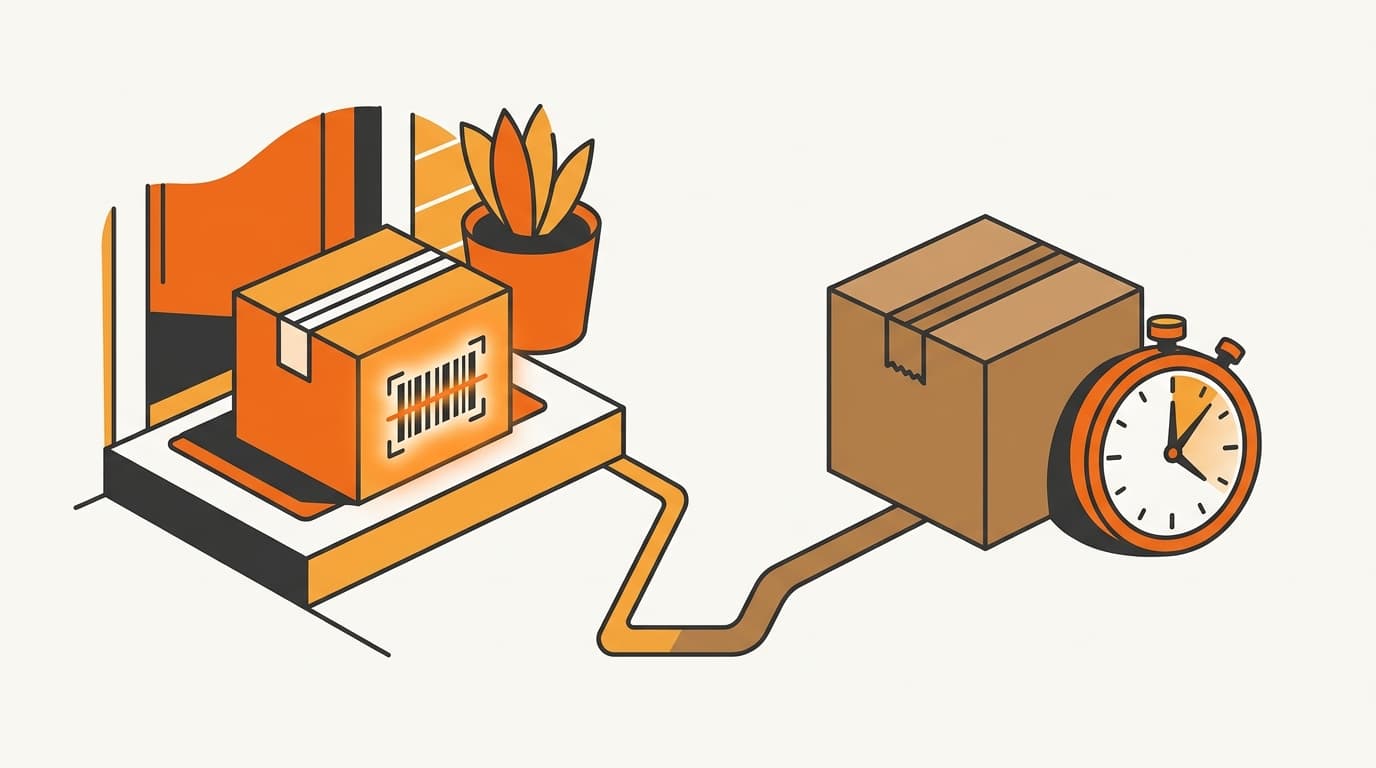
There is an important exception for company-direct shipments. When you enter an order under the DIRECT carrier code — your own courier or hand-off with no scannable tracking — Coupang cannot receive a delivery-completion scan. The trigger that normally fires on "delivered" has nothing to fire on.
Coupang handles this by recognizing the sale on a fixed post-shipment clock instead: roughly a week after the ship-out, the order is auto-recognized as completed even though no carrier ever confirmed delivery. This is normal system behavior, not an error, and not a sign your order is stuck. If you run a mix of tracked and DIRECT shipments, expect two different recognition patterns in the same settlement window — tracked orders recognize on actual delivery, DIRECT orders recognize on the clock.
For cash-flow modeling this means the recognition date for a DIRECT order is predictable but delayed: it lands on a schedule, not on an event. Do not assume a DIRECT sale recognizes the moment you mark it shipped. It does not.
If your Korea operation leans on DIRECT-code shipments, build the fixed post-shipment recognition lag into your forecast explicitly. A batch shipped at month-end may not recognize until the following period.
Coupang's own developer documentation describes the order states, carrier codes, and completion behavior that drive all of this — it is the source a finance team should verify against rather than reverse-engineering from the seller dashboard alone. It also explains why the order and settlement data you pull from the Open API is keyed to these states.
What settles is not the sticker price
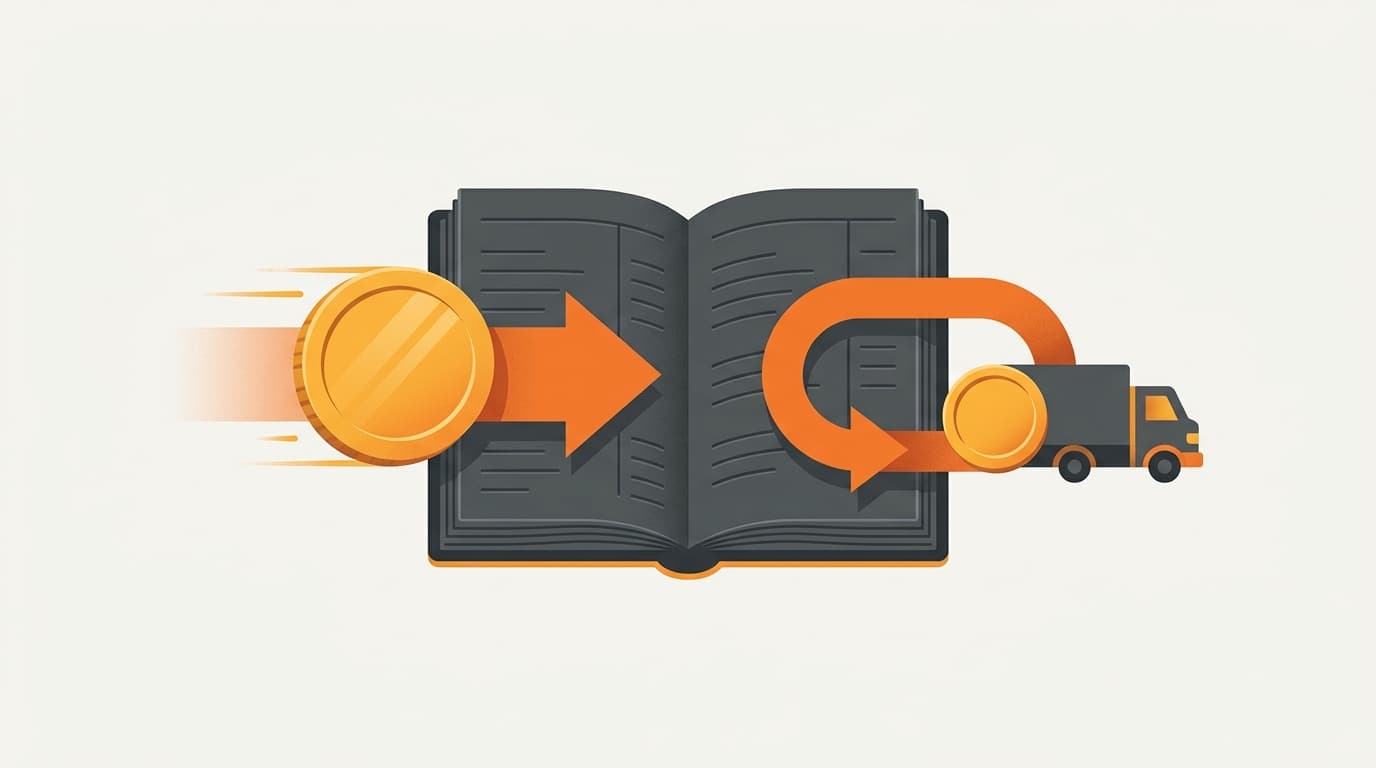
Even once a sale is recognized, the amount that eventually settles to you is not the number the customer saw at checkout. Three price fields are worth keeping straight, because they answer different questions:
- salesPrice — the per-unit price of the item.
- orderPrice — unit price multiplied by quantity for that order line.
- discountPrice — the discount applied to the order.
The one that surprises Western brands: not every discount comes out of your pocket. Certain Coupang-funded coupon discounts do not reduce the seller's settlement — the buyer paid less, but Coupang absorbs that portion, so your settle-eligible amount is not cut by it. Other discounts are seller-funded and do reduce what settles. If you model settlement by simply summing the prices customers paid, you will misstate it in both directions.
Reconcile settlement against the order line's price components, not the customer-facing final price. The gap between "what the buyer paid" and "what settles to you" is where seller-funded vs. platform-funded discounts hide.
On top of the price components, Coupang's selling commission and — if you use Rocket Growth (로켓그로스) — storage, fulfillment, and returns-handling fees are deducted before you see cash. The recognized sale is the top line; several deductions sit between it and your bank.
Returns claw back sales that already 'closed'
Here is the part that quietly wrecks cash forecasts: a return can reverse a sale that has already been recognized. Recognition is not the same as finality. Until the return window closes, "delivered" revenue is still exposed.
The operational split matters:
- Cancel before ship (release-stop): if the order has not yet moved past preparation, it can be stopped with no revenue impact. Nothing recognized, nothing to reverse.
- Return after ship: once the order moves past the preparation stage, stopping it converts into a return — and the seller bears the return shipping cost, even if the parcel proceeds to ship and then comes back.
So a recognized sale can be reversed net of costs: you lose the sale amount and you eat the return logistics. The timing is what catches teams out — Coupang's instant refund flow can pay the buyer before the returned unit is even back in your hands, so the reversal can hit before you have inspected anything. And under Rocket Growth, Coupang runs the customer-facing return while the unit re-enters your inventory — the disposition stays your problem.
The lesson is not "returns are bad." It is that a return reversal lands on a different clock than the original sale, so a month that looked strong on recognized revenue can settle lower once reversals catch up.
How to model the cash-flow lag in practice
Put the two gaps into your forecast explicitly, because they compound:
- Recognition → payout lag. A recognized sale does not pay out immediately; it enters Coupang's settlement cycle, which runs on its own schedule. Treat delivery/recognition as the start of a clock, not the payment date. If you want the mechanics of that schedule, see how Coupang's default settlement pays on the 20th business day of the following month — close to 60 calendar days from the sale.
- Return reserve. Hold back a portion of recognized-but-not-settled revenue against reversals. The right percentage depends on your category's return rate, but the principle is fixed: do not spend recognized revenue as if it were final until the return window closes.
“On Coupang, 'delivered' is a milestone, not a receipt. The sale is not final revenue until the settlement cycle and the return window both close.”
Kontactic — Commerce operations
For DIRECT-code shipments, stack the fixed post-shipment recognition clock on top of the settlement lag. For tracked shipments, the recognition date follows actual delivery. Either way, near-term cash is later and softer than a naive "customer paid, so I earned it" model implies.
Common questions
Does Coupang recognize revenue when the customer pays? No. The customer's checkout payment sits with Coupang as an intermediary. Your sale is recognized on the delivery-completion event (tracked orders) or on a fixed post-shipment clock (untracked DIRECT orders) — not at checkout.
Why did my DIRECT order recognize about a week after I shipped it? Because DIRECT-code shipments have no scannable tracking, so no delivery-completion scan can fire. Coupang auto-recognizes the sale on a fixed clock roughly a week after ship-out. This is expected behavior, not a stuck order.
Can a sale be reversed after it's delivered? Yes. A return within the return window can reverse a recognized sale, and once an order has moved past preparation the seller bears the return shipping cost. Recognized revenue is not final revenue until the return window closes.
Does settlement timing change my Korean tax obligations? No. Settlement is a Coupang commercial process. Your accounting recognition and VAT (부가가치세) obligations under Korean law are separate — verify those against the National Tax Service and the statute text on law.go.kr, not the settlement dashboard.
Modeling Korean cash flow before you go local?
Talk to Kontactic about how Coupang recognition, settlement, and return reversals actually flow through your forecast.
About the author
Korean and global e-commerce operators with 15+ years of cross-border experience, led by CEO Isaac Lee — KOTRA-certified consultant and official lecturer for Seoul City and the Korea Customs Service. We run Korea market entry for Western brands every day; this blog documents what we learn in the field.
More about Kontactic →Related Articles
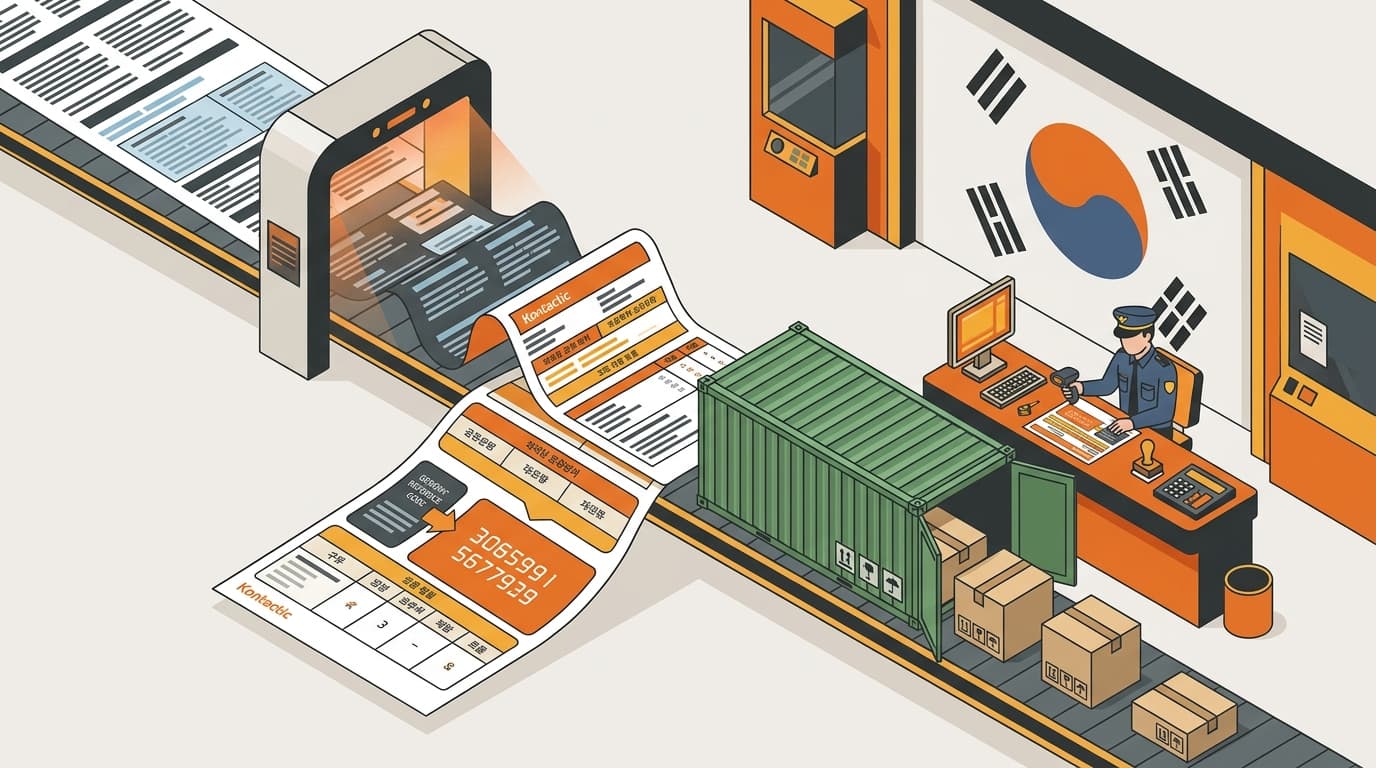
Korean HS Code: Can You Reuse US/EU HS Codes? Not Always
A US or EU HS code is a useful starting point, not a portable Korean classification. Learn how Korea’s HSK affects duty, FTA treatment, and import controls.

Korean Biocide Approval: Why Coupang Claims Still Count
No. Korean biocide approval cannot be avoided by hiding a “kills bacteria” claim from the bottle; a Coupang listing can still evidence intended biocidal use.
Can You Sell a Children's Product With KC Pending?
An in-scope children's product cannot be sold in Korea while KC is pending; complete the applicable Korean safety route before sales, not after stock arrives.