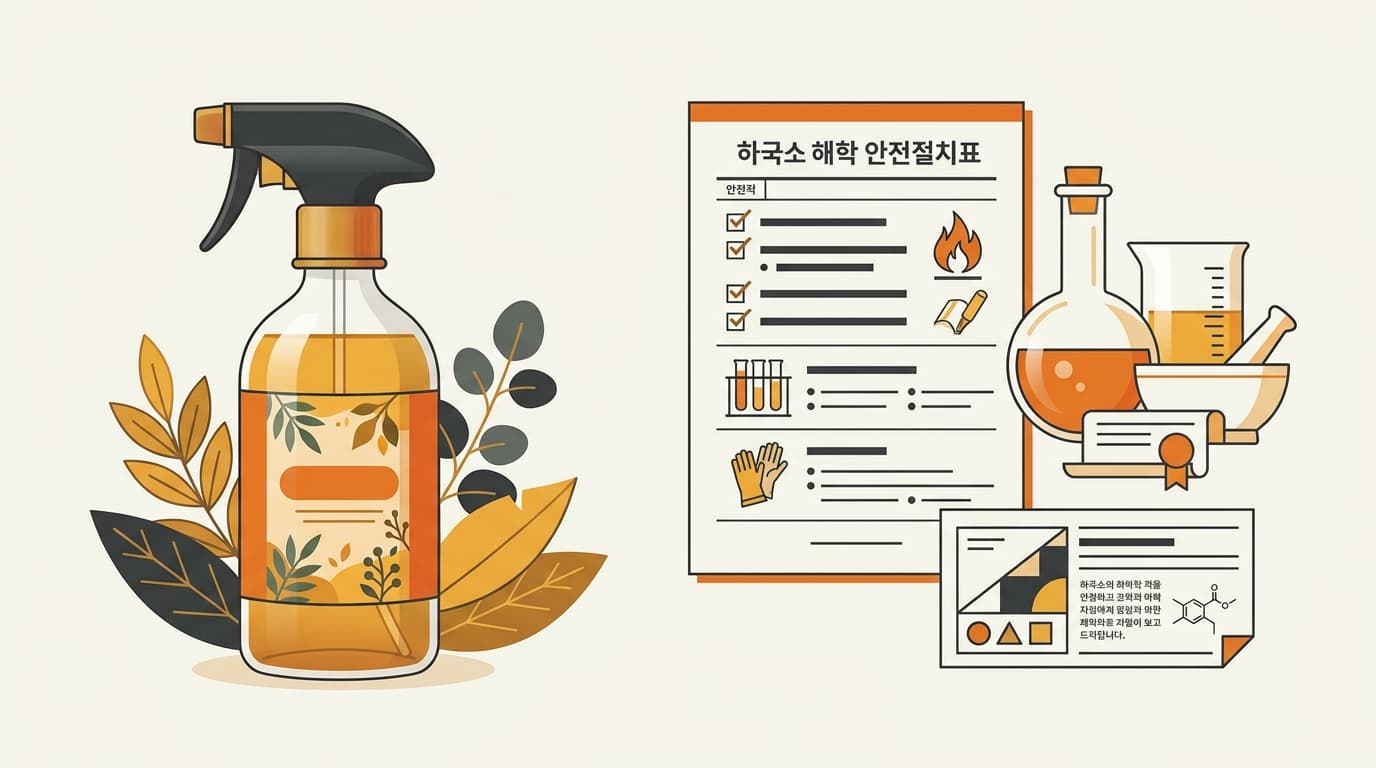
Natural Room Spray: Does Korea Require Safety Filing?
An essential-oil room spray cannot skip Korea’s household-chemical safety filing because the label says “natural,” “plant-based,” or “non-toxic.” If Korea’s current category list treats the spray as an air freshener, the Korean manufacturer or importer must have the finished spray tested by a designated testing body. The manufacturer or importer must submit the result through the Ministry of Environment’s system before making or importing the spray for sale.
Start with what the room spray is used for
Korea starts with the product’s job. A spray used to add fragrance to room air can fit the listed household-chemical category even when its formula uses essential oils or plant extracts.
Korea calls this type of product a safety-confirmed household chemical product (안전확인대상생활화학제품). That name describes a Korean regulatory category. It does not mean that products with synthetic ingredients are covered while natural products are not.
Safety-confirmed household chemical product: a listed household product whose finished formula must be checked against Korean safety standards. The required result must be submitted before commercial manufacture or import.
Imagine a Western brand selling a room spray with essential oils. Its front label says “natural lavender,” “plant-based,” and “non-toxic.” Its stated purpose is to freshen room air. The first question is what the spray does, what it contains, how it sprays, and what reaches the consumer during use. Those facts help decide whether Korea’s current air-freshener category covers it.
The brand’s words do not answer that question alone.
| What the brand says | What Korea still needs to know |
|---|---|
| “Natural” or “plant-based” | Which ingredients and concentrations are in the finished product? |
| “Non-toxic” | Which Korean safety standards apply to this product? |
| “Room freshener” | Does it only scent room air, or does it also kill, repel, or control organisms? |
| “Spray” | How is the product dispensed, and what can reach the consumer during use? |
The same check applies if the package uses leaves, flowers, or other natural imagery. Those images may explain the brand story. They do not create a legal exemption.
If the product has another use, such as skin or medical use, do not assume the air-freshener rules apply. Check its category again.
What the Korean safety check examines
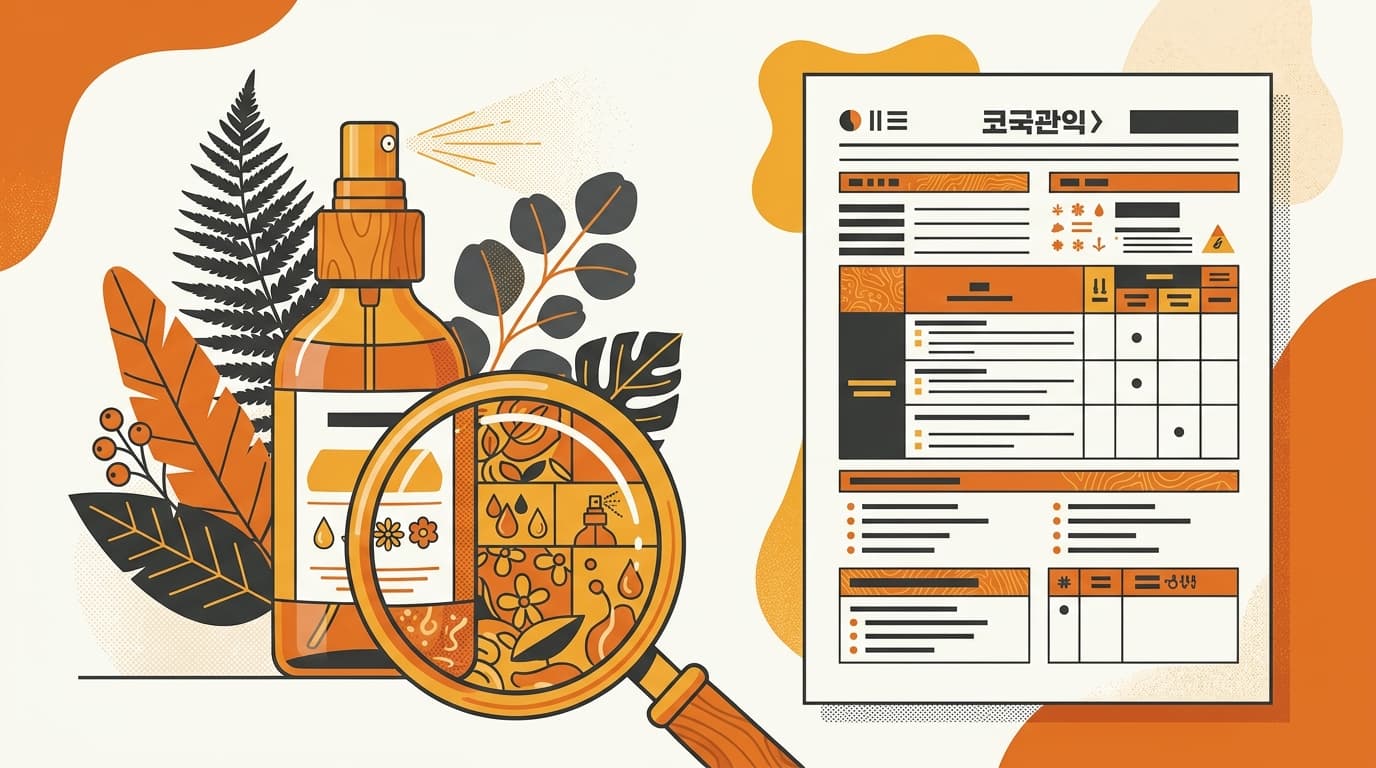
The Korean check follows the finished product. It is not only a review of the essential-oil supplier’s ingredient sheet.
The finished product is the mixture and dispenser that Korean consumers will receive. The review covers the finished product’s ingredients and concentrations, its intended use, how it sprays, and what reaches the consumer.
For a listed household-chemical product, the Korean manufacturer or importer must have a designated testing body check the finished product against Korean safety standards. The manufacturer or importer must then submit the required result through the Ministry of Environment’s system before commercial manufacture or import.
A US or EU ingredient list can help describe the formula. A Safety Data Sheet (SDS) can explain hazards and handling for a substance or mixture. Neither document replaces the Korean check. The same is true of a “non-toxic” statement on the bottle or product page.
Consider a simple mismatch. A brand sends its Korean importer an SDS for an essential-oil concentrate. The Korean product is a diluted room spray with its own pump. The review concerns the marketed spray, its concentration, its use, and its dispensing method. The concentrate document does not remove the need to review the finished product.
The product description must also match the claims customers see. A bottle described as a room freshener should not carry a different organism-control purpose in its instructions or online listing. If the purpose changes, the Korean rules can change too.
A US or EU SDS, ingredient list, or “non-toxic” claim is supporting product information. It is not Korean safety confirmation. Do not treat it as the filing.

What must happen before commercial import
The order matters. Do not book a commercial shipment or publish a Korean sales listing first and plan to fix the filing later.
For a room spray that falls within the listed household-chemical category, the practical sequence is:
- Write down the intended use. State whether the product only freshens room air or also claims to kill, repel, prevent, or control organisms.
- Check the current Korean category list. Confirm that the product is treated as an air freshener and review the current safety standards for that category.
- Prepare the finished-product information. Provide the formula, concentrations, dispensing method, and intended use for the product that will actually be sold.
- Use a designated testing body. Have a designated testing body check the finished product against the current Korean safety standards for that category.
- Submit the required result through the Ministry of Environment’s system. This step must happen before commercial manufacture or import for sale.
- Prepare the Korean-market package. The package must show the required product details, use instructions, warnings, and safety-filing information, including the safety-confirmation report number.
Use primary sources when checking the current rule. Check the current law at the Korean Law Information Center (law.go.kr). Search for the law on the safety management of household chemical products and biocidal products (생활화학제품 및 살생물제의 안전관리에 관한 법률). The Ministry of Environment’s official household-chemical product safety system provides the current category list, standards, and filing instructions.
Lists and standards can change. An old supplier guide or a foreign compliance document cannot confirm that the current Korean category and filing steps have been met.
What the Korean package must show
The filing is not only a submission on a government system. The Korean-market package must carry the required information for the product.
That information includes the product details, how it is used, warnings, and the required safety-filing information. It also includes the safety-confirmation report number. A front panel that says “natural” or “chemical-free” does not remove those duties from the side, back, or other required package area.
This is where some brands make a practical mistake. They translate the front label, add a natural-ingredient story, and assume that an English SDS can cover the legal information. It cannot. The package itself needs the Korean information required for the product.
The package should also match the product that was checked. If the Korean product differs from the reviewed product in formula, spray method, or purpose, check whether the filing still covers it.
For a closer look at the package-information question, see Korean-Language Labeling: How Hangul Label Studio Works. The central point remains simple: natural marketing does not replace the required Korean product information.
When a room-spray claim creates a biocide question
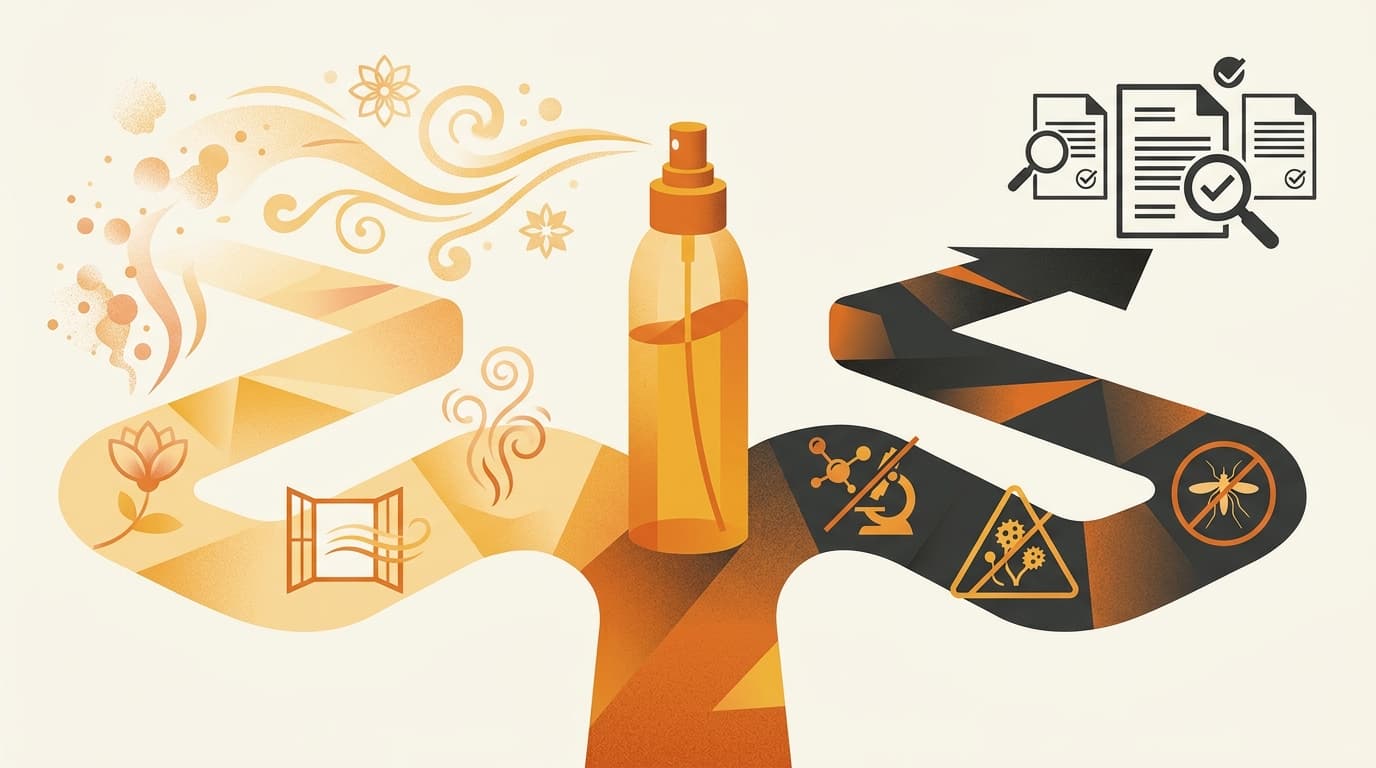
A room spray can raise a separate issue when it claims to kill, repel, or control organisms. The same essential-oil formula may need a different review if the product’s stated purpose moves beyond adding fragrance to room air.
| Claim or purpose | Question that follows |
|---|---|
| Freshens room air | Does the product fit the current air-freshener category? |
| Kills germs | Is the product intended to control microorganisms? |
| Prevents mold | Is it making a mold-control claim? |
| Repels insects | Is it functioning as an insect repellent? |
The last three examples may point to a biocidal product. A product that kills, repels, or controls organisms may need separate product approval from the Ministry of Environment. That is not the same as completing the safety filing for an air freshener.
Biocidal question: If the product is meant to kill, repel, or control organisms, do not rely on the air-freshener filing alone. Check whether separate Korean biocide approval is required.
Review the claims everywhere customers can see them: the bottle, instructions, product page, and advertising. Removing a claim from one panel does not make a different intended use disappear elsewhere. The product’s actual purpose still matters.
The same caution applies to a room spray marketed for skin, medical, or another use. Do not force that product into the air-freshener category because the bottle happens to use a spray format.
For more on this exact question, see Is Your Air Freshener a “Biocidal Product” in Korea?. If the claim appears on an online listing, Korean Biocide Approval: Why Coupang Claims Still Count explains why the listing can matter too.
A pre-import checklist for a Western brand
Before sending stock to Korea, answer these questions in order:
- What does the product do? Write one sentence describing its intended use in room air.
- What does every claim say? Include “natural,” “non-toxic,” germ, mold, and insect language on the bottle, instructions, product page, and ads.
- What is in the finished product? Use the exact formula and concentrations for the marketed spray, not only a raw essential-oil document.
- How is it used? Describe the spray method and what reaches the consumer during use.
- Which current Korean category covers it? Check the Ministry of Environment’s current list and air-freshener safety standards.
- Has the Korean step been completed? If it is a listed household chemical, complete the designated-body check and submit the required result before commercial manufacture or import.
- Does the package match? Confirm the required product, use, warning, and safety-filing information, including the safety-confirmation report number.
This checklist prevents the common mistake of treating a natural-ingredient story as the first legal decision. The first decision is what the product does in Korea.
Need to classify a room spray before import?
Share the product’s intended use, formula, claims, and package draft. We can help you identify the Korean questions to resolve before you ship.
About the author
Korean and global e-commerce operators with 15+ years of cross-border experience, led by CEO Isaac Lee — KOTRA-certified consultant and official lecturer for Seoul City and the Korea Customs Service. We run Korea market entry for overseas brands every day; this blog records what we learn in the field.
More about Kontactic →Related Articles

Korea E-commerce, September 2026: The Market Shrank, Coupang Grew
Korean online shopping spend fell 2.1% in September 2026, yet Coupang grew 3.9% and reached a 72.7% share of the 12 largest platforms. What the data means for a foreign brand choosing where to sell.
Korean Children's KC: Do Toys and Hoodies Differ?
Toys and hoodies can follow different Korean KC paths. Korea may require product testing, factory inspection, a filing, or a supplier declaration before sale.

Korean Cosmetics Responsible Seller: Who Takes the Role
Imported cosmetics need a Korea-registered responsible seller before sale; learn who can take the role, what the Korean label must show, and what to verify.