
Korea Food Import Agency Fees: What to Expect
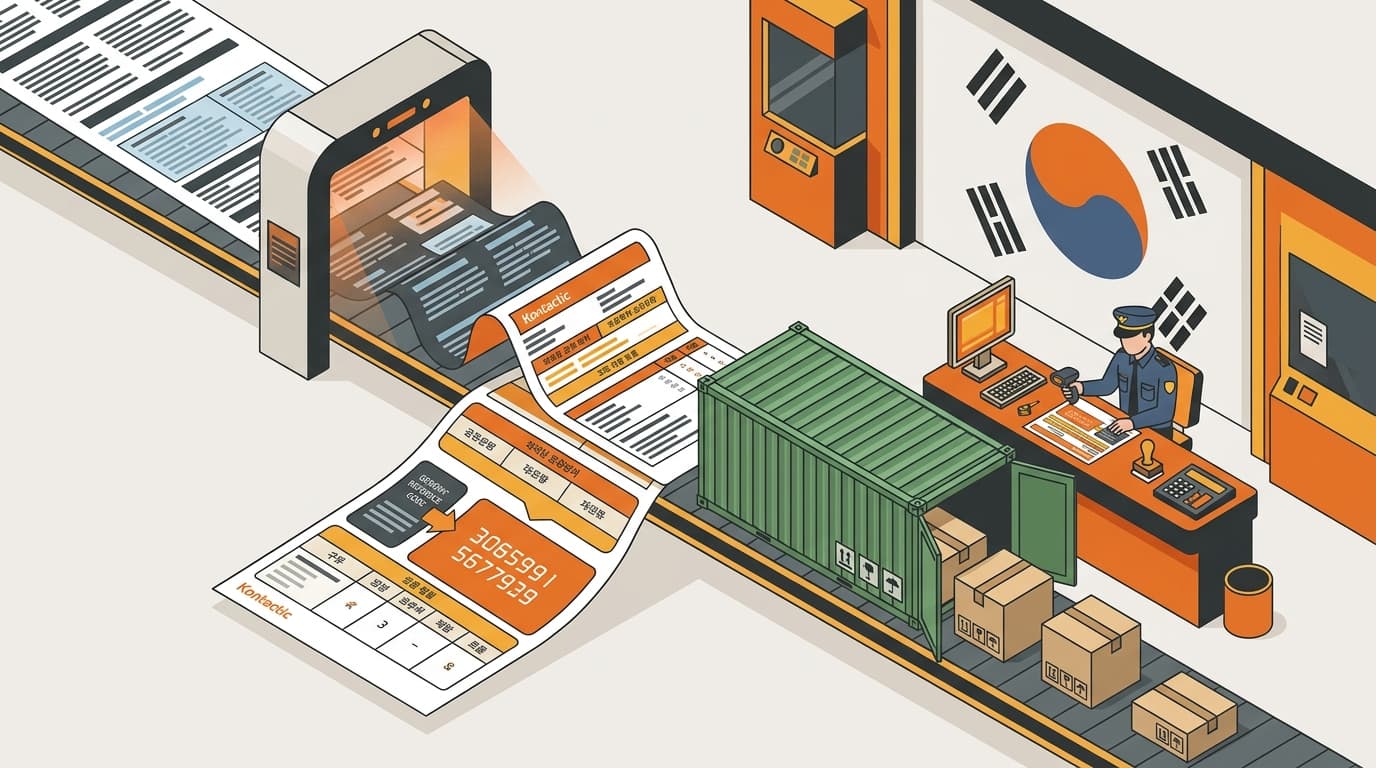
A Korea food import compliance agency typically charges for foreign food facility registration with the Ministry of Food and Drug Safety (MFDS), import declaration filings, and Korean-language label review. For a small US brand, that scope is narrower than most founders expect. It usually stops at the customs gate.
What happens after goods clear — Coupang seller onboarding, localized product pages, Rocket Growth fulfillment, Korean-language customer service — is almost always a separate conversation with separate fees.
This guide walks through what a small US food brand should expect when pricing the agency route, what those fees do and don't cover, and how the agency model compares to the cross-border and local-entity alternatives.
What "compliance agency fees" usually include
Most Korea compliance agencies are organized around the import event itself. A typical scope of work for a packaged food product looks like this:
- Foreign food facility registration with MFDS. Mandatory for any facility manufacturing food or food-contact items destined for Korea. Must be completed before the first import declaration.
- Import declaration (수입신고) and customs clearance coordination. Filed against the correct HS code, with supporting documents — commercial invoice, packing list, certificate of origin (for KORUS FTA preferential rates), ingredient lists, and any test reports.
- Label review and Korean-language label artwork. Korean food labeling rules cover ingredient declaration order, allergen callouts, country of origin, importer name and address, expiration date format, and nutrition facts where applicable.
- Lab testing coordination. Some categories — supplements, processed foods with novel ingredients, food-contact items — require Korean lab testing on first import or per-lot.
- Customs broker (관세사) coordination. Most agencies subcontract the actual customs filing to a licensed broker.
Agencies price this work in different ways. Some quote a flat onboarding fee plus a per-shipment customs handling fee. Others bundle a monthly retainer. The FreightAmigo guide, for context, cites brokerage fees in the KRW 50,000–200,000 range per shipment as a market signal — that's the broker's slice, not the full agency fee, and it doesn't include MFDS registration or label work.
For food specifically, the registration and label review are the heavy lifts. We've covered the full scope of what registration looks like for food and food-contact items in Importing Food and Hygiene Products into Korea.

What's typically excluded — and why it matters
This is the gap the top-ranking guides on this query don't fill in. A pure compliance agency will get your product into Korea legally. It will not, by default, get your product onto Coupang, in Korean, with Rocket-fast delivery.
Here's what usually sits outside the standard fee:
- Coupang seller account onboarding. Coupang requires a Korean business registration number, a Korean settlement bank account, and KYC documentation in Korean. A foreign brand cannot open a domestic Coupang seller account directly without either a Korean entity or a partner who acts as Seller of Record.
- Rocket Growth (로켓그로스) inbound and ongoing operations (pre-registered SKUs, barcode labeling to spec, inventory replenishment), plus storage, fulfillment, and returns handling billed separately by Coupang.
- Localized product detail pages. A standard text listing is not a Korean PDP. Korean Coupang shoppers expect a long-scroll, image-driven detail page (often around 20,000 pixels tall) covering brand story, ingredients, lifestyle imagery, comparison charts, and reviews. This is design work, not compliance work.
- Korean-language Tier-1 customer service. Coupang holds the seller responsible for response times and resolution rates. CS in Korean is a recurring monthly cost.
- Coupang PPC and review seeding. Without these, listings rarely get above the fold.
- VAT filing and settlement reconciliation. Korea VAT (부가가치세) is 10%, which means roughly 1/11 of any VAT-inclusive sale is owed to the National Tax Service. Someone has to file it.
In practice, the unbundled agency model works for brands whose plan is "import, then sell cross-border or via a Korean distributor." It does not work for brands whose plan is "be on Coupang Rocket in three months."
Cross-border versus local: what the fee question is really asking
A small US food brand asking about agency fees is usually trying to decide between three paths:
- Cross-border only. Keep selling from the US to Korean buyers, ship parcel-by-parcel, pay no Korean compliance fees, accept slow delivery and de minimis ceilings. This is fine for validation, weak for scale.
- Local entry via an agency or partner (no entity). Use a partner's Korean entity as Importer of Record and Seller of Record. Pay compliance and operating fees but avoid setting up your own company.
- Local entry with your own Korean limited company (유한회사). Maximum control, maximum overhead. Setup is harder than it used to be — see Why Setting Up a Korean Entity as a Non-Resident Foreigner Got Harder.
For a small brand testing Korea, option 2 is usually the right starting point. It also reframes the fee question: the right comparison is not "agency A vs. agency B" but "agency vs. cross-border vs. own entity." We've laid out the same trilemma for skincare in Agency vs IoR vs Entity: Korea Skincare Entry Compared — the food version follows the same logic, with MFDS food rules replacing MFDS cosmetics rules.
If you already have meaningful cross-border orders into Korea, that's a useful signal that local entry will pay back. The mechanics of why are in Why Cross-Border Orders Understate Your Korea Market Opportunity.

How to read an agency quote: the three-layer test
When you receive a proposal, sort it into three layers. This is how we structure our own services at Kontactic, and it's a clean diagnostic for any vendor's quote.
Layer 1 — Entity administration. Importer of Record, Seller of Record, VAT filing, customs correspondence, and settlement. If the agency uses its own Korean entity for you, this layer is in scope by definition. If you're expected to set up your own entity, it's not.
Layer 2 — Commerce operations. Coupang seller account, listing creation, storefront, inventory coordination with Rocket Growth, returns, Korean-language CS, catalog maintenance.
Layer 3 — Growth strategy and marketing. Coupang PPC, off-site marketing, review campaigns, conversion optimization, PDP design.
Most pure compliance agencies cover a thin slice of Layer 1 (customs, MFDS, labels) and nothing in Layer 2 or Layer 3. That's not a flaw — it's their scope. The mistake is assuming a customs-focused quote covers commerce.
Kontactic's three tiers map directly to these layers: Spark uses our entity (Layer 1 plus Layer 2 commerce ops); Flame and Blaze use the client's own entity, with Blaze adding Layer 3. The funding flow under each is broken down in Who Pays for What in Korea: Operating Costs Explained.
When comparing quotes, ask each vendor to draw a line through Layers 1, 2, and 3. The vendor that gets defensive about scope is usually the one selling Layer 1 only.
What a realistic first-year setup looks like for a small food brand
For a small US food brand entering Korea via a partner (no own entity), a realistic first-year stack of moving parts looks like this:
- MFDS foreign food facility registration (one-time, before first import).
- KORUS FTA certificate of origin to claim preferential duty rates where applicable.
- DDP shipment from the US to a Korean 3PL or Coupang inbound dock.
- Customs clearance and import declaration via a licensed broker.
- Korean-language label artwork applied before customs release (or at the bonded warehouse).
- Coupang seller account opened under the partner's entity (Seller of Record).
- Product listing in Korean, with a localized PDP for the lead SKU.
- Rocket Growth inbound and ongoing fulfillment, plus returns processing.
- Monthly settlement: gross sales minus platform fees, Rocket Growth fees, ad spend, and the partner's service fee, with VAT remitted to the National Tax Service.
The unit economics of this shift are non-trivial. Going from cross-border parcel sales to local Coupang Rocket Growth typically lowers per-unit margin while lifting orders by close to an order of magnitude — see How Coupang IoR and 3PL Change Your Korea Margins for the numbers.
Localized PDPs and Korean-language CS: where most agency quotes go quiet
This is the area where the gap between a compliance agency and a commerce operator shows up most clearly.
A Korean PDP is a long, image-heavy, conversion-tuned page — typically around 20,000 pixels tall — that does most of the selling work on Coupang. A US-style listing with five product images and three bullets does not convert. Translating an English page word-for-word into Korean does not convert either. Korean shoppers expect:
- A clear brand story above the fold.
- Ingredient and origin transparency, with visual callouts.
- Lifestyle imagery showing the product in a Korean context (kitchen, lunchbox, café).
- Comparison charts versus alternatives, even informal ones.
- Visible reviews, ratings, and any press or certification logos.
Compliance agencies rarely build this. Some commerce operators include a basic localized text listing in their base scope and price the full PDP as an add-on — which is the structure we use under Spark.
Korean-language customer service is the other quiet line. Coupang scores sellers on response time and resolution. CS in Korean is a monthly cost regardless of who runs it.

A short answer for the founder pricing this right now
The short answer: a Korea food import compliance agency will quote you somewhere between a few thousand and low five figures USD for the registration-and-customs slice, depending on category complexity, lab testing requirements, and number of SKUs. That number is real — but it answers a smaller question than the one you're trying to solve.
What actually moves a small US food brand from "we get cross-border orders" to "we have a real Korean business" is the bundle of Coupang onboarding, localized PDPs, Rocket Growth operations, and Korean-language CS that sits on top. Price the bundle, not the customs line.
If you have proven cross-border demand and want to move to local Coupang sales without setting up your own Korean entity, our How to Sell on Coupang as a Foreign Brand guide walks through the full path.
Pricing the agency option for your food brand?
Send us your category, SKU count, and current cross-border volume. We'll lay out what Spark, Flame, or Blaze would actually look like — including what's in scope and what isn't.
About the author
Korean and global e-commerce operators with 15+ years of cross-border experience, led by CEO Isaac Lee — KOTRA-certified consultant and official lecturer for Seoul City and the Korea Customs Service. We run Korea market entry for Western brands every day; this blog documents what we learn in the field.
More about Kontactic →Related Articles

Rocket Growth: Why Outbound and Return Locations Matter?
Rocket Growth stores and ships inventory, but sellers still need outbound and return records before product registration; each has a distinct seller-side role.
Korean HS Code: Can You Reuse US/EU HS Codes? Not Always
A US or EU HS code is a useful starting point, not a portable Korean classification. Learn how Korea’s HSK affects duty, FTA treatment, and import controls.

Korean Biocide Approval: Why Coupang Claims Still Count
No. Korean biocide approval cannot be avoided by hiding a “kills bacteria” claim from the bottle; a Coupang listing can still evidence intended biocidal use.