
How Do I Renew My Korean Entity Service Before It Lapses?
If your Korean entity service ends on October 31, Kontactic Seller Center triggers renewal billing in July, then sends warnings in August and September. Your headquarters (HQ) team can review the notice and respond while the current service is still active, instead of starting a last-minute request in October.
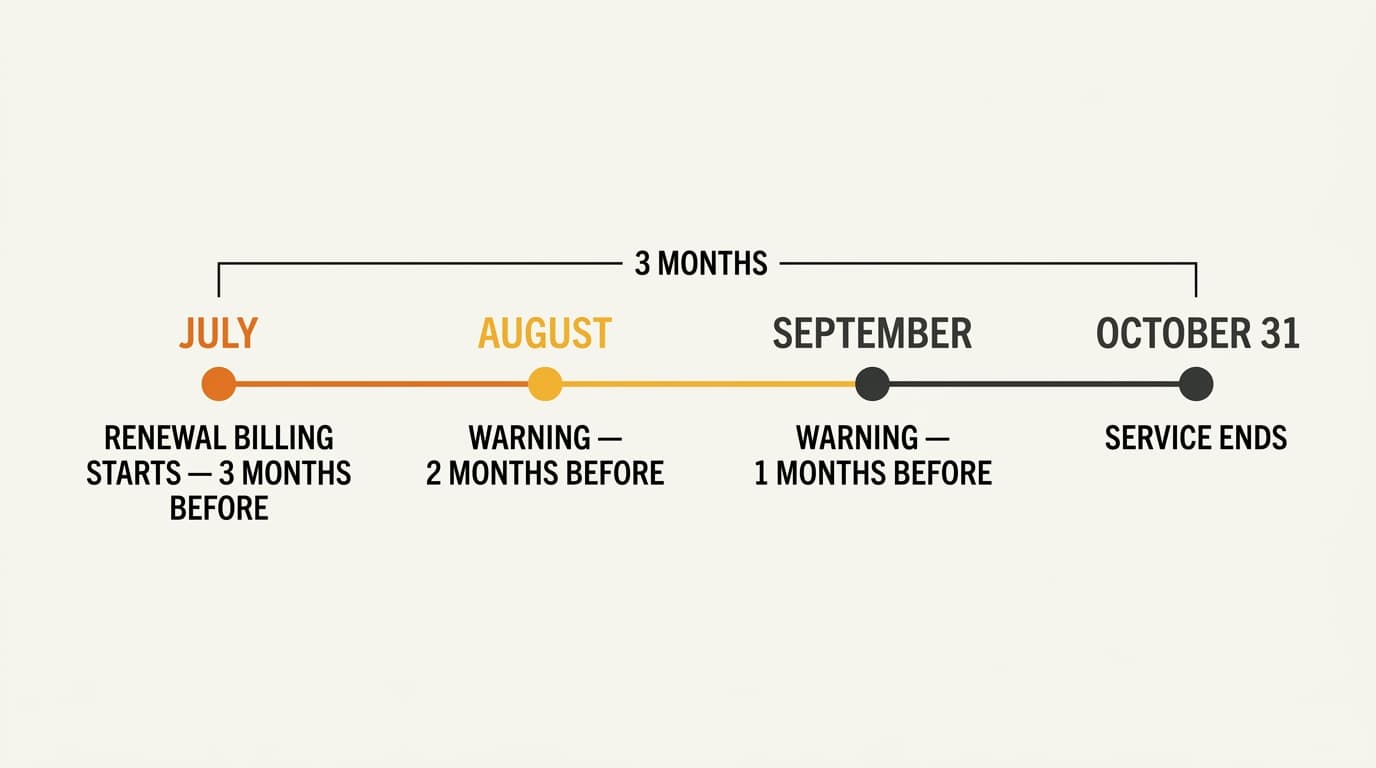
The renewal clock: Seller Center keeps the service end date, triggers renewal billing 3 months before that date, then sends a warning 2 months before and another 1 month before. The schedule gives you time to review and respond; it does not remove that decision from your team.
Why the service end date needs attention
Going local does not end when the Korean entity is set up. The service that supports the entity has its own service period and end date. That date can be easy to miss after launch, when the team is focused on sales, stock, and daily customer work.
The renewal problem is usually timing. HQ may still want the service to continue, but the person who approves the renewal may not see the end date until the current period is nearly over. A request that could have been reviewed during normal planning then becomes urgent.
Seller Center puts the date in front of the seller earlier. It starts renewal billing 3 months before the service end date. It then sends warnings at 2 months and 1 month before the same date.
That changes the seller's job. Instead of trying to remember one date, the team gets three clear points to review the same renewal. The first point gives HQ the most time. The later warnings help bring the decision back to the calendar if nobody has replied yet.
The date belongs to the service period supporting your Korean entity. It is not a new Korean entity setup date. Renewal is about keeping the existing support in place, not rebuilding the entity from the beginning.

How the three renewal notices work
Seller Center uses the service end date as the reference point. The schedule then works backward from that date:
- Service end date: This is the date when the current service period finishes.
- 3 months before: Renewal billing is triggered automatically. This is the first point for the seller to review the renewal notice.
- 2 months before: A warning follows if the renewal still needs attention.
- 1 month before: Another warning arrives while the current service is still active.
These are not three separate setup tasks. They are three reminders around the same service period. The Korean entity does not need to be treated as a brand-new launch each time the service continues.
The early billing trigger matters because it gives the seller a usable review window. HQ can read the notice, ask questions, and send a response before the end date becomes immediate. The two later warnings are there to keep the item visible, not to replace the first review.
The automatic part is the timing of the billing trigger and warnings. The seller still needs to review the notice and respond. A reminder is not the same as a completed renewal.
Example: a service ending on October 31
Assume the Korean entity service end date is October 31. The renewal schedule looks like this:
| Time | Seller Center action | What HQ can do |
|---|---|---|
| July | Renewal billing is triggered 3 months before October 31. | Review the renewal while the current service is active. |
| August | A warning is sent 2 months before October 31. | Follow up if the decision is still open. |
| September | A warning is sent 1 month before October 31. | Respond before the service end date is close. |
| October 31 | The current service period reaches its end date. | Do not wait until this date to begin the review. |
July is not the service end. It is when the renewal billing trigger starts. August and September are follow-up points. October 31 remains the date that defines the end of the current service period.
This example shows why the feature is useful for a Western brand. HQ may need time to read the notice, check the billing, and agree on the next step. The July trigger gives that work a place on the calendar. The August and September warnings bring it back into view if the first notice did not receive a response.
The schedule also keeps two ideas separate. The service already running today is not the same thing as the renewal decision for the next period. The current service stays active while the seller reviews the notice. The renewal schedule starts early so the two periods do not get confused.
What HQ should do with each notice
The feature gives your team time. Use that time in a simple order:
- Start with the end date. Confirm which service period the notice covers. In the example above, the date is October 31.
- Read the first billing notice. When it arrives 3 months before the end date, use the early notice to begin the review. Do not wait for the one-month warning to open the question.
- Give one person responsibility for the reply. The person does not need to be in Korea. They do need to be able to review the notice and send the company's response.
- Use the later warnings as follow-ups. If the decision is still open in August, the 2-month warning is a prompt to move it forward. If it remains open in September, respond before the current service period ends.
- Treat renewal as continuation. The renewal concerns the existing Korean entity service. It should not be handled as if the brand were starting its Korean setup for the first time.
This does not mean every renewal decision is identical. The seller still decides whether the service should continue and responds to the notice. Seller Center handles the calendar pressure by showing the end date early and bringing it back to the seller's attention.
That is the practical change. Before the schedule, the seller could see one end date and leave it for later. With the schedule, the seller sees the billing trigger in advance and receives two more warnings before the end date. The support period does not become a last-minute task simply because the original setup happened months earlier.

Common questions about Korean entity service renewal
Does the service renew automatically?
Seller Center automatically triggers renewal billing 3 months before the service end date and sends warnings at 2 months and 1 month. The seller still reviews the notice and responds, so the automatic schedule should not be read as confirmation that the renewal decision is complete.
What happens if the team misses the first notice?
The later warnings at 2 months and 1 month provide two more prompts before the service end date. The best use of the system is still to begin review when the first billing trigger appears, because that gives HQ the most time.
Is renewal a new Korean entity setup?
No. The feature tracks the end date of the existing service and starts the renewal process before that date. The purpose is to keep support in place without asking the seller to treat each renewal like a new setup.
Why are there warnings at both 2 months and 1 month?
One end date can be forgotten. The 2-month and 1-month warnings give HQ additional points to check the notice and send a response while the current service is still active.
What does October 31 mean in the example?
October 31 is the end date of the current service period. July is when renewal billing starts, August brings the 2-month warning, and September brings the 1-month warning. The seller should review the renewal before October 31 arrives.
Keep your Korean entity renewal on schedule
If you want to review how Kontactic tracks your Korean entity service end date and renewal timing, contact Kontactic.
About the author
Korean and global e-commerce operators with 15+ years of cross-border experience, led by CEO Isaac Lee — KOTRA-certified consultant and official lecturer for Seoul City and the Korea Customs Service. We run Korea market entry for Western brands every day; this blog documents what we learn in the field.
More about Kontactic →Related Articles

How Does Seller Center Make Korean Contracts Reviewable?
Kontactic Seller Center turns Korean contract translation into a structured review workflow, so HQ can approve scope while the Korean document stays the local execution record.
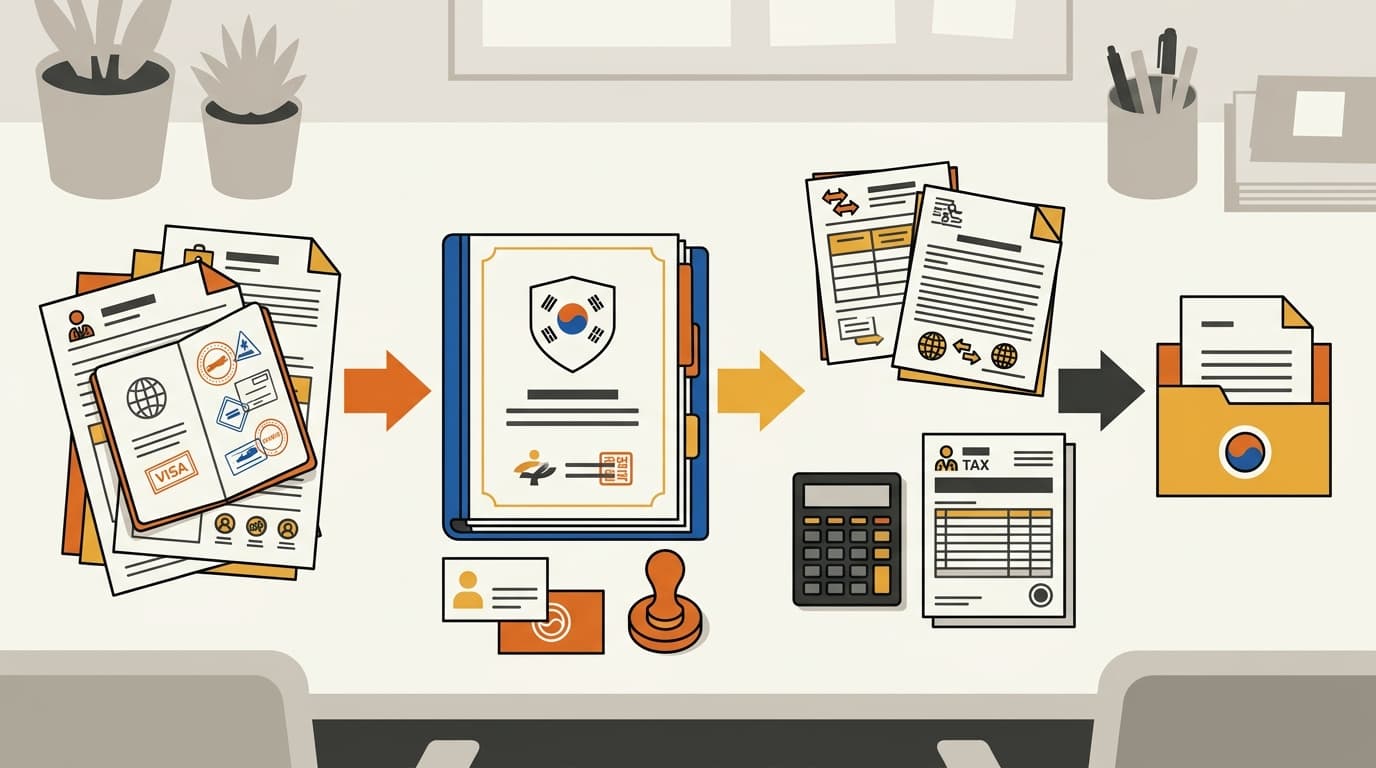
How Representative Documents Support Korean Filing Work
Kontactic Seller Center connects representative documents and translation with delegated Korean filing work, so evidence becomes records and local action.
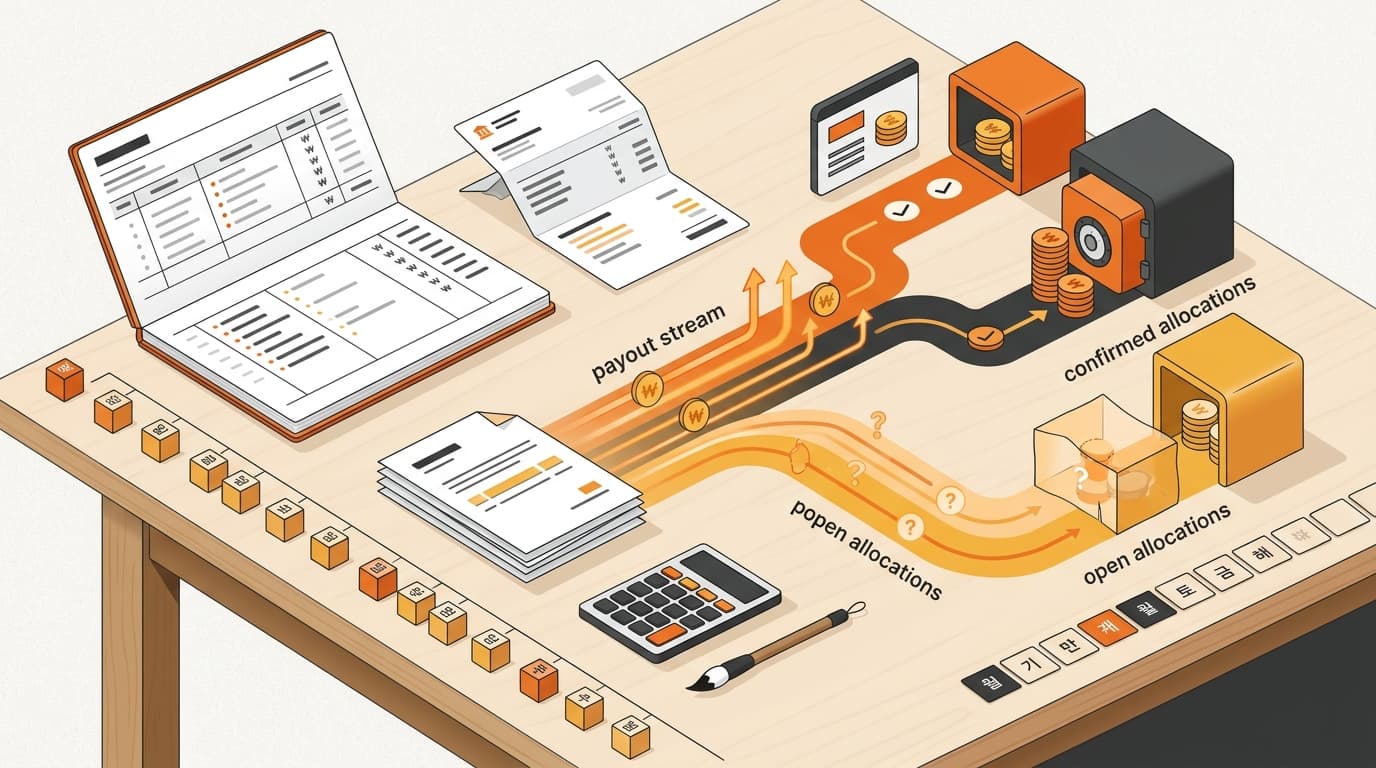
Coupang Settlement Periods: How Kontactic Reconciles
Kontactic closes Coupang settlement periods by confirming allocations, checking bank evidence, and keeping FX differences and late corrections visible.