How Kontactic Keeps Coupang Creative True to Each SKU
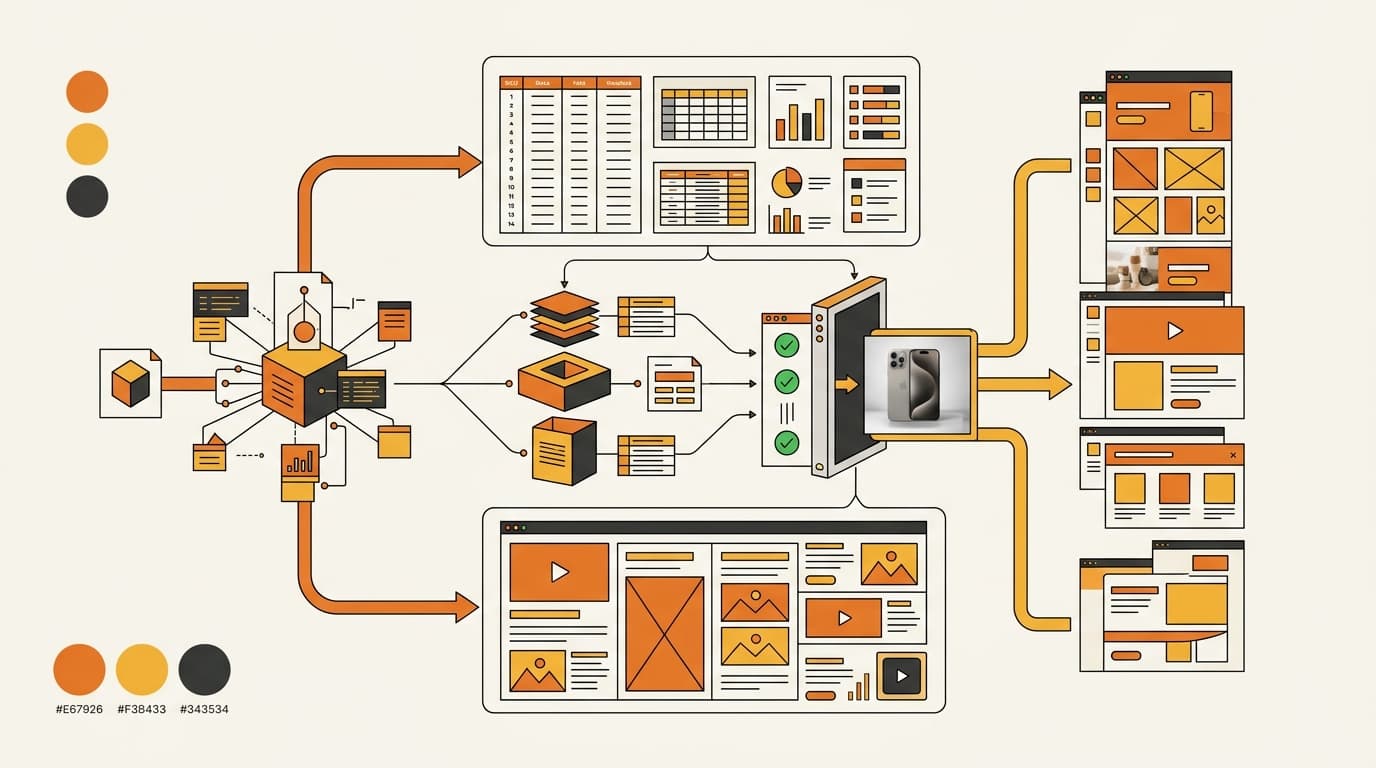
Kontactic keeps Coupang creative true to each SKU by separating product facts from creative treatment. Korean-aware layout rules handle copy and units, while pre-export checks verify the product imagery. The Seller Center builder then produces one primary image, up to nine additional 1:1 tiles, and the structured Korean product-information disclosure.
The core rule: facts define the SKU; strategy determines the way those facts are presented. Keeping those layers separate lets the story change by product without letting the product itself change in the process.
When a Western brand moves from proven cross-border demand to a local Coupang catalog, the asset problem grows quickly. A small set of products now needs Korean creative that can be adapted, reviewed, and exported repeatedly. The risk is not only a mistranslation. It is a polished tile that uses a malformed unit, implies an unsupported detail, or shows imagery that is not anchored to the item being listed.
With a single SKU, an experienced operator may catch those problems from memory. Across a catalog, that is a weak control system. The practical answer is a content pipeline in which the facts stay bounded while the visual story remains flexible. The broader work of how to localize product pages for Korean e-commerce covers the page as a whole; this update focuses on scaling creative without creating SKU drift.
Content integrity starts by separating facts from treatment
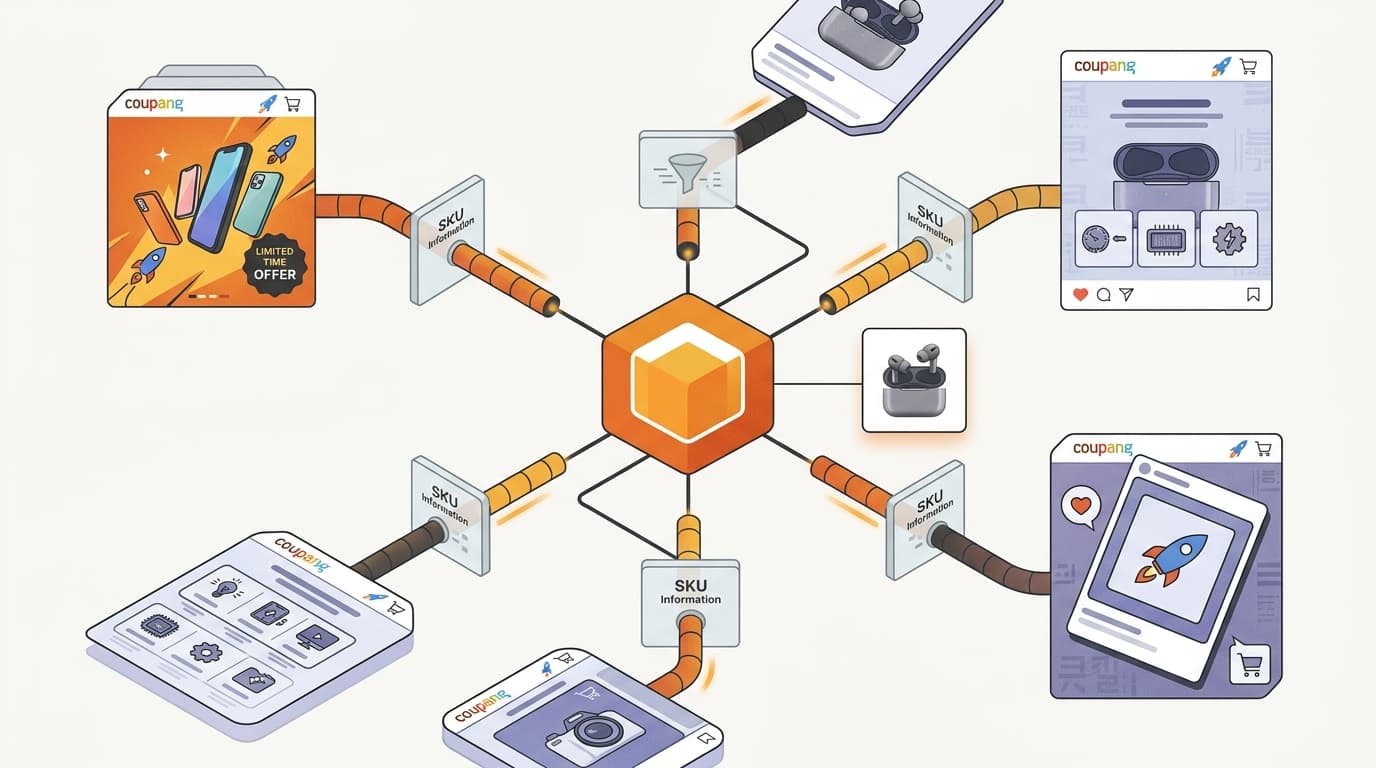
Product information and creative treatment do different jobs. Product information describes what the SKU is. Creative treatment decides how a shopper encounters that information in a visual asset.
In the Seller Center pipeline, those layers remain distinct. Section selection, copy treatment, and composition can vary without turning the specifications into freeform design material. That distinction clarifies how to edit an asset. Change the presentation when needed, but do not rewrite the underlying product to suit a layout.
A useful way to think about the separation is:
- SKU facts: the product information that must remain attached to the item being listed.
- Creative treatment: the strategy, section pattern, copy treatment, and composition used to present those facts.
- Export outputs: the localized visual assets and the structured Korean product-information disclosure built from the same content process.
The test is simple. If the creative strategy changes, can the team identify what changed in the story and what did not change in the product information? If the answer is unclear, the creative layer has become too powerful.
This is also why content integrity is an operating problem rather than merely a translation problem. Korean copy may be accurate while the composition still gives prominence to the wrong detail. A specification may be present while its unit is malformed. A visual may look polished while representing the wrong item. Separating facts from treatment makes those failure modes easier to see.
Reusable patterns let strategy choose the story
A reusable system does not have to mean one fixed template. In fact, forcing every product through the same composition can make a catalog consistent in appearance but inaccurate in emphasis.
Kontactic Seller Center uses strategy-driven, reusable section patterns. The reusable part is the pattern: a repeatable way to arrange and present information. The strategy decides which patterns and treatments make sense for a particular product. This allows different products to receive different compositions without making every new asset a blank-page design exercise.
That distinction matters at scale:
- A fixed template makes the structure predictable, but can give every SKU the same narrative order.
- A fully freeform process permits variation, but makes consistency and factual control harder to maintain.
- Strategy-driven patterns keep the production logic reusable while allowing the composition to adapt by product.
The point is not to make each SKU visually unrelated. It is to make variation intentional. A product can receive a composition that gives its relevant information the right role, while another product can use a different arrangement. The facts remain the boundary; strategy controls the route through the creative.
Because strategy is part of the content decision, it also needs to remain visible before generation. A comment in a separate document or an assumption held in one operator's head is difficult to reproduce. An editable strategy inside the builder is easier to inspect, change, and carry through to export.
Keep the decisions editable before generation and export
Generated assets are more useful when the team can see and change the decisions that produced them. Seller Center lets teams edit copy, composition, and strategy before generation and export. That keeps the content model controllable instead of presenting the final image as an opaque result.
The practical sequence is:
- Establish the product information that belongs to the SKU.
- Select or adjust the strategy and reusable section pattern.
- Edit the Korean copy treatment and composition while those decisions are still visible.
- Generate the creative assets.
- Validate the real product imagery and export the final set and structured disclosure.
This is not primarily an approval workflow. It keeps the production decisions visible before generation. An approval step can identify a bad final asset; editable inputs make it easier to understand why the asset took that shape and to correct the right layer. The capability therefore complements, rather than replaces, a separate Coupang image-set gate before export.
For a catalog team, that distinction reduces rework. If the problem is copy, edit copy. If the problem is composition, change composition. If the problem is the chosen strategy, revise strategy. The correction stays close to its cause instead of becoming a manual redesign of every tile.
Korean typography and units belong in the layout engine
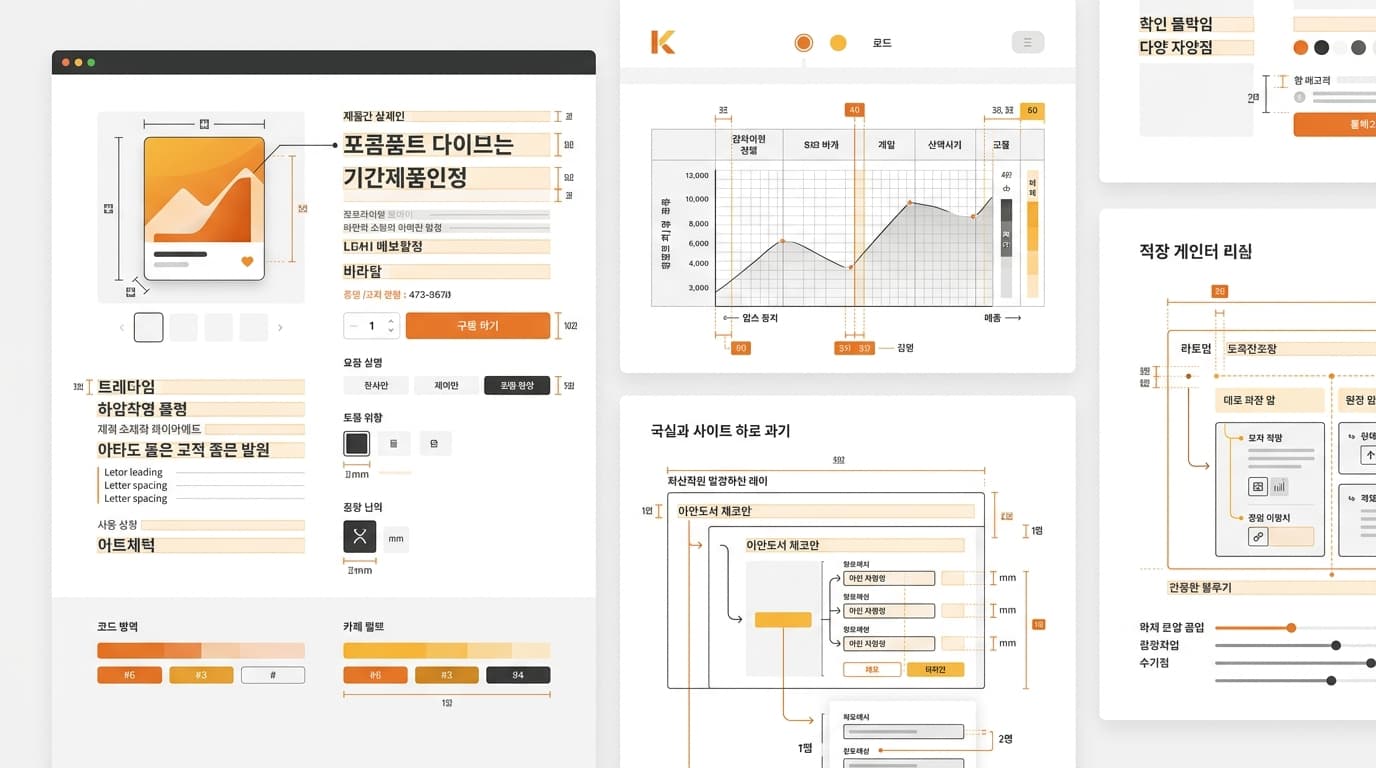
Technical details are especially vulnerable when they are treated as ordinary text pasted into an image. Korean copy has to remain legible in the composition, and the unit has to stay attached to the value it qualifies.
The layout engine handles Korean copy with typography and unit-aware rules, including dB, W, V, ㎡, and inches. That is a content-integrity feature, not just a visual polish feature. It helps technical details remain legible in image assets while the creative treatment adapts around them.
The distinction is important because a number without clear unit treatment can become ambiguous. A unit that is malformed or difficult to read can weaken an otherwise accurate listing. A strategy may decide where a technical detail appears and how much emphasis it receives; it should not casually change what the detail means.
A clean layout is not enough. If a technical value is detached from its unit or becomes hard to read in Korean creative, the asset can look finished while weakening the product's factual integrity.
The layout engine therefore carries part of the operational burden that would otherwise fall on repeated manual placement. Teams can adapt the story by SKU while the rendering rules handle the typography and unit treatment needed to keep the details usable in the final image assets.
Validate real product imagery before export
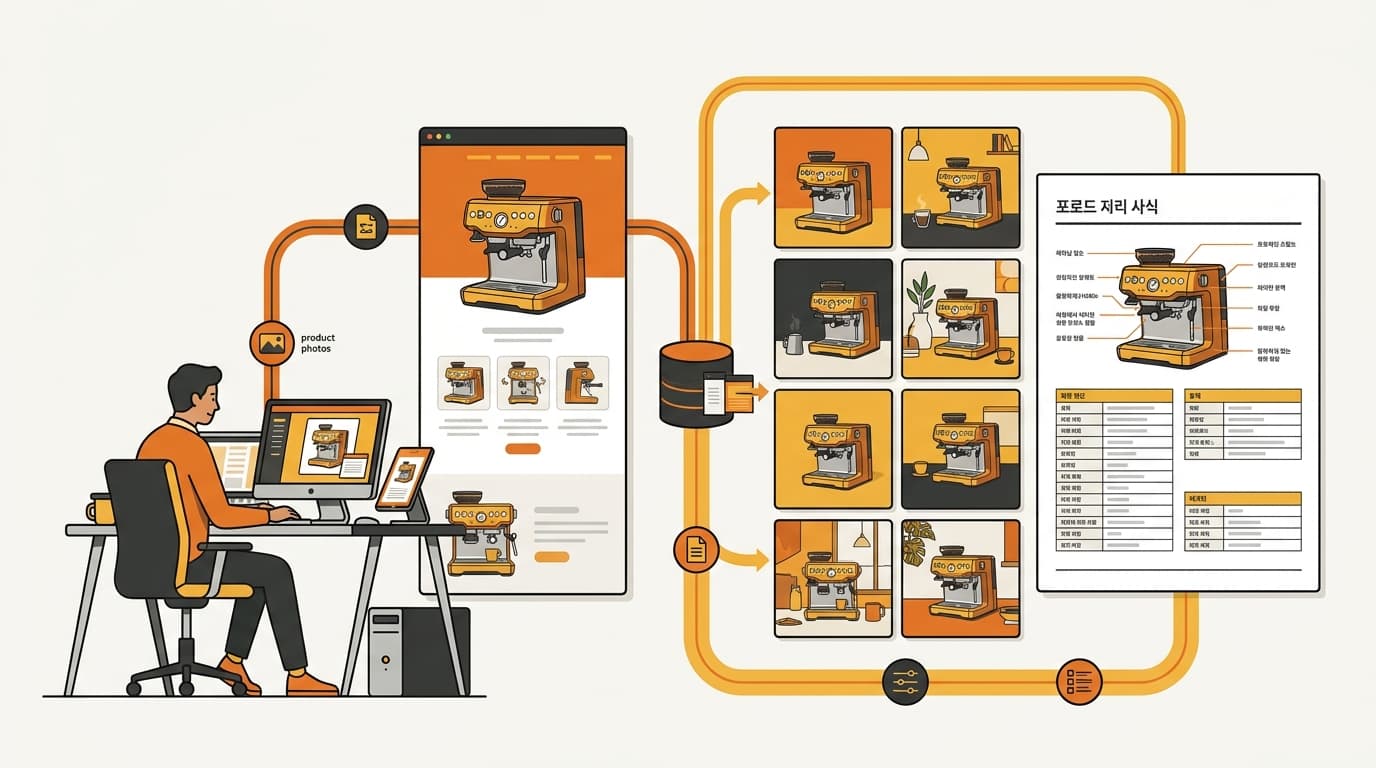
Copy and specifications can be correct while the image is still wrong. A mismatched image can undermine the entire asset set because shoppers read the visual as evidence of what the listing contains.
Seller Center validates real product imagery before export. The check keeps the visual set anchored to the item being listed rather than treating any attractive or available image as interchangeable creative material.
The timing matters. Validation happens before export, when the team can still change the composition or replace the image inside the same content process. Once an asset leaves the builder, a factual mismatch can become a handoff problem. One person may trust the image while another trusts the specification, and neither can see the original decision clearly.
This check is not a substitute for complete product information. A content pipeline should not fill a missing fact by allowing a section pattern or image to imply one. If the source information is incomplete, resolve that gap before generation. The purpose of validation is to keep the selected visual tied to the SKU, not to make an unsupported claim look more convincing.
One builder produces the visual set and structured disclosure
The final deliverable is not just a collection of images. In the same builder, the team produces the Coupang image set—one primary image plus up to nine additional 1:1 tiles—and exports the accompanying structured Korean product-information disclosure.
These outputs have different roles. The image set carries the visual story: the selected composition, Korean copy treatment, and product imagery that shoppers see as they move through the listing. The structured disclosure organizes the product information in a separate format. They should not become two independent versions of the SKU.
Producing both from one content process keeps the relationship visible. The team can change the strategy or composition without treating the image tiles as a new source of product facts. It can also inspect the structured output as a companion to the visual set rather than assuming that a polished image has covered every information need.
This is the narrower operating value of the update. It is not simply a faster way to make Korean creative. It is a way to multiply localized assets while preserving the boundary between what the product is and how the product is presented. This update does not redefine the broader process of turning existing product photos into a Korean PDP in-portal; it focuses on keeping those outputs faithful to the SKU as they are adapted and exported.
Common questions about SKU-safe Coupang creative
Does every SKU receive the same layout?
No. Reusable section patterns provide production consistency, while strategy-driven selection allows the composition and copy treatment to vary by product.
Can the team change creative decisions before the assets are generated?
Yes. Copy, composition, and strategy remain editable before generation and export, so a correction can be made at the layer where it belongs.
Does the layout engine handle Korean technical units?
Yes. It uses Korean typography and unit-aware rules for details including dB, W, V, ㎡, and inches, helping those details remain legible in image assets.
What does the Coupang image export contain?
It contains one primary image plus up to nine additional 1:1 tiles. The same builder also exports the accompanying structured Korean product-information disclosure.
Does image validation replace the team's content judgment?
No. It provides a pre-export check that keeps real product imagery tied to the listed item. The team still controls the copy, strategy, composition, and decision to export.
Keep your Korean SKU content under control
If you are scaling a Coupang catalog and need localized creative to stay tied to the products behind it, talk with Kontactic about the operating workflow.
About the author
Korean and global e-commerce operators with 15+ years of cross-border experience, led by CEO Isaac Lee — KOTRA-certified consultant and official lecturer for Seoul City and the Korea Customs Service. We run Korea market entry for overseas brands every day; this blog records what we learn in the field.
More about Kontactic →Related Articles

Does My Korean Importer Need a License for This Product?
A Korean importer may need a license or permit even when product documents are complete. Seller Center separates the two checks and lists what to prepare next.
Import a Product Into Korea, But Can't Sell on Coupang?
Importing a product into Korea does not guarantee Coupang sales. Learn how SKU review separates import permission, online-sale rules, and importer permits.

What Happens After Your Korean Coupang Page Is Finished?
After your Korean Coupang page is finished, see the real page, follow the same instructions in Seller Center and email, and get reminders only if needed.