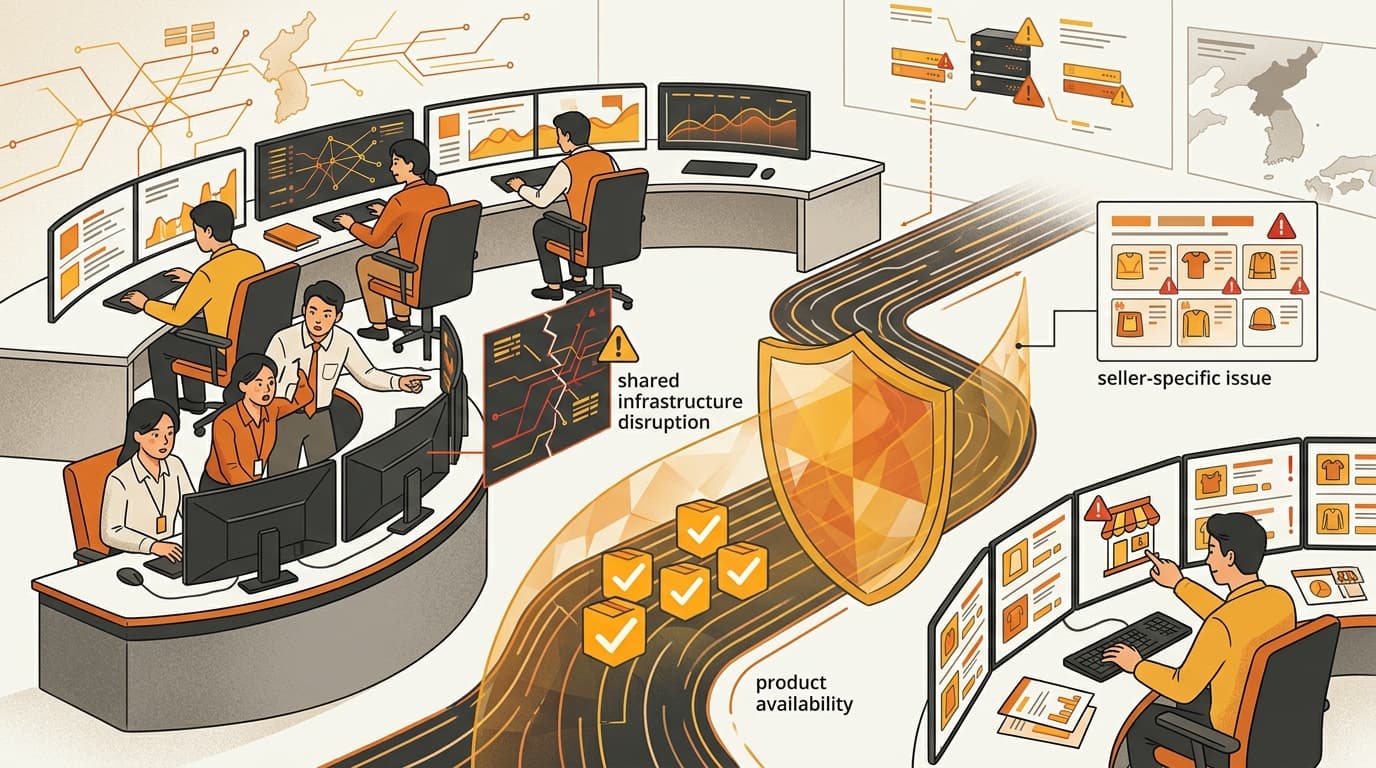
How Does Kontactic Protect Coupang Catalogs When Sync Fails?
When Coupang connectivity fails, Kontactic does not immediately mark the seller account as disconnected or treat a partial inventory response as the current catalog. It first distinguishes a shared marketplace incident from a genuine seller-level failure, then protects an incomplete synchronization from silently reducing the live assortment.
The key distinction: a marketplace connection error is not automatically a seller-account error, and an unfinished inventory sync is not a trustworthy picture of the whole catalog.
Why a Coupang connectivity alert needs diagnosis first
A connection failure is not one thing. A shared marketplace incident can interrupt connectivity across more than one integration, while a seller-level disconnection affects one account’s ability to exchange data. To a brand watching a status signal, both events can look like the same broken connection.
The operational response is different. Treating a shared incident as a seller problem can prompt unnecessary investigation or changes to an account that is configured correctly. Treating a genuine seller-level failure as a temporary platform event can leave inventory and catalog updates stale. The useful question is not simply whether an error appeared; it is where the failure sits.
Kontactic Seller Center treats connection health as a diagnosis problem rather than a binary label. The status needs to reflect whether the marketplace itself is experiencing an incident, whether the seller-specific connection is actually affected, and whether the apparent failure is transient. That distinction keeps seller-facing action tied to evidence instead of making the brand respond to every infrastructure symptom.
This is different from solving the integration setup itself. When multiple systems are involved, Coupang Open API: Can Two Systems Share One Seller ID? provides useful context on controlling the connection path; this product capability addresses the ongoing question of whether an established connection is genuinely healthy.
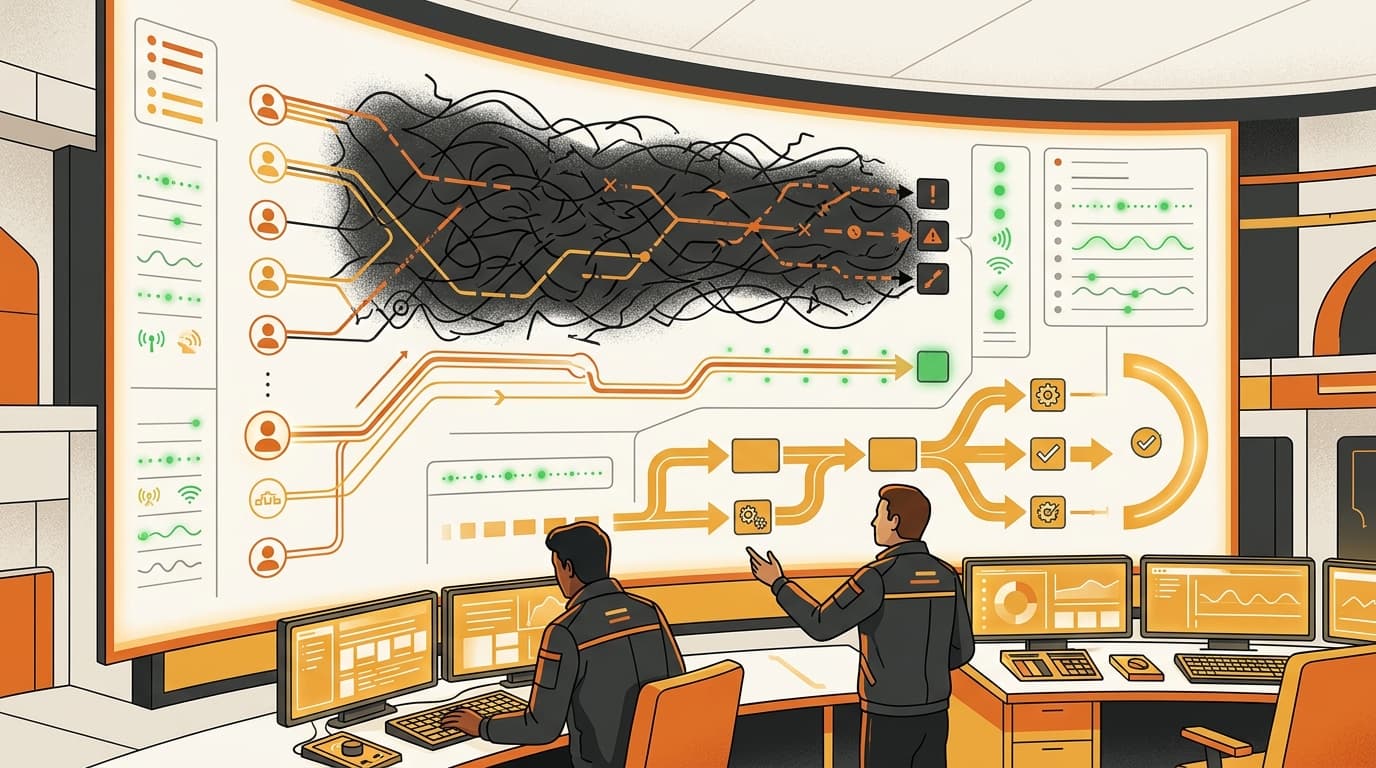
How an incomplete inventory sync can shrink the live assortment
A live catalog can lose availability without the brand changing a product, price, or inventory plan. If an inventory synchronization starts and is interrupted after only part of the assortment is processed, the data received so far is not necessarily a complete description of the intended catalog.
The risk appears when a partial result is treated as a full result. Depending on how that state is applied, products that were not yet processed can be treated as missing, unavailable, or no longer part of the active assortment. Nothing deliberate happened to those SKUs, but the marketplace can still present a smaller catalog to shoppers.
This is especially difficult to detect as a Korean assortment grows. A brand may see that its account is broadly operating while a portion of the catalog has quietly lost availability. For a Western brand moving from cross-border demand to a local Coupang operation, that gap can be mistaken for a stock problem, a listing problem, or a merchandising decision when the cause is an incomplete transfer.
The distinction also matters alongside other Rocket Growth availability states. Why Coupang Rocket Growth SKUs Stay Unavailable examines cases where received stock has not yet become sellable; this update covers a different failure mode, where an incomplete connection update can make the catalog itself appear smaller.
Kontactic’s catalog-integrity safeguard is deliberately conservative: an interrupted result is not allowed to silently stand in for the complete catalog state. The safeguard does not create inventory, override Coupang’s physical stock records, or claim that an unconfirmed item is sellable. It prevents missing data from being mistaken for a deliberate removal or availability reduction.

What ongoing Coupang integration monitoring needs to establish
A useful monitoring process has to connect a technical signal to a commerce consequence. It needs to answer five practical questions:
- What is the scope of the incident? Is the symptom shared across the marketplace connection path, or does it point to one seller account?
- Is the connection genuinely healthy? Does the status represent current marketplace health, or is it carrying forward a transient infrastructure failure?
- Did the inventory update finish? Was the synchronization complete, or did it stop before the whole intended assortment was processed?
- Can the result support a catalog-affecting change? Does the data describe the relevant full state, or only the portion that arrived before the interruption?
- What needs to be checked after recovery? When connectivity returns, does the marketplace status and catalog state now reflect confirmed, current information?
These questions are more useful than a generic connected/disconnected label. They tell an operator whether to investigate the seller account, wait for a shared incident to clear, protect the existing catalog state, or verify the result after synchronization resumes.
The same principle applies to catalog uploads more broadly. Can Coupang Open API Upload Product Catalogs? explains why category mapping, variant validation, SKU crosswalks, and document review still require a controlled workflow even when an upload mechanism exists. A transfer that started is not automatically a catalog update that can be trusted until its completeness is known.
Why this is daily local-commerce work, not one-time setup
Initial integration is a milestone, not the end of the operating task. It establishes a connection, but it does not answer whether today’s status represents the live marketplace, whether the latest inventory update completed, or whether a shared incident is being misread as a seller-level problem.
That matters more when a brand moves from cross-border demand to local Coupang selling. The Korean assortment is not just a list prepared at launch; it is a customer-facing operating state. If products become unavailable because a synchronization process was incomplete, shoppers experience an assortment or stock problem even though the brand did not make that decision.
This is why Coupang integration monitoring belongs alongside inventory and account operations. It is not an IT check that can be handed off once and forgotten. Connection health influences whether the catalog shown to Korean shoppers still represents the products the brand intends to sell, while sync completeness determines whether an apparent change is real or merely the result of missing data.
No monitoring process can prevent Coupang or another marketplace from having an infrastructure incident. It can prevent that incident from being turned into a seller-status error or a silent catalog reduction. In our experience, that is the important operational boundary: diagnose the event first, then allow confirmed marketplace data—not an interrupted process—to drive availability.
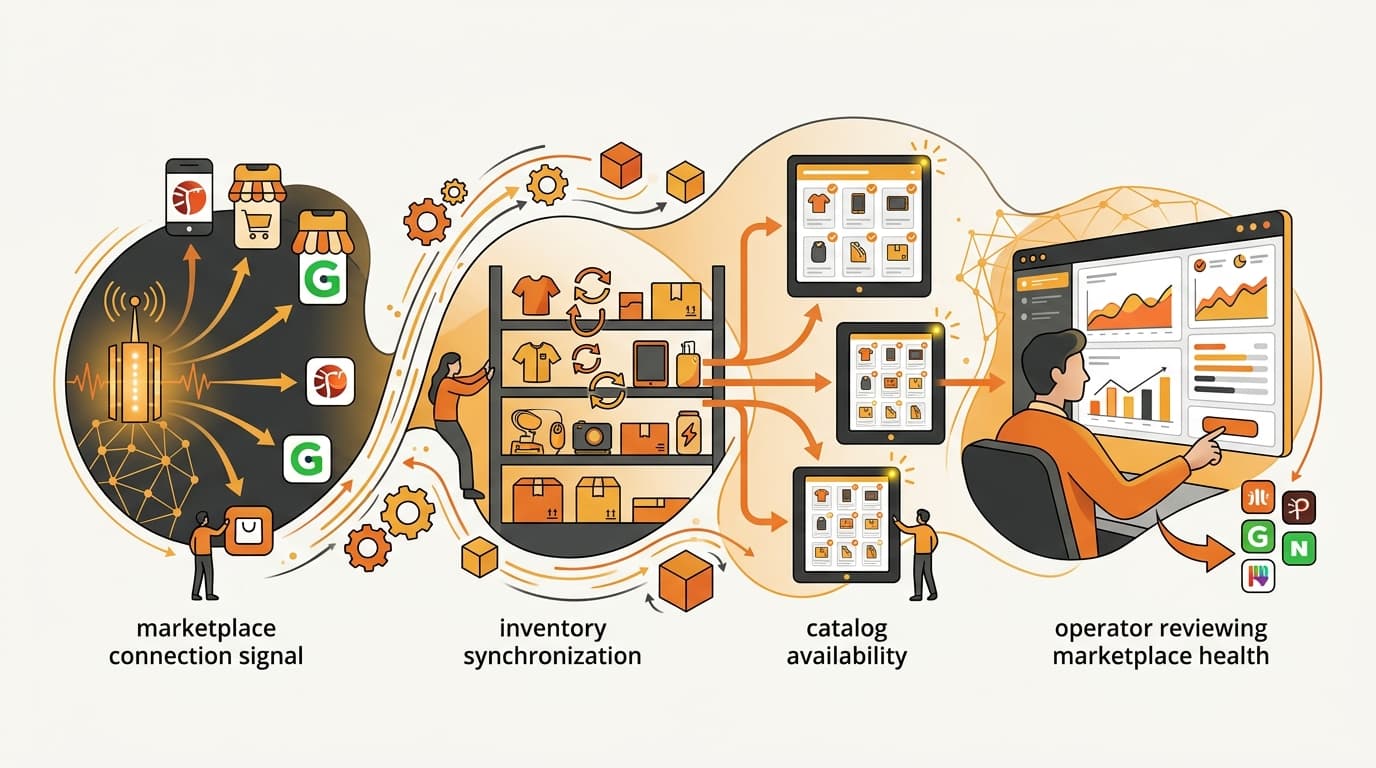
The operating sequence when Coupang connectivity degrades
The practical sequence is simple, but each step prevents a different avoidable failure:
- Observe the signal without declaring seller failure. A connection alert is an event to diagnose, not proof that the seller account is disconnected.
- Classify the scope. Separate a shared marketplace incident from a condition specific to the seller account before triggering seller-facing action.
- Check synchronization completeness. Treat an interrupted or incomplete inventory result as incomplete rather than as the full current catalog.
- Protect catalog availability. Do not let unprocessed or missing records silently reduce the live assortment merely because the update stopped early.
- Align the state after recovery. Once the connection is healthy again, the marketplace status and catalog state should be grounded in confirmed information. If the evidence points to a genuine seller-level failure, that becomes the actionable operating issue.
The sequence is intentionally conservative. It does not hide a real disconnection or manufacture stock; it keeps a transient connection problem from becoming a second problem in the catalog.
Common questions about Coupang connectivity monitoring
Does a Coupang connectivity alert always mean the seller account is disconnected?
No. A shared marketplace incident can produce a similar symptom. The scope of the event should be established before the brand changes account settings or treats the seller connection as broken.
Can an incomplete sync reduce product availability even when inventory has not changed?
Yes. If a partial result is mistaken for the full catalog state, products that were not processed can appear missing or unavailable. The catalog-integrity safeguard prevents that inference from silently becoming an assortment change.
Is this only relevant to large catalogs?
No. Larger assortments make partial reductions harder to notice, but the underlying risk exists whenever an incomplete update can be interpreted as a complete one.
What should a brand expect from an operating partner after the initial integration?
The connection should be monitored as part of daily commerce operations. That includes distinguishing shared incidents from seller-level failures, keeping status signals tied to actual connection health, and treating inventory updates as catalog-affecting data only when their completeness is known.
Review your Coupang operating workflow
If connection health, inventory synchronization, and catalog availability need a clear operational owner in Korea, contact Kontactic to discuss the workflow.
About the author
Korean and global e-commerce operators with 15+ years of cross-border experience, led by CEO Isaac Lee — KOTRA-certified consultant and official lecturer for Seoul City and the Korea Customs Service. We run Korea market entry for Western brands every day; this blog documents what we learn in the field.
More about Kontactic →Related Articles

Korean Entity Handover: How Kontactic Aligns Each Step
See how Kontactic Seller Center keeps a Korean entity handover aligned across representative records, documents, delegated tax work, milestones, and exceptions.

Korea Payment Reconciliation Made Traceable by Kontactic
Kontactic's Korea payment reconciliation links payments, invoices, and allocations; confirmed and provisional matches stay separate, with adjustments preserved.
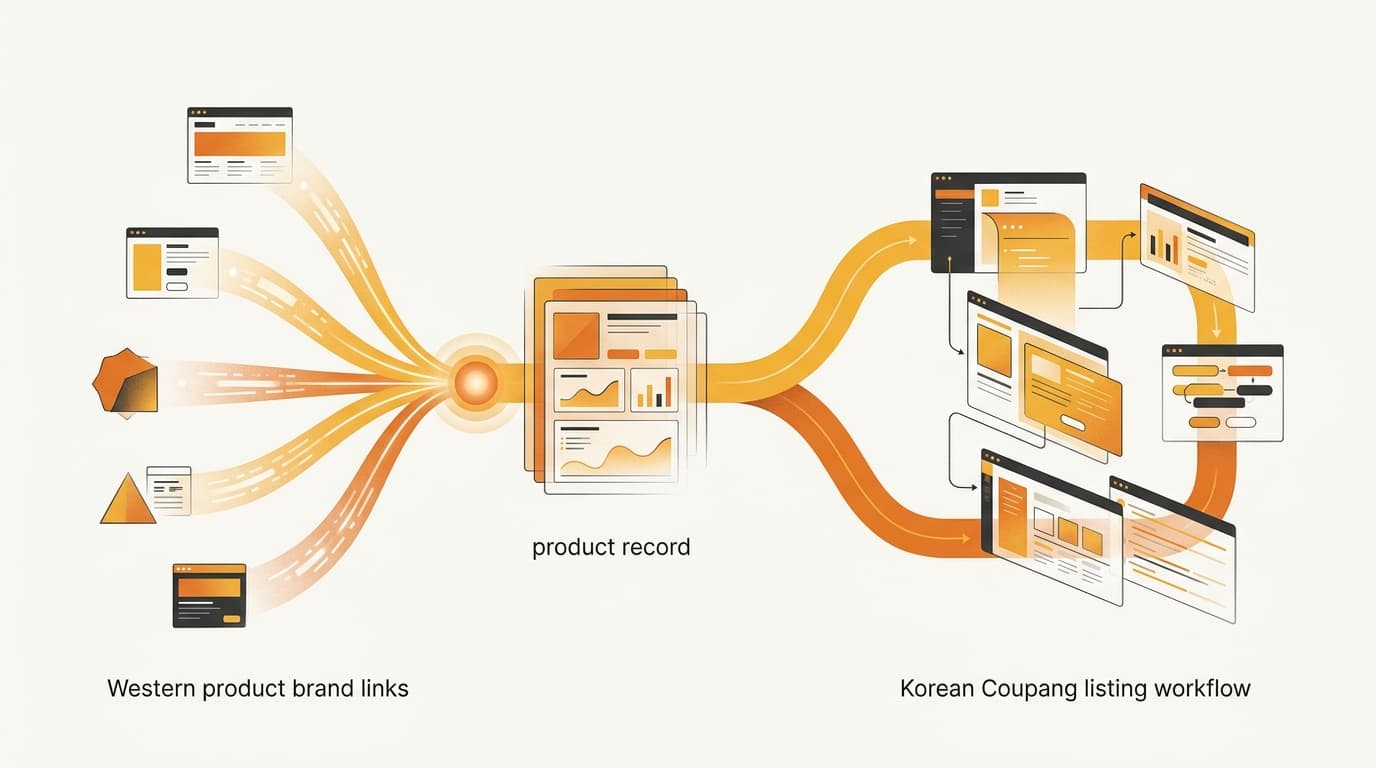
Product-Link Intake for Coupang: A Traceable Handoff
Kontactic Seller Center gives product-link intake a reviewable source record and a handoff into Coupang listing work before Korean copy or creative production starts.