
Children’s Product KC: Does “Ages 13+” Avoid the Rules?
No. Printing “Ages 13+” may support an older-user classification, but it does not by itself remove a product from Korea’s children’s-product safety regime. The question is whether the product’s design and intended use support the claim, while its Korean presentation points to an in-scope category.
Children’s-product scope asks whether a product falls into a designated category under Korea’s Special Act on the Safety of Children’s Products. If it does, the product needs the applicable Korean safety procedure before import and sale. An age statement is evidence in that determination, not an automatic exemption.
The short answer: an age label is evidence, not an exemption
The governing starting point is Korea’s Special Act on the Safety of Children’s Products on the National Law Information Center. For the current product-safety categories and applicable conformity routes, check the Korea Agency for Technology and Standards (KATS) through its official Safety Korea portal. Those are better starting points than a foreign retail taxonomy or a product name chosen for marketing.
The Act is not limited to products sold as toys. Depending on the designated category and the product’s intended use, children’s apparel, accessories, play products, and child-use gear can all require a children’s-product safety analysis. Calling an item a lifestyle product, general merchandise, or an accessory does not settle the question.
A truthful age statement still has a role. A product genuinely designed for older users may fall outside the children’s-product definition when its physical design and commercial presentation support that conclusion. But the conclusion has to come from the evidence as a whole. A brand cannot create the conclusion simply by printing “Ages 13+” on a package that otherwise presents the product as made for children.
Think of the age line as a claim to support, not a switch that turns Korean scope off. The two common errors are treating any product a child might use as automatically covered and treating an age label as enough to avoid the children’s-product regime.
The defensible approach is to test the full product record before import and sale.
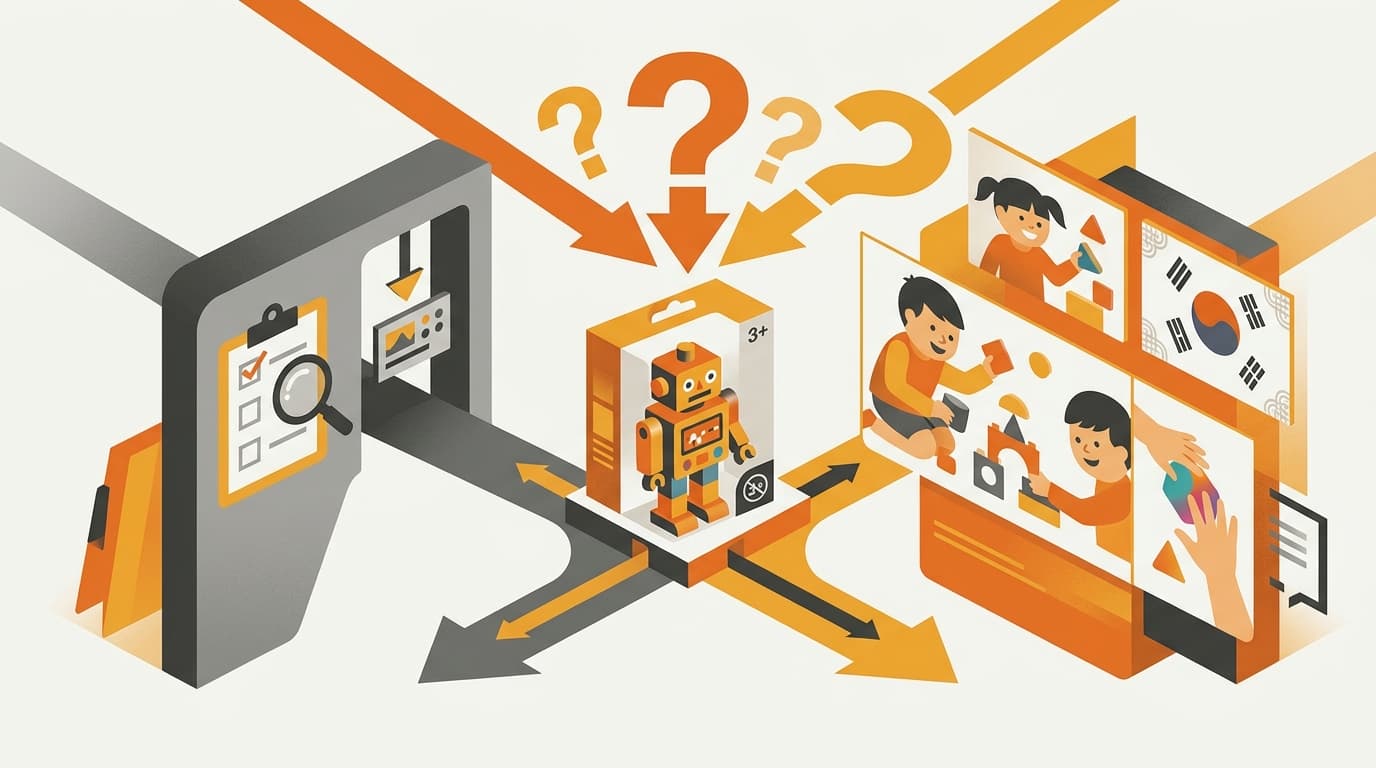
What Korea examines beyond the package age line
Review the item as a Korean consumer will encounter it, not just as the factory describes it. The practical scope file should examine at least five evidence groups.
-
Intended user and ordinary use case. Who is the product actually made for? The answer should come from the product’s function, instructions, sales positioning, and likely use—not only from the age printed by the brand.
-
Design, dimensions, and features. Does the size, fit, shape, play value, or functional design make child use a reasonable intended use? A product can carry a general retail name while its physical characteristics point in a more specific direction.
-
Packaging and instructions. Examine every panel, image, use direction, warning, age statement, and illustration. Packaging can communicate an intended user even when the front-facing age line says otherwise.
-
Commercial presentation. Review the product name, photographs, claims, and merchandising context. A Korean product page is part of what the customer sees. Child-focused imagery or claims can conflict with an older-user classification.
-
Consistency of the age claim. Ask whether the product itself makes “Ages 13+” credible. Can the brand explain why that age was selected, using the item’s design and presentation rather than a desire to avoid a safety route?
These signals should be read together. None is necessarily decisive in isolation, but contradictions matter. A package carrying an older-user age line alongside child-scale dimensions, child-use features, and child-directed imagery is not a clean older-user record. The conflict needs to be resolved before the product is classified for Korea.
This is the same reason a brand should not rely on a broad retail label when assessing whether a product is a children’s product under Korean law. The label may describe how the item is sold elsewhere; it does not replace the Korean scope analysis.
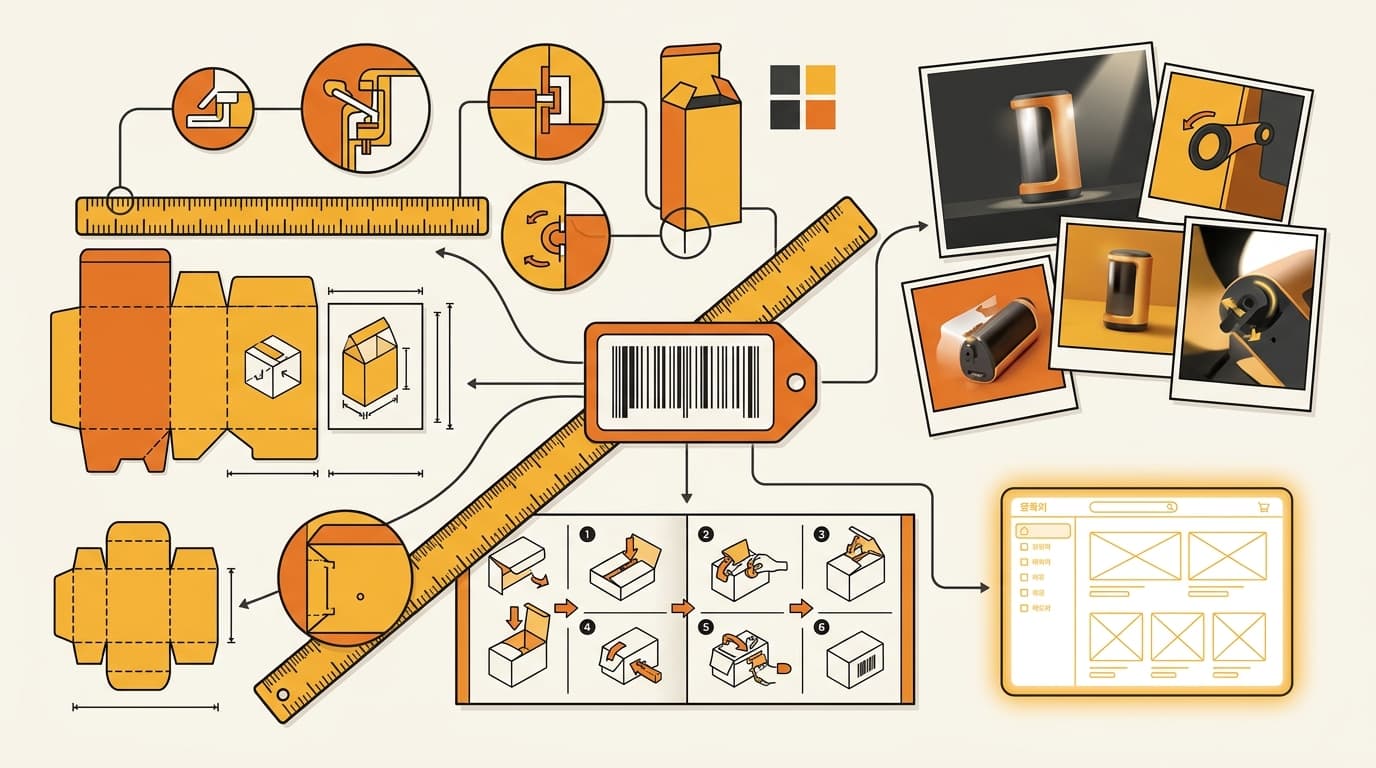
Incidental child use is not the same as child-directed design
Children can use many products that were not made for them. Incidental use alone does not automatically place a general consumer product inside the children’s-product regime. The mistake is assuming that a brand’s declaration of “incidental use” settles the matter without looking at the evidence.
A product may support an incidental-use conclusion when its evidence consistently points to older users. For example, the brand may show an older-user use case, adult-oriented dimensions and functions, and instructions written for those users. The Korean presentation should also contain no child-directed imagery or claims. That is still a classification conclusion to document, not a result created by one sentence on the package.
Evidence can point in the other direction when the product is:
- Sized, shaped, or configured around children’s use.
- Built with a child-use or play function, even if the retail category uses a different name.
- Packaged with child-focused imagery, language, or instructions.
- Presented on the Korean product page as something children should wear, use, play with, or receive.
- Marketed through a lifestyle label that conflicts with the actual product design and intended-user signals.
Consider an accessory that a brand lists as general lifestyle merchandise but shows on child models, describes for school-age use, and produces in child-specific dimensions. Printing “Ages 13+” does not make those other signals disappear. Conversely, a general-use item that a child could use incidentally should not be treated as a children’s product solely because child use is possible.
The practical question is not whether a child could touch or use the item. It is whether the product, taken as a whole, is designed, marketed, and reasonably intended for children within a designated Korean category. The discussion of why Korea can treat adult-looking items as children’s products is useful for spotting this mismatch early.
Why Western labels and foreign marks do not settle Korean scope
Western brands often bring an existing age grade, retail category, or safety file into the Korea launch. Those materials are useful evidence. They can help explain the product’s design, user assumptions, and prior testing. They are not a substitute for identifying the Korean category and applicable Korean safety procedure.
The same applies to a foreign compliance mark or test report. It may support a factual review, but it does not automatically establish that the item sits outside Korea’s children’s-product rules. Korean scope and conformity obligations still need to be checked against the applicable KATS category.
Localization can also change the evidence. A final Korean product page may use different images, claims, or use examples from the overseas page. A translation may make child-directed positioning more explicit. The package, instructions, product images, and Korean listing therefore need to be reviewed as one launch set.
Once the evidence points toward a children’s-product category, the next question is not simply whether the product has a foreign certificate. It is which Korean safety or conformity procedure applies to that category and whether the required documents match the exact product being imported and sold. A general-consumer assumption is not enough. The practical distinction between product scope and the applicable children’s-product KC procedure should be settled before the product enters the Korean sales workflow.
Build a classification file before Korean import and sale
Treat classification as a controlled pre-launch record. A useful file should show why the product is inside or outside children’s-product scope and which Korean route applies. It should also confirm that the final package and listing match that reasoning.
-
Identify the exact product. Record the model, SKU, variants, materials, dimensions, functions, and product photographs. Do not classify a vague product family if the physical versions differ in ways that could affect intended use.
-
Write the intended-age rationale. If the package will say “Ages 13+,” explain why. Tie the claim to the product’s design, user scenario, instructions, and presentation. Do not write the age only as a compliance shortcut.
-
Capture the complete presentation. Save the final package artwork, instructions, product images, product name, Korean copy, claims, and merchandising context. The review should cover what Korean customers will actually see, not an earlier draft.
-
Map the Korean category. Use the Special Act and current KATS materials to identify the applicable product category and explain the in-scope or out-of-scope conclusion. Record any unresolved feature or claim that could change the answer.
-
List the required Korean procedure and documents. Identify the applicable testing, certification, confirmation, or other conformity evidence for the selected category. Keep the documents tied to the exact model and configuration; a foreign mark by itself is not the Korean route.
-
Freeze the release claims. Before import and sale, compare the approved classification file with the final package and Korean listing. Reopen the review if the design, dimensions, materials, features, age wording, imagery, or intended-use claims change. If the file indicates a children’s product, complete the applicable route before sale; a pending KC step is not a substitute. See Can You Sell a Children’s Product With KC Pending?.
This process does not require a brand to classify every product as a children’s product. It requires the brand to make the decision from evidence that is consistent and traceable. A genuinely older-user product can be supported by a credible “Ages 13+” claim. A child-directed product cannot be moved outside scope merely by adding that claim to the package.
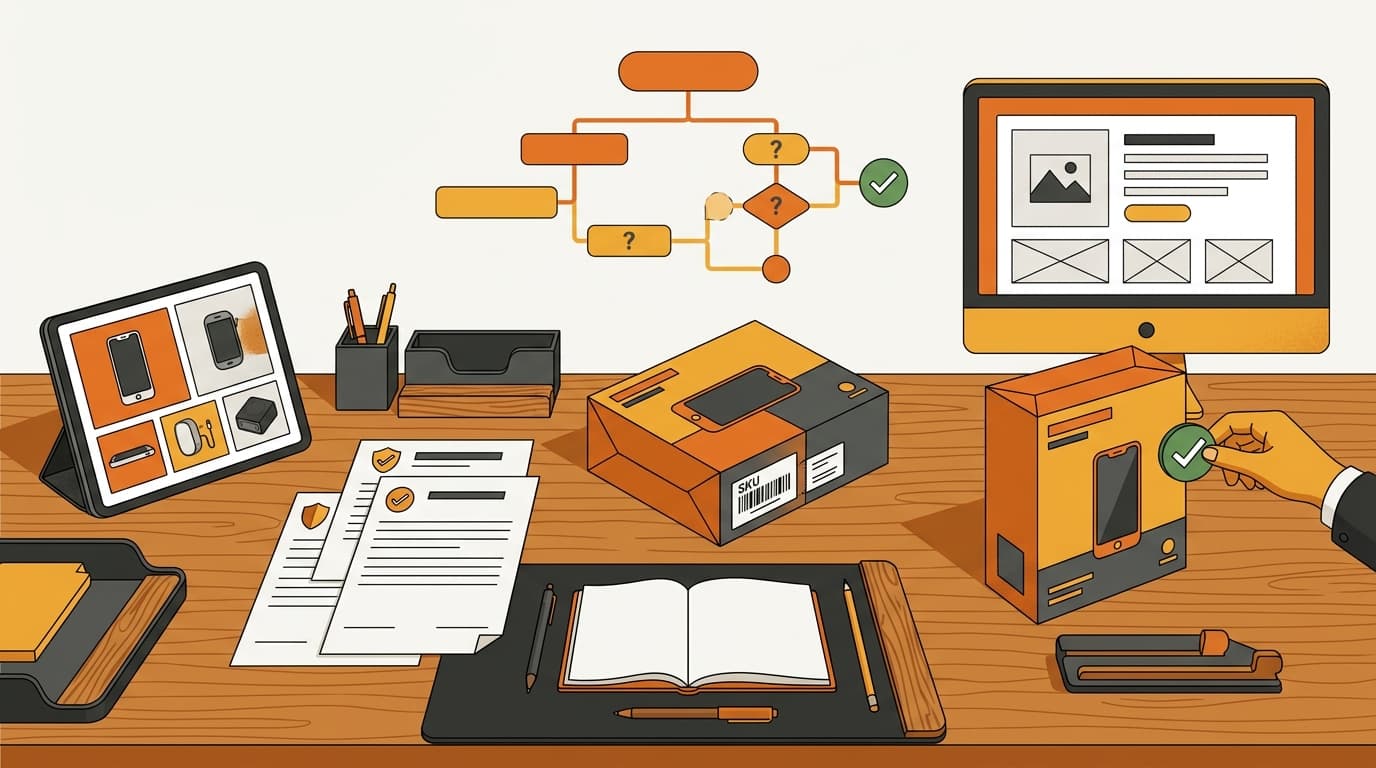
Common questions about “Ages 13+” and Korean children’s-product KC
Can a brand use “Ages 13+” if the product is genuinely for older users?
Yes. The claim may support an older-user classification when the product’s design and functions point to older users. Packaging, instructions, imagery, and Korean marketing must be consistent. It should be documented as a supported conclusion, not selected solely to avoid Korean safety obligations.
Does incidental child use automatically make an item a children’s product?
No. A child’s possible use of a general product is different from a product designed, marketed, and reasonably intended for children. The answer depends on the combined evidence and the applicable Korean category.
Do foreign compliance marks or test reports replace Korean children’s-product review?
No. Foreign documents may provide useful background, but they do not replace identifying the applicable KATS category and Korean safety or conformity procedure. The product, package, and Korean listing still need to support the scope conclusion.
If the package says “Ages 13+,” can the Korean product page show children using the product?
Treat that as a potential conflict, not as two separate marketing decisions. Review the final page, images, and claims together with the package and instructions so the intended-user rationale is consistent.
When should the classification be decided?
Before Korean import and sale, including the local product listing. If the model, dimensions, features, materials, age wording, or marketing presentation changes afterward, reopen the scope review before relying on the original conclusion.
Review your Korea product-scope file
If your age claim, package, and Korean listing do not point to the same intended user, bring the SKU evidence to Kontactic before import and sale.
About the author
Korean and global e-commerce operators with 15+ years of cross-border experience, led by CEO Isaac Lee — KOTRA-certified consultant and official lecturer for Seoul City and the Korea Customs Service. We run Korea market entry for Western brands every day; this blog documents what we learn in the field.
More about Kontactic →Related Articles
Korean KC for a Detachable Device Charger: Not Automatic
Does Korean KC cover a detachable charger? Not automatically. The final bundle and adapter evidence must match the Korean commercial SKU before import.

Can Coupang Handle Every Korean Buyer Inquiry? No—Seller Duties
Coupang may handle platform and fulfillment contacts, but sellers still own product questions, cancellations, returns, exchanges, and order exceptions.

Rocket Growth: Why Outbound and Return Locations Matter?
Rocket Growth stores and ships inventory, but sellers still need outbound and return records before product registration; each has a distinct seller-side role.