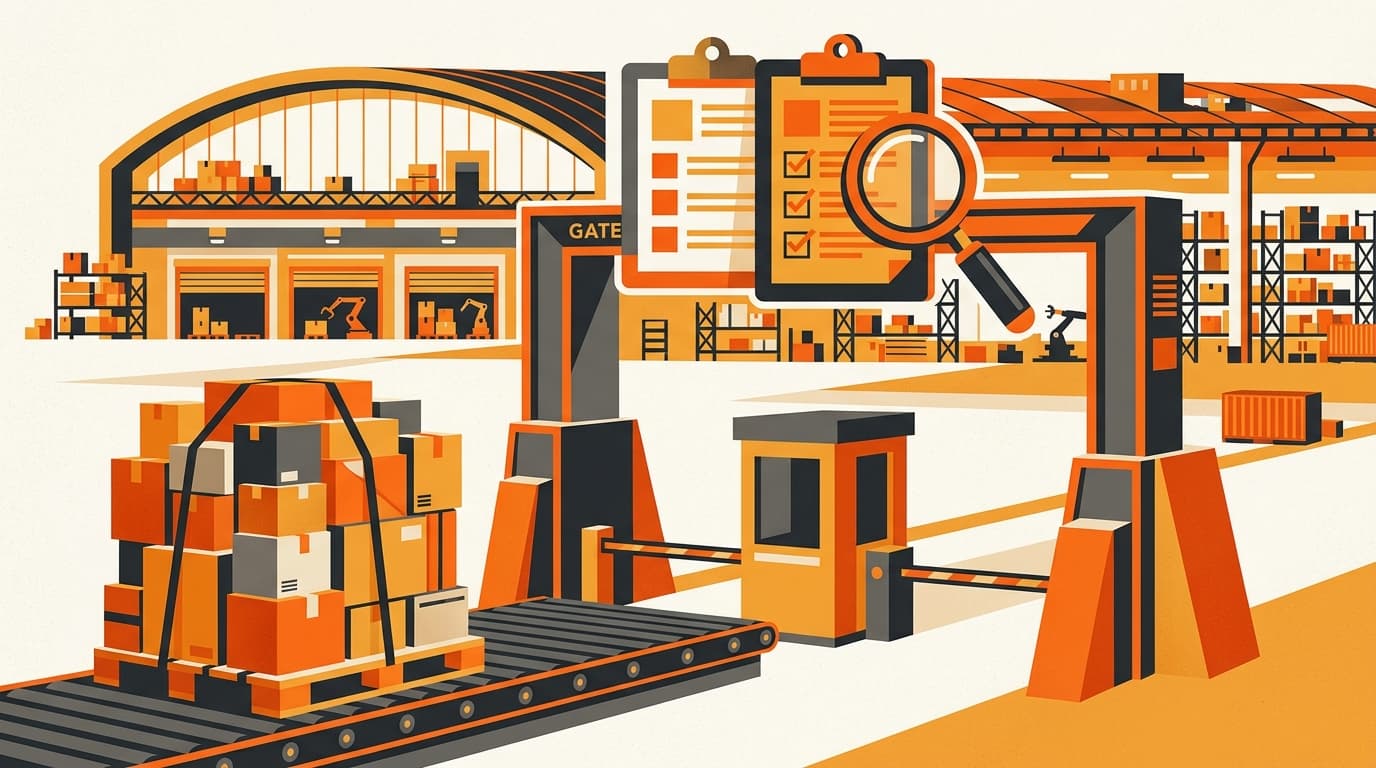
Coupang Inbound Verification: Label & Cert Review
A shipment that fails Coupang's inbound gate gets held at the warehouse dock — expensive, opaque, and slow to reverse. Coupang inbound verification is a two-step review — a safety and compliance label check, then a certification-evidence check — that catches problems at the desk, where fixing them costs an email, rather than at the Rocket warehouse dock, where they cost a rejected or quarantined pallet. The result: corrections happen in hours, not days.
The scariest failure mode when going local in Korea isn't the listing. It's a container that arrives and gets held because a label doesn't match the Korean disclosure format, or because the certification proof behind a SKU can't be matched to the goods on the pallet. Coupang's Rocket model is unforgiving about inbound requirements. A shipment that stalls there is hard to diagnose and slow to unwind — which is why the inspection belongs upstream, before the pallet ships.
How does inbound verification prevent warehouse holds?
Before anything clears into Rocket fulfillment, a shipment moves through two distinct review stages.
The first stage is the safety and compliance label check. This confirms the Korean-language disclosure label (표시사항) and any safety-standard markings on the physical goods are correct for the category — not just present, but right. A label that exists but omits a required field is still a rejection at the warehouse.
The second stage is the certification-evidence check. Here the paperwork behind the product — the certification proof that establishes the SKU is legally cleared for sale in Korea — is verified against the shipment itself.
Coupang inbound verification means a shipment is not "cleared" until both the physical label and the certification evidence behind it have been checked and matched. Passing one stage does not clear the shipment; both gates have to open.
Keeping these as two separate stages matters. A label can be perfect while the certification evidence is missing, and vice versa. Collapsing them into one pass/fail hides which problem you actually have. Splitting them tells you exactly what to fix, so the correction happens at the desk instead of the dock.
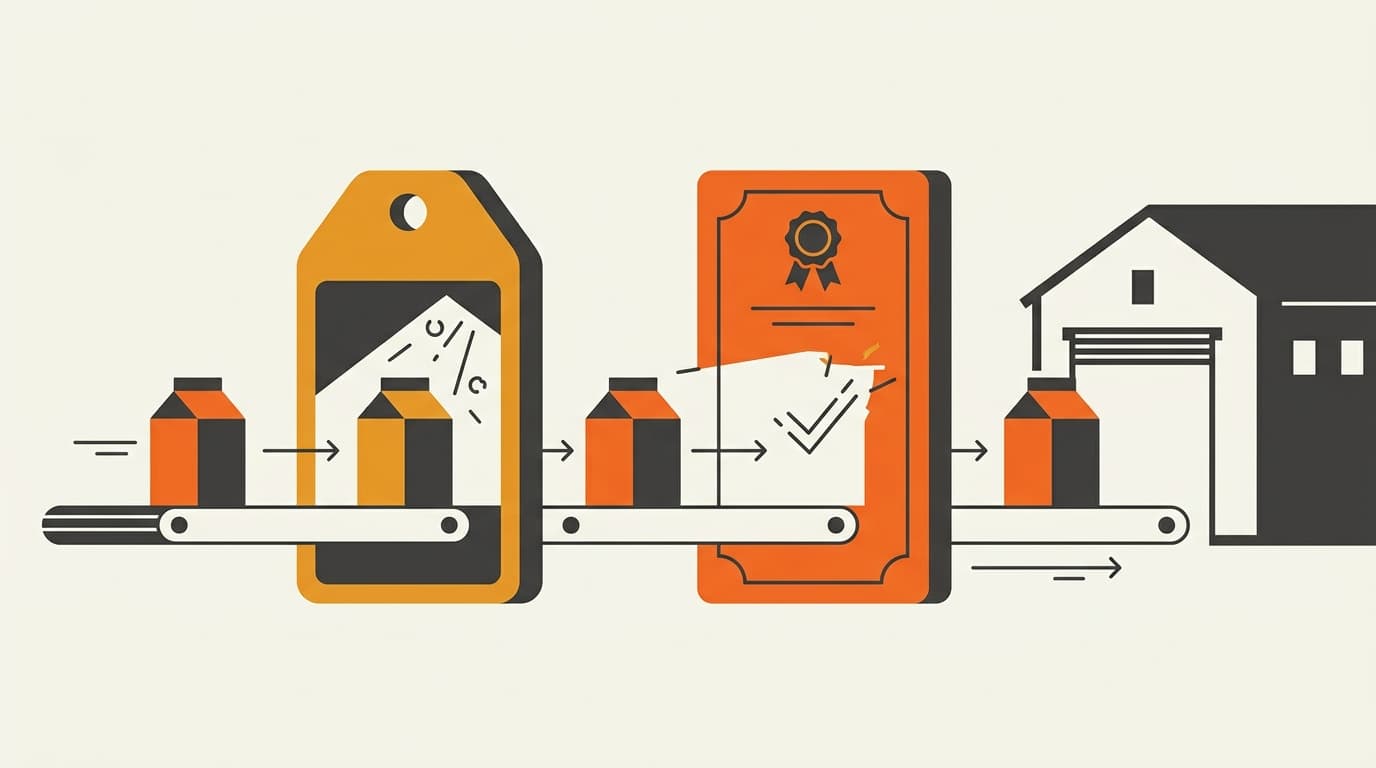
Whose next action is this?
The second thing this review does is answer one critical question on every shipment: whose action is blocking it right now?
Each inbound shipment carries a clear ownership state. The inbound view shows whether the operations team is actively working the shipment or whether the brand needs to act — and when action is needed, it shows the reason and the urgency. That sounds small. It is not. Most inbound delays aren't caused by hard problems; they're caused by silent ones — an approval sitting in someone's inbox that neither side realized was blocking the pallet.
Making ownership explicit removes the "I thought you had it" failure. If a shipment is flagged for a label correction, it is visibly the brand's action, with the reason attached. If it's mid-review, it is visibly the operator's. No shipment sits in an ambiguous middle where both parties assume the other is handling it.
“Most inbound delays aren't hard problems. They're silent ones — an approval nobody realized was blocking the pallet. Making ownership explicit on every shipment is what actually keeps things moving.”
Operational principle — Inbound verification
What happens if my label fails the check?
Labels are rarely wrong one unit at a time. When a label is wrong, it's usually wrong for the whole group that shares it — same artwork, same missing field, same category.
So when a label group is rejected, the whole group is held together rather than surfaced as fifty separate item-level rejections. You see the real issue once, fix the underlying label once, and the group moves as a unit. That is the difference between "your label is missing an importer field" and fifty near-identical error rows you have to reconcile by hand only to discover they're all the same problem.
If your organization has already submitted certification proof, the review takes that further. Certification evidence and label proof are grouped and cross-checked, so label-only shipments that match evidence you've already provided can be confirmed automatically. You don't resubmit the same certificate every time a new batch of the same SKU arrives. The paperwork you did once keeps paying off. This is the same logic that makes a clean, reusable Korean disclosure label worth getting right the first time — the artifact is reusable across every future inbound.

How long do I have to correct a flagged shipment?
A flag is only useful if someone acts on it. The failure mode to guard against is the flagged shipment that everyone forgets — the correction that never happens because no clock was running.
So flagged shipments have a defined correction window, and reminders push the corrective action along inside it.
Fourteen days is enough time to get a real label reprinted or a certificate located and submitted, but short enough that a shipment can't drift indefinitely in a flagged state. The reminders matter as much as the window: they keep the corrective action visible instead of letting it sink under newer work. A shipment that needs fixing gets fixed, or it's clearly and visibly overdue — never silently stuck.
This is worth understanding before your first pallet lands, because inbound sequencing has more moving parts than most brands expect. It's the same reason what actually drives Rocket Growth inbound lead times is worth reading first — the warehouse dock is rarely the real constraint. The review layer upstream is.
Why full visibility beats a black box
None of this happens where you can't see it. The customer-facing inbound view shows connection and sync status, thumbnails of what's being reviewed, and the two-step review stages themselves. You can look at any shipment and see exactly where it is in the process.
That transparency is deliberate. The traditional handoff between a brand's dock and Coupang's warehouse is a black box — you ship, you wait, and you find out whether it worked when it either shows up sellable or doesn't. Replacing that with a visible pipeline — sync status, thumbnails, review stage, ownership state — turns a high-stakes guess into a checklist you can read.
One design decision underneath this is worth naming. The label check uses real safety-standard-compliant label examples as its reference, and comparison steps that looked rigorous on paper but that Coupang's listings couldn't reliably support in practice have been retired. The review reflects what actually gets shipments through the door — not compliance theater that produces a green checkmark and a rejected pallet anyway. A check that doesn't predict the real outcome is worse than no check, because it manufactures false confidence.
Common questions
What happens if my label fails the first check? The shipment is held at the label stage and flagged as the brand's action, with the reason attached. Because labels are handled by group, you fix the underlying label once and the whole group moves — you're not clearing rejections one unit at a time.
Do I have to resubmit certification proof for every shipment? No. Certification evidence and label proof are grouped and cross-checked. If your organization has already submitted the proof, matching label-only shipments can be confirmed automatically, which cuts repeat paperwork on repeat SKUs.
How long do I have to fix a flagged shipment? There's a defined 14-day correction window, with reminders inside it. That's long enough to reprint a label or locate a certificate, short enough that a flagged shipment can't drift indefinitely.
Does this cover what happens after the goods are selling? This is specifically the inbound gate — the review between your shipment and Rocket fulfillment. Once units are live and orders come in, the return side has its own boundary; who owns a returned unit under Rocket Growth is covered separately.
Going local on Coupang without the inbound guesswork
If you have proven Korean demand and want your shipments checked before they hit the Rocket warehouse, not after, talk to Kontactic about how our inbound review works for your categories.
About the author
Korean and global e-commerce operators with 15+ years of cross-border experience, led by CEO Isaac Lee — KOTRA-certified consultant and official lecturer for Seoul City and the Korea Customs Service. We run Korea market entry for overseas brands every day; this blog records what we learn in the field.
More about Kontactic →Related Articles
Import a Product Into Korea, But Can't Sell on Coupang?
Importing a product into Korea does not guarantee Coupang sales. Learn how SKU review separates import permission, online-sale rules, and importer permits.

What Happens After Your Korean Coupang Page Is Finished?
After your Korean Coupang page is finished, see the real page, follow the same instructions in Seller Center and email, and get reminders only if needed.

Korean Tax and Import Paperwork: What Kontactic Handles
Korean tax and import paperwork: you provide entity details, supporting documents, and import papers; Kontactic completes the local submissions for a shipment.