
Does Korean Importer Registration Cover Every Product You Sell?
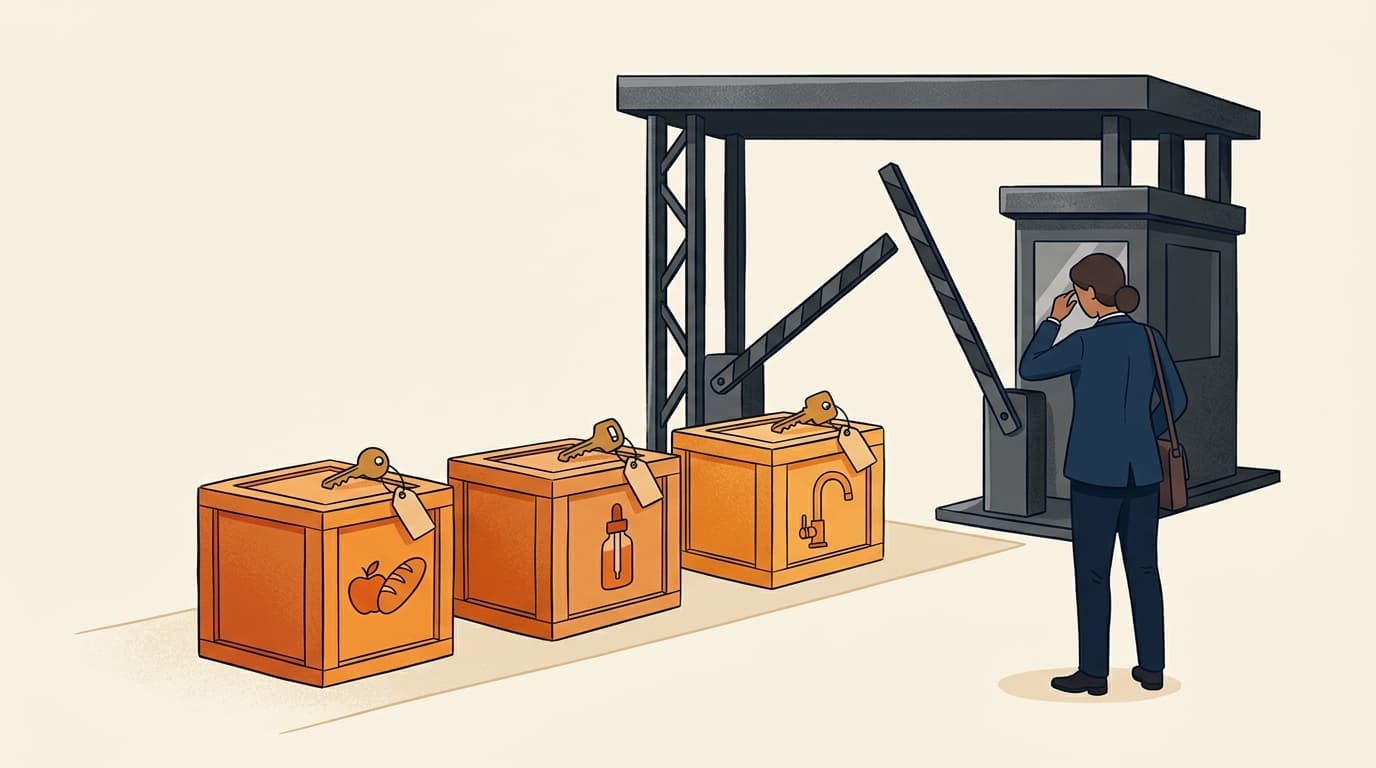
No. Base importer-of-record registration establishes who may legally import into Korea — it does not, by itself, entitle that importer to bring in regulated goods. Food, cosmetics, water-contact plumbing, and electrical goods each sit under their own category-specific import authorization, and that authorization must be held by the same registered importer before the product clears customs. IoR status is a foundation, not a universal permit.
This trips up brands more than almost anything else in a Korea launch, because the setup work feels complete. You secured a resident representative. You have the corporate seal in hand. The importer registration went through. And then a shipment of a specific product sits at the border because the category license underneath it was never obtained.
Two different layers: who may import vs. what they may import
The cleanest way to hold this is to separate the two layers by orientation.
The horizontal layer — who you are. Becoming a registered importer of record is about identity and legal standing. It requires a Korea-resident responsible party, a registered corporate seal and certificate, and general importer registration. This is what makes you an entity the Korea Customs Service can hold accountable at clearance. It applies broadly — the same registration underlies everything you import. This is also why a purely offshore brand cannot complete the step alone; the workflows presume a Korean business registration and a locally reachable representative, which is the whole reason Korean importer registration demands a corporate seal and a resident representative.
The vertical layer — what you may bring in. Category-specific import authorization is about the goods themselves. Food is governed under one regime, cosmetics under another, water-contact plumbing under a third, electrical goods under a fourth. Each is a separate qualification that stacks on top of the base registration. Being a registered importer tells customs you exist and are accountable. It does not tell them your particular product is cleared to enter.
Importer of Record (IoR): the Korea-resident legal entity accountable to the Korea Customs Service for importing goods — filing customs documentation and serving as the registered importer. It is horizontal: it establishes who may import. Category import authorization is vertical: it establishes what that importer may bring in. You need both, and the second sits on top of the first.

The base registration does not cover regulated categories
A general importer registration is deliberately broad. It is not a substitute for the product-specific filings that Korean law requires for certain categories before those goods can move through clearance.
Food and health-related goods are the clearest example. To import them, you need an importer/business registration through the Ministry of Food and Drug Safety (MFDS, 식약처) — the filing runs through the Food Safety Korea portal (식품안전나라). This registration is held by the importer of record, not by the overseas factory that made the product. The manufacturer's own credentials do not import the food for you; your registered importer identity is what carries the filing. If your product is ingestible, this MFDS track is a hard gate that sits entirely outside the general importer registration — and food adds a further wrinkle, because Korea also splits the compliance into a one-time overseas manufacturer registration and a per-shipment import declaration filed on every batch.
Electrical goods sit under the product-safety regime administered through the Korean Agency for Technology and Standards (KATS), where KC certification applies before customs will release regulated items. Cosmetics require a licensed responsible role. Water-contact plumbing has its own hygiene-safety pathway. None of these is folded into the act of becoming a registered importer — each is its own qualification, verifiable against the relevant statute on the national law portal (law.go.kr) and the responsible agency's guidance.
The practical failure mode is a registered-but-unable-to-import state. The entity exists. The seal is real. The importer registration cleared. But the specific goods are stuck at the border because the category license underneath them was never filed. From the outside it looks like the setup is done; functionally, the assortment cannot move.
Category licenses are per-category, not per-company
Here is the part brands most often underestimate: the vertical authorizations are per-category, not per-company. Qualifying for one does nothing for the others.
Picture a single registered importer selling two products — a cosmetic serum and a water-contact faucet. That importer needs:
- the cosmetics responsible-distributor role satisfied for the serum, under Korea's Cosmetics Act; and
- the water plumbing hygiene-safety pathway (수도법 위생안전기준인증, sometimes referenced as KCw) satisfied separately for the faucet.
One importer identity. Two distinct product authorizations stacked underneath it, each obtained on its own track, each with its own evidence and lead time. Add a food SKU and you add the MFDS registration too. Add a regulated electrical device and you add the KATS KC track. The importer does not "level up" once and cover the range — every regulated category is its own separate qualification.
Cosmetics is worth calling out because the responsible role is a genuine legal position, not a formality: imported cosmetics need a licensed Korean responsible distributor (화장품책임판매업자) to reach the market, a role a foreign brand cannot hold directly from offshore. That role attaches to the importer, which is exactly why the resident representative and seal you established in the first layer are what make the second layer executable.
The importer — not the factory, not Coupang — must hold the authorizations
There is a common assumption worth killing directly: that the overseas manufacturer's certifications, or the marketplace you sell on, somehow carry the import authorization for you. They do not.
The category authorization is filed by or held under the importer of record — the Korea-resident, accountable party. The overseas factory's registrations belong to the factory; they establish that the product was made under certain conditions, not that you are cleared to import it into Korea. And Coupang is a marketplace, not your importer. When you sell locally, the Importer of Record must be a Korea-resident party accountable to the Korea Customs Service — not the platform and not your freight forwarder.
This is the throughline between the two layers. The reason the resident representative and corporate seal matter so much in layer one is that they are the credentials that make layer two possible. Without a qualifying importer identity, there is no one to hold the MFDS registration, the cosmetics responsible role, or the plumbing certificate. The identity is the hook every category license hangs on.
“The importer registration tells customs who you are. The category authorization tells them what you're allowed to bring in. Brands finish the first and think they're done — then a shipment stops at the border for the second.”
Kontactic operations team — Korea import & commerce operations
Sequence category lead times on top of the importer setup — not inside it
The operational takeaway is a sequencing one. Identify every regulated category in your assortment before assuming your import setup is complete, because each category adds its own pre-market or registration lead time that runs on top of the importer registration, not inside it.
Treating "get the importer set up" as a single milestone hides the real critical path. In practice the timeline looks more like this:
- Establish the importer identity — resident representative, corporate seal and certificate, general importer registration. This is horizontal and applies to everything.
- Map your assortment to categories — go SKU by SKU and flag every regulated category present: food/ingestible, cosmetic, water-contact, electrical/wireless, and so on.
- Start each category authorization in parallel — MFDS registration, cosmetics responsible role, plumbing hygiene-safety pathway, KATS KC certification. These run concurrently with each other but stack on top of the base registration.
- Confirm clearance readiness per category before you ship that category's goods.
If you skip step two and discover a category license only when the cargo is already inbound, you have converted a plannable lead time into a border hold.

Common questions
Does one importer registration let me import anything? No. It establishes who may legally import. Regulated categories — food, cosmetics, water-contact plumbing, electrical goods — each require their own separate authorization held by that same registered importer before the goods clear customs.
Can the overseas factory's certifications cover my import? No. The factory's registrations belong to the factory and describe how the product was made. The import authorization must be held by or filed under the Korea-resident importer of record.
Does Coupang act as my importer? No. Coupang is a marketplace, not your importer of record. The IoR must be a Korea-resident party accountable to the Korea Customs Service.
My product's category is ambiguous — how is it decided? By actual function and use, not the name on your listing. Whether a shower hose is a "water-contact" item, or whether a gummy is general food or a Health Functional Food, is settled against the responsible authority's classification — verify with the MFDS, KATS, or the statute text on law.go.kr rather than assuming.
When should I map my categories? Before you assume the import setup is finished. Every regulated category adds pre-market lead time on top of the importer registration, so mapping the assortment early is what keeps a launch from stalling at customs.
Not sure which category licenses your assortment triggers?
Tell us what you plan to sell in Korea and we'll map each SKU to the exact import authorization it needs before you ship. Talk to Kontactic.
About the author
Korean and global e-commerce operators with 15+ years of cross-border experience, led by CEO Isaac Lee — KOTRA-certified consultant and official lecturer for Seoul City and the Korea Customs Service. We run Korea market entry for Western brands every day; this blog documents what we learn in the field.
More about Kontactic →Related Articles

Korean KC for a Detachable Device Charger: Not Automatic
Does Korean KC cover a detachable charger? Not automatically. The final bundle and adapter evidence must match the Korean commercial SKU before import.
Can Coupang Handle Every Korean Buyer Inquiry? No—Seller Duties
Coupang may handle platform and fulfillment contacts, but sellers still own product questions, cancellations, returns, exchanges, and order exceptions.

Rocket Growth: Why Outbound and Return Locations Matter?
Rocket Growth stores and ships inventory, but sellers still need outbound and return records before product registration; each has a distinct seller-side role.