
Antimicrobial Textiles: Korea Biocide Approval Needed?
A qualifying antimicrobial-treated textile may enter Korea without separate standalone-biocide approval when its ordinary function remains non-biocidal and the treatment meets Korean requirements. Treatment status, intended use, exposure, claims, and Korean labeling still need review. An EU treated-article designation, foreign factory certificate, or overseas efficacy report does not establish clearance in Korea.
Treated article means an ordinary article that has been treated with a biocidal substance or product while its principal purpose remains something else, such as clothing or bedding. Standalone biocidal product means the finished product is placed on the market to control organisms through a biocidal function. The distinction is conditional, and both categories can carry compliance duties.
Treated article or standalone biocide: what Korea is asking
Start with the product’s job. The word “antimicrobial” does not answer the classification question by itself.
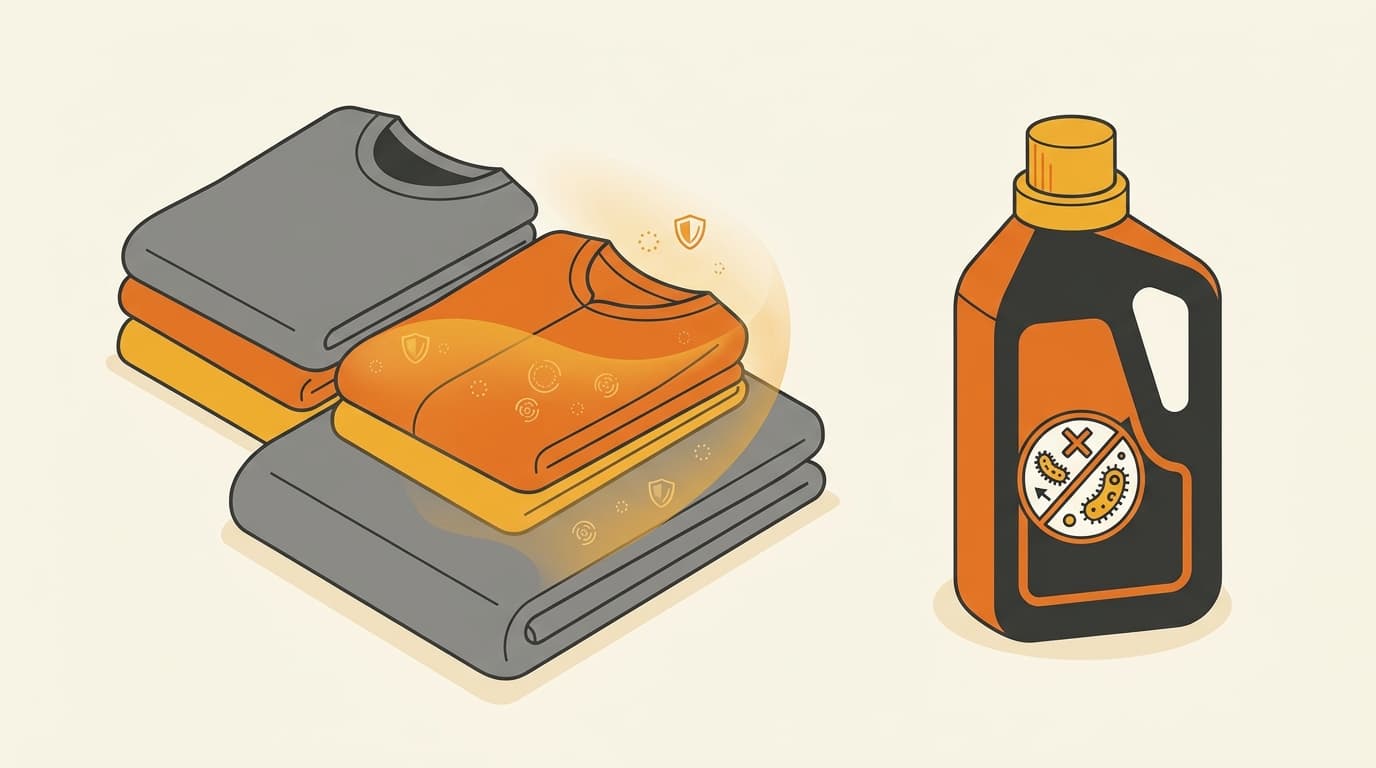
A shirt, bedsheet, blanket, or similar textile whose ordinary purpose is to clothe, cover, furnish, or protect may generally be considered through Korea’s treated-article framework when a treatment is added during manufacturing. The textile remains an article with a non-biocidal primary function. The treatment is a property of that article, not necessarily the reason the product exists.
A different analysis applies when the finished textile is marketed primarily to kill, disinfect, repel, or control organisms. In that case, the product may be treated as a standalone biocidal product, even if a factory applied the chemical as a “finish” and even if the item looks like an ordinary textile. The route for a standalone biocidal product is separate and should not be bypassed by describing the item as merely treated.
The practical signals look like this:
| Review question | Treated-article direction | Standalone-biocide direction |
|---|---|---|
| What is the article ordinarily used for? | Clothing, bedding, upholstery, or another ordinary textile use | The product is supplied principally for an organism-control purpose |
| What does the buyer understand the product to do? | Perform its ordinary textile function, with a treatment disclosed as a property | Kill, disinfect, repel, or control organisms |
| What language appears in the market presentation? | Treatment information that does not make the biocidal effect the product’s main purpose | A direct promise that the textile itself performs the biocidal function |
| What must be checked? | Korean treatment status, safety, labeling, and claim requirements | The separate Korean approval and evidence route for a standalone biocidal product |
This is a classification framework, not a safe-harbor checklist. The article name, the factory’s terminology, and the fact that the treatment is invisible to the consumer do not settle the result. Intended use, actual performance, instructions, packaging, and marketing claims all matter.
For the broader Korean distinction between a product that needs a biocidal route and one that belongs on a different safety track, see Safety Confirmation vs. Biocide Approval: Which Korea Track?. The same function-over-name discipline, illustrated in Is Your Air Freshener a “Biocidal Product” in Korea?, applies here: classify the product by what it is intended and presented to do, not by the easiest label to attach to it.
Why the product claim can change the classification
The claim is part of the product. Korean regulators and marketplace reviewers do not assess only the physical textile. They can also review its packaging, Korean label, product detail page, advertising, instructions, and other sales language.
That makes a claims audit necessary before the first shipment. Review at least:
- the product name, front-of-pack language, hangtags, and inserts;
- the Korean label wording and any translated instructions;
- the Coupang product detail page title, bullet points, images, and comparison graphics;
- paid advertising, retailer copy, and influencer or distributor scripts; and
- customer-use directions that describe what the treatment is expected to do.
Consider the difference between these types of presentation:
- A bedding product described primarily by its ordinary use, construction, comfort, or textile performance, with accurate treatment information added as a secondary property, may point toward treated-article review.
- A textile described as something that “kills bacteria,” “disinfects bedding,” “repels insects,” or “controls mold” is making a direct organism-control promise. Those words can move the finished product toward standalone-biocide treatment.
- A claim that sounds softer in English can become stronger in Korean translation. A literal translation is not enough if the Korean wording implies disinfection, prevention of infection, or another regulated function.
The question is not whether one word can mechanically trigger a category. The question is what the complete market presentation tells a reasonable buyer the product is for. If the buyer is purchasing the textile because the textile itself is expected to control organisms, the treated-article position becomes harder to defend.
Do not use “treated article” as a workaround when the finished product is actually marketed to perform a biocidal function. Removing one phrase from the product page does not change the product’s intended use, supporting evidence, or the rest of its market presentation.
How to check the treatment’s Korean status
“Antimicrobial finish” is a commercial description, not a complete regulatory identity. Before import, obtain enough information to identify what was applied to the textile, who applied it, and how the finished article may expose a user to it.
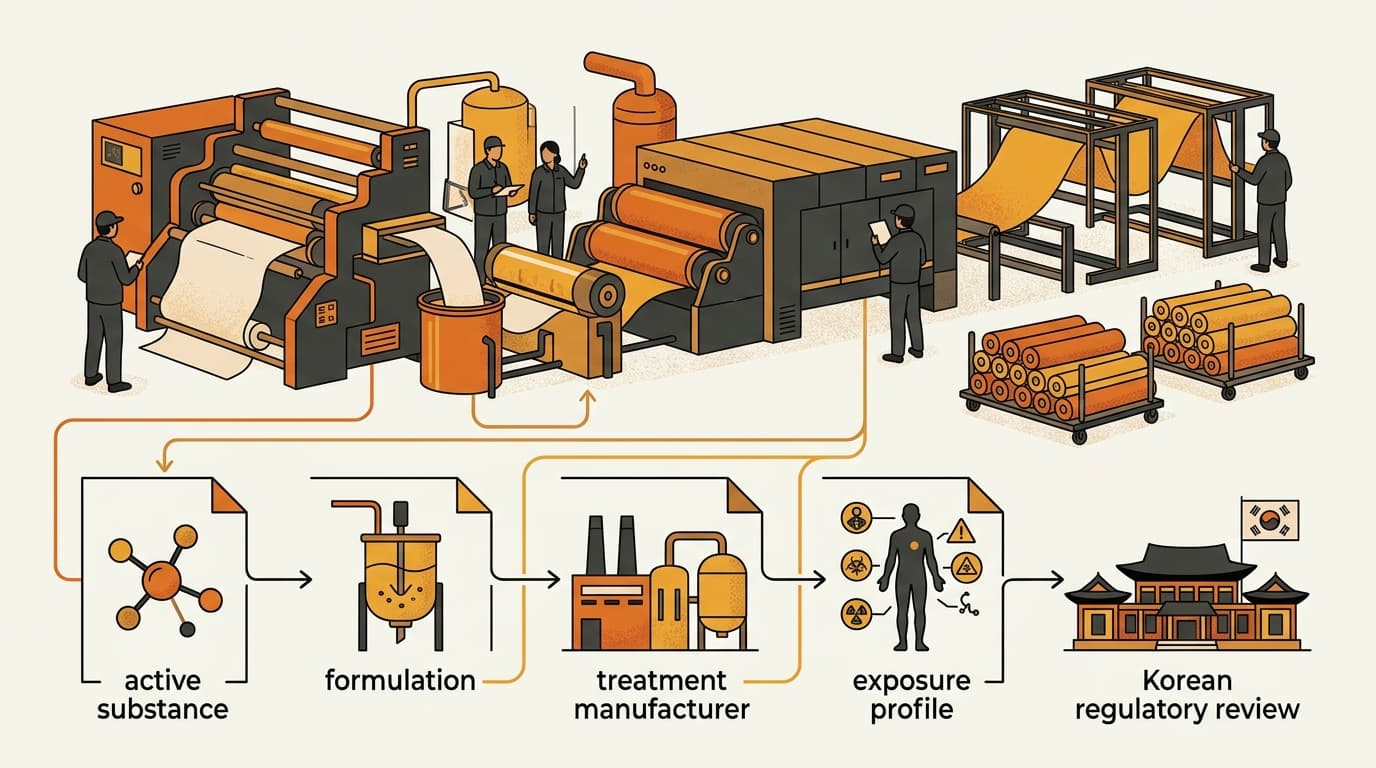
Ask the factory and treatment supplier for a treatment fact pack covering:
- The active substance. Identify the substance precisely. A generic statement that the fabric is “treated with an antimicrobial” is not enough to check Korean status.
- The biocidal formulation. Record the formulation or treatment product used at the factory, including its product identity and manufacturer. The active substance alone may not describe the actual material applied to the article.
- The treatment purpose. Document what the treatment is intended to do, which organisms or deterioration concern it addresses, and whether the purpose is protection of the textile or a direct consumer-facing control claim.
- The concentration or exposure profile. Capture the amount applied or retained, how the treatment is fixed to the article, and the exposure information relevant to people who wear, touch, wash, or sleep on it. The required detail depends on the treatment and article.
- The treatment manufacturer and factory. Keep the identities of the chemical supplier, finishing facility, and finished-goods factory connected to the same SKU record.
- Supporting evidence. Retain the available safety, composition, and efficacy documents, and identify exactly which product, formulation, test method, and use they cover.
- The Korean legal status. Check whether the active substance and treatment use can support the intended treated-article route under current Korean requirements. Do not infer this from an overseas approval, a foreign treated-article designation, or a supplier’s statement that the product is legal elsewhere.
Start with Korea’s Act on the Safety Management of Household Chemical Products and Biocidal Products on the Korean Law Information Center. Then check the current subordinate standards and notices issued by the Ministry of Environment. Read the current Korean text and applicable notices for the actual treatment and use. A historical guide or a European compliance opinion may help explain the chemistry, but it does not establish the Korean result.
This review is especially important when a supplier gives you only an efficacy report. An efficacy report can show that a test produced a result under a stated method. It does not, by itself, answer whether the active substance, formulation, exposure profile, intended use, and claims fit Korea’s legal framework. Treat the report as one part of the evidence file, not as a market-access certificate.
If the treatment identity or Korean status cannot be established, pause the launch rather than importing first and trying to repair the file after listing. The uncertainty is not limited to customs. It can affect the label, the product page, consumer instructions, future variants, and the evidence needed if a regulator or marketplace asks how the product was classified.
What still applies when standalone approval is not required
A treated textile still has Korean compliance duties even when separate standalone-biocide approval is not required. It still needs a defensible safety and labeling file, and its online presentation must match the reviewed product facts.
The practical obligations are these:
- Use the current Korean safety standards. The treatment and finished article must be assessed against the requirements that apply to their facts and exposure profile. Do not assume that an ordinary textile review automatically covers the chemical treatment.
- Prepare the Korean label. The package, label, insert, or other required disclosure must communicate the treatment information and precautions required by current Ministry of Environment standards. The exact fields and format depend on the applicable rule and product facts, so an English label translated word-for-word is not a reliable shortcut.
- Keep online claims aligned. The Coupang product detail page, images, advertising, and instructions should use the same reviewed claim scope as the Korean package. A compliant package can be undermined by a stronger claim on the PDP.
- Preserve evidence and traceability. Keep the treatment formulation, active-substance information, supplier and factory identities, supporting tests, label version, and claim approvals connected to the SKU. You should be able to show which evidence supports which article and wording.
- Separate customs from product compliance. Import clearance or a marketplace listing is not proof that the classification, treatment status, or labeling was correct. Those are separate questions that remain relevant after the goods arrive.
The label is not a translation exercise. It is where the treatment identity, precautions, and consumer-facing claims become operational. For a practical look at Korean disclosure work, see Korean-Language Labeling: How Hangul Label Studio Works. A treated textile still requires the separate classification and treatment-status analysis described here.
One common failure is to copy the foreign packaging and add a small Korean sticker after production. That can fail in two ways: the required treatment information may be missing, and the foreign marketing may make a stronger organism-control claim than the Korean review supports. Design the Korean label and product page from the same approved fact set.
A SKU-level review before import and listing
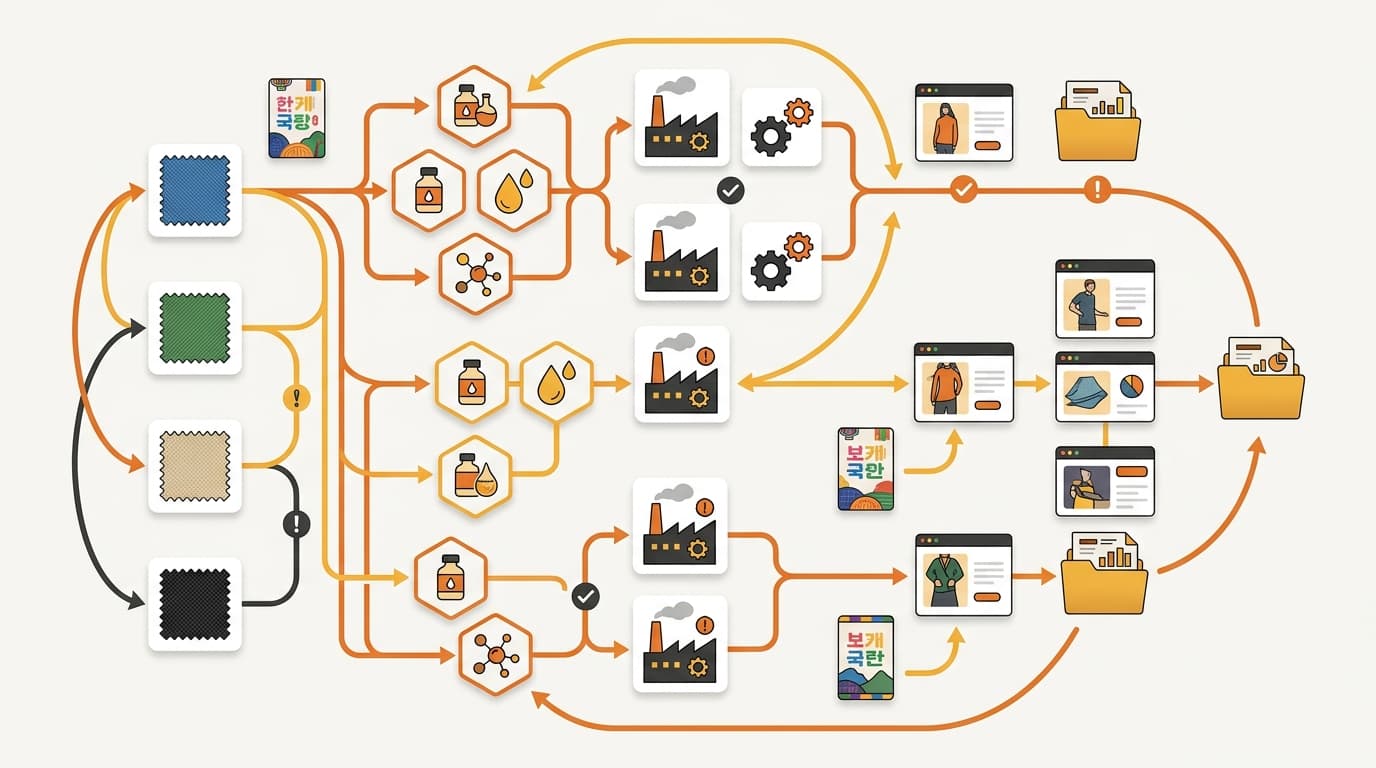
Treat each SKU as a controlled compliance record, not as a brand-wide assumption. Two items can share a brand and a general “antimicrobial” description while differing in treatment formulation, factory, article function, exposure, or claims.
Use this sequence before the first shipment:
- Write the ordinary-use statement. Describe what the article is and what a buyer ordinarily uses it for: for example, a bedding article or a clothing article. Then separately state what the treatment is intended to do. This forces the primary article function and the treatment function into view.
- Freeze the claims inventory. Collect every intended English and Korean claim, including text embedded in images. Mark which claims describe the textile’s ordinary performance and which describe organism control. Do this before the PDP and advertising are finalized.
- Match the treatment to the SKU. Record the active substance, formulation, treatment manufacturer, finishing factory, application method, concentration or exposure profile, and supporting evidence for that exact article. Do not attach a factory-wide certificate to every product without checking the formulation and use.
- Check the Korean route. Confirm whether the facts support treated-article handling or require the separate standalone-biocide route. If the answer depends on a claim or intended use, resolve that point before publishing the claim.
- Build the Korean label and PDP from the same file. Include the treatment information and precautions required by the current standards, and make sure the Korean wording does not expand the approved meaning. Keep the final label artwork and live listing version-controlled.
- Set change triggers. Reopen classification when the treatment changes, the supplier or factory changes, the article’s intended function changes, the exposure profile changes, or a new marketing claim is added. A reformulation or a new “disinfecting” message is not a routine copy edit.
A simple launch gate is useful. Do not release the SKU until you can answer “yes” to all five questions:
- Is the applied treatment precisely identified?
- Is its Korean status documented for the intended use?
- Are the finished article’s function and claims classified together?
- Are the Korean label, precautions, and product-page wording aligned?
- Can each variant be traced to its treatment, factory, evidence, and label version?
This approach also prevents a common variant problem. A new color or size may not automatically create a new biocidal category, but it still needs a traceable relationship to the reviewed treatment and article specification. If the material, treatment, supplier, construction, use, or claim changes, do not assume the original conclusion carries over. The broader principle of mapping each SKU to its exact Korean obligation is set out in How We Map Each SKU to the Right Korean Regulation.
Common questions about antimicrobial textiles in Korea
Can an EU treated-article designation replace Korean biocide approval or review?
No. It can help explain the foreign product’s treatment and classification, but it does not establish that the active substance, formulation, intended use, exposure profile, or claims are acceptable in Korea. The Korean framework and current Ministry of Environment standards still need to be checked.
Does the word “antimicrobial” automatically make a textile a standalone biocidal product?
No. Classification depends on the textile’s ordinary and intended function, the treatment, and the complete market presentation. The word is a reason to investigate the treatment and claims, not a classification result by itself.
Can a Korean product page say that the textile kills bacteria?
Not without reviewing the claim as part of the Korean classification and evidence file. A direct statement that the textile kills, disinfects, repels, or controls organisms can indicate that the finished product is marketed for a biocidal function. That claim may require the separate route.
If no standalone approval is required, can the product use only an English label?
No. The treated article still has Korean safety and labeling duties, including the treatment information and precautions required by the applicable current standards. Confirm the exact Korean disclosure requirements before production and listing.
Does every color or size need a completely separate approval?
Not automatically. Each SKU and variant should be tied to its treatment formulation, factory, article function, evidence, and claims. A change to those facts should trigger a fresh review rather than an assumption that the original classification still applies.
Does customs clearance prove that the treated-article route was correct?
No. Customs clearance and product-market compliance are different checks. Keep the classification, treatment-status, safety, labeling, and claim records ready even after the shipment has cleared.
Review your Korea textile classification
If you are deciding whether an antimicrobial-treated textile fits Korea’s treated-article framework, contact Kontactic to discuss the treatment facts, intended claims, and Korean launch documentation.
About the author
Korean and global e-commerce operators with 15+ years of cross-border experience, led by CEO Isaac Lee — KOTRA-certified consultant and official lecturer for Seoul City and the Korea Customs Service. We run Korea market entry for Western brands every day; this blog documents what we learn in the field.
More about Kontactic →Related Articles
Korea Food Import Declaration: File Every Shipment
Korea food import declaration rules apply to one shipment only, so MFDS requires a new declaration for every reorder and later checks may delay stock in Korea.
Can a Factory's KC Certificate Cover Your Brand?
Factory KC paperwork covers your private-label product only when the approved model, factory, and version match. Wireless products need a separate RRA check.

Can You Reject a Coupang Exchange? Only Two Reasons
Coupang exchange rejection is limited to SOLDOUT or WITHDRAW. Learn when each code applies—and what to do when a seller simply prefers a refund instead.