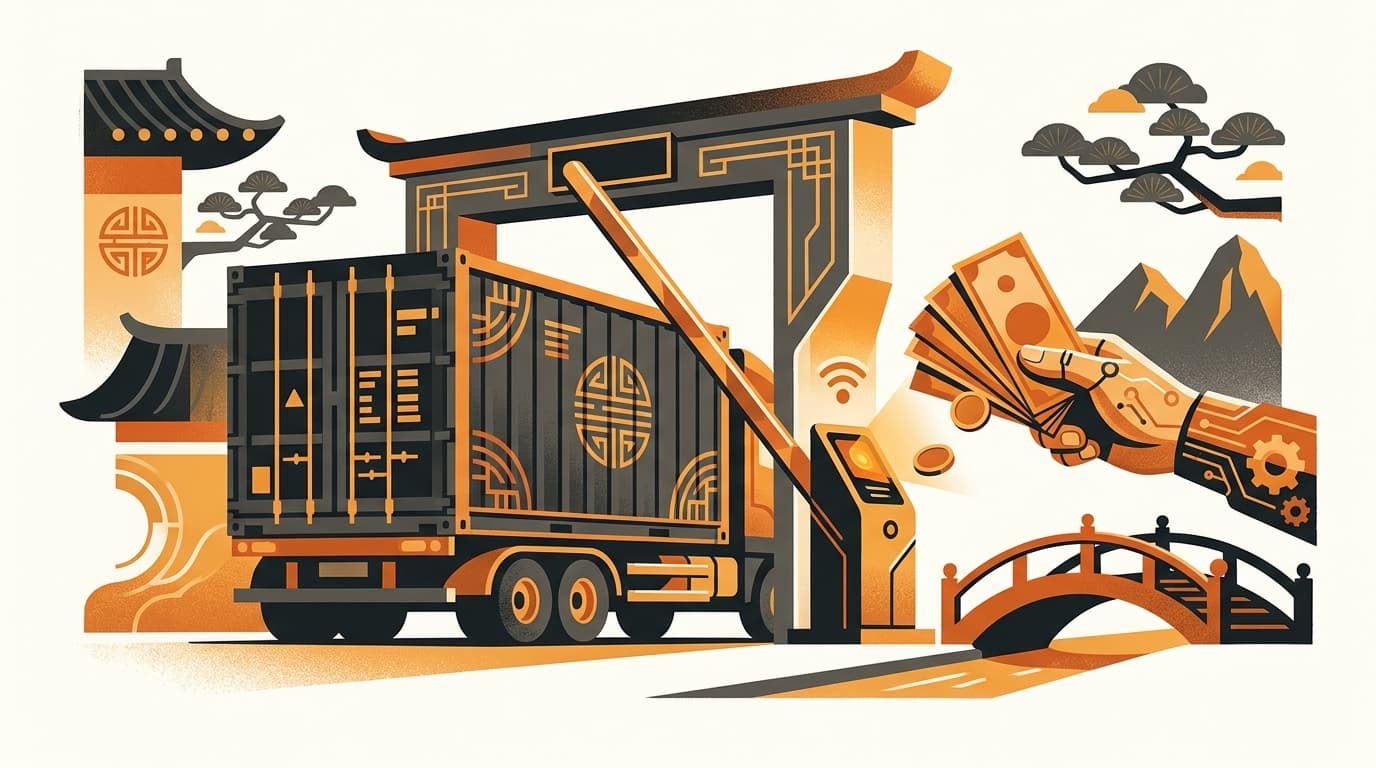
Who Pays Korea Import Duties on Your First Shipment
The party that pays Korea's import duties and VAT on your first shipment has to be a Korea-side entity or agent — the money is due at the border before customs releases the cargo, and a foreign brand rarely has a local payer on day one. Under Kontactic's Spark service, we advance those customs duties and VAT for you, so goods clear without you pre-wiring funds into a Korean account or standing up your own payer. We then reconcile every won paid back to the actual settlement documents and hand you the evidence.
This is the first genuine operational shock most Western teams hit when they go local in Korea. It is not the product listing, the translation, or even the Coupang account. It is the moment a container lands and Korean customs (통관) simply will not let it move until duty and VAT are settled — in KRW, from a Korean payer.
Why customs holds your cargo until duty and VAT are paid
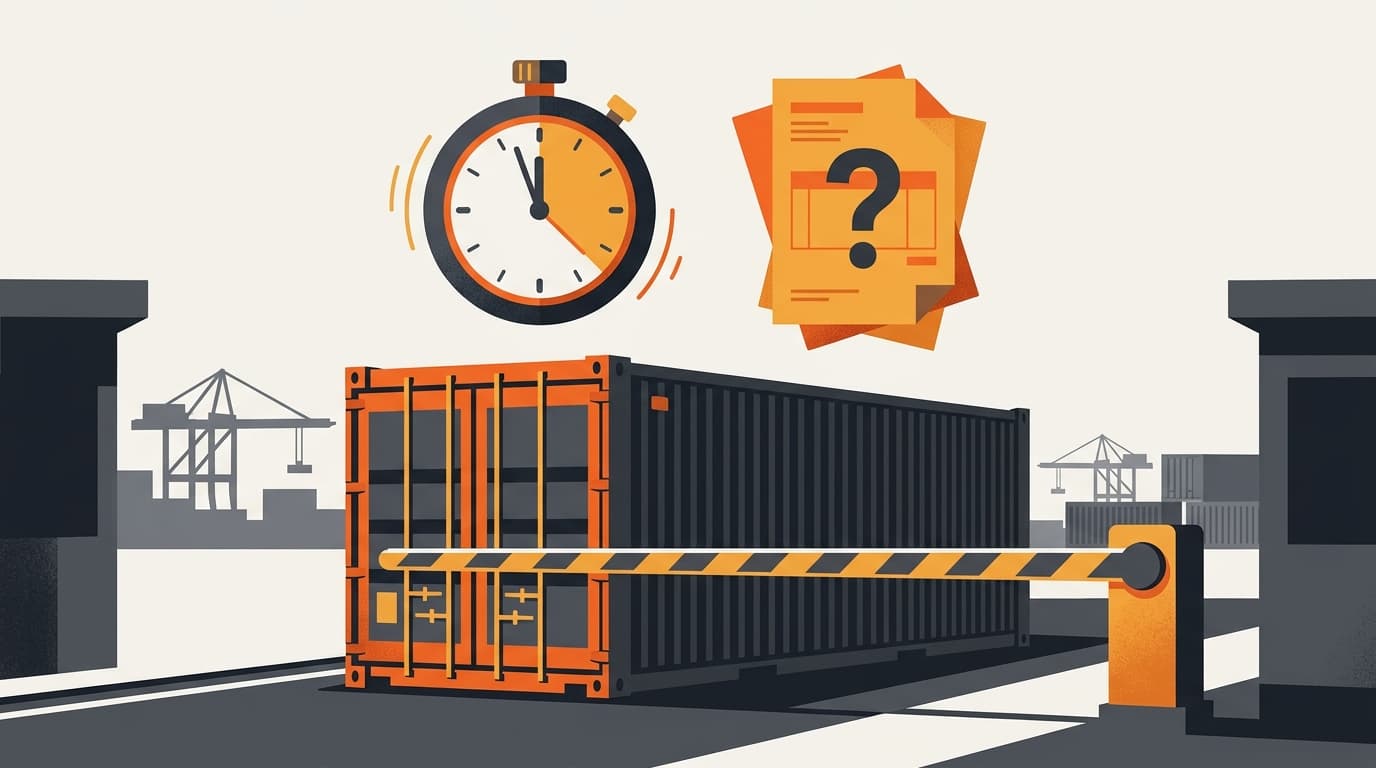
Korea assesses import duty and import VAT at the point of clearance, and the goods do not leave the customs area until both are paid. That is the mechanism, and it does not bend for a brand's launch timeline.
Two charges apply at the border. The first is customs duty, which depends on your product's HS code and origin. The second is import VAT, which Korea imposes at a flat 10% — and for VAT-inclusive figures, the VAT portion works out to 1/11 (roughly 9.09%) of the value. Both are due before release.
The catch is who is allowed to pay. Korea requires an Importer of Record — the entity that files customs documentation and is registered as the importer. That entity is the one on the hook to settle duty and VAT at clearance. A brand still selling cross-border, or one that has just decided to go local, usually has no Korean entity, no Korean bank account funded in KRW, and no registered importer. So the cargo sits.
We see the same pattern repeatedly: a brand has validated demand, negotiated freight, shipped its first pallet DDP or DAP, and then discovers the border is not a formality but a payment gate. Without a local payer, the shipment stalls — accruing storage and, worse, delaying the go-live it was booked against.
How Kontactic advances the duty so your first shipment clears
We front the customs duty and VAT on your behalf. Under our Spark service, Kontactic's own Korean corporation acts as the Importer of Record, so there is already a registered, funded Korea-side payer standing between your cargo and the clearance desk. You do not pre-fund a Korean account, and you do not have to establish your own payer before your first shipment can move.
Practically, that means the day-one problem disappears. The advance is a managed workflow, not a favor we scramble to arrange per shipment. When your goods land, the duty and VAT get paid so the cargo clears, and then we settle up with you against the real numbers.
Import tax advance (customs duty financing) is when a Korea-side payer settles your import duty and VAT at the border so cargo clears, then reconciles the exact amounts back to you against source documents. It removes the day-one requirement that a foreign brand have its own funded Korean payer.
This matters most for the very first shipment, when you have the least local infrastructure and the highest chance of a stall. It is also why we treat the advance as part of going local, not a standalone finance product — it exists so your border crossing becomes a routine step instead of an emergency.
The workflow is document-driven and auditable
Every advance runs off source documents, not estimates. That is the part we care about most, because "we paid your duty" is only trustworthy if you can see exactly what was paid and why.
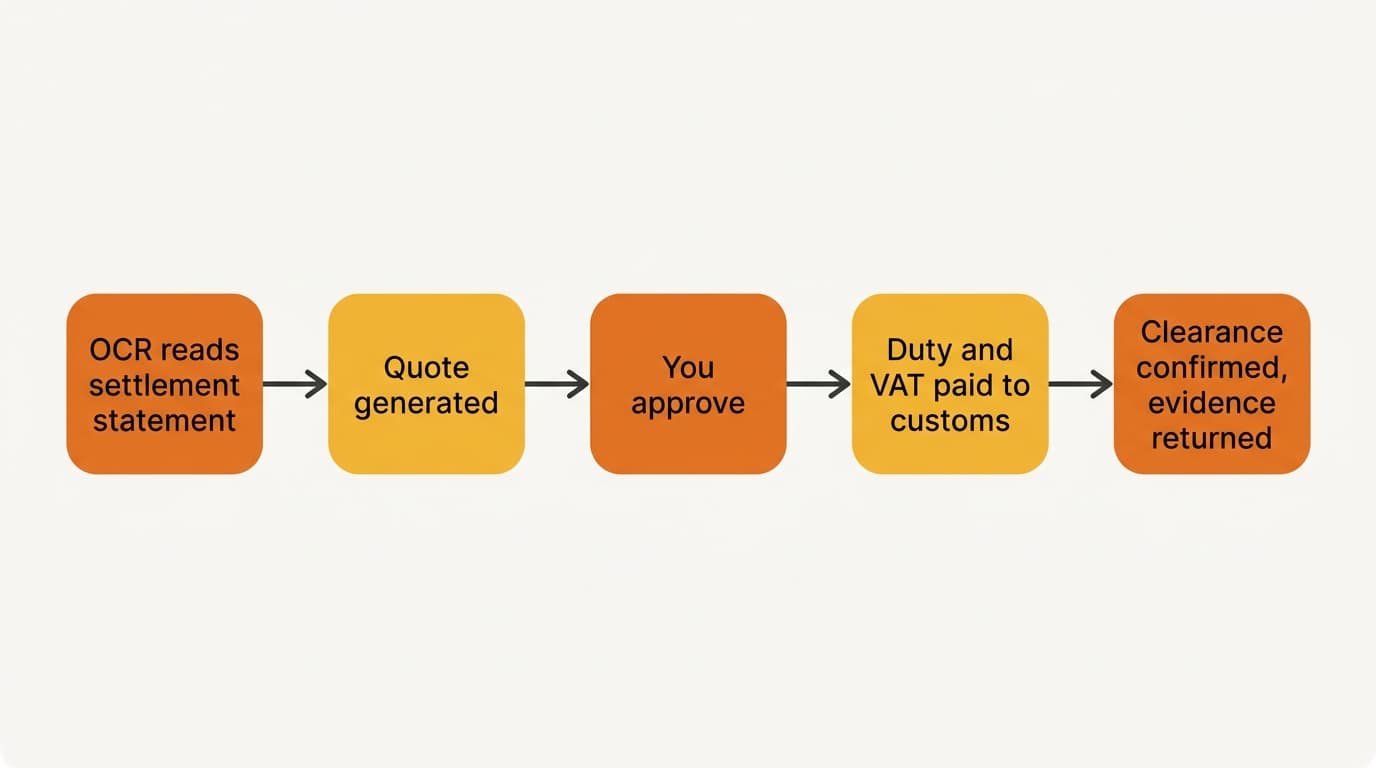
The sequence is deliberately boring, which is the point:
- The customs settlement statement is read via OCR into a quote, so the figures come off the official document rather than a hand-keyed guess.
- You review and approve the quote before any money moves.
- Payment of duty and VAT is executed to customs.
- Clearance is confirmed, and the supporting evidence — the settlement statement and payment record — is handed back to you.
Because the quote is built from the settlement statement itself, the amount you approve is the amount that reconciles later. There is no gap between a rough pre-quote and a surprise true-up, and you keep the underlying documents for your own books and VAT filing.
Clearance is tracked against Korea's official system in real time
You see duty status against Korea's official clearance system, not a forwarder's inbox. Instead of emailing a freight forwarder to ask whether duty has been paid and when the container will be released, the clearance state is tracked directly — so you know when duty is settled and when cargo is released as it happens.
That real-time visibility changes the failure mode. A stall stops being a mystery you discover days late and becomes a status you can watch and act on. For a brand coordinating a Coupang go-live against a shipment, that difference is the gap between hitting a launch date and quietly slipping it.
FX is handled with an explicit currency buffer
Cross-currency payment introduces a real risk, and we handle it explicitly rather than absorbing it silently. Duty and VAT are paid in KRW, but your economics live in USD or EUR, and the reference rate you see is never exactly the rate at the moment of conversion.
To protect both sides against that gap, the advance uses a currency buffer tied to the official export-import bank rate. The reference rate anchors the quote; the buffer covers the movement between that reference and the real conversion when payment executes. Any difference reconciles transparently — you are not exposed to a hidden spread, and we are not exposed to an FX loss on money we fronted.
“The point of the buffer isn't to make money on FX — it's so the number you approve and the number that settles never quietly diverge on you.”
Kontactic Operations — Seller Center

Terms are stated up front, including who owns each border step
The responsibility split is written down before your first shipment moves, so nobody is guessing at the border. That includes the delivery term — for example, DAP (Delivered At Place) — which fixes who bears cost and risk up to each point of the crossing.
This clarity matters because Incoterms decide a lot in practice. Under our Spark service, inbound shipments are sent DDP (Delivered Duty Paid) to our partner warehouse, where the client's freight forwarder handles freight, insurance, duties, and import taxes — and the difference between DDP and DAP is exactly the difference in who owns those border costs. Whichever term applies to your lane, it is stated up front so the advance, the clearance, and the responsibility map are all consistent. If you want the fuller cost picture around this, our guide to Korea VAT and tax for foreign shippers walks through how the charges stack.
The advance is connected to your IoR onboarding and go-live
The duty advance is not a disconnected one-off — it ties into IoR onboarding and your service commencement date. That connection is what turns clearance into a routine step of your launch rather than a fire drill that happens to coincide with it.
In practice, we sequence the advance against the same calendar as your Importer of Record setup and go-live. When the IoR is registered, the Coupang listing is ready, and the first shipment is in transit, the duty advance is already scoped to land at the right moment — so customs clearance, service commencement, and your first sale are one plan, not three. That sequencing is the same logic behind who pays for what across our service models: every operating cost — inventory, ads, platform fees, VAT — sits with the client, and our job is to make each one payable at the moment it's actually due.
Common questions
Do I need my own Korean bank account before my first shipment can clear? No. Under Spark, our Korean entity is the Importer of Record and pays duty and VAT so cargo clears — you do not pre-fund a Korean account to move your first shipment.
How do I know the duty amount is correct? The quote is built by OCR-reading the official customs settlement statement, and you approve it before payment. The evidence — statement and payment record — is handed back to you, so the amount you approve is the amount that reconciles.
Who bears the currency risk on the payment? The advance uses a currency buffer tied to the official export-import bank rate, and any difference between the reference rate and the real conversion reconciles transparently. Neither side carries a hidden FX spread.
Is the duty a cost Kontactic absorbs? No. The client retains full economic responsibility for import duties and VAT — the advance is a financing and clearance mechanism, not a waiver. You still owe the actual duty and VAT; we make sure they get paid on time and reconciled to source.
Clear your first Korean shipment without a day-one payer
Talk to Kontactic about how our managed duty and VAT advance gets your first shipment through customs and connects clearance to your Coupang go-live.
About the author
Korean and global e-commerce operators with 15+ years of cross-border experience, led by CEO Isaac Lee — KOTRA-certified consultant and official lecturer for Seoul City and the Korea Customs Service. We run Korea market entry for Western brands every day; this blog documents what we learn in the field.
More about Kontactic →Related Articles
How Representative Documents Support Korean Filing Work
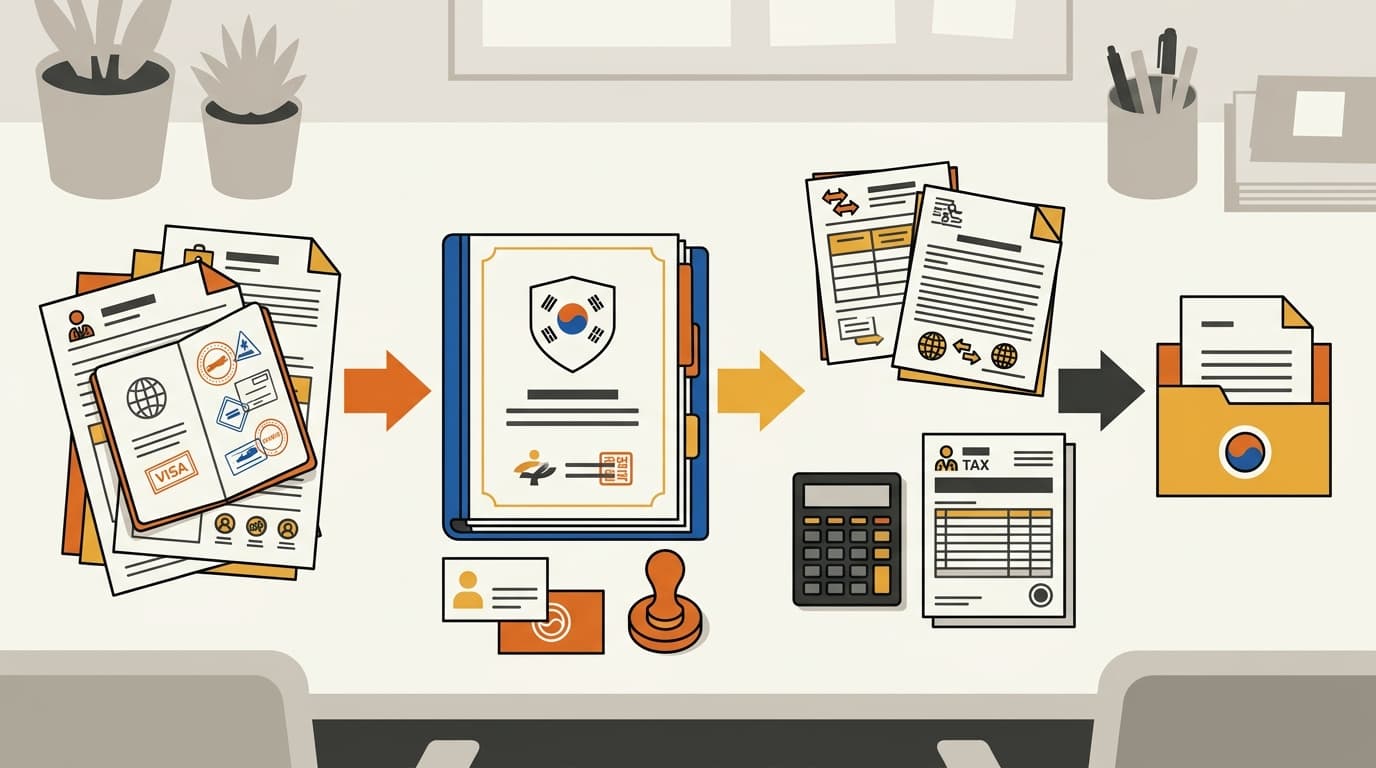
Kontactic Seller Center connects representative documents and translation with delegated Korean filing work, so evidence becomes records and local action.
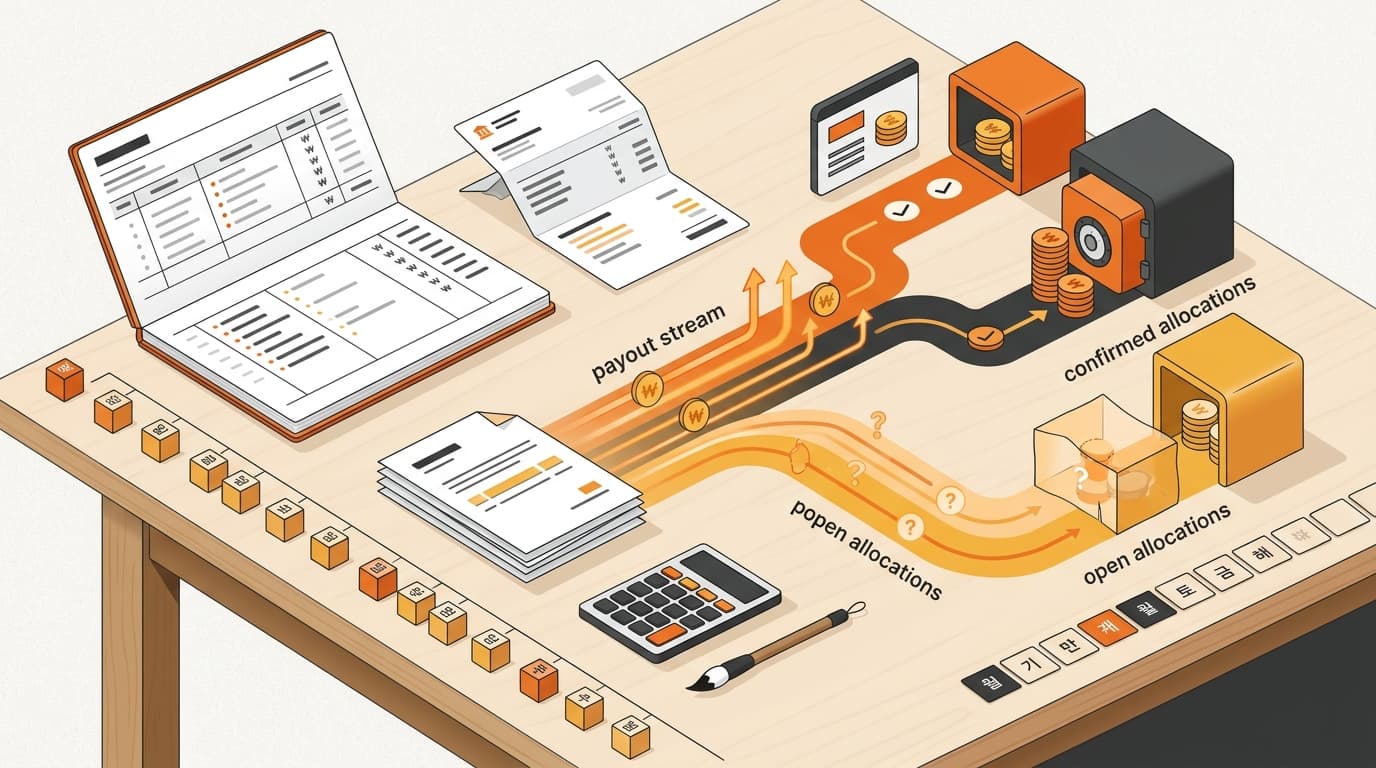
Coupang Settlement Periods: How Kontactic Reconciles
Kontactic closes Coupang settlement periods by confirming allocations, checking bank evidence, and keeping FX differences and late corrections visible.
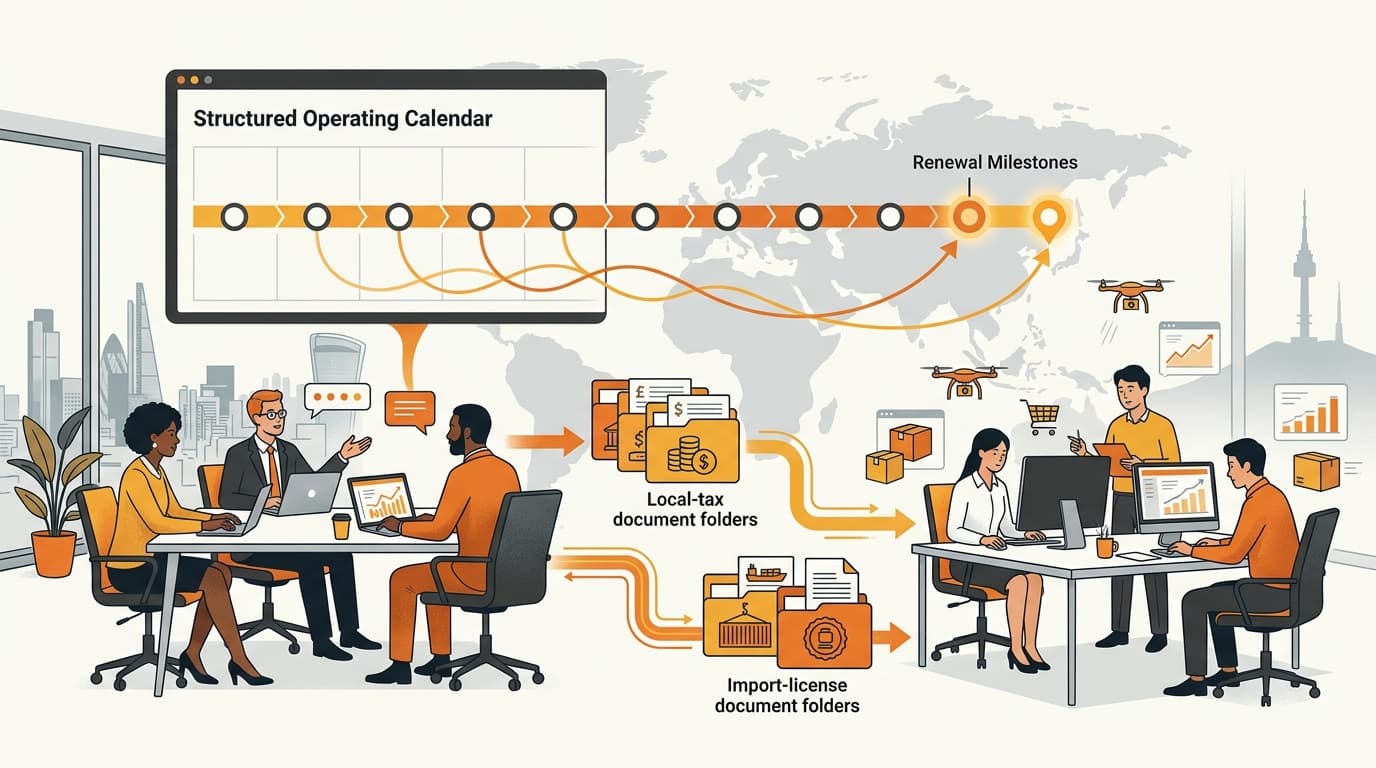
Korean Entity Administration: What Happens After Setup?
Incorporation is the start for a Korean entity. See how Kontactic Seller Center stages renewal reminders and routes local-tax and import-license document work.