Product-Link Intake for Coupang: A Traceable Handoff
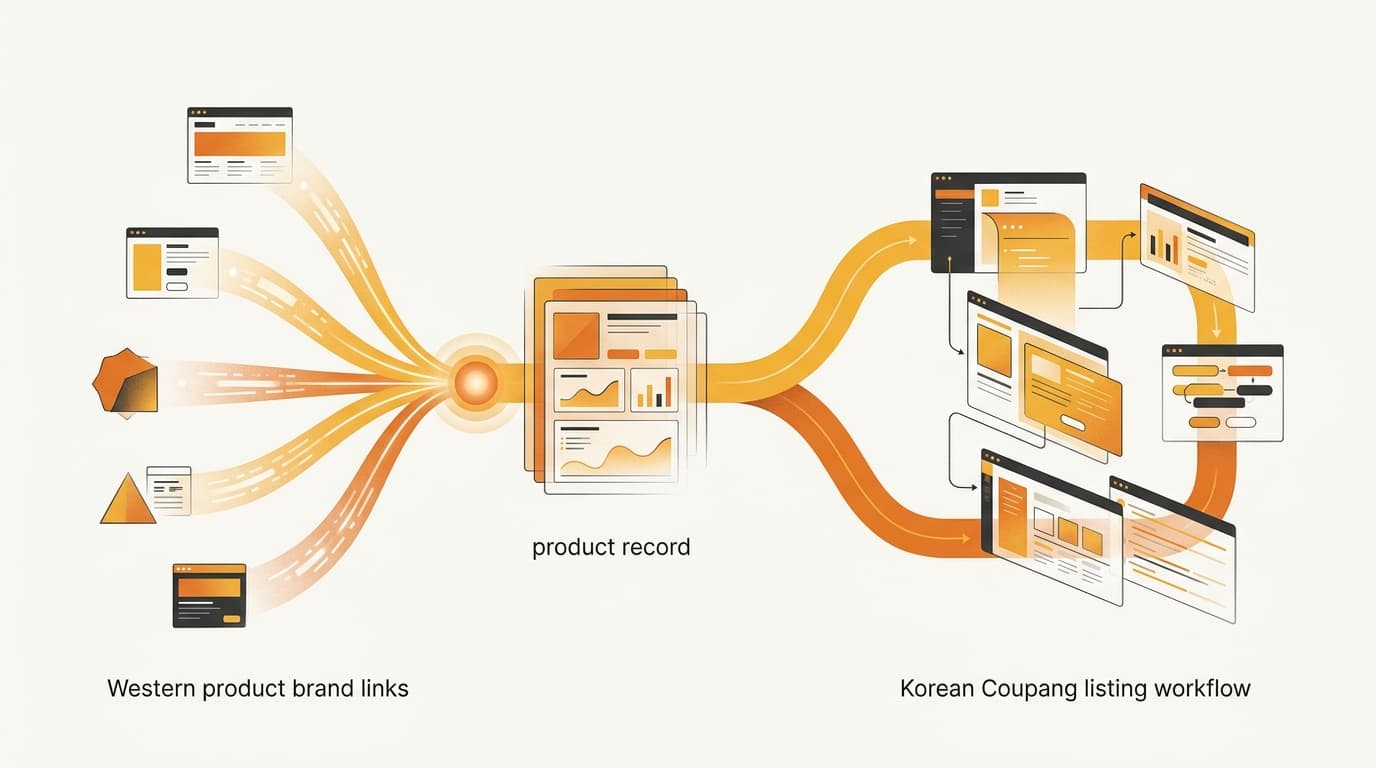
Product-link intake becomes traceable when the workflow records its interpretation of supplied product material. Kontactic Seller Center saves that interpretation as a reviewable source record. A connector passes the record into Coupang listing work before Korean copy or creative begins.
Source record means the reviewable record of what the workflow derived from the product material you supplied. It is the intake record used to support downstream page work—not the final Korean listing.
Why product-link intake is operational work
Product links are often the most available input a brand has. A brand may provide several pages and links rather than one Korea-ready content file. That is workable, but it creates an interpretation step. Someone must determine what the supplied material supports before a Korean listing can be built.
That is the core product-link intake problem: the handoff can carry a conclusion without carrying the basis for it. If interpretation lives only in an operator’s memory, later work receives the result but not the path that produced it. When something is missing or unclear, the team has to reconstruct whether the issue came from the supplied material, the handoff, or downstream production. By then, localized copy or creative work may need to be revisited.
Kontactic Seller Center treats product-link intake as a recorded workflow rather than an invisible preface. The concrete output at this stage is a reviewable source record: product information derived from supplied material and made available for inspection before it becomes listing input. The goal is not to turn source links into polished Korean copy. It is to establish a dependable, reviewable basis for the work that follows.
The working sequence is straightforward:
- Supplied product links and material are read through a single path.
- The product information derived from that material is recorded in a source record.
- A source-to-page connector makes that recorded information usable as input for downstream listing work.
- Operators can review the intake result and surface missing or unclear information before Korean copy and creative are produced.
That sequence separates source interpretation from page production without disconnecting them. For product-link intake, the checkpoint is the reviewable record and the defined handoff—not an unexplained conclusion passed to copy or creative.
One reading path keeps the handoff consistent
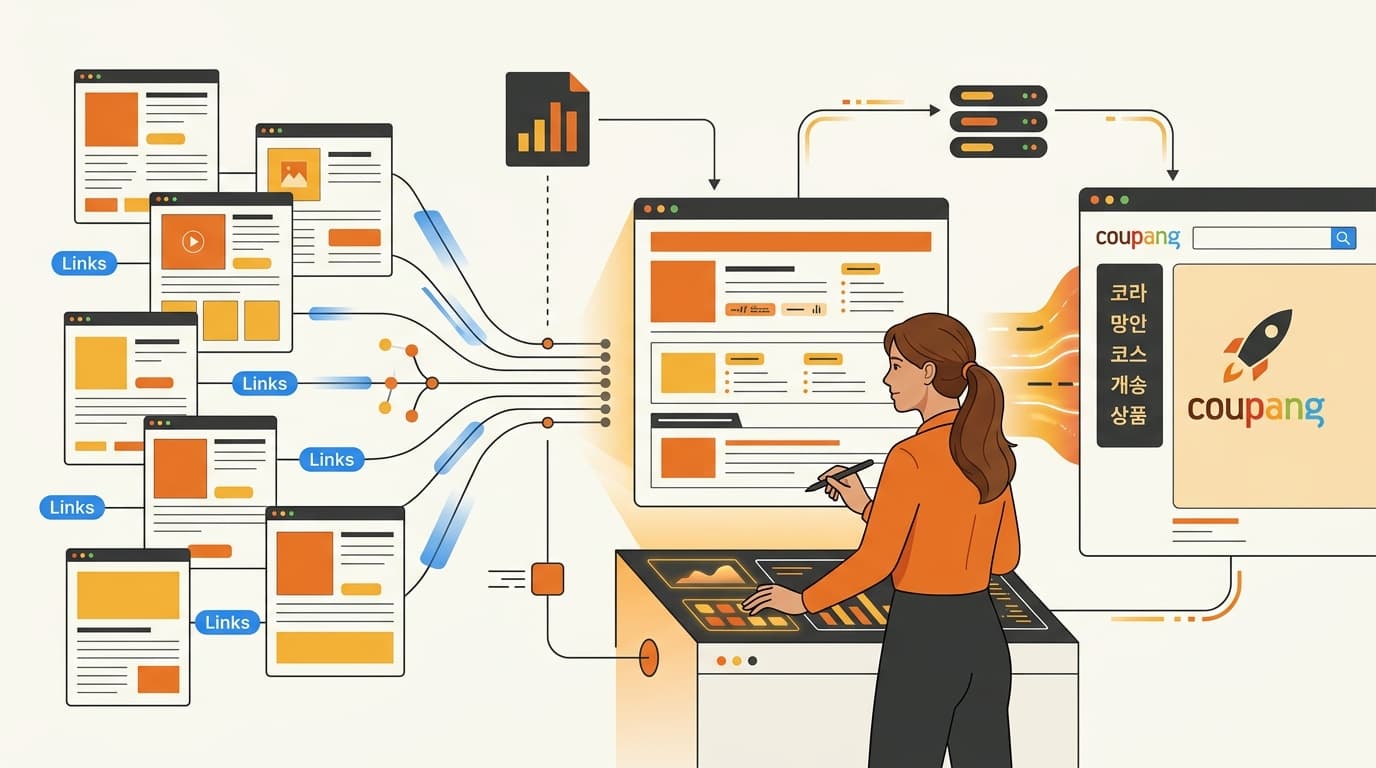
Consistency starts with the reading path. A single path means the supplied product links are interpreted through the same workflow before the information is handed to later stages. The point is not that every source page will be complete or perfectly clear. The point is that later work starts from the same recorded interpretation instead of asking each stage to read the source again in its own way.
That distinction matters when a Coupang listing is built or revised. The source record gives operators a shared basis for the work already done and the changes still needed. An operator can inspect the product information derived from the supplied material, then identify missing or unclear points before Korean copy and creative production. If the result is usable, the connector can pass it into listing work; if a point needs attention, it is visible before downstream production.
Product-link reading is not Korean copywriting, and it is not layout production. It is the upstream step that establishes what product information the downstream page workflow can use. Keeping that boundary visible reduces handoff ambiguity without treating the stages as separate systems.
That boundary also keeps product-link intake from being confused with page production. It establishes what the downstream page workflow can use; it does not promise that every source page has answered every product question. For a brand, this is a practical difference. The question is no longer only whether the final page looks complete. Operators can also ask what the workflow derived from the supplied material and whether that result is ready to move forward.

What the source record makes visible
An original product link tells you where supplied material sits. It does not, by itself, show what the workflow derived from that material. The source record fills that gap by capturing the resulting product information in a form that can be reviewed.
The visible output is not a final page, a translation, or creative production. It is the product information derived from the supplied material, captured in a reviewable form. An operator can inspect that result before it becomes input for the page workflow, rather than discovering an intake problem only after Korean wording or creative has been produced.
That review has three concrete questions. What material was supplied? What product information did the workflow derive? What remains missing or unclear before downstream production? The supplied links and product material remain the starting input. The source record captures the workflow’s interpretation. The downstream page workflow uses that recorded information for listing work.
This distinction prevents an important failure mode: treating an unspoken assumption as if it had come directly from the source. If information is absent or ambiguous, an operator can surface that condition before it is carried further downstream. In product-link intake, that is the difference between a reviewable input and an unexplained handoff.
Use the source record as the checkpoint between supplied product material and listing production. Its job is to make the workflow’s interpretation visible early enough to question it.
The source-to-page connector controls the handoff
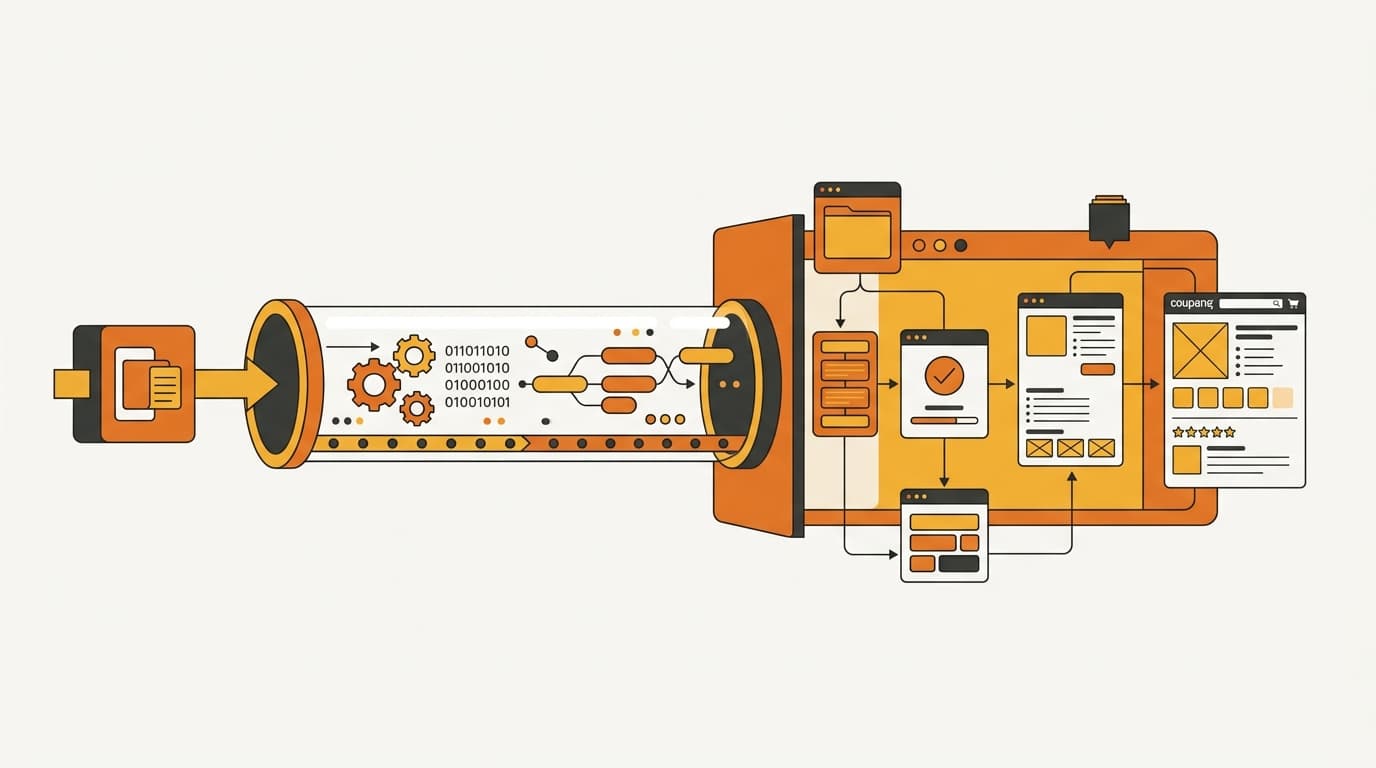
A source record is useful only when downstream work can use it. The source-to-page connector is the handoff mechanism: it takes recorded, interpreted product information and makes it usable as input for the page workflow that follows.
That action is specific. The connector passes the intake result into Coupang listing build or revision; it does not turn incomplete source material into complete information, translate it into final Korean copy, or produce creative. Without a connection to page work, an operator would still need to reinterpret the supplied links when building or revising a listing. With the connector, the intake result has a defined route into the next stage.
For product-link intake, the connector is the point where a reviewable source record becomes an operational handoff. Operators can distinguish between information that came from the recorded intake and information that still needs attention before localized copy and creative production proceed. The handoff is explicit without claiming that every product question has already been resolved.
Revisions are where this matters most. A listing change can begin from the recorded intake result rather than an unrecorded rereading of every supplied page. The operator has a starting point for understanding what the page workflow received and where a gap may have entered. If a change depends on information that is not present in the source record, that absence can be addressed as an intake issue before page production continues.
Why a repeatable intake pattern matters as products expand
One product can be handed off through memory and informal messages. An expanding Korean assortment needs a repeatable starting point. The value of this capability is not forcing every product into identical content. Each product follows the same pattern: read the links, record the result, surface gaps, and pass usable input downstream.
That pattern helps a brand add products without creating a new interpretation process for each one. Product pages may differ, and the supplied material may vary, but the intake question stays stable: what did the workflow derive, and is anything missing or unclear before production begins?
Repeatable product-link intake also gives operators a consistent way to approach a new product. They can confirm the links intended for intake, inspect the product information captured in the source record, identify missing or unclear points before downstream production, and use the recorded result as the basis for a listing build or revision. This is a repeatable operating step, not another marketing asset.
The result is not another marketing asset. It gives operators a common basis for building and revising Coupang listings as the local catalog grows.
Common questions about traceable product-link intake
What does traceable product-link intake mean?
It means the workflow does more than read supplied product links once. It records the product information derived from them, makes that result reviewable, and passes it into Coupang listing work through a defined connector.
Is this a translation workflow?
No. It starts before Korean copy and creative production. The workflow interprets supplied product material, records the derived product information, and makes it usable for downstream page work.
What can an operator review in the source record?
The operator can review the product information derived from the supplied links and material, then surface information that is missing or unclear before the result is used in listing work. The source record is not the final localized listing.
What does the source record add beyond the original product link?
A link points to the supplied material. The source record captures what the workflow derived from that material, so an operator can inspect the intake result instead of reconstructing it from memory or informal handoff messages.
Does traceability mean the supplied product material is complete?
No. The capability does not make absent information appear. It makes gaps easier to identify before they are carried into downstream listing work.
Can the same intake pattern support additional products?
Yes. The repeatable pattern can be used as a brand expands its Korean assortment, giving new products the same link-reading, recording, review, and handoff structure.
Make your product-link intake reviewable
If your Korean Coupang listing starts with product links rather than a Korea-ready content file, contact Kontactic to discuss the intake record and downstream handoff your workflow needs.
About the author
Korean and global e-commerce operators with 15+ years of cross-border experience, led by CEO Isaac Lee — KOTRA-certified consultant and official lecturer for Seoul City and the Korea Customs Service. We run Korea market entry for overseas brands every day; this blog records what we learn in the field.
Meet the Kontactic team →Related Articles

Do I Have to Recheck My Whole Catalog When One SKU Changes?
No. Recheck only the changed SKU, submit shared label groups once, and replace a rejected product with a newly eligible SKU without restarting the whole catalog.

Korean Product Approval: Why a SKU Needs It and What to Do
Korean product approval does not have to be a yes-or-no answer. See the cited rule, preparation steps, language options, and SKU-only rechecks HQ can use.
Coupang Order Appearing Twice: How Kontactic Stops It
Coupang can send the same product option twice in one order. Here is how Kontactic joins the repeat so your local team processes one clear order line.