Does the KORUS or Korea–EU FTA Cut Your Import Duty to Zero?
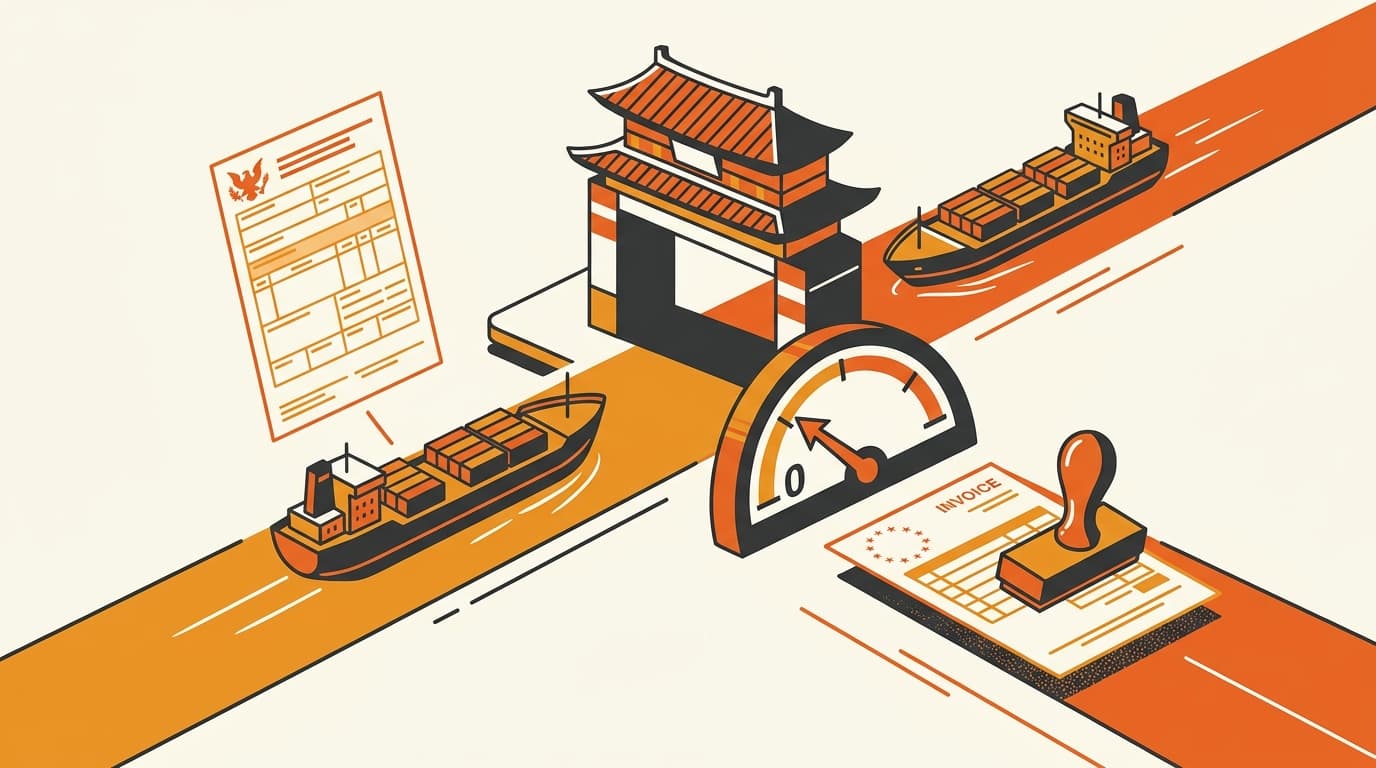
The short answer is yes — the KORUS FTA (for US-origin goods) and the Korea–EU FTA (for EU-origin goods) can reduce your Korean import duty to zero on qualifying products. But "free trade agreement" does not mean the duty vanishes automatically. Preferential treatment is granted only when your importer of record affirmatively claims it at clearance and holds valid proof that the goods actually originate under the agreement's rules. Get the claim or the paperwork wrong, and the Korea Customs Service applies the standard most-favored-nation rate by default — quietly eroding margin on every shipment.
This is the gap most Western brands miss. They price the FTA rate into their landed cost, assume "made in the USA" or "made in the EU" is enough, and then discover — sometimes months later, in an audit — that the preference was never actually granted. The duty is real money. The paperwork that unlocks it is not decorative.
The FTA question is only about the duty portion — not VAT
Every import into Korea is assessed a duty rate under the national tariff schedule, and then a 10% VAT is charged on the duty-inclusive value. The FTA changes only the first number.
That distinction matters when you build your landed-cost model. Even a perfect FTA claim that zeroes out duty does not remove VAT. Korea's 10% VAT is calculated on the CIF value plus whatever duty was assessed — so if duty goes to zero, VAT is charged on CIF alone, but it is still charged. If you want the full picture of how the base is built before the FTA question even enters, we walked through it in how Korea import duty is assessed on CIF value.
So the honest framing is: the FTA can eliminate the duty line. It never eliminates the VAT line. Model both separately.
Preferential duty is not automatic — someone has to claim it
Korea Customs does not scan your invoice, notice the country of origin, and helpfully apply the discount. The default is the standard rate. Preferential treatment is an election the importer of record makes at the point of clearance, backed by documentation.
That means two things have to be true at the same time:
- The importer files the import declaration and explicitly claims FTA preferential treatment for that HS code.
- The importer holds valid proof of origin for the goods — ready to present if asked.
If either is missing, you pay the full rate. There is no retroactive "oops" that happens on its own, and no automatic refund for a preference you were entitled to but did not claim correctly. This is precisely why the entity acting as your importer of record needs the origin documents physically in hand before the goods clear — a topic that connects directly to who the importer of record is when you sell on Coupang. A gap between your supplier and your IoR is one of the most common reasons brands silently overpay duty for years.

The two agreements use different origin-proof mechanisms
Here is the part brands most often get wrong: KORUS and the Korea–EU FTA do not use the same paperwork. If your supplier hands you the wrong instrument, the claim can fail even when the goods genuinely qualify.
Korea–EU FTA — approved-exporter origin declaration. For most commercial shipments above a low value threshold, the EU agreement relies on an origin declaration made by an approved exporter — a specific statement placed directly on the commercial invoice (or another commercial document) by an exporter who has been authorized and holds an approved-exporter authorization number. There is generally no separate stamped government certificate to chase; the declaration text on the invoice, from an approved exporter, is the proof. If your EU supplier is not an approved exporter, they cannot make that declaration for larger shipments, and your preference claim has nothing to stand on.
KORUS FTA — certificate of origin, flexible issuer. The US agreement works differently. There is no fixed government form and no approved-exporter registration. Instead, a certificate of origin can be issued by the exporter, the producer, or even the importer, provided it contains the required data elements and the certifier can support the claim. The format is flexible; the substance is not.
Proof of origin is the documentation that lets an importer claim preferential FTA duty. Under the Korea–EU FTA it is typically an approved-exporter origin declaration printed on the invoice; under KORUS it is a certificate of origin that the exporter, producer, or importer may issue. Both must be valid and retained — not just present at clearance.
The practical takeaway: ask your supplier the right question. For an EU supplier, "Are you an approved exporter, and will you place the origin declaration on the invoice?" For a US supplier, "Who will certify origin, and can they stand behind the rules-of-origin determination?" You want that settled before the goods sail, not while your container sits at the port.
"Originating" is a rules-of-origin test, not a shipping label
This is the trap that catches brands with global supply chains. "Made in the USA" or "assembled in the EU" does not, by itself, make a product originating under the FTA. Origin is a legal test written into the agreement — usually expressed as a tariff-shift rule, a regional value-content threshold, or a combination — and it is applied per HS code.
A product with substantial third-country components can fail that test even though final assembly happens domestically. If the components don't undergo the required change in tariff classification, or the domestic value added doesn't clear the value-content bar for that code, the product is not originating — and no certificate, however neatly filled out, makes it eligible. Signing an origin declaration for goods that don't actually qualify is not a shortcut; it is exposure.
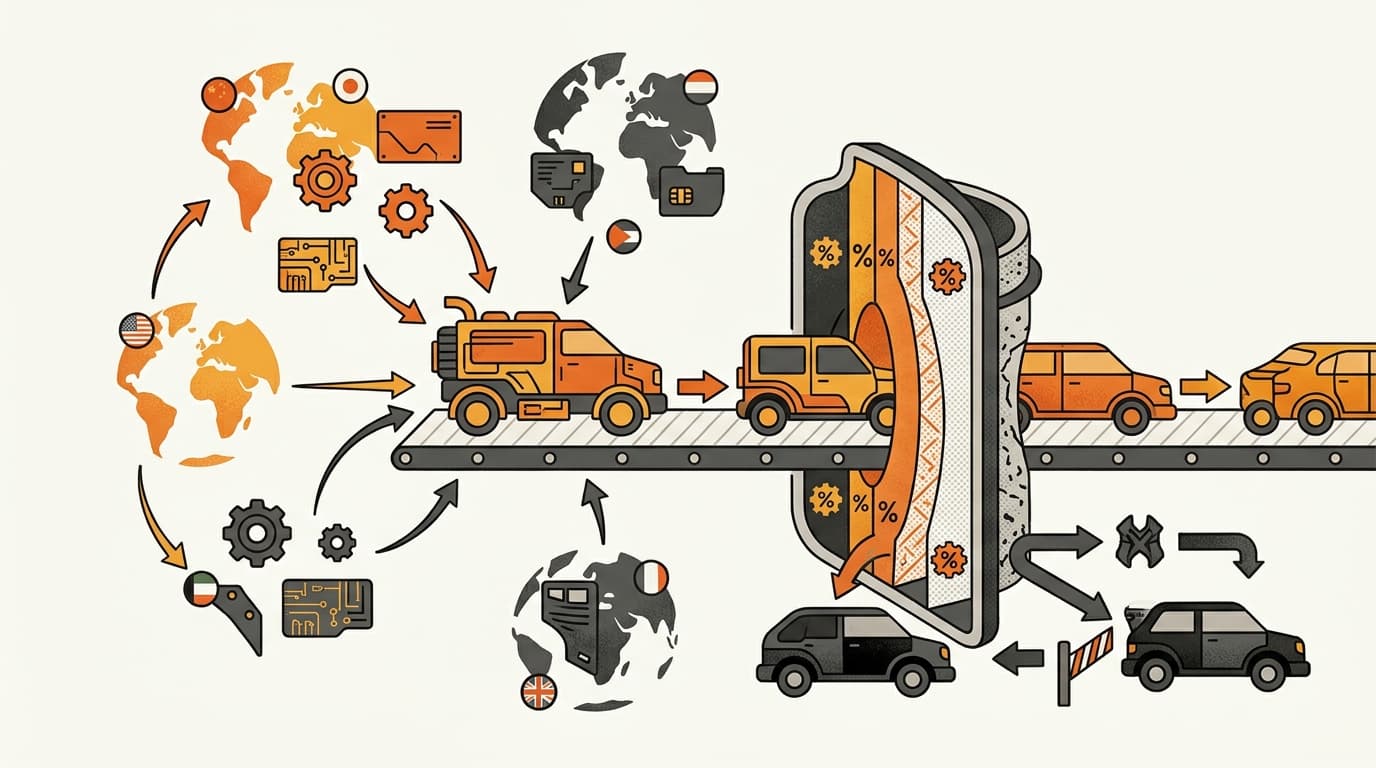
This is why the sequence below starts with classification. You cannot check whether a product meets a rule of origin until you know which HS code — and therefore which rule — applies.
The practical sequence to actually claim it
Work in this order. Skipping a step is how brands end up either overpaying at clearance or exposed in a later audit.
- Confirm your HS classification. The code determines both the tariff rate and the specific rule of origin you must satisfy.
- Check the FTA preferential rate for that code. Not every line goes to zero, and staging schedules differ. Verify the actual preferential rate, don't assume "FTA = 0%."
- Confirm the product meets that code's rule of origin. Apply the tariff-shift or value-content rule to your real bill of materials — not to the marketing story of where it's "from."
- Secure the correct origin instrument before shipping. For the Korea–EU FTA, an approved-exporter origin declaration on the invoice; for KORUS, a certificate of origin with the required data elements.
- Make sure your importer of record has the document in hand to claim preference on the import declaration at clearance.
You can verify the governing rules against primary sources rather than trusting a freight forwarder's summary. The Korea Customs Service publishes FTA guidance and the origin-proof requirements per agreement, and the underlying legislation is available on Korea's national law portal, law.go.kr. Because the importer files the claim and funds any duty at clearance, the mechanics of who pays and reconciles it also matter — we cover that in who pays Korea import duties on your first shipment.
Keep the paperwork defensible — Korea can audit it later
The origin claim doesn't end when the goods clear. Proof of origin must be retained, and Korea Customs can run a post-clearance origin verification — sometimes long after delivery. If the documentation doesn't hold up, the authority can reassess and claw back the duties you thought you had saved, potentially with additional charges.
That is why the paperwork has to be defensible, not decorative. An origin declaration signed by an approved exporter who can't actually support the rules-of-origin determination, or a certificate of origin for goods that quietly fail the value-content test, is a liability sitting on your file waiting to be found.
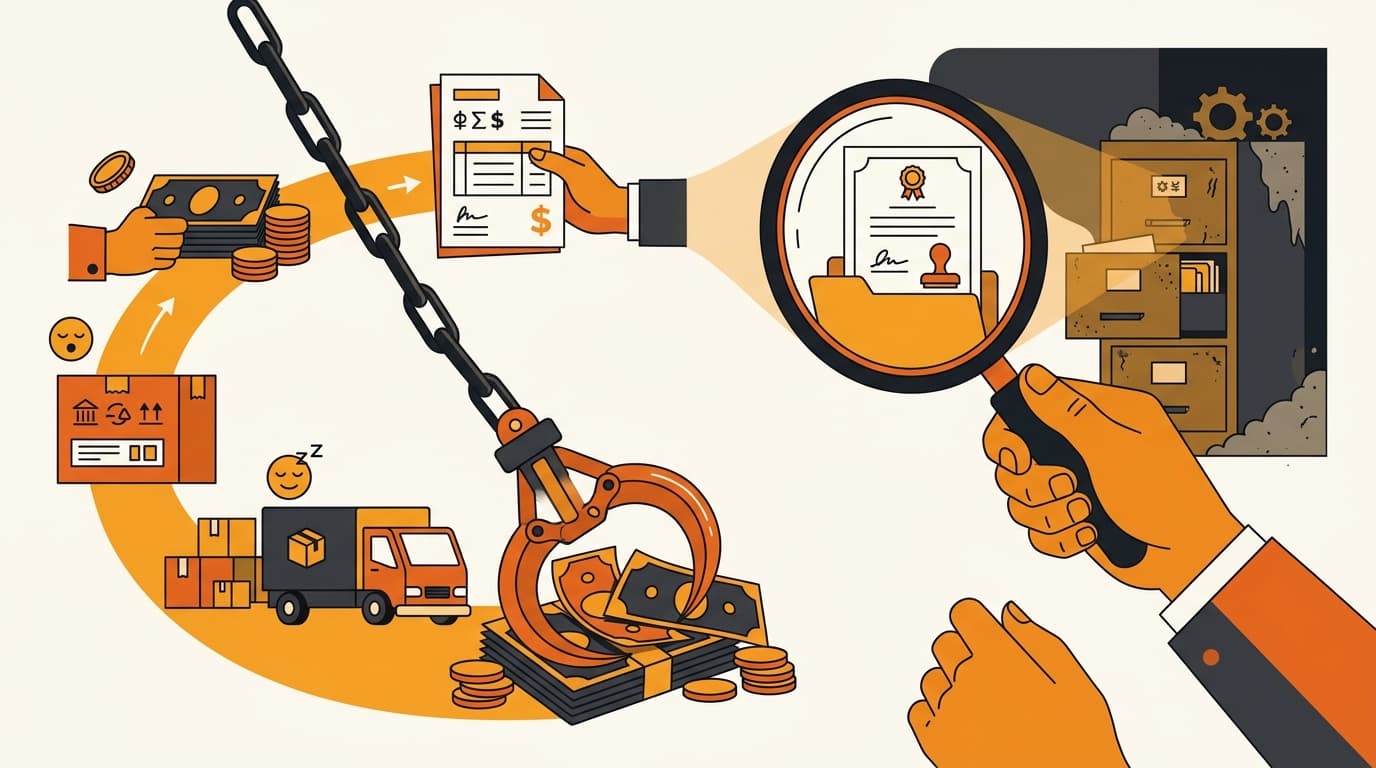
Treat origin records the way you'd treat tax records: complete, retrievable, and consistent with reality. The savings are only real if they survive an audit.
Common questions
Does an FTA automatically make my Korean import duty zero? No. The FTA sets a preferential rate — often zero for qualifying goods — but it is only applied if your importer of record claims it at clearance and holds valid proof of origin. Without the claim and the documentation, Korea Customs applies the standard rate.
Does the FTA remove VAT too? No. The FTA affects only the customs duty portion. Korea's 10% VAT is still charged on the CIF value plus any assessed duty. If duty goes to zero, VAT is charged on the CIF value alone — but it is still charged.
My product is made in the US/EU. Doesn't that guarantee it qualifies? Not necessarily. "Originating" is a rules-of-origin test — usually a tariff-shift or regional value-content rule applied per HS code. A product with significant third-country components can fail the test even if final assembly is domestic.
What document do I need — a certificate or a declaration? It depends on the agreement. The Korea–EU FTA generally uses an approved-exporter origin declaration placed on the invoice. KORUS uses a certificate of origin that the exporter, producer, or importer can issue, with no fixed government form.
Can Korea take the duty saving back after clearance? Yes. A post-clearance origin verification can reassess duty retroactively if the proof of origin doesn't hold up. Retain your origin records and make sure they reflect a genuine qualifying determination.
Planning your Korea landed-cost model?
If you're mapping duty, VAT, and origin documentation before your first shipment, talk to Kontactic about how the FTA claim fits into your clearance and importer-of-record setup.
About the author
Korean and global e-commerce operators with 15+ years of cross-border experience, led by CEO Isaac Lee — KOTRA-certified consultant and official lecturer for Seoul City and the Korea Customs Service. We run Korea market entry for Western brands every day; this blog documents what we learn in the field.
More about Kontactic →Related Articles

Korean KC for a Detachable Device Charger: Not Automatic
Does Korean KC cover a detachable charger? Not automatically. The final bundle and adapter evidence must match the Korean commercial SKU before import.
Can Coupang Handle Every Korean Buyer Inquiry? No—Seller Duties
Coupang may handle platform and fulfillment contacts, but sellers still own product questions, cancellations, returns, exchanges, and order exceptions.

Rocket Growth: Why Outbound and Return Locations Matter?
Rocket Growth stores and ships inventory, but sellers still need outbound and return records before product registration; each has a distinct seller-side role.