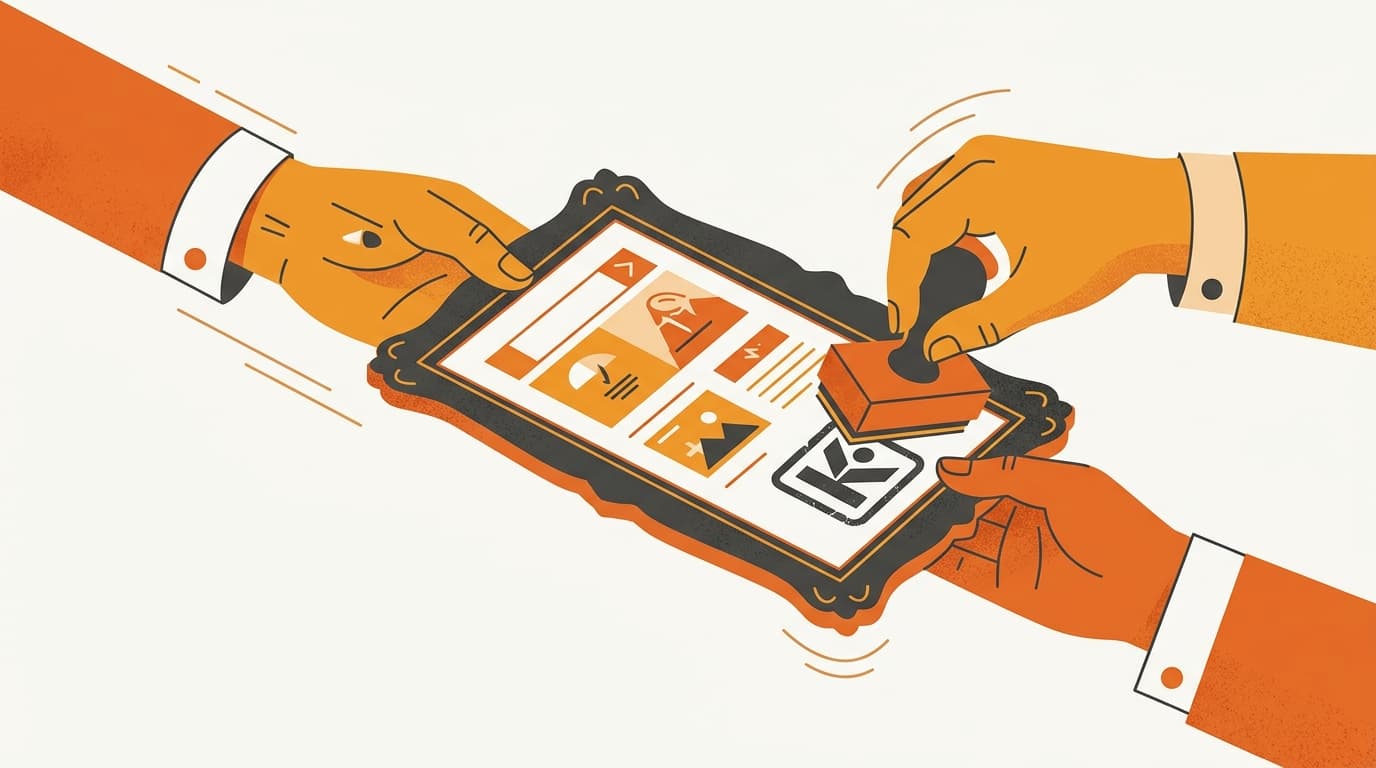
Who Approves Your Korea Ad Creative — and Who Is Liable
The brand approves every ad creative and carries full legal liability for every product claim in Korea — even the creatives Kontactic writes. Production can be shared; approval and liability cannot. That split is fixed across every service we offer, and it is the single most misunderstood part of running paid growth in a market a foreign founder can't read.
This is a working note on how we handle that boundary in practice, because founders ask about it almost every week: if you write the ad, aren't you on the hook for it? No. And the reason is worth spelling out.
The short answer: brand approves, brand is liable
The short answer is that regardless of who physically produces a creative, the brand holds final approval and sole responsibility for the claims inside it.
Our agreements say this in almost identical language across services. The Client "bears sole responsibility for any claims, disputes, regulatory actions, penalties, or liability arising from advertising content, product claims, marketing materials, or any representations" made about the products — and that responsibility holds "regardless of whether such content was created by the Client independently, created by Kontactic on behalf of the Client, or jointly developed by the Parties."
Advertising & content liability means the party who owns the product owns the claims made about it. Who typed the ad copy does not move the liability. The brand substantiates the claim, and the brand answers to the regulator if the claim is challenged.
The reason is structural, not a fee-avoidance clause. Kontactic is not a distributor, reseller, or equity holder. On your own Korean entity we act as your operating agent; under Spark our entity is the Importer & Seller of Record, but you keep control of pricing, your brand, and what happens to unsold stock. Either way, the product and its claims are yours: under our agreement, you are responsible for product compliance and indemnify us. Advertising liability is just product liability wearing a marketing jacket: a claim about what your product does is a claim you must be able to prove.

Why we still write your creative — and why that doesn't shift the risk
Sharing production and sharing liability are two different things, and conflating them is where most of the confusion starts.
When we run your marketing, we do produce creative. Blaze includes growth strategy and marketing (Layer 3), so we run campaigns end to end. But the agreement is explicit that "creatives produced by Kontactic are subject to the Client's approval, and the Client holds full responsibility for product claims, substantiation, and regulatory exposure." In other words: we can hand you a finished Korean ad, but it does not go live until you approve it, and approving it is you standing behind the claim.
In practice this is healthier than it sounds. A Korean-market creative that a foreign founder cannot read is exactly the kind of thing that goes wrong quietly — a translated superlative, a health-adjacent phrase, a comparison that reads as fine in English and as a regulated claim in Korean. Because approval is a real gate and not a rubber stamp, both sides have a reason to check the claim, not just the layout. We surface the claim, you decide whether you can substantiate it, and only then does it ship.
This is also why we push operational readiness before ad spend: if the approval loop is treated as an afterthought, brands burn budget on creative that stalls at sign-off or, worse, goes live with a claim nobody can defend.
“We can write the Korean ad for you. We can't approve it for you, and we can't be liable for the claim inside it — because it's your product and your promise, not ours.”
Isaac Lee — CEO, Kontactic
How the split works across Spark and Blaze
The production split changes by service. The approval and liability split does not.
- Spark (Importer & Seller of Record): You manage marketing and listings. Content is either created by you or jointly developed, and you provide assets to us for use. You approve, you're liable.
- Blaze (full managed operations on your own Korean entity): Growth strategy and marketing are part of the service, so we produce and run the creative. It's still subject to your approval, and you still hold full responsibility for the claims. You approve, you're liable.
Put the two side by side and the pattern is blunt: who produces the creative depends on the service, but who approves it and who is liable for it never move. They stay with the brand in every service.
That consistency is deliberate. It's the same logic that keeps your name on the Korean seller account and entity filings: you own the business, so you own the exposure. An operator who quietly absorbed claim liability would, in effect, be making promises about a product it didn't make and can't substantiate. Neither party wants that.
The one place approval is a hard, written gate: Coupang PPC
For paid advertising specifically, approval is not a vibe — it's a documented pre-launch requirement.
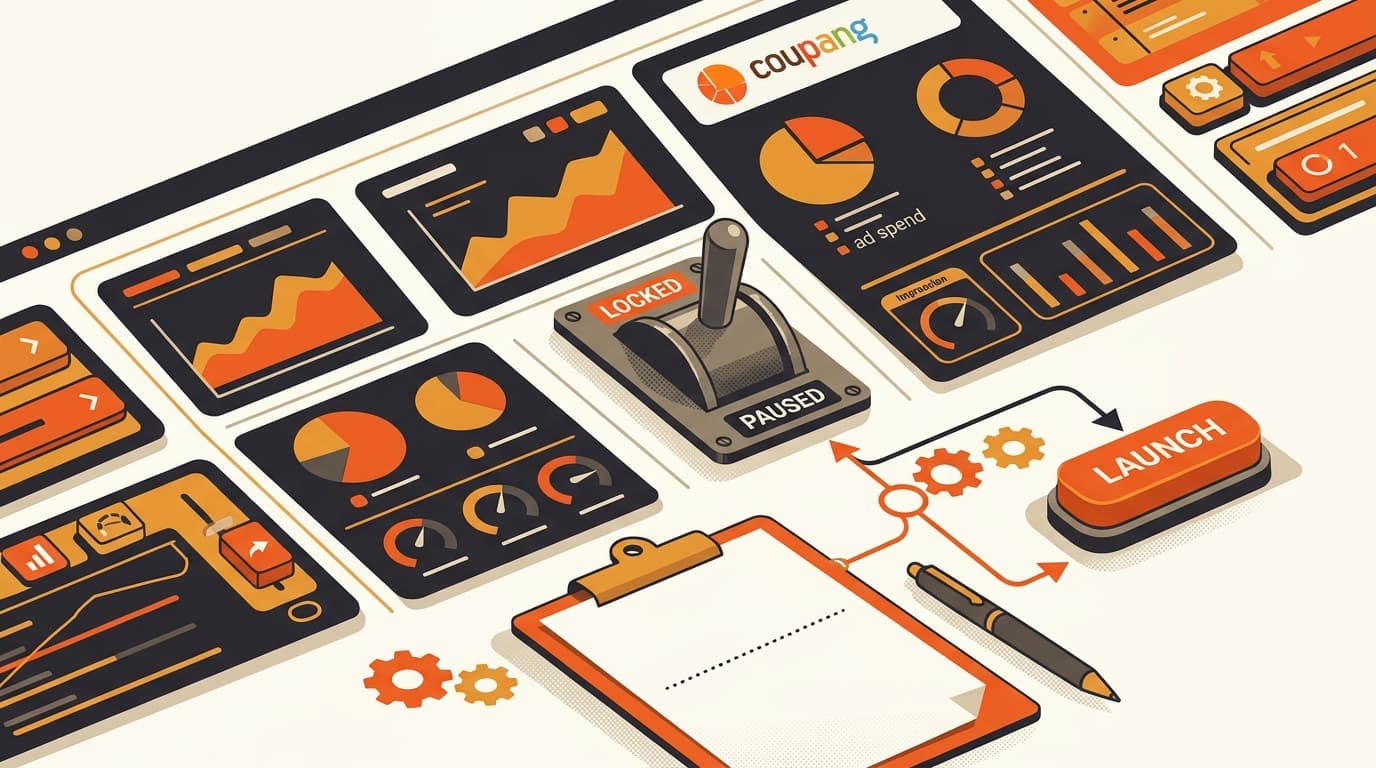
On the operations side, we set up and manage Coupang on-platform pay-per-click (PPC) campaigns: keyword strategy, bid optimization, campaign structuring, and performance tuning. But the agreement requires that we "obtain the Client's prior written approval before launching any campaign or making material changes to campaign budgets." No campaign launches, and no budget gets materially moved, without your written sign-off first.
Two practical consequences follow from that:
- Nothing runs silently. A campaign can't go live, and your spend can't jump, without a written approval on file. If you never approved it, it didn't run.
- You fund 100% of the spend. Advertising cost is an operational cost, and every service puts operational costs on the client — funded from your Korean entity's revenue, deducted from settlement, or paid directly. The approval gate and the funding responsibility line up: you approve what you pay for.
Because the brand approves and funds every campaign, "we didn't know that was running" is not a position you'll ever be in with us — but it also means budget approvals can't be skipped to move faster. The written gate is the point.
Common questions
If Kontactic writes the ad, why am I liable? Because it's your product, and the claim is about it. Who drafted the copy doesn't change who has to substantiate the claim or answer a regulator. Every one of our agreements states this plainly.
Can I hand off approval so I don't have to review Korean creative I can't read? No — and you shouldn't want to. Approval is where the claim gets caught. We surface what the creative is actually claiming and you decide whether it's substantiable; that check is the whole value of the gate. It's also a core reason to sequence operational readiness ahead of ad spend.
Does this change if I only use Spark and don't ask you to make creative? No. Under Spark the creative is typically yours or jointly developed, but the liability language is the same: the brand bears sole responsibility for the claims.
Who pays for the advertising itself? You do — 100% of actual spend. It's treated as an operational cost across all our services, funded from your entity's revenue, deducted from settlement, or paid directly.
What has to happen before a Coupang PPC campaign goes live? Your prior written approval. The same applies to any material change in campaign budget. This is a contractual pre-launch step, not an internal courtesy.
Talk to Kontactic about running paid growth in Korea
Want the approval-and-liability boundary mapped to your products before you spend a won on Korean ads? Tell us what you sell and we'll walk through how it works for the way you sell in Korea.
About the author
Korean and global e-commerce operators with 15+ years of cross-border experience, led by CEO Isaac Lee — KOTRA-certified consultant and official lecturer for Seoul City and the Korea Customs Service. We run Korea market entry for overseas brands every day; this blog records what we learn in the field.
Meet the Kontactic team →Related Articles
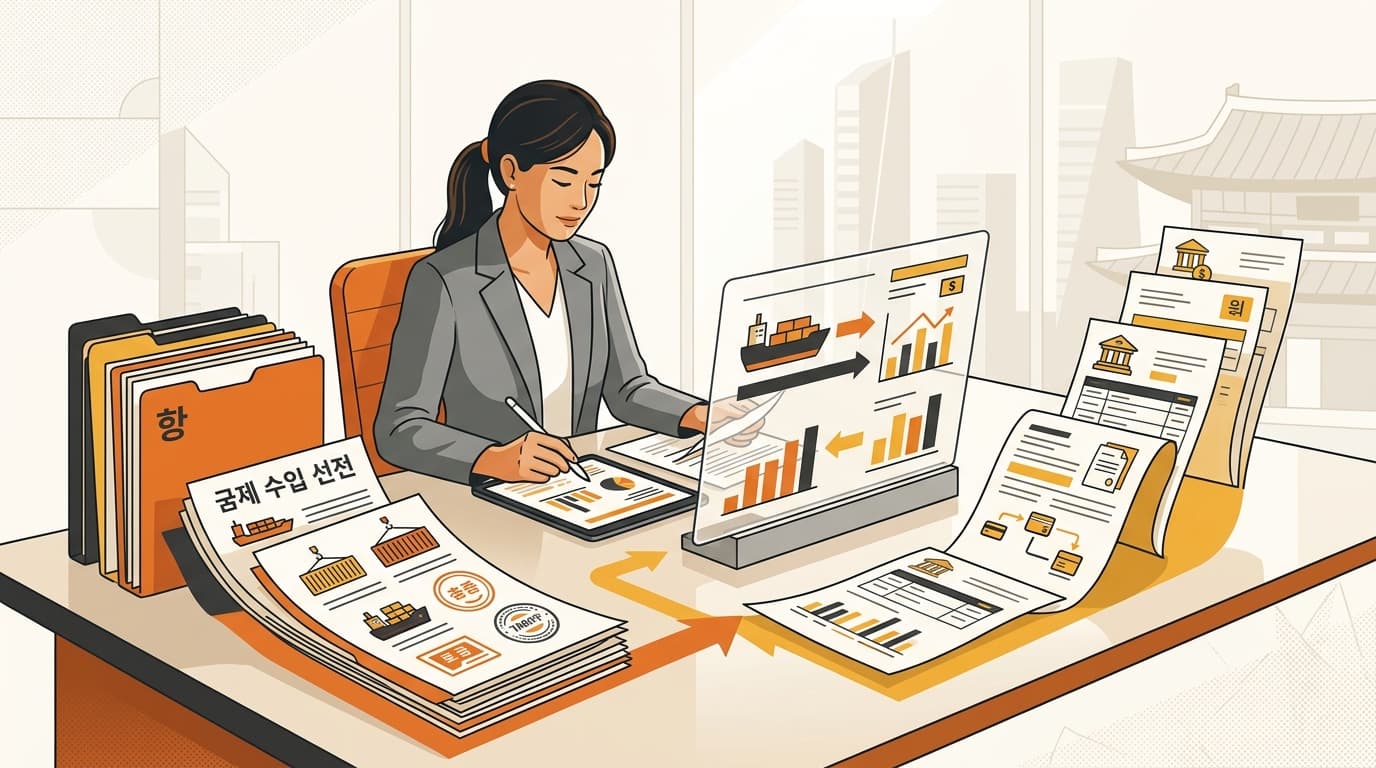
Korean Import Totals: Compare Supplier Payments
Kontactic compares each seller’s running Korean import total with its running supplier-payment total to help local teams find missing entries or timing gaps.
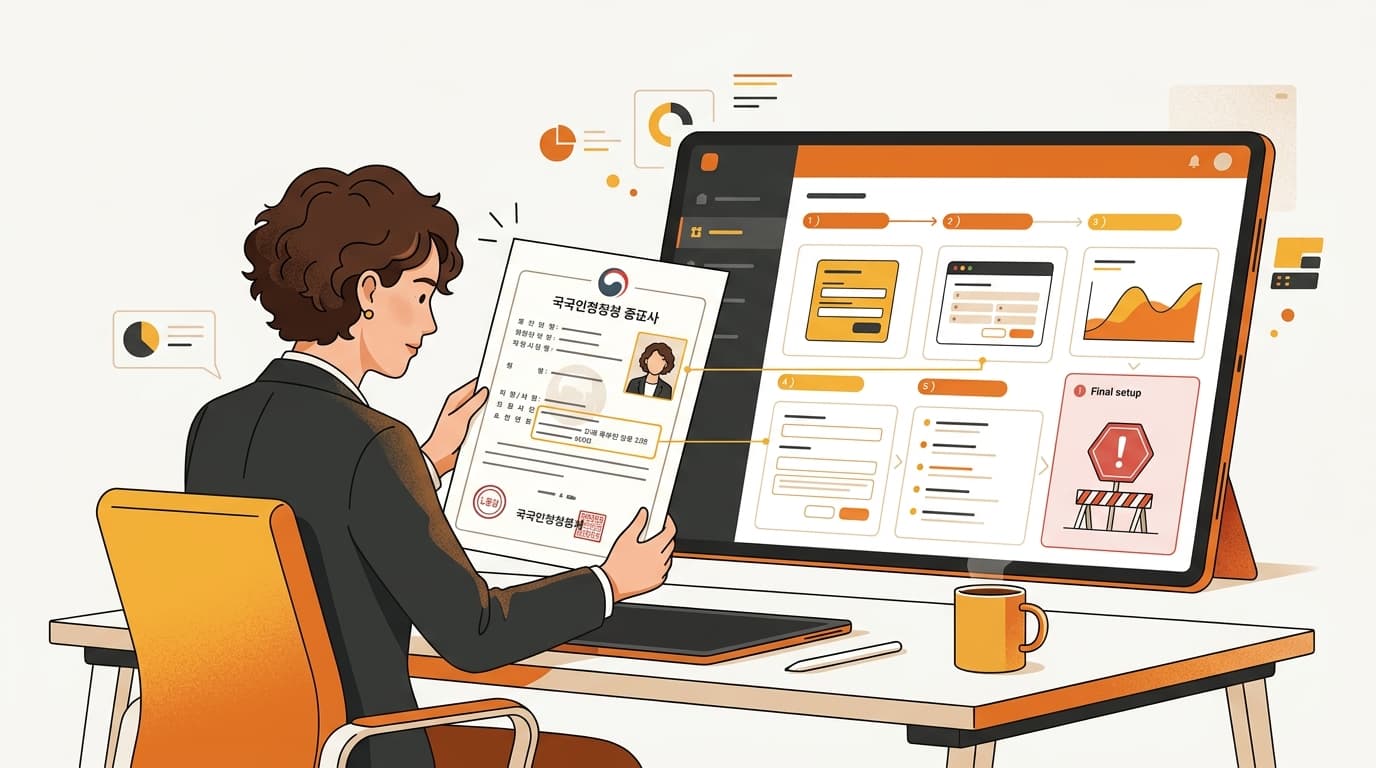
Korean Business Registration: How Kontactic Checks
Kontactic checks your Korean business registration certificate against the prepared address and representative, then keeps the setup open if either value differs.
Does My Korean Importer Need a License for This Product?
A Korean importer may need a license or permit even when product documents are complete. Seller Center separates the two checks and lists what to prepare next.