
Korea Payment Reconciliation Made Traceable by Kontactic
Kontactic makes Korea payment reconciliation traceable by linking incoming payments, invoices, and allocations in one operating ledger, then separating confirmed records from provisional matches. Seller Center preserves adjustments instead of overwriting prior records. It checks bank records and payment status, then produces client statements showing what each amount represents.
The operating boundary: an amount is counted as received only when its allocation is confirmed. A proposed match stays visible for review, but it does not silently change the received position.
Why Korean market entry needs a finance layer
Once a Western brand sells locally in Korea, the difficult finance cases are often exceptions rather than ordinary sales. A transfer can cross a month boundary. An exchange rate can be corrected. A refund can change a prior position. A document can be reissued. Another amount can remain held while its allocation is still unresolved.
None of those cases is necessarily unusual. The problem starts when the records describing them are disconnected. A payment may appear in one billing record and the invoice in another. The explanation may sit in a spreadsheet note that only one operator understands. The finance team can see that money moved. It still needs four answers: which invoice did it support, was the allocation confirmed, what changed later, and what needs attention?
A structured reconciliation layer does not remove exceptions. It gives each one a visible state and a reviewable relationship to the records around it. That is the difference between a Korea-side financial process that can be explained and one that depends on reconstructing history from memory.
The product update is therefore about operating discipline, not a new catch-all billing label. The goal is to keep the relationship between money, documents, and decisions intact when the straightforward case becomes a correction.
One operating ledger connects payments, invoices, and allocations
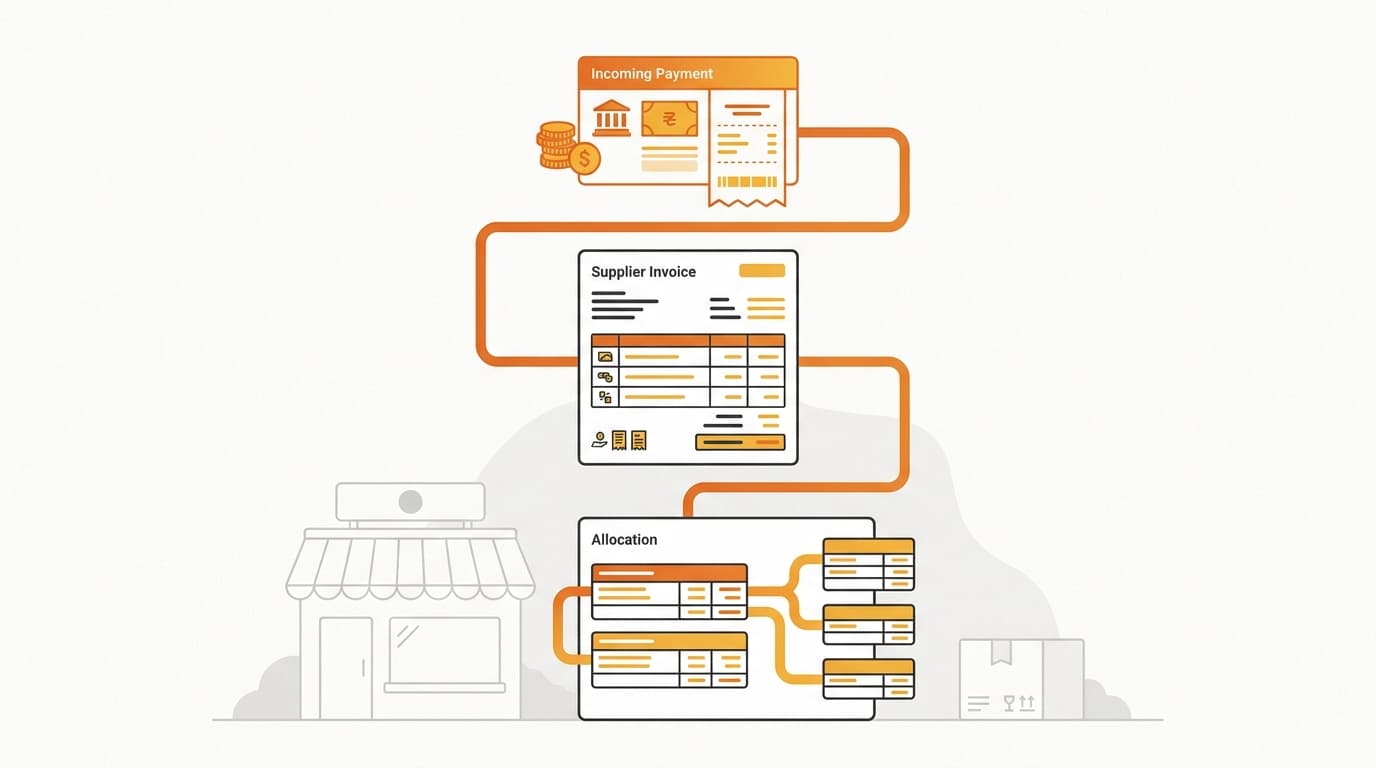
The core capability is a single operating ledger rather than a set of disconnected billing records. It keeps three related records visible:
- Incoming payment: the record that funds entered the payment flow.
- Invoice: the document the payment is expected to support.
- Allocation: the relationship that applies the payment to an invoice or defined balance.
These records can be related without being given the same status. A payment can exist before an allocation is confirmed. An invoice can remain open while an operator reviews the available evidence. A proposed match can be useful to the reviewer without being treated as a completed result.
That distinction is important because a ledger should show both the record and the current confidence in its relationship. If everything is flattened into one final-looking line, a reviewer cannot tell whether the amount was actually applied or merely appears to fit. If the records are kept separate with no relationship, the reviewer has to rebuild the connection manually.
Seller Center lets an operator follow a client statement line to its allocation, then back to the invoice and payment evidence. The chain stays visible during review. It is a working reconciliation record: structured enough to support repeatable review, but explicit about what has and has not been confirmed.
Confirmed allocations decide what counts as received
The most important control is the distinction between a confirmed allocation and a provisional match. In this operating layer, a payment appearing in a bank record is not by itself the same as an amount received for statement purposes. The allocation connecting that payment to the relevant invoice or balance must be confirmed.
The workflow is deliberately straightforward:
- An incoming payment is recorded.
- A possible relationship to an invoice or balance can be kept visible as a proposed match.
- The relationship is reviewed against the available payment and bank-record evidence.
- Only the confirmed allocation is counted as received; the unresolved match remains provisional.
This prevents a plausible explanation from becoming a settled position too early. It also avoids the opposite failure: hiding a likely match because it is not ready for confirmation. Operators can see the work that remains without allowing that work-in-progress to change the received total.
The distinction becomes especially useful around month boundaries and corrections. A payment may be present while the supporting allocation is still being clarified. A refund may require a prior application to be revisited. A corrected exchange rate may change the amount that should be represented. In each case, the provisional state keeps the issue visible while the confirmed state protects the reliability of the client record.

Evidence checks reduce false exceptions
Payment-status language is not always decisive. A record may contain processing language that sounds unresolved even when the underlying bank record supports the payment. Conversely, it may look complete without showing which invoice the funds support. Treating every ambiguous status as an error creates unnecessary exceptions. Treating every status as final creates a different risk.
Seller Center uses bank-record and payment-status checks to separate valid evidence from ambiguous processing language. The purpose is not to force an uncertain record into a final state. It is to give the operator enough context to distinguish a genuinely missing relationship from a record that is merely described unclearly.
That reduces two kinds of wasted work. A valid payment is less likely to be sent back into investigation simply because of an ambiguous status phrase. At the same time, an item with no confirmed allocation remains visible instead of disappearing into a completed-looking line. Evidence checks therefore support the confirmed-versus-provisional boundary rather than bypassing it.
Adjustments preserve history instead of overwriting it
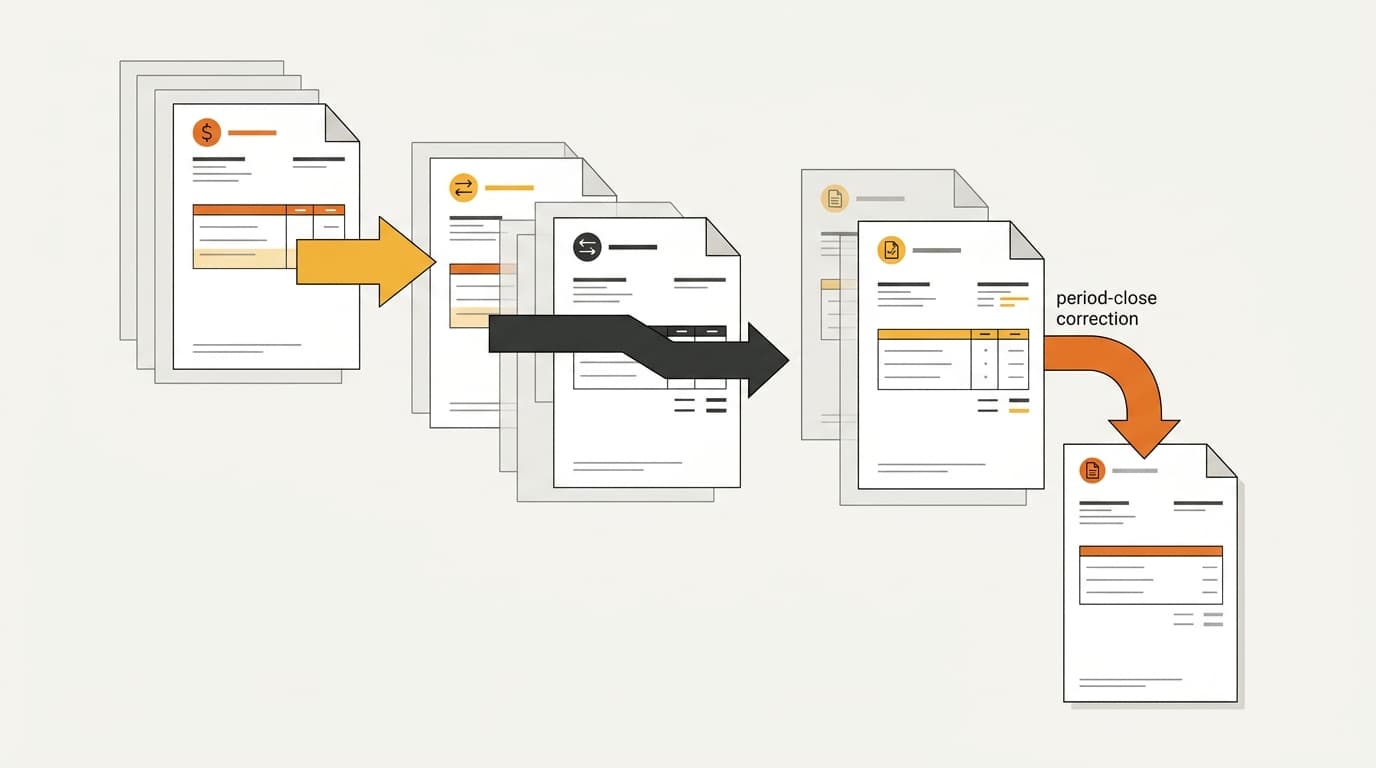
Settlement records change, and the latest figure is not always enough to explain why. Kontactic’s reconciliation layer keeps a controlled adjustment trail for the changes that otherwise make period review difficult:
- Carryovers keep an unresolved position visible when it moves into a later review period.
- Reversals show that a prior allocation was undone or changed.
- Reissued documents preserve the fact that the supporting document changed rather than erasing the earlier reference.
- Period-close corrections record a correction as part of the history instead of silently replacing the earlier view.
The practical rule is simple: correct the record without destroying the reason it had to be corrected. That gives a reviewer a way to understand the path from the earlier position to the current one. It also keeps a month-end statement from becoming a misleading snapshot when a later refund, document change, or exchange-rate correction affects the underlying relationship.
This is not about making every exception look tidy. It is about retaining enough structure that a finance team can tell whether a balance is new, carried over, reversed, reissued, or corrected. The adjustment trail turns change into a reviewable event rather than an unexplained difference between two exports.
Consistent statements make the Korea-side record explainable
The final output is the client statement, and consistency matters as much as completeness. A statement built from vague catch-all lines may show a balance without showing the reason behind it. A structured statement groups amounts by reason so the reader can distinguish confirmed allocations, provisional items, adjustments, and other positions that still need review.
That gives the brand’s finance team a more useful view of the Korea-side administration. The question is no longer only whether the statement total changed. The team can ask what was received, what was applied, what was carried forward, what was reversed, and what remains provisional.
The statement is a view over the underlying reconciliation records, not a second source of truth. Its value comes from preserving the links and statuses established in the operating ledger. When a reviewer needs more detail, the statement should lead back to the payment, invoice, allocation, or adjustment that explains the line.
Operators can also review historical periods and identify balances that may be ready for release. That is a review step, not an automatic conversion of provisional records into confirmed ones. The release decision remains tied to the evidence and allocation state, while the historical view makes it easier to find the cases that deserve attention.
Common questions about Korea payment reconciliation
Does a payment count as received as soon as it appears in the bank record?
No. The bank record is part of the evidence, but the operating rule is that only a confirmed allocation counts as received. A payment can remain visible while its relationship to an invoice or balance is still provisional.
Why keep a provisional match instead of waiting until everything is confirmed?
A provisional match preserves useful work and makes the open question visible. It helps an operator see what may be related without allowing an unconfirmed relationship to change the received position.
What happens when a transfer crosses a month boundary?
The payment, invoice, and allocation remain connected while the timing difference is handled through the review and adjustment history. The record does not need to be rewritten simply because the related activity falls into different periods.
Are corrections hidden from the client statement?
No. Carryovers, reversals, reissued documents, and period-close corrections are preserved in a controlled adjustment trail. Statements group amounts by reason so a changed balance has an explanation rather than a catch-all line.
Can the system decide which balances should be released?
It gives operators tools to review historical periods and identify balances that may be ready for release. That review does not make a provisional match confirmed automatically; the allocation state and supporting evidence still matter.
Make your Korea-side financial records easier to review
If you need a clearer operating structure for Korea payments, invoices, allocations, and adjustments, contact Kontactic to discuss your market-entry administration.
About the author
Korean and global e-commerce operators with 15+ years of cross-border experience, led by CEO Isaac Lee — KOTRA-certified consultant and official lecturer for Seoul City and the Korea Customs Service. We run Korea market entry for Western brands every day; this blog documents what we learn in the field.
More about Kontactic →Related Articles
Product-Link Intake for Coupang: A Traceable Handoff
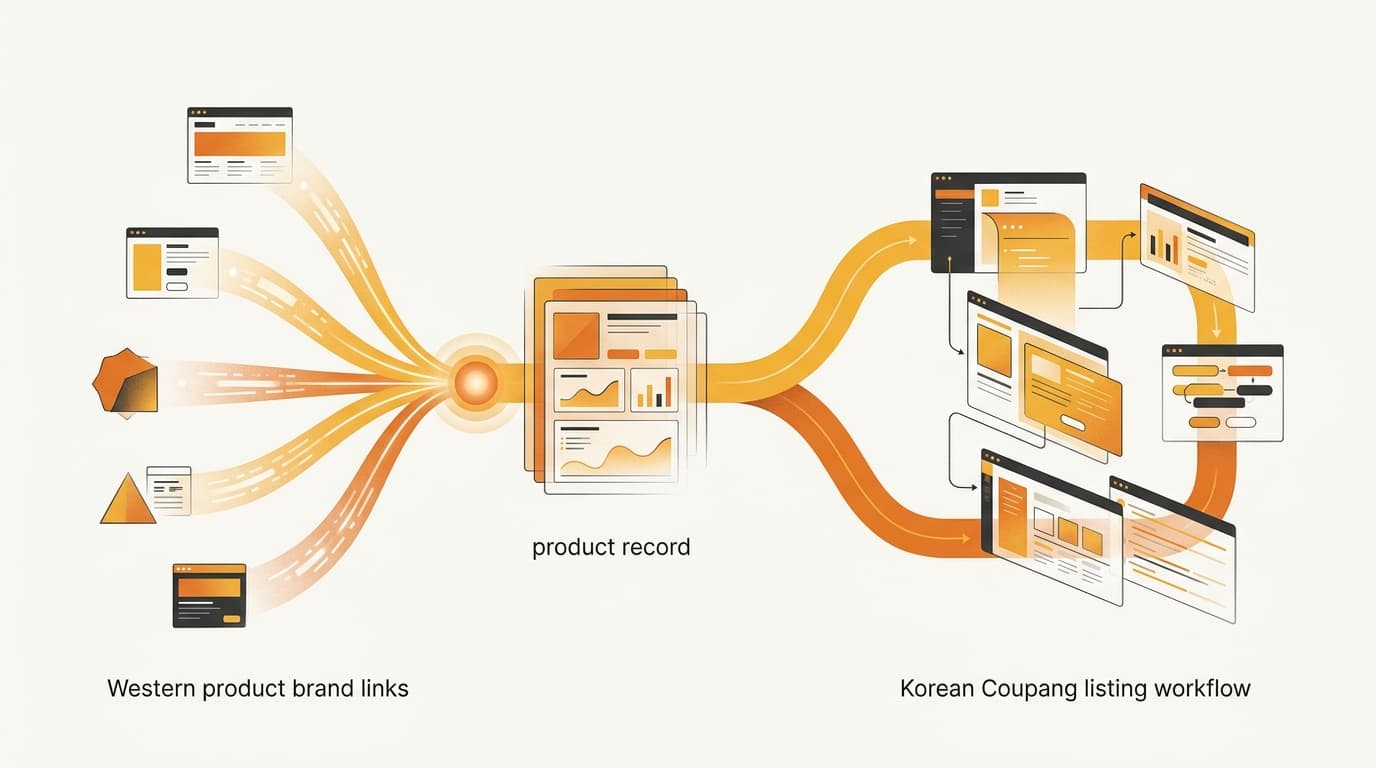
Kontactic Seller Center gives product-link intake a reviewable source record and a handoff into Coupang listing work before Korean copy or creative production starts.

Coupang Image Gallery: How Kontactic Builds Each Set
Kontactic Seller Center builds each Coupang image gallery as one set: 1 primary image plus up to 9 supporting 1:1 tiles, all connected to the page builder.

Coupang Product-Information Disclosure in Listings
Coupang product-information disclosure keeps marketplace data beside localized creative, giving operations a handoff without rebuilding listing information.