Coupang Order Lines: One Line Is Not One Unit
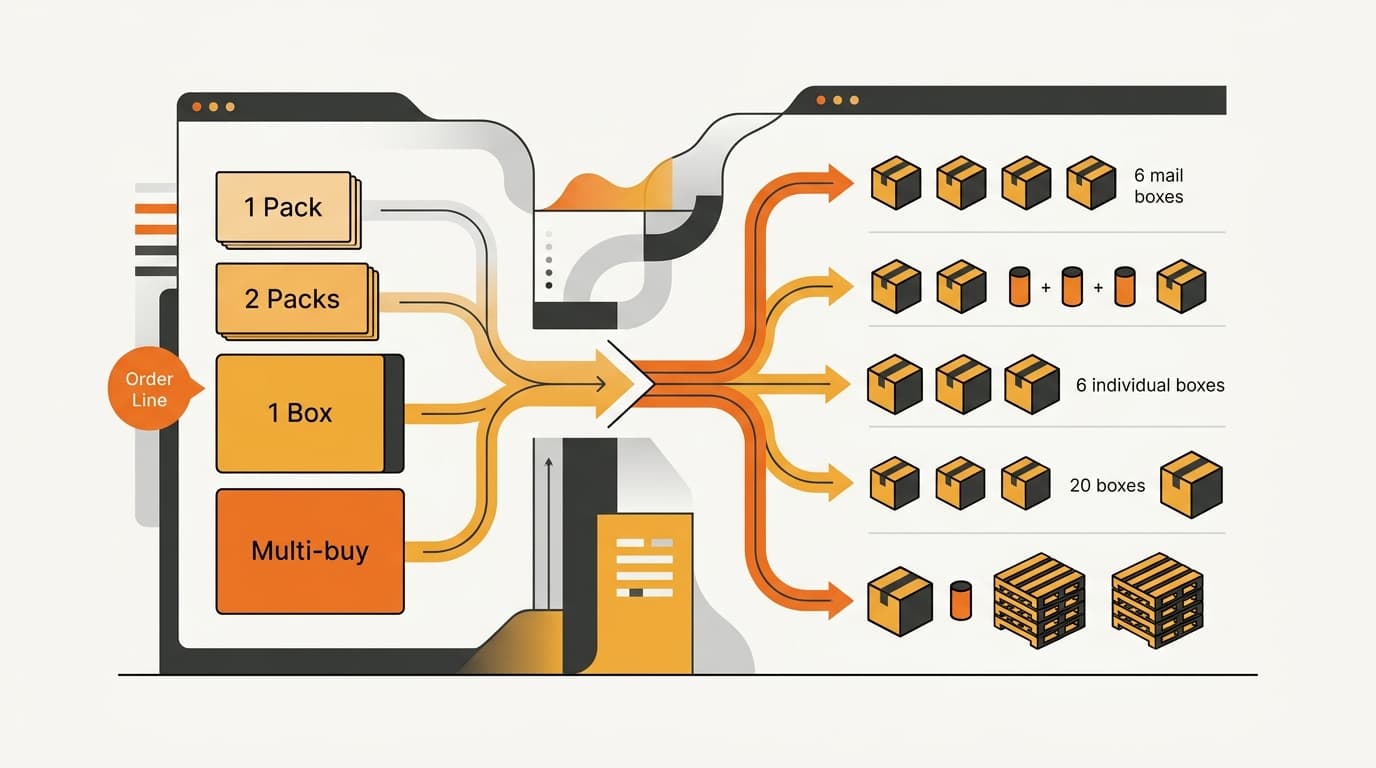
No—not safely: a Coupang order line is a customer-facing commercial option, not proof that the warehouse should decrement one physical unit. An auto-generated quantity option can represent multiple base units. Before an ERP posts inventory or fulfillment, it must identify the option type, follow its relationship to the original item, and calculate the handling quantity from structured order data.
Core rule: Treat the order line as unresolved until the integration has identified the original platform item, the generated-option relationship, the bundle size, and the ordered quantity. Only then should it create a physical-unit movement.
Why Coupang breaks the one-line/one-unit assumption
Many Western ERP mappings begin with a simple chain: one catalog item becomes one SKU, one order line becomes one unit, and one inventory decrement follows. That chain is safe only when the customer-facing option and the warehouse unit are the same thing.
Coupang's official notice describes auto-generated options as demand-based purchase-quantity options for eligible categories. A seller-created product can therefore acquire a customer-facing quantity or bundle option even though the brand did not create a new physical product. The feature is not universal, so the connector must discover the state per product rather than apply one global rule.
There are three identities to keep separate:
- Original product or item: the seller-created platform listing that anchors the catalog relationship.
- Generated option: the customer-facing quantity or bundle choice created by Coupang.
- Base physical unit: the unit your warehouse, 3PL, or fulfillment operation actually picks, ships, and counts.
The generated option may be commercially distinct without being a new warehouse SKU. If the option contains more than one base unit, treating the line as one unit under-decrements stock and sends an incomplete fulfillment instruction. Treating every option as a brand-new SKU creates the opposite problem: duplicate catalog records, fragmented sales history, and unnecessary inventory identities.
| Common assumption | What can go wrong | Safer rule |
|---|---|---|
| One Coupang order line equals one physical unit | Inventory is reduced by too little when the option represents multiple base units | Resolve the bundle rule before decrementing |
| The option name tells us the pack size | Localized or edited display text can be ambiguous or stale | Use structured option and order fields |
| Every generated option is a new SKU | One base product becomes several phantom warehouse SKUs | Keep the option-to-base-SKU relationship explicit |
| The feature is either on for the whole account or off for the whole account | Product-level differences are missed | Check option state per product |
The practical test is simple: ask whether the connector can explain how one customer-facing option becomes a specific physical quantity without reading the product title. If it cannot, it is not ready to automate this part of the order flow.

Which Coupang fields should control the mapping?
Use structured Product API and order-sheet response data as the mapping authority. Verify the Product API and order-response schema in Coupang's official Open API developer documentation. Also consult Coupang's official notice on auto-generated options.
The endpoint context matters. The seller-product response is returned by GET /v2/providers/seller_api/apis/api/v1/marketplace/seller-products/{sellerProductId}; the order-sheet response is returned by GET /v2/providers/openapi/apis/api/v4/vendors/{vendorId}/ordersheets. Confirm the current path and version in Coupang's documentation before coding against it.
The role names in the table are conceptual. The code-formatted values are the response paths an implementer should inspect. Coupang may expose the generated-option marker under a different key by endpoint or API version, so preserve the raw key and value alongside a normalized field such as generated_option_state. Do not silently replace a missing marker with the option name.
| Data element or conceptual role | Literal field or response path to inspect | What it should answer | What the connector should avoid |
|---|---|---|---|
| Product or listing identity | Product API seller-product response: data.sellerProductId, data.items[].sellerProductItemId, and data.items[].vendorItemId; order sheet: data[].orderItems[].productId and data[].orderItems[].vendorItemId | Which seller-created listing and platform item does this line belong to? | Creating an internal SKU from the display name alone |
| Product-level auto-generated-option signal (conceptual role) | The documented option-state field in the seller-product response, such as data.items[].isAutoGeneratedOption where that literal key is returned; some versions may use autoGeneratedOption or another documented boolean or enum | Is this item currently associated with a generated quantity option? | Hard-coding one guessed field name or assuming the state applies to every product |
| Generated-option indicator in the order response (conceptual role) | The documented line-level marker in data[].orderItems[], such as isAutoGeneratedOption where returned; retain data[].orderItems[].vendorItemPackageId as a supporting relationship value, not as an assumed boolean | Is this line a normal seller item or a generated option? | Sending every line through the normal one-line/one-unit path |
| Related item or package reference (conceptual role) | Join data[].orderItems[].productId, data[].orderItems[].vendorItemId, and, where populated, data[].orderItems[].vendorItemPackageId back to the Product API's data.items[].vendorItemId and data.items[].sellerProductItemId | Which original product or item does the generated option belong to? | Creating a disconnected SKU because the option looks separate |
| Bundle size | Product API data.items[].unitCount; resolve it by the matching vendorItemId when the order response does not repeat the value | How many base units does one purchased option represent? | Inferring quantity from Korean pack text or a display name |
| Customer-facing or order quantity | Order sheet data[].orderItems[].shippingCount, or the distinct ordered-quantity field documented for the order state being consumed | How many customer-facing options were ordered or carried into shipping? | Confusing option count with base-unit count |
| Shipping quantity, where returned | The order-sheet quantity fields in data[].orderItems[], with shippingCount kept separate from cancelCount, holdCount, and other lifecycle counts | Which quantity should be carried into the platform's shipping workflow? | Collapsing every quantity field into one generic qty value |
| Commercial amount | data[].orderItems[].orderItemUnitPrice and data[].orderItems[].orderItemDiscountPrice | What price and discount belong to the customer-facing option? | Using price to infer physical units |
If the current schema uses a different literal name for the generated-option marker, record that name in the connector's versioned mapping configuration. The important implementation decision is not whether the normalized field is called generated_option_state; it is whether the raw response key, value, endpoint, and API version remain auditable.
The important distinction is between option quantity and handling quantity. If the response says the bundle size is B and the ordered quantity is Q, the base-unit movement is B × Q unless a separately defined warehouse rule applies. For example, if B = 3 and Q = 2, the order creates a six-base-unit movement (3 × 2), while the customer-facing option quantity remains 2.
The calculation should use the structured values returned by Coupang, not an attempt to parse a name. Store the raw platform identifiers and response values as well as the normalized ERP result. That makes a later review possible when a generated option is added, changed, or disabled. It also prevents a data repair from destroying the evidence that explains why a stock movement was posted.
This is the same boundary that matters when a catalog is created through the API: Can Coupang Open API Upload Product Catalogs? explains why the ability to upload catalog data does not remove the need for mapping and validation. Importing a record is not the same as deciding what it means in the warehouse.
Build a relationship, not a phantom warehouse SKU
A reliable data model treats the generated option as a relationship layered on top of the original item. It does not automatically promote every platform option into a new internal SKU.
At minimum, retain these separate records or fields:
| Layer | Store separately | Why it matters |
|---|---|---|
| Platform identity | Original product or item reference, including sellerProductId, vendorItemId, and the generated-option relationship when present | Keeps the order tied to its source listing |
| Option state | Product-level signal, order-level generated-option indicator, and the raw field names returned by each endpoint | Determines which mapping path to use and supports later audits |
| Commercial facts | Customer-facing option, price, discount, and ordered quantity | Preserves what the customer bought and what the platform charged |
| Physical rule | Base SKU and unitCount or another approved bundle-size value | Defines what the warehouse must count |
| Execution facts | shippingCount, fulfillment status, and lifecycle quantities such as cancellations or holds | Prevents order, shipment, and inventory quantities from being conflated |
This model supports a one-to-many relationship: one base SKU can have a normal platform item and one or more customer-facing generated options. The option can have its own price or discount for sales reporting while still rolling physical movement back to the base SKU.
There is one important exception. If the brand actually manufactures, labels, stores, and picks the quantity option as a separate pre-packed product, the business may choose to assign it a dedicated warehouse SKU. That is an inventory-policy decision. The Open API exposes the platform relationship; it does not decide whether a bundle is pre-packed stock, a pick instruction, or a virtual commercial offer.
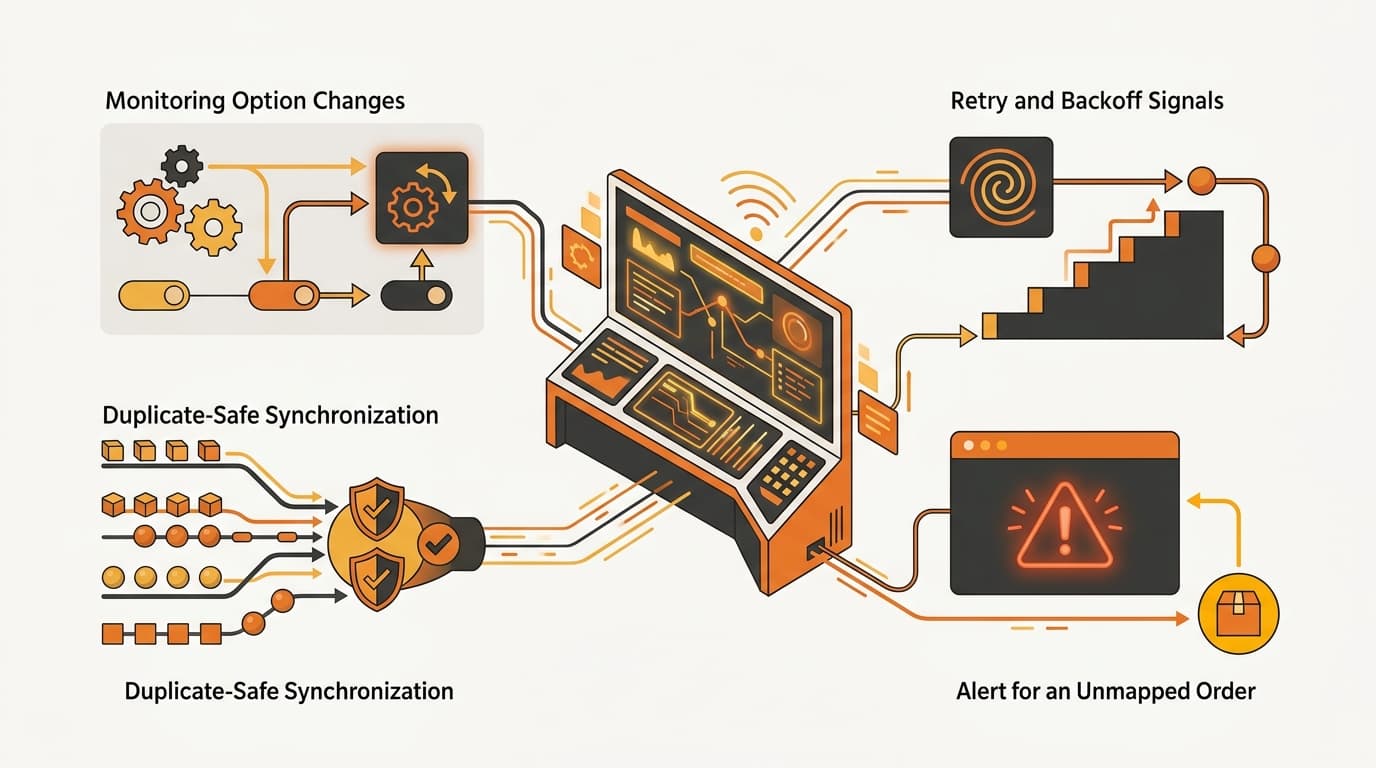
Do not let the mapping silently change when Coupang changes an option. Keep the current state, the effective bundle rule, and the prior relationship available for order-history reconciliation. A new or changed option should produce a visible mapping event, not an invisible rewrite of historical orders.

Apply the mapping before inventory, fulfillment, and settlement
Mapping after the stock deduction is too late. The relationship must be resolved before any downstream system treats the order as executable.
A safe sequence is:
- Persist the source order data. Keep the platform order, line, product/item references, option indicator, quantity fields, price, and discount.
- Classify the line. Decide whether it is a normal seller item or an auto-generated quantity option.
- Resolve the relationship. Find the original item, internal base SKU, and applicable bundle-size rule.
- Calculate execution quantity. Apply the bundle rule to the ordered quantity, while preserving shipping quantity as its own fact when the response provides it.
- Post idempotently. Decrement inventory and create fulfillment work only after mapping succeeds; a retry of the same order must not decrement stock twice.
- Write both reporting views. Keep revenue and discount at the customer-facing option level, and roll physical units and unit margin to the base SKU according to the brand's accounting policy.
This sequence matters for fulfillment services as well as a brand's own warehouse. A platform can show one commercial line while the fulfillment instruction requires more than one base unit. If the connector passes only the line count, the warehouse receives incomplete instructions. If it passes an inflated quantity because it interpreted the option as a separate SKU and also multiplied it, the same order can be over-fulfilled.
Settlement requires the same relationship. The order record should let finance trace:
- which platform line generated the revenue;
- which original item and generated option were involved;
- which price and discount were applied;
- which base SKU received the physical-unit movement; and
- which quantity rule produced that movement.
That is more reliable than rebuilding pack quantities from product names during reconciliation. The approach is consistent with the record-linking discipline in Coupang Settlement Periods: How Kontactic Reconciles, where platform evidence and allocation records remain connected through settlement review.
If the order feeds Coupang Rocket Growth or another fulfillment workflow, the same distinction continues downstream. Why Coupang Rocket Growth SKUs Stay Unavailable is a useful reminder that platform inventory status must be reconciled against platform-recognized stock, not inferred from an order line or an internal intention to replenish.
Test the connector before trusting it with live stock
Before local launch, test the mapping with real response shapes from the seller account or a controlled environment. A normal-order import is not enough. Test whether the connector preserves the relationship when the option state changes.
| Test | Pass condition |
|---|---|
| Product discovery | The connector reads the auto-generated-option state per product and records the raw field and API version |
| Order classification | A generated-option indicator sends the line to a different mapping path from a normal seller item |
| Relationship resolution | The related item reference resolves to the correct original product or item and base SKU |
| Quantity math | Bundle size and ordered quantity produce the defined base-unit movement without using display text |
| Duplicate handling | Reprocessing the same order or a retried response does not create a second inventory deduction or fulfillment request |
| Option changes | Added, changed, or disabled options create a visible update and do not silently overwrite historical mappings |
| Exception handling | An unmapped or contradictory response is held for human review instead of being posted as one unit |
An in-house connector is reasonable only when the ERP and integration layer support one-to-many item mappings, changing pack quantities, duplicate-safe updates, monitoring, and a review path for unmapped cases. A generic connector is risky when its core assumption is one platform item to one internal SKU and one integer quantity.
Ask the vendor to show the normalized record, not just the order screen. The useful evidence is the stored relationship between the original item, generated option, base SKU, bundle rule, and posted quantity. If the vendor cannot expose those values, a successful import may still be hiding an unsafe inventory decision.
Control generated options and protect the API connection
A brand that does not want auto-generated options can use the Product API controls to disable specific generated options or all generated options after product registration. That can simplify the catalog policy, but it is not a substitute for detection. The process should still recheck option state and alert when Coupang adds, changes, or disables an option.
The resynchronization process also needs to respect Coupang's API behavior. Coupang warns that excessive product calls can return HTTP 429 responses and may lead to blocking. Option discovery and resync should therefore use throttling, retries with backoff, last-seen state, and alerts rather than repeated unrestricted calls.
Do not make a fixed polling limit the safety mechanism. A connector should be rate-aware, retry transient failures with backoff, and surface stale or incomplete option state for review. A lower call count is not useful if the last successful response is silently treated as current forever.
Operational monitoring should answer four questions:
- Did the product's generated-option state change?
- Did an order arrive with a generated-option indicator that has no mapping?
- Did the calculated physical quantity differ from the quantity posted to inventory or fulfillment?
- Did a retry, rate-limit response, or partial update leave the order in an unknown state?
Those checks turn a catalog feature into a manageable integration problem. Without them, the connector may appear stable while slowly accumulating incorrect stock and margin data.
Common questions about Coupang quantity options
Is every auto-generated quantity option a new SKU?
No. It is a customer-facing platform option. Assign it a separate warehouse SKU only when the brand's physical storage and picking policy treats it as a separate pre-packed product.
Can a connector map the quantity from the option name?
It should not. Use the generated-option indicator, related item reference, bundle size, ordered or shipping quantities, and platform identifiers. A display name can help a reviewer but should not drive inventory math.
Does Coupang create these options for every product?
No. The feature is described for eligible categories and must be detected per product. A connector should not assume one account-wide state.
Can disabling generated options remove the integration risk?
It can remove a source of quantity variation for the products where the control is applied, but the connector should still verify status and handle existing orders or stale responses correctly.
Does the Open API decide the accounting treatment?
No. It exposes product and order relationships and provides controls. The brand still defines whether the option maps to a base SKU, a pre-packed SKU, a fulfillment quantity, and a reporting treatment.
When is a generic connector sufficient?
Only when it can preserve one-to-many mappings, changing pack rules, duplicate-safe updates, monitoring, and human review of unmapped cases. If it assumes one platform line is one internal unit, treat it as unproven.
Pressure-test your Coupang quantity mapping
Before trusting a connector with live stock, review a real product response and order response from your seller account. Contact Kontactic to discuss where customer-facing options, warehouse units, fulfillment quantities, and settlement records could diverge.
글쓴이 소개
15년 이상의 크로스보더 이커머스 경험을 가진 한국·글로벌 커머스 운영자들입니다. 대표 이이삭 (Isaac Lee)은 KOTRA 인증 컨설턴트이자 서울특별시와 관세청의 공식 강연자입니다. 저희는 매일 서구 브랜드의 한국 시장 진출을 직접 운영하며, 이 블로그에는 그 현장에서 배운 것들을 기록합니다.
Kontactic 더 알아보기 →관련 글
Korean Importer Registration: Why a POA Is Not Enough
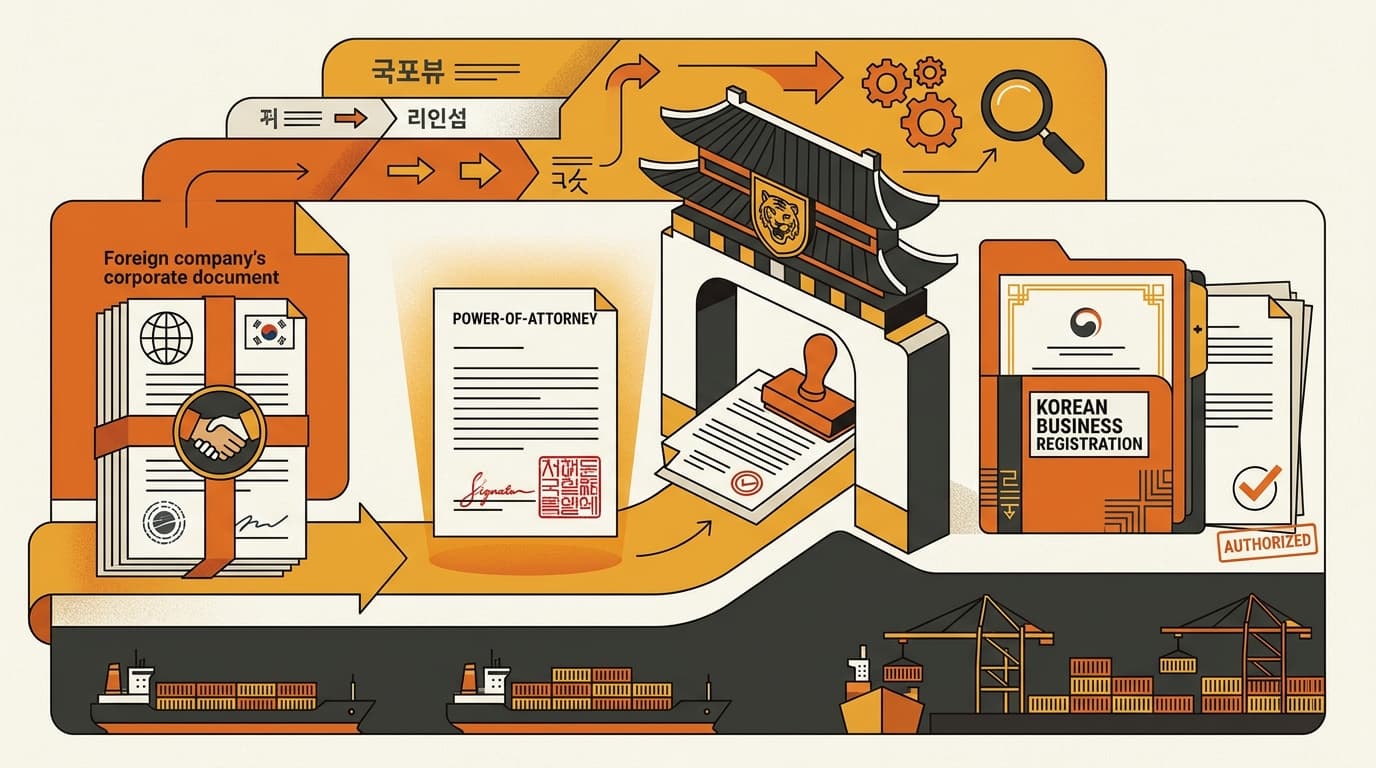
A power of attorney cannot establish Korean importer registration; corporate-authority proof and Korean importer records are still required for the filing.
Can You Delay Korea Import Duty on Consignment Stock?
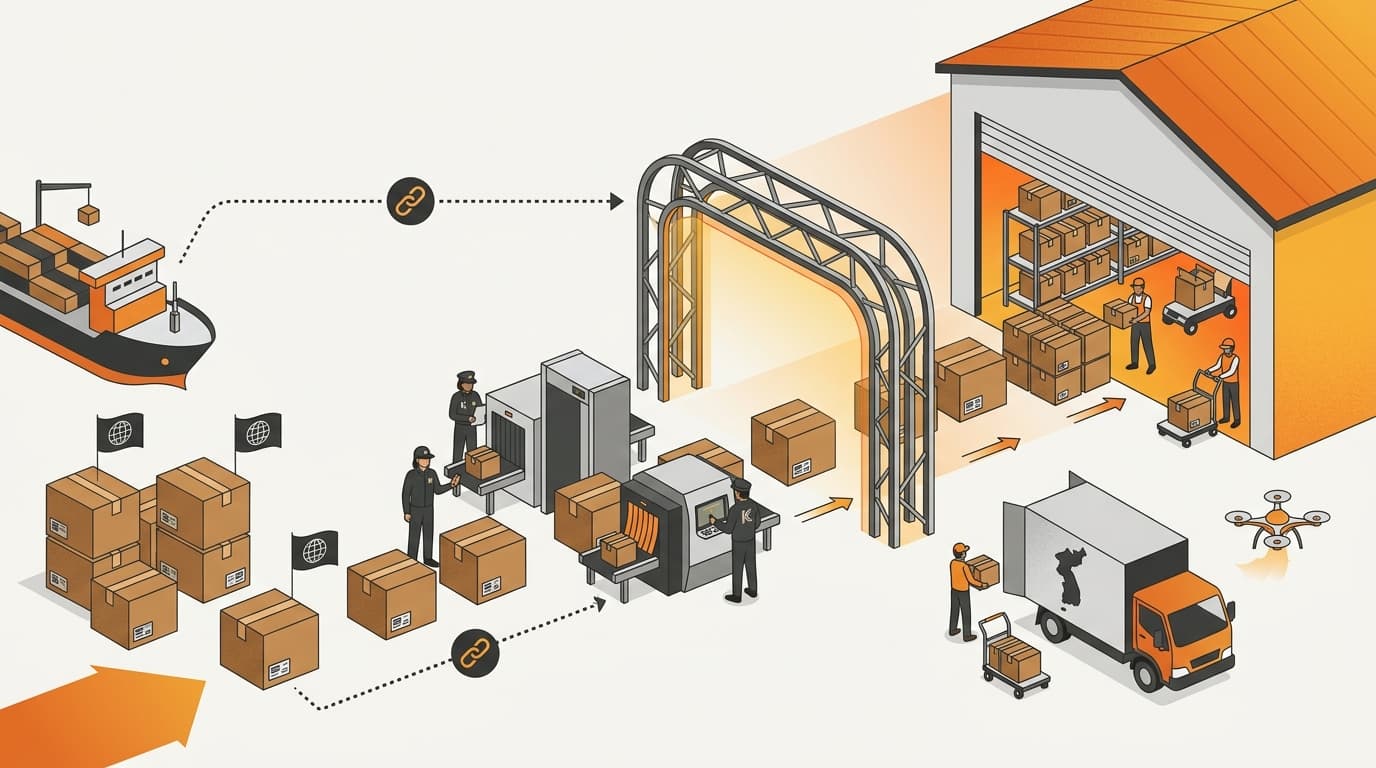
No. Korea import duty and import VAT are normally assessed when consignment stock is cleared for domestic circulation, not when a Korean customer buys one unit.

Children’s Product KC: Does “Ages 13+” Avoid the Rules?
No. In Korea, “Ages 13+” is only one factor; design, intended use, packaging, and child-directed marketing can still trigger children’s-product KC rules.